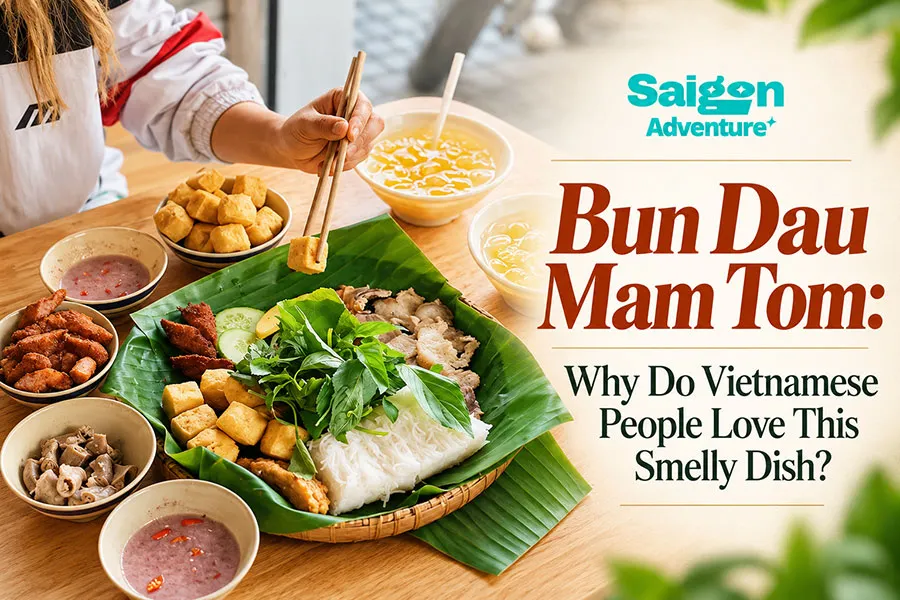
The smell arrives before the food. A small bowl of purple-gray shrimp paste sits beside golden fried tofu, fresh rice noodles, and fragrant herbs. For many first-time visitors, the immediate question is simple: how can something that smells so strong be so popular?
Bun dau mam tom is a traditional Vietnamese dish combining crispy tofu, rice vermicelli, fresh herbs, and fermented shrimp paste. Originally associated with Hanoi, it has become a familiar street food in many Vietnamese cities. Locals love its contrasting textures, deeply savory flavor, affordability, and social dining experience.
If you’re exploring Vietnamese street food in Ho Chi Minh City, this unusual combination offers another side of local food culture beyond the familiar bowls of pho and banh mi.
But does it actually taste as intimidating as it smells? Here’s what curious travelers should know before taking their first bite.
What Is Bun Dau Mam Tom?
Bun dau mam tom is a Vietnamese platter featuring rice vermicelli, deep-fried tofu, fresh herbs, and a dipping sauce made from fermented shrimp paste.
Its name describes the three essential ingredients: bún means rice vermicelli, đậu refers to tofu, and mắm tôm is fermented shrimp paste.
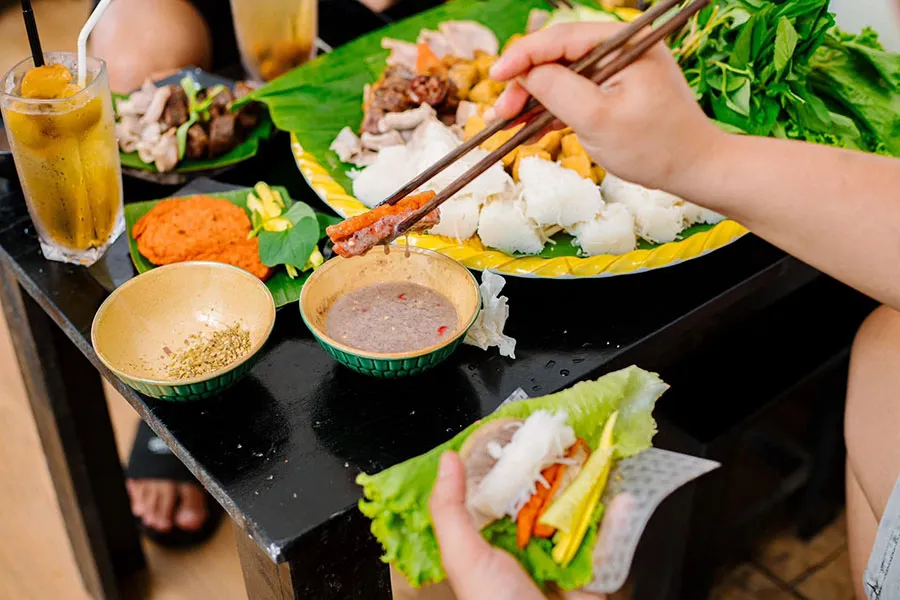
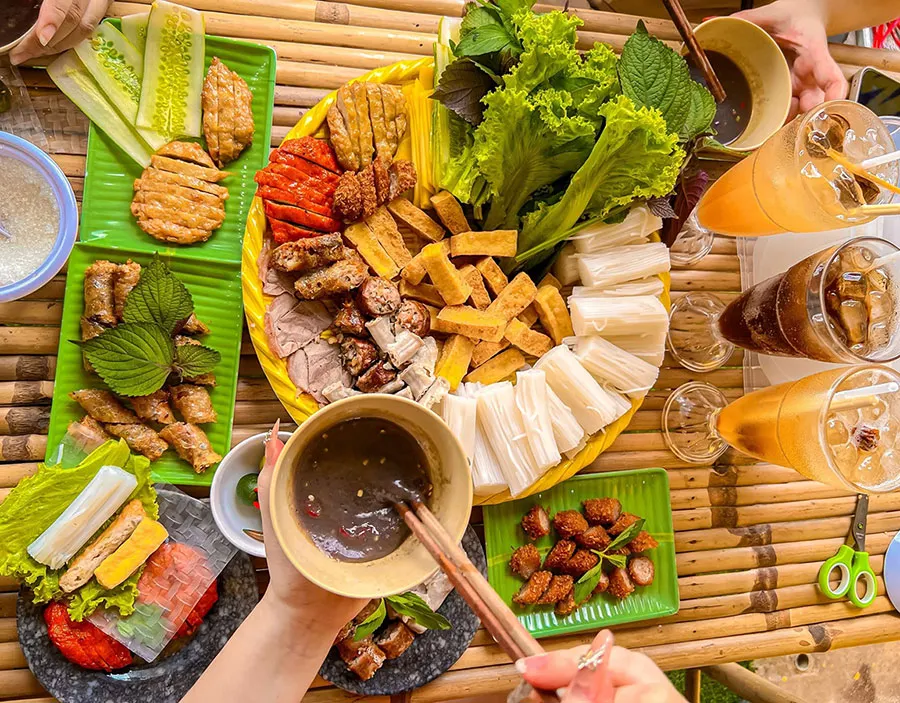
Unlike noodle soups, the ingredients arrive separately, often arranged on a bamboo tray lined with banana leaves. Diners choose their favorite combinations and dip each bite into the sauce.
Although closely associated with Hanoi’s street food traditions, the dish is now widely enjoyed in Ho Chi Minh City and elsewhere in Vietnam.
What’s Inside a Traditional Bun Dau Mam Tom Platter?
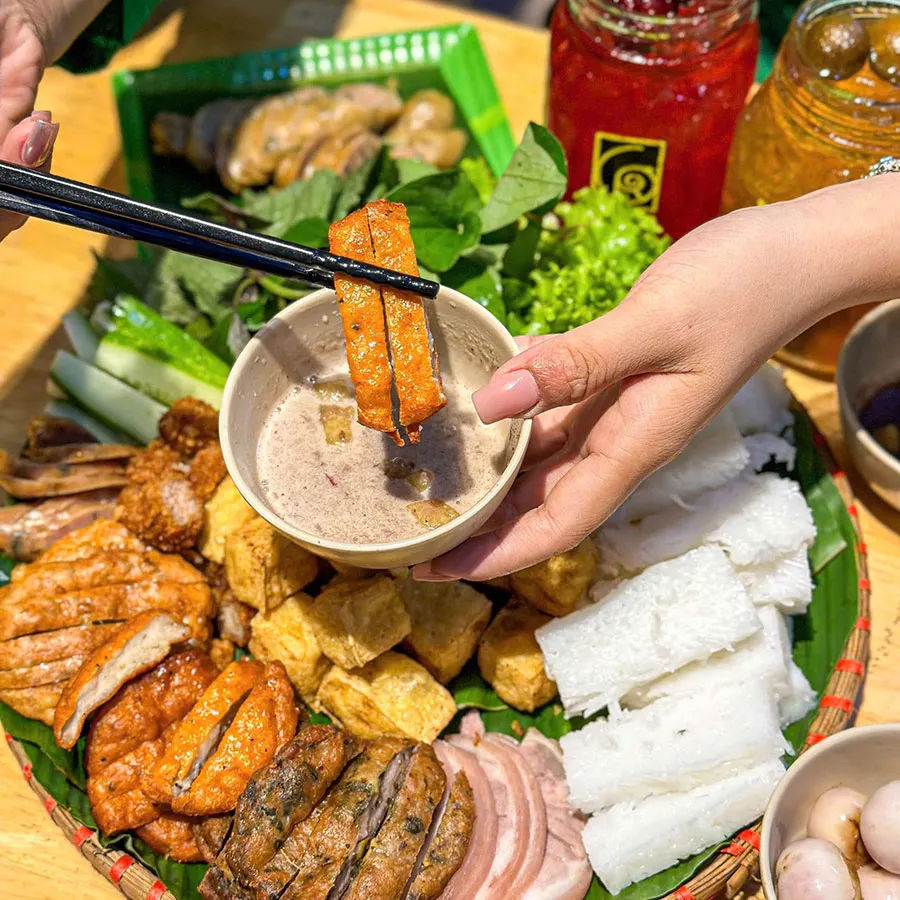
A basic serving usually includes several simple ingredients that create surprisingly complex flavors when eaten together.
- Bún lá: Soft rice vermicelli pressed into compact sheets and cut into bite-sized pieces.
- Đậu hũ chiên: Golden fried tofu with a crispy exterior and tender center.
- Mắm tôm: Fermented shrimp paste served as the signature dipping sauce.
- Rau thơm: Fresh Vietnamese herbs, particularly perilla and other aromatic leaves.
- Thịt heo luộc: Sliced boiled pork, commonly included in larger portions.
- Chả cốm: Fried pork patties containing young green rice, especially associated with Hanoi.
- Nem rán: Crispy Vietnamese spring rolls, offered at some restaurants.
Not every platter contains all these ingredients. Many eateries allow customers to choose between a simple tofu-and-noodle portion and a more elaborate mixed platter.
Why Does Bun Dau Mam Tom Smell So Strong?
The unmistakable aroma comes from mắm tôm, a traditional Vietnamese condiment made by fermenting small shrimp with salt.
During fermentation, naturally occurring microorganisms and enzymes break down proteins, producing compounds responsible for its powerful smell and concentrated savory taste.
The aroma can seem particularly intense to travelers unfamiliar with fermented seafood. However, its pungency does not automatically indicate that the paste has spoiled.
What Does Fermented Shrimp Paste Actually Taste Like?
Mắm tôm tastes intensely salty, savory, and rich in umami, with a distinctive fermented seafood character.
Vendors commonly mix it with kumquat or lime juice, sugar, and chili. Some add hot oil, producing a lighter, frothy texture when the sauce is vigorously stirred.
The result is sharper and more complex than ordinary dipping sauces.
Local Tip: Ask for a small amount of shrimp paste first. You can always add more once you understand how its flavor works with the tofu and noodles.
Why Do Vietnamese People Love Bun Dau Mam Tom?
For many Vietnamese diners, the dish is not about enjoying a strong smell on its own. Its appeal comes from the balance between rich, mild, crispy, and refreshing ingredients.
The soft noodles absorb the salty dipping sauce, while golden tofu provides a satisfying crunch. Fresh herbs brighten each bite and prevent the combination from feeling overly heavy.
The Perfect Contrast of Flavors and Textures
Imagine biting into freshly fried tofu while its center is still warm and delicate. Add cool rice noodles, a fragrant perilla leaf, and just a touch of shrimp paste.
The contrast is what makes the dish memorable.
The fermented sauce gives otherwise mild ingredients a powerful savory dimension. Without the noodles, tofu, and herbs, that same sauce would be much less approachable.
A Social Food Experience
Bun dau mam tom is also a popular choice for casual meals with friends, colleagues, and family.
Large mixed platters encourage sharing, conversation, and experimentation with different combinations.
In Vietnamese cities, it’s common to see groups gathering around bamboo trays filled with food, each person adjusting their dipping sauce according to personal preference.
This lively atmosphere is part of the appeal, especially for visitors interested in everyday Vietnamese dining culture.
What Does Bun Dau Mam Tom Taste Like for First-Time Visitors?
The first bite is often milder than people expect, particularly when the amount of shrimp paste is carefully controlled.
Fried tofu tastes familiar and comforting, while the noodles are neutral and slightly chewy. Fresh herbs introduce refreshing, sometimes peppery notes.
The shrimp paste provides the strongest flavor, adding saltiness and fermented depth rather than overwhelming every ingredient.
| Ingredient | Flavor | Texture |
|---|---|---|
| Fried tofu | Mild, nutty | Crispy outside, soft inside |
| Rice vermicelli | Neutral | Soft, slightly chewy |
| Shrimp paste | Salty, intensely savory | Thick or whipped |
| Fresh herbs | Herbal, refreshing | Tender, leafy |
| Boiled pork | Mild, savory | Tender |
| Fried spring rolls | Savory, aromatic | Crunchy |
Travelers who enjoy blue cheese, kimchi, or other fermented foods may appreciate the idea of a strong aroma paired with a more balanced eating experience.
However, these foods taste quite different, and enjoying one does not guarantee you’ll enjoy fermented shrimp paste.
How to Eat Bun Dau Mam Tom Like a Local
There is no complicated dining ritual, but a few simple steps can make the experience more enjoyable.
Step 1: Prepare Your Shrimp Paste
The dipping sauce usually arrives in a small bowl, sometimes accompanied by kumquat, sugar, and chili.
Add the seasonings gradually, then stir until the ingredients combine. Adjust the balance to your preferred level of saltiness, acidity, and sweetness.
If you’re uncertain, ask the vendor to prepare it for you.
Step 2: Combine Tofu, Noodles, and Herbs
Use chopsticks to pick up a piece of tofu with some rice vermicelli and herbs.
Dip lightly into the sauce rather than soaking everything immediately. This allows you to experience the individual flavors before trying a stronger combination.
Step 3: Try Different Ingredients
Once comfortable with the basic combination, experiment with pork, spring rolls, or other accompaniments.
Different textures change how the shrimp paste tastes, making each bite slightly different.
Local Tip: If the shrimp paste is too strong, ask whether the restaurant offers nước mắm (fish sauce) instead. Not every establishment provides an alternative, but it’s worth asking.
Where to Try Bun Dau Mam Tom in Vietnam
Hanoi: The Traditional Home of Bun Dau Mam Tom
Hanoi is particularly associated with this dish, making it an excellent destination for travelers curious about northern Vietnamese food.
Look for established neighborhood eateries in areas such as the Old Quarter or residential streets outside the main tourist routes.
A busy lunch service can be a useful sign of regular turnover, although popularity alone does not guarantee food safety.
Travelers exploring the capital’s broader dining scene can also discover the best food streets in Hanoi.
Ho Chi Minh City: An Easy Place to Try It
Bun dau mam tom is also readily available in Ho Chi Minh City, where specialized restaurants serve both traditional and expanded platters.
Many offer comfortable indoor seating, illustrated menus, and individual portions, which may suit first-time visitors.
For a broader introduction to local eating habits, a walking street food tour in Ho Chi Minh City can help travelers become more familiar with Vietnamese ingredients and dining customs.
How Much Does Bun Dau Mam Tom Cost?
As a practical budgeting estimate, a simple portion may cost around 35,000–60,000 VND, while a larger mixed platter commonly falls around 60,000–120,000 VND per person.
Prices depend on the city, restaurant, portion size, and extra ingredients. Shared platters can cost more overall, so check whether a listed price is per person or per tray.
Lunchtime and early evening are convenient times to look for freshly prepared portions.
Is Bun Dau Mam Tom Safe for Foreign Tourists?
Bun dau mam tom can be enjoyed by travelers, but food hygiene deserves attention, particularly because the dish contains fresh herbs, prepared noodles, and fermented shrimp paste.
Choose reputable restaurants with clean preparation areas, properly stored ingredients, and freshly fried tofu.
Fermentation does not guarantee that shrimp paste is free from harmful microorganisms, so travelers should not assume that traditional preparation makes every serving safe.
Anyone with a shellfish allergy should avoid mắm tôm and ask about potential cross-contact. Vegetarians should also check the sauce carefully because the traditional version contains shrimp.
Local Tip: Travelers with sensitive stomachs may prefer a small portion from a well-established restaurant rather than experimenting with several unfamiliar fermented foods at once.
Is Bun Dau Mam Tom Worth Trying?
For adventurous eaters, bun dau mam tom is worth considering because it reveals how Vietnamese cuisine balances strong fermented flavors with simple everyday ingredients.
It’s especially appealing to travelers who enjoy tofu, street food, regional specialties, and interactive dining experiences.
However, those who strongly dislike fermented seafood, have shellfish allergies, or prefer mild flavors may find it less suitable.
You don’t have to love every traditional dish to appreciate it. Sometimes, understanding why local people enjoy a food is just as memorable as the tasting itself.
Frequently Asked Questions About Bun Dau Mam Tom
1. What is bun dau mam tom made of?
Bun dau mam tom contains rice vermicelli, deep-fried tofu, fresh herbs, and fermented shrimp paste. Larger platters may include boiled pork, fried spring rolls, pork patties, or other accompaniments.
2. Why does bun dau mam tom smell so bad?
Its strong aroma comes from fermented shrimp paste. The fermentation process produces distinctive compounds that some people find pungent, although many Vietnamese diners appreciate its concentrated savory flavor.
3. Can foreigners eat bun dau mam tom?
Yes, many foreign travelers enjoy it. However, beginners should choose hygienic restaurants, start with a small amount of shrimp paste, and avoid the dish if they have a shellfish allergy.
4. Can you eat bun dau mam tom without shrimp paste?
Yes, you can eat the tofu, noodles, and herbs without mắm tôm. Some restaurants also offer fish sauce, although the traditional flavor combination depends on fermented shrimp paste.
5. Is bun dau mam tom from Hanoi or Saigon?
Bun dau mam tom is traditionally associated with Hanoi and northern Vietnamese cuisine. Today, it is popular in Ho Chi Minh City and other parts of Vietnam.
6. Is bun dau mam tom vegetarian?
Traditional bun dau mam tom is not vegetarian because its signature dipping sauce contains shrimp. Some restaurants can prepare tofu, noodles, and herbs with a suitable plant-based sauce, but ingredients and cooking practices should be confirmed.
7. What is the best time to eat bun dau mam tom?
Lunch is a popular choice, although many restaurants also serve it in the afternoon or evening. Visiting during regular meal hours may help you find freshly prepared ingredients.
Discover More of Vietnam’s Unusual Street Food
Bun dau mam tom demonstrates that Vietnamese food is not always about familiar flavors or beautiful presentation. Sometimes, the most interesting dishes challenge your expectations before surprising you with how well their ingredients work together.
Whether you fall in love with fermented shrimp paste or decide one bite is enough, the experience offers a memorable introduction to local food culture.
If you’re curious about more Vietnamese specialties, explore Saigon’s neighborhoods and food traditions with Saigon Adventure’s local street food experiences. You may discover that your favorite Vietnamese food is something you’ve never heard of before.