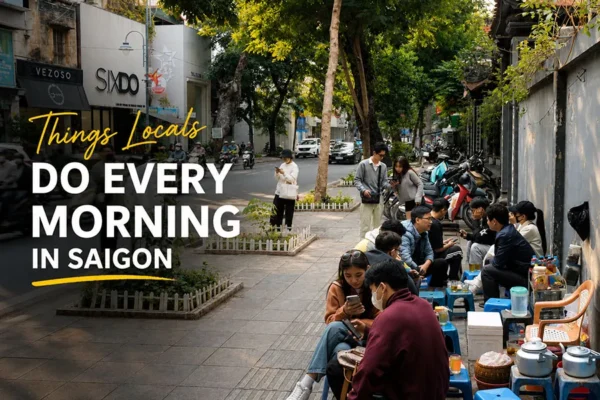
Hanoi rewards travelers who choose a street before choosing a dish. The city’s best bowls, grills and snacks are not gathered in one polished dining zone; they are woven through market lanes, old trading streets and lakeside neighborhoods. This guide to the best food streets in Hanoi shows where to eat, what each area does well and when to visit, without turning your day into a race between famous restaurants.
The short answer: begin in the Old Quarter for variety, visit Ngũ Xã for a focused local specialty, explore Trúc Bạch for a slower evening and save Tống Duy Tân for late-night hunger. The best area depends less on rankings than on the atmosphere and meal you want.

Quick Answer: What Are the Best Food Streets in Hanoi?
The best food streets in Hanoi include Hang Buom for evening snacks and nightlife, Tong Duy Tan for late-night dining, Ngu Xa for pho cuon (fresh rice noodle rolls), and the streets surrounding Dong Xuan Market for traditional Vietnamese street food.
For first-time visitors, Hanoi’s Old Quarter is the best place to start, with plenty of local specialties within walking distance. Bat Dan is particularly well known for pho, while Hang Manh is a popular stop for bun cha (grilled pork with rice noodles).
Best overall choice: Explore the Old Quarter for variety, visit Ngu Xa for local specialties, and head to Tong Duy Tan for food after dark. The ideal street depends on what you want to eat and when you plan to visit.
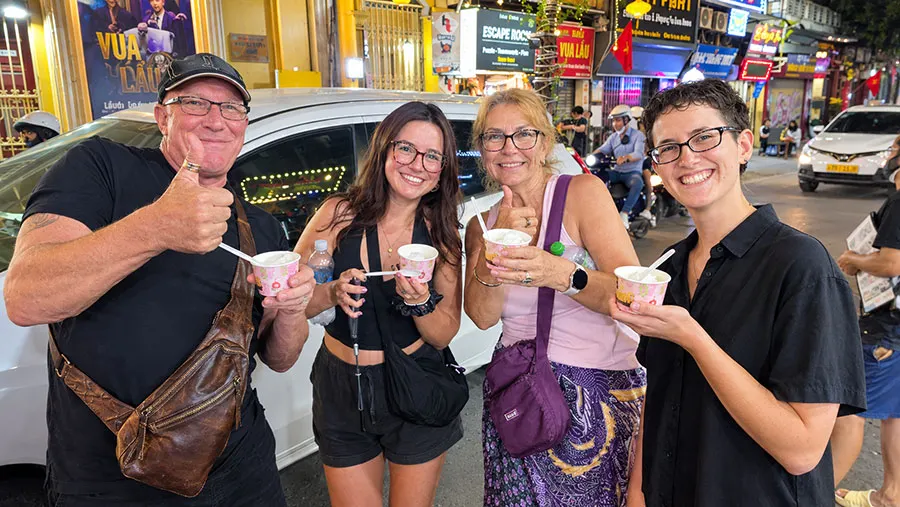
Best Food Streets in Hanoi at a Glance
Not sure where to begin your Hanoi food adventure? Each street offers something different, from traditional noodle dishes and local snacks to lively late-night dining. Use this quick comparison to find the best place for your appetite and travel style.
| Food Street / Area | What to Eat | Best Time to Visit | Best For |
|---|---|---|---|
| Hang Buom Street | Grilled snacks, street food, local beer | Evening | Nightlife and casual dining |
| Dong Xuan Market Area | Noodle soups, bun cha, sweet desserts | Daytime and evening | Traditional street food |
| Tong Duy Tan Street | Chicken rice, noodle dishes, late-night meals | Evening to late night | Night owls |
| Ngu Xa Street | Pho cuon, fried pho | Lunch or dinner | Hanoi specialties |
| Bat Dan Street | Traditional beef pho | Morning | Authentic Hanoi breakfast |
| Hang Manh Street | Bun cha | Lunch | Grilled pork and rice noodles |
| Cha Ca Street | Cha ca (turmeric fish with dill) | Lunch or dinner | Classic Hanoi cuisine |
Local Tip: If you only have a few hours, start in Hanoi’s Old Quarter, where several famous food streets are within walking distance. Save Ngu Xa for a separate food stop, especially if you want to try pho cuon.
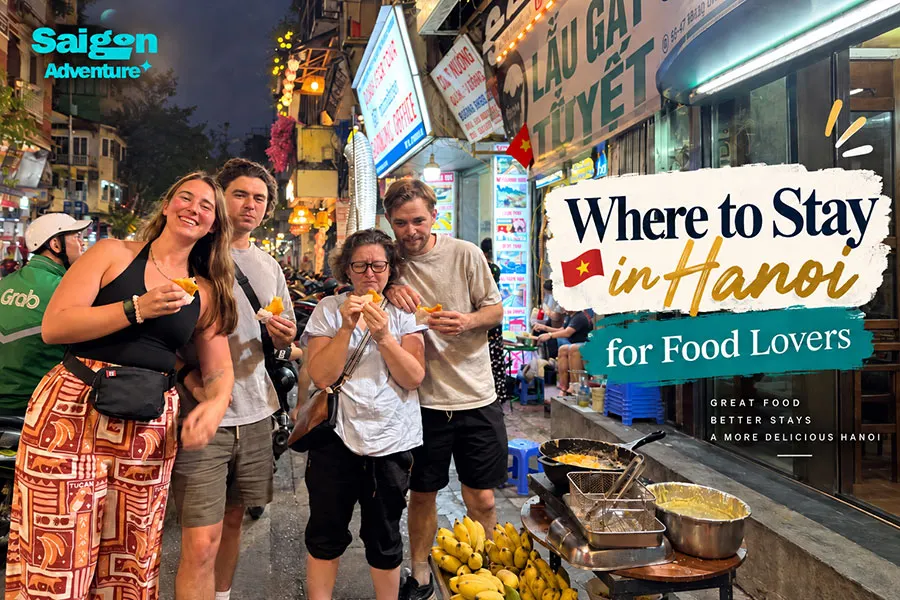
What Makes a Hanoi Food Street Worth Visiting?
A worthwhile food street has a recognizable rhythm: morning soup counters, lunchtime grills or tables that appear after dark. A breakfast specialist may finish before noon, while an evening lane can feel empty in the morning.
If this is your first introduction to northern Vietnamese cooking, our guide to what to eat in Hanoi explains the essential dishes before you choose a route.

Old Quarter: The Best Area for First-Time Food Explorers
The Old Quarter is the easiest starting point because many specialties sit within a compact historic area. Around Đồng Xuân Market and the streets toward Hoàn Kiếm Lake, you can move from noodles and fried snacks to chè and coffee without arranging transport.
Its advantage is variety; its disadvantage is inconsistency. Look for short menus, steady local turnover and a cook repeatedly preparing the same dish.
Đồng Xuân Market and the Surrounding Lanes
The lanes around Đồng Xuân provide a concentrated street-food experience, with noodle dishes, porridge, grilled skewers, bánh tôm and sweet soups depending on the hour. Order lightly or share portions so you have room for several stops.
Hàng Buồm and Tạ Hiện After Dark
Hàng Buồm and nearby Tạ Hiện become lively in the evening, with beer, grills and casual dishes for groups. Tạ Hiện can be loud and crowded, so keep valuables secure, check prices before ordering and move a street away for a calmer table.
Travelers who would rather have local context and preselected stops can compare this independent route with a Hanoi Michelin street food walking tour.
Lý Quốc Sư: A Convenient Street for Phở and Breakfast
Close to St. Joseph’s Cathedral, Lý Quốc Sư works well for an early meal. The street is associated with phở, although kitchens vary in broth, meat cuts and hours. Taste the broth before adding lime, chili or sauce.
Local Tip: A famous street name does not guarantee that every shop represents the same recipe or standard. Choose a busy specialist, confirm the displayed price and regard the meal as one interpretation of phở rather than the definitive bowl.
Bát Đàn Street: A Classic Stop for Hanoi Beef Pho
Bát Đàn Street, tucked inside Hanoi’s Old Quarter, is closely associated with phở bò, the city’s traditional beef noodle soup. It is a worthwhile breakfast stop for travelers who want to experience one of Hanoi’s most recognizable dishes in a busy neighborhood setting.
A classic bowl combines rice noodles, thinly sliced beef, aromatic broth and fresh herbs. Rather than loading it with sauces immediately, taste the broth first to appreciate its delicate balance of spices and savory flavors.
Local Tip: Visit in the morning when looking for a traditional phở breakfast. Popular restaurants may have queues, and some sell out early, so check the individual shop’s opening hours before visiting.
Hàng Mành Street: Where to Try Traditional Bún Chả
Hàng Mành is a convenient Old Quarter stop for travelers interested in bún chả, a Hanoi specialty featuring grilled pork, rice vermicelli, fresh herbs and a savory dipping sauce.
Unlike noodle soups, bún chả is served with its components arranged separately. Dip the noodles and herbs into the warm sauce with grilled pork to enjoy the combination of smoky, fresh and tangy flavors.
The surrounding streets make it easy to combine a bún chả lunch with sightseeing or a relaxed coffee break.
Local Tip: Lunchtime is a natural choice for bún chả, but restaurant hours vary. If you are unfamiliar with Vietnamese herbs, try small combinations rather than mixing everything at once.
Chả Cá Street: Discover Hanoi’s Famous Turmeric Fish
Chả Cá Street takes its name from one of Hanoi’s distinctive traditional dishes: fish seasoned with turmeric and cooked with dill and spring onions.
The dish is commonly served with rice vermicelli, herbs, peanuts and dipping sauce. Some restaurants finish cooking the fish at the table, making the meal feel more interactive than a typical bowl of noodles.
Unlike a casual street-food snack, chả cá is often better enjoyed as a seated lunch or dinner. It is especially appealing to travelers who want to explore Hanoi’s culinary traditions beyond phở and bún chả.
Local Tip: Ask about the type of fish, serving size and price before ordering. Travelers with fish or peanut allergies should confirm ingredients and preparation methods directly with the restaurant.
Ngũ Xã: Hanoi’s Home of Phở Cuốn
On a small peninsula near Trúc Bạch Lake, Ngũ Xã is known for phở cuốn—soft rice noodle sheets wrapped around beef, herbs and vegetables—and phở chiên phồng, crisp noodle squares served with beef and greens. Share both dishes for useful contrast.
Is Ngũ Xã Worth Leaving the Old Quarter For?
Yes, especially for repeat visitors, families and travelers who prefer a calmer setting. Đồng Xuân offers greater variety, but Ngũ Xã delivers a stronger neighborhood specialty and combines easily with Trúc Bạch.
Trúc Bạch: Lakeside Dining and a Slower Evening
Trúc Bạch is a compact lakeside neighborhood of local restaurants, cafés and casual evening tables. It suits travelers who want dinner followed by a walk. Check same-day hours because small businesses may close or sell out.
For travelers building a broader itinerary, Saigon Adventure’s Hanoi local food tour with Train Street and Old Quarter highlights offers a guided alternative centered on classic central experiences.
Tống Duy Tân and Cấm Chỉ: The Late-Night Food Quarter
Tống Duy Tân and adjoining Cấm Chỉ are associated with eating after conventional dinner hours. Expect practical comfort food—rice, chicken, porridge or noodles—rather than a curated tasting menu. Verify individual opening hours that day.
Who Should Visit This Area?
Night owls staying near the western Old Quarter will find it convenient. It is less suitable for a peaceful early dinner or photogenic market scene.
Hàng Than: Traditional Sweets and Edible Souvenirs
Hàng Than is linked with bánh cốm, the green sticky-rice cake filled with sweet mung bean. Share one, check its expiry and storage instructions, and buy edible gifts near the end of your trip.
Hồ Tây: Best for Cafés, Views and a Flexible Food Break
Hồ Tây is larger and more dispersed than the Old Quarter, mixing Vietnamese restaurants, modern cafés and international choices. Choose it for a relaxed afternoon or mixed dining preferences, not an efficient walking crawl; short rides may be required.
How to Plan a Self-Guided Hanoi Food Street Route
Exploring the best food streets in Hanoi doesn’t require an organized tour. The Old Quarter is compact enough to discover several local specialties on foot, making it ideal for travelers with limited time.
For a relaxed experience, allow approximately 2–3 hours for a self-guided Hanoi street food walk. Choose three or four food stops rather than trying to visit every famous restaurant in one evening.
Suggested Hanoi Old Quarter Food Walking Route
Stop 1: Dong Xuan Market – Start With Local Snacks
Begin around 5:00 PM near Dong Xuan Market. Explore the surrounding lanes and look for freshly prepared snacks, noodle dishes or traditional Vietnamese desserts.
Stop 2: Hang Buom Street – Discover Evening Street Food
Continue toward Hang Buom, where casual eateries and evening food stalls create a lively atmosphere. This is a convenient place to try grilled snacks or share a few small dishes.
Stop 3: Ta Hien Street – Experience Hanoi After Dark
Walk toward Ta Hien to experience one of the Old Quarter’s most energetic nightlife streets. Enjoy a drink or simply take in the atmosphere before deciding whether to eat more.
Stop 4: Finish With Vietnamese Coffee or Dessert
End your food walk at a nearby café or dessert shop. Egg coffee, chè or another traditional sweet makes a pleasant final stop after exploring the busy streets.
Practical Tips for Your Hanoi Food Walk
- Best starting time: Around 5:00–6:00 PM for an evening experience.
- Recommended duration: 2–3 hours, including food and rest breaks.
- What to bring: Comfortable shoes, small Vietnamese dong notes and drinking water.
- Food strategy: Share portions when possible to experience more dishes.
- Opening hours: Confirm individual vendors’ schedules, as availability changes throughout the day.
Local Tip: Keep your itinerary flexible. Some of Hanoi’s most memorable food experiences come from discovering a busy local stall rather than following a rigid restaurant checklist. If you prefer a quieter outing, explore Ngu Xa and Truc Bach separately instead of adding them to the Old Quarter walking route.
If Train Street is also on your list, plan it as a separate stop rather than squeezing it into your Old Quarter food walk. Read our Hanoi Train Street food guide for practical tips on what to eat, drink and expect during your visit. Check current access arrangements locally, as they can change.
How Much Does a Hanoi Food Street Tour Cost?
Street food is generally affordable, but portions, drinks and venues differ. Allow roughly VND 250,000–500,000 per person for several shared tastings and drinks. Cash remains useful, and visible preparation, turnover and clear pricing matter more than finding the cheapest stall.
Are Hanoi’s Best Food Streets Worth Exploring?
Yes. Each neighborhood reveals a different side of Hanoi: market snacking near Đồng Xuân, breakfast phở around Lý Quốc Sư, phở cuốn in Ngũ Xã and late meals near Tống Duy Tân. Independent exploration offers freedom; a guided walk reduces guesswork and adds cultural context.
If you want your first evening to feel effortless, explore Hanoi with a local guide who can explain each dish and adapt the route to current opening hours. If you enjoy comparing menus and changing plans, build a two-neighborhood route and let your appetite set the pace.

Frequently Asked Questions About Hanoi Food Streets
What Is the Best Food Street in Hanoi for First-Time Visitors?
The Đồng Xuân–Hàng Buồm area is the most practical choice because it combines variety, central location and evening atmosphere. Travelers focused on one specialty should choose Ngũ Xã for phở cuốn instead.
What Time Should I Explore Hanoi Street Food?
Breakfast is best from roughly 7:00–9:00 a.m., while an evening crawl generally works from 5:00–8:30 p.m. Individual vendors may open briefly or sell out, so check the specific dish and business on the same day.
Can I Explore Hanoi’s Food Streets Without a Guide?
Yes. A self-guided route is realistic in the Old Quarter, particularly around Đồng Xuân and Hàng Buồm. A guide is valuable if you want explanations, help ordering, dietary communication and a route selected around current opening times.
Which Hanoi Neighborhood Is Best for Late-Night Food?
Tống Duy Tân and Cấm Chỉ are established choices for food later in the evening. Availability changes, so confirm current hours before arriving, especially after 10:00 p.m.
Is Hanoi Street Food Safe for International Travelers?
No food setting is risk-free, but travelers can reduce risk by choosing busy vendors, ordering thoroughly cooked food served hot, washing their hands and avoiding food that has sat uncovered for long periods. Communicate allergies clearly and carry necessary medication.
How Many Food Neighborhoods Can I Visit in One Evening?
One or two is ideal. More neighborhoods add transport time and encourage rushed eating; three or four well-spaced tastings within a compact area usually create a better experience.