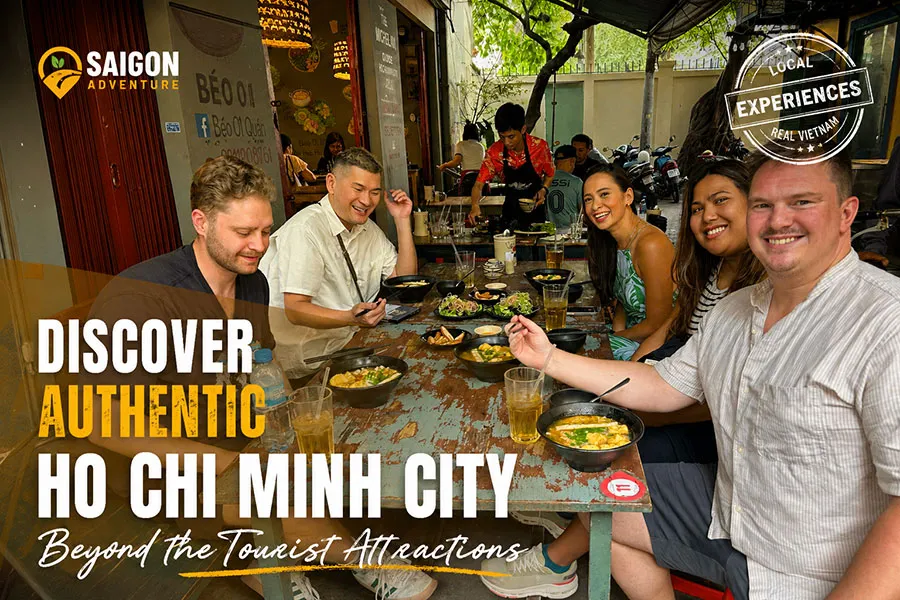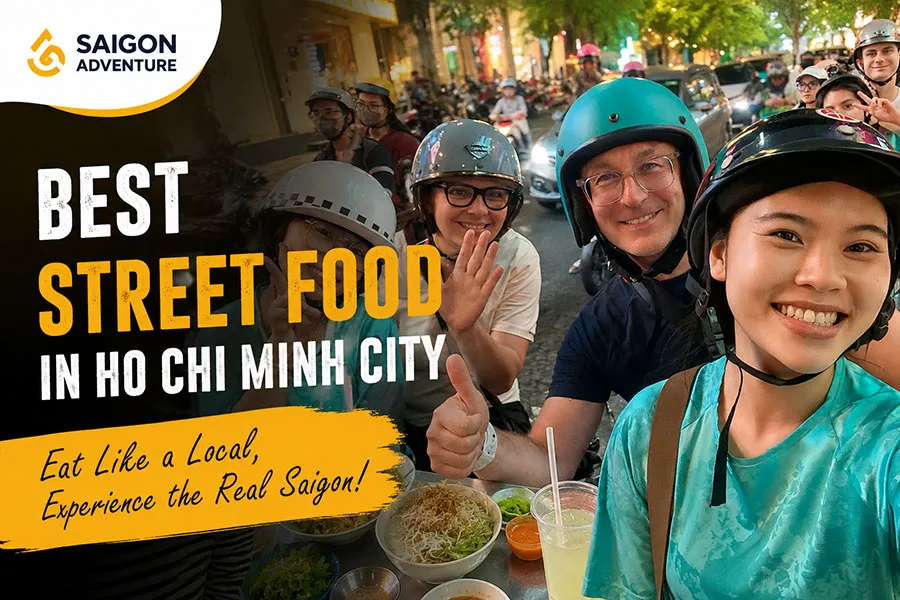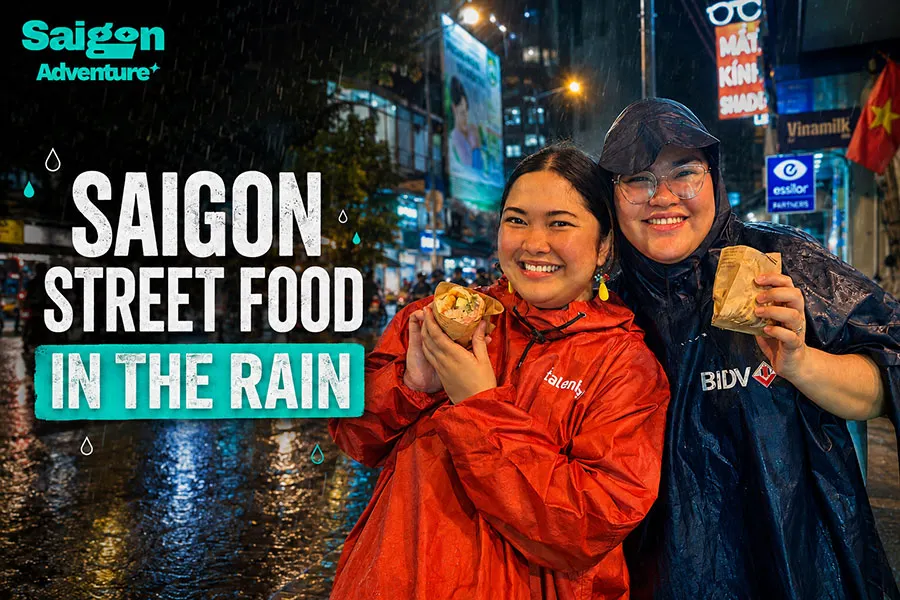
Rain changes Saigon in a matter of minutes. Motorbikes slip beneath awnings, vendors pull plastic covers over their carts, and the smell of grilled pork, hot broth, garlic, and charcoal becomes richer in the humid air.
For travelers, a tropical shower does not have to cancel an evening of eating. In fact, some of the city’s most comforting dishes taste even better while rain drums against a metal roof and steam rises from a bowl at a busy neighborhood stall.
The secret is knowing what to order and where to go. This guide covers the best Saigon street food in the rain, reliable areas with sheltered seating, and practical local tips for enjoying the city safely when the streets are wet.
Does Saigon Street Food Continue When It Rains?
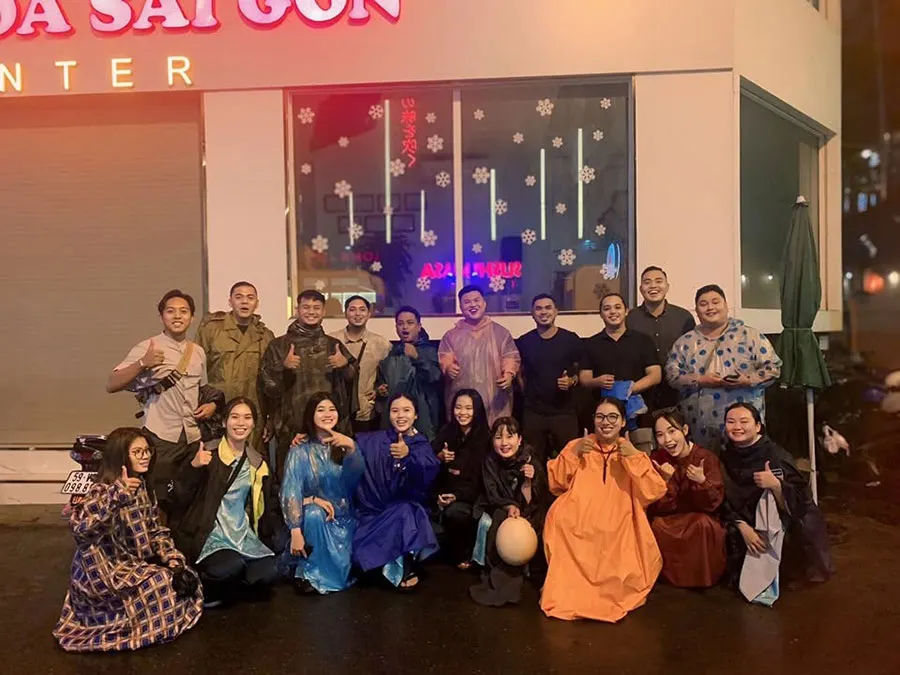
Yes, most established vendors continue serving during light or moderate rain. Many stalls operate beneath permanent awnings, inside market buildings, along covered alleys, or from the open front of a family home.
Small mobile carts may move temporarily, while vendors with exposed sidewalk tables sometimes wait for the heaviest rain to pass. Because tropical showers are often intense but relatively brief, local food streets usually become active again soon afterward.
A rainy evening can even offer a more atmospheric experience. The air feels cooler, popular areas may be less crowded, and warm dishes become far more inviting than they are during the midday heat.
For a broader look at sightseeing and weather, read this guide to Ho Chi Minh City in the rain before planning your day.
What to Eat in Saigon When It Rains
Rainy weather naturally calls for food that is hot, aromatic, filling, and easy to enjoy under cover. Saigon has no shortage of dishes that meet all four requirements.
1. Hủ tiếu Nam Vang
Hủ tiếu Nam Vang is one of the city’s essential noodle dishes. A typical bowl combines a clear pork-based broth with noodles, minced pork, sliced meat, shrimp, quail egg, herbs, and crispy garlic.
The broth is lighter than many visitors expect, but it still has enough savory depth to feel comforting on a wet evening. You can order it as a soup or “dry,” with the broth served separately, although the steaming soup version is hard to beat in the rain.
Look for busy neighborhood shops where the stockpot is constantly simmering. High turnover usually means fresher noodles, herbs, and toppings.
2. Bò kho
Vietnamese bò kho is a slow-cooked beef stew scented with lemongrass, star anise, cinnamon, and other warm spices. Carrots and tender beef sit in a rich, reddish broth that is usually eaten with bánh mì or noodles.
It is an excellent rainy-day meal because it is hearty without feeling excessively heavy. Tear pieces of crusty bread into the broth, add a squeeze of lime, and use the accompanying herbs to brighten each bite.
Bò kho is commonly served for breakfast, but many local eateries offer it later in the day. Availability varies, so it is worth asking a guide or checking smaller family-run shops.

3. Phở
Phở may be Vietnam’s most internationally recognized dish, but a rainy Saigon evening gives it a different appeal. The combination of hot broth, rice noodles, herbs, and tender beef or chicken is simple, balanced, and deeply satisfying.
Saigon-style phở often arrives with a generous plate of Thai basil, bean sprouts, lime, and sliced chili. Add them gradually so that you can taste the broth before changing its flavor.
Choose a shop with indoor or deep-set pavement seating rather than an exposed mobile cart. This allows you to eat slowly without balancing an umbrella beside a hot bowl.
4. Bún bò Huế
For travelers who prefer stronger flavors, bún bò Huế delivers more heat and intensity. Its lemongrass-scented broth is typically served with thick round noodles, beef, herbs, and sometimes pork knuckle or Vietnamese sausage.
Although the dish comes from Central Vietnam, it is widely loved in Ho Chi Minh City. A bowl can be moderately spicy or fiercely hot depending on how much chili and satay you add.
This is the kind of meal that makes you forget your wet shoes. The fragrance reaches the table before the bowl does, and the broth stays hot until the final spoonful.
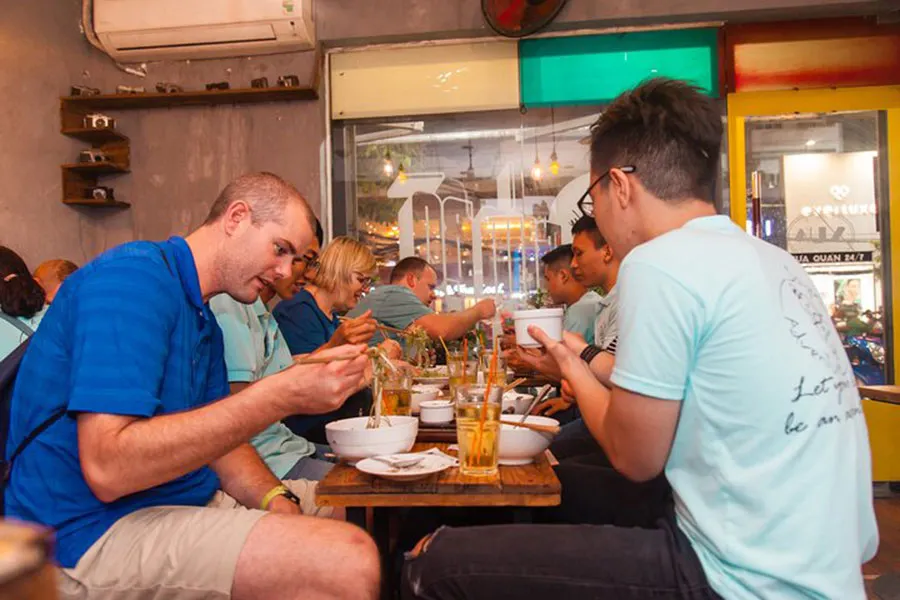
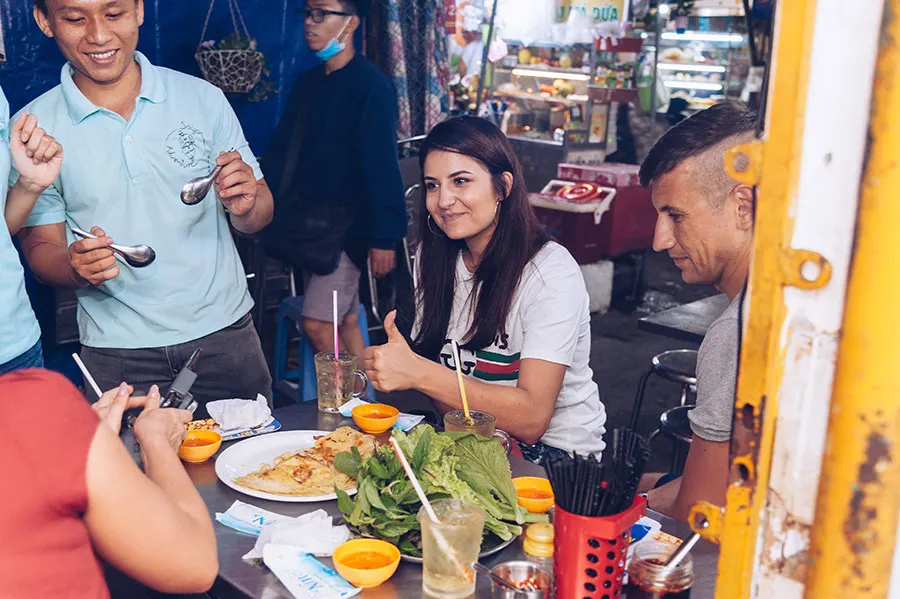
5. Bánh xèo
Bánh xèo offers a crisp contrast to the soft, soupy foods commonly associated with rainy weather. The turmeric-colored rice-flour pancake is cooked with ingredients such as pork, shrimp, bean sprouts, and mung beans.
Good bánh xèo should reach the table immediately after leaving the pan. Wrap a piece in mustard leaf or lettuce with fresh herbs, then dip it into seasoned fish sauce.
For wet evenings, choose a permanent restaurant or covered cooking area. Mobile stalls can struggle to keep the pancake crisp when rain and humidity are particularly heavy.
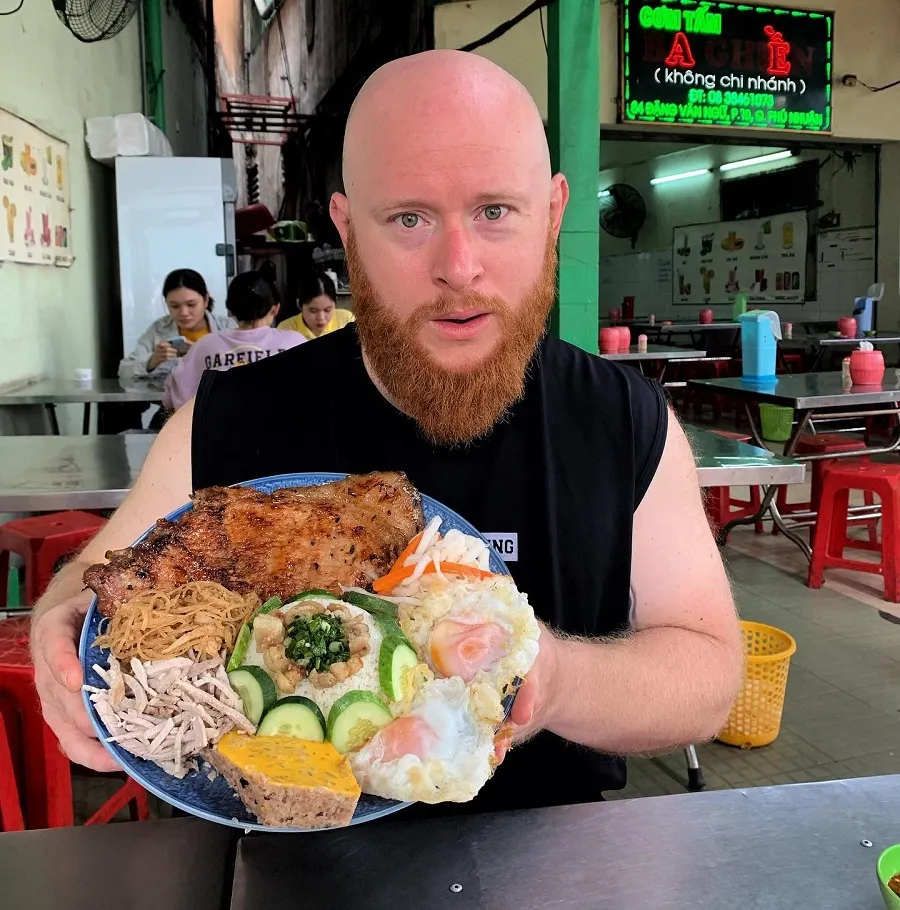
6. Cơm tấm
Cơm tấm, or broken rice, is one of Saigon’s great all-day meals. The classic version includes grilled pork, shredded pork skin, steamed egg cake, pickled vegetables, scallion oil, and fish sauce.
Rain makes the charcoal aroma especially noticeable as smoke moves through the damp evening air. A freshly grilled pork chop over warm rice is also a useful choice for travelers who want something familiar and substantial.
Many cơm tấm shops have covered frontage and quick service. They are ideal when you need to wait out a shower without committing to a long meal.
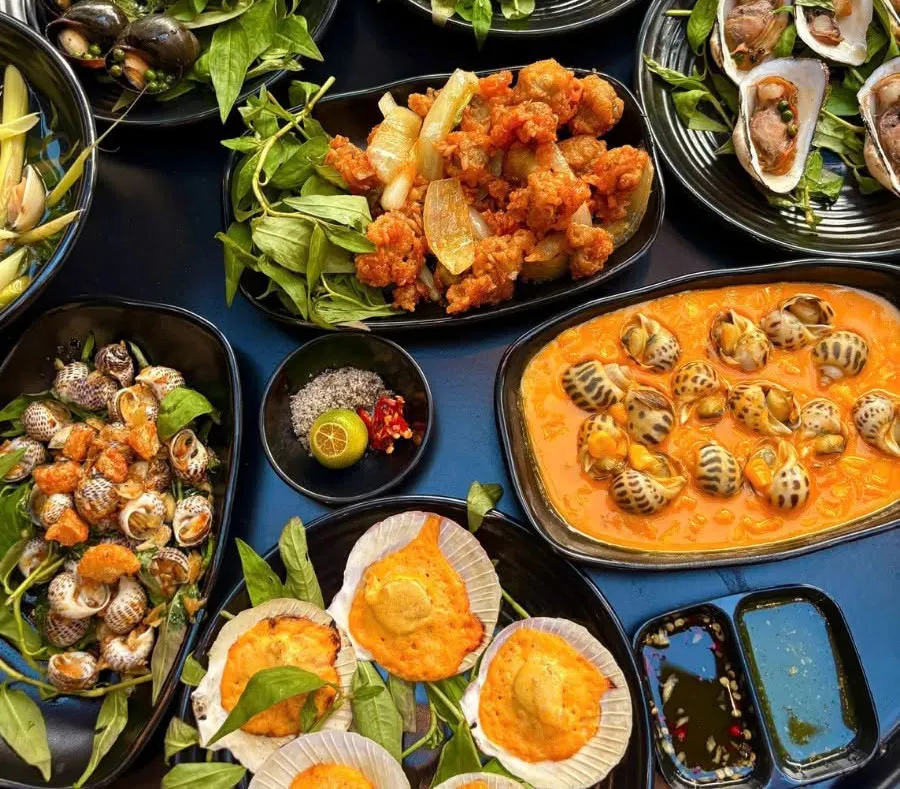
7. Ốc and grilled seafood
In Saigon, “đi ăn ốc” means much more than eating snails. A typical table may include cockles grilled with scallion oil, clams cooked with lemongrass, crab claws in tamarind sauce, garlic-fried snails, and spicy stir-fried shellfish.
These dishes are designed for sharing and eating slowly. The lively atmosphere of an ốc shop, with metal tables, sizzling pans, and plates arriving one after another, fits a rainy night surprisingly well.
District 4 is particularly famous for this style of dining. Explore the area further in this District 4 food tour and seafood guide.
8. Súp cua
Súp cua is a thick crab soup commonly made with shredded chicken, mushrooms, corn, egg ribbons, and quail eggs. It is often sold in small portions, making it an easy snack between larger food stops.
Its gentle flavor and silky texture are especially comforting after getting caught in a shower. Add pepper, chili, or a little soy sauce according to your preference.
Because the soup is kept hot in a large pot and served quickly, it is also one of the most convenient foods to eat during a brief rain break.
Where to Find Street Food During a Rainy Evening
The best rainy-day food destination is not necessarily the most famous street. Shelter, drainage, traffic conditions, and the number of permanent eateries matter just as much as the menu.
District 4
District 4 is one of the most rewarding areas for grilled seafood, snails, rice dishes, and casual evening dining. Vĩnh Khánh Street has numerous established restaurants with awnings or indoor seating, so finding cover is usually easier than at isolated sidewalk carts.
The district is close to central District 1 but feels more local after dark. Roads can become busy when rain begins, so use a taxi, ride-hailing car, or guided transport if you are unfamiliar with the area.
District 3
District 3 combines leafy streets, old residential neighborhoods, coffee shops, and long-established food businesses. It is a dependable area for phở, bún bò Huế, bánh xèo, cơm tấm, and warming bowls of noodles.
Many eateries are built into narrow shophouses with seating extending back from the pavement. This layout offers better protection than open-air food zones while preserving the casual local atmosphere.
District 5 and Chợ Lớn
District 5 brings Vietnamese and Chinese-Vietnamese culinary traditions together. Travelers can find wonton noodles, duck noodles, dim sum, herbal soups, roasted meats, chè, and numerous dishes rarely seen in central tourist areas.
Chợ Lớn is particularly appealing in wet weather because many businesses occupy permanent shopfronts. Rather than searching for one famous stall, explore a small group of nearby eateries and choose the busiest sheltered option.
Covered markets and food courts
Traditional markets with covered food sections can be practical during daytime rain. They provide multiple choices within a compact area, although vendors may close earlier than restaurants serving the evening crowd.
Modern food halls are less adventurous but useful during a severe downpour. They offer dry seating, restrooms, and an easy introduction to dishes before you explore smaller neighborhood businesses.
Residential alleys
Some of Saigon’s most memorable meals are hidden inside hẻm, the narrow alleys running between the city’s main roads. These lanes may contain family kitchens, noodle shops, grills, and tiny covered dining rooms.
Alleys are best explored with local knowledge during rain because lighting, drainage, and access vary considerably. Joining a Saigon walking tour can make these areas easier to understand, especially if you prefer to move at a relaxed pace.
How to Enjoy a Saigon Food Tour in the Rain
A short shower is rarely a reason to abandon your plans, but flexibility matters. Routes may need to change if a street floods temporarily, a vendor moves, or traffic becomes unusually slow.
A guided Saigon motorbike food tour can be particularly useful because local teams know which stops have sheltered seating and which roads are best avoided. Reputable operators also provide rain ponchos and adjust the route according to actual conditions.
Travelers who want a dedicated tasting experience can consider the Street Food Lover tour. It combines local dishes with neighborhood exploration, removing much of the guesswork involved in finding reliable vendors during changing weather.
If food is only part of your plan, a Ho Chi Minh City motorbike tour provides a broader introduction to local districts, landmarks, alleys, and everyday street life. Ask in advance how the itinerary changes during heavy rain.
Practical Local Tips for Eating Out in Wet Weather
Carry a lightweight poncho rather than relying only on an umbrella. A poncho protects your shoulders and bag while leaving both hands free to eat, take photographs, or use your phone.
Wear sandals or shoes that dry quickly, and avoid smooth soles. Painted road markings, polished tiles, and metal drain covers can become slippery within minutes.
Keep your phone, passport copy, and cash inside a waterproof pouch. Small food businesses may accept only cash, so bring modest notes rather than one large bill.
During intense rain, wait under proper shelter instead of standing close to the curb. Passing vehicles can create large splashes, and visibility drops quickly.
Choose food that is cooked thoroughly and served hot. Busy stalls with steady customer turnover, clean utensils, covered ingredients, and separate handling of raw and cooked food are generally the most sensible choices.
Finally, do not insist on a particular stall if conditions make it impractical. Saigon rewards flexibility, and another excellent bowl is usually waiting just a few streets away.
A Rainy Saigon Evening Worth Remembering
Saigon street food does not disappear when the clouds open. It moves beneath awnings, into narrow shopfronts, around steaming stockpots, and closer to the charcoal grills that keep neighborhood streets alive.
Order a bowl of hủ tiếu, share plates of seafood in District 4, or follow a local guide into a sheltered alley. The rain may change your route, but it can also turn an ordinary meal into one of your most vivid memories of Ho Chi Minh City.
For a comfortable introduction with flexible food stops and local guidance, explore Saigon Adventure’s food, walking, and motorbike experiences and choose the format that suits your pace.
Frequently Asked Questions
Is street food available in Saigon when it rains?
Yes. Many permanent stalls, markets, shophouses, and covered eateries continue operating during rain, although exposed mobile carts may move or close temporarily.
What is the best Vietnamese food for a rainy day?
Hủ tiếu, phở, bún bò Huế, bò kho, and súp cua are excellent choices. They are served hot, widely available, and particularly comforting in cooler rainy weather.
Where should tourists eat in Saigon during heavy rain?
Districts 3, 4, and 5 have many established eateries with covered or indoor seating. Traditional markets during the day and permanent food halls are also practical choices.
Do Saigon food tours operate in the rain?
Many tours continue during light rain and provide ponchos, but routes may change for safety or comfort. Operations during severe weather depend on the actual conditions and the tour provider.
Is it safe to ride a motorbike in Saigon when it rains?
Experienced local riders generally reduce speed and adjust routes, but travelers should use a licensed, reputable operator. During severe rain, flooding, or poor visibility, waiting or switching transport may be safer.
What should I bring for a rainy-season food tour?
Bring a lightweight poncho, waterproof phone pouch, small cash notes, and footwear with a reliable grip. A compact towel and a dry bag for cameras are also helpful.
What months are rainy in Ho Chi Minh City?
The wetter period generally runs from May to November, but rainfall varies and showers can occur outside these months. Many showers arrive in short, intense bursts rather than lasting all day.