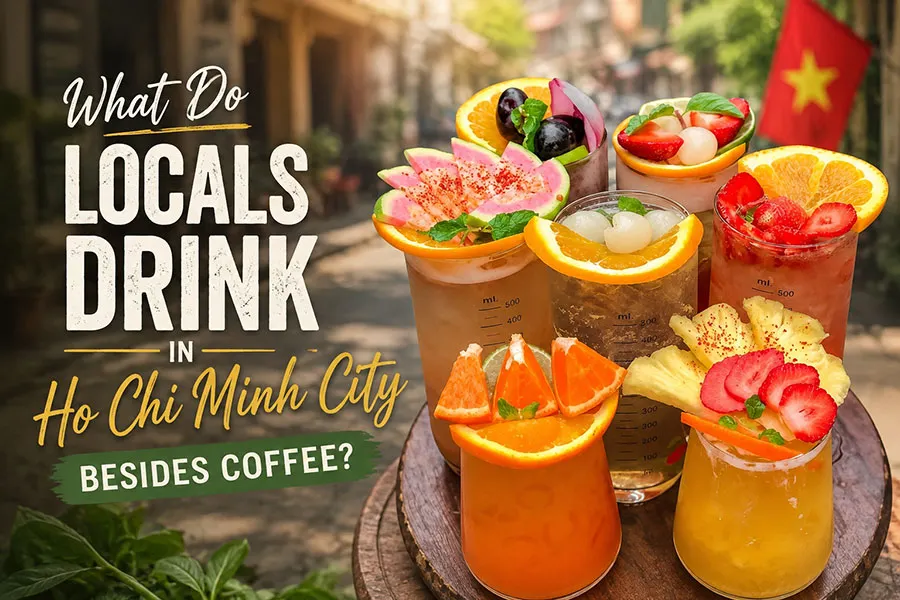
Ho Chi Minh City may be famous for its strong Vietnamese coffee, but coffee is only one part of the city’s everyday drinking culture. Walk through a local market, residential alley or busy street corner and you will see people sipping everything from iced tea and sugarcane juice to herbal drinks, fresh coconut water and fruit smoothies.
These drinks are more than simple refreshments. They reflect Saigon’s hot climate, tropical ingredients, street-food habits and relaxed social culture.
For travelers who want to experience the city beyond cà phê sữa đá, discovering what locals drink in Ho Chi Minh City is an easy and affordable way to understand everyday life.
Quick Answer: What Do Locals Drink in Ho Chi Minh City?
Besides coffee, people in Ho Chi Minh City commonly drink trà đá (iced tea), nước mía (sugarcane juice), trà tắc (kumquat tea), nước sâm (herbal tea), fresh coconut water, fruit juice, sinh tố smoothies and soy milk.
On hot days, cold drinks are especially popular because Saigon’s tropical weather can feel warm and humid throughout much of the year.
Many of these drinks are sold at markets, sidewalk stalls, cafés, food shops and neighborhood restaurants, making them easy for visitors to try while exploring the city.
Coffee Is Famous, but Saigon Drinks Much More Than Coffee
Vietnamese coffee deserves its reputation. Cà phê sữa đá, black iced coffee and modern specialty coffee are deeply connected to life in Ho Chi Minh City.
However, locals do not spend the entire day drinking coffee.
During lunch, you may see a glass of trà đá beside almost every bowl of noodles. In the afternoon, students might stop for trà tắc or sugarcane juice. Families visiting markets often pick up coconut water, fruit juice or traditional herbal drinks.
The variety is one reason exploring local drinks in Ho Chi Minh City can be just as interesting as tasting the city’s food.
1. Trà Đá – Vietnamese Iced Tea
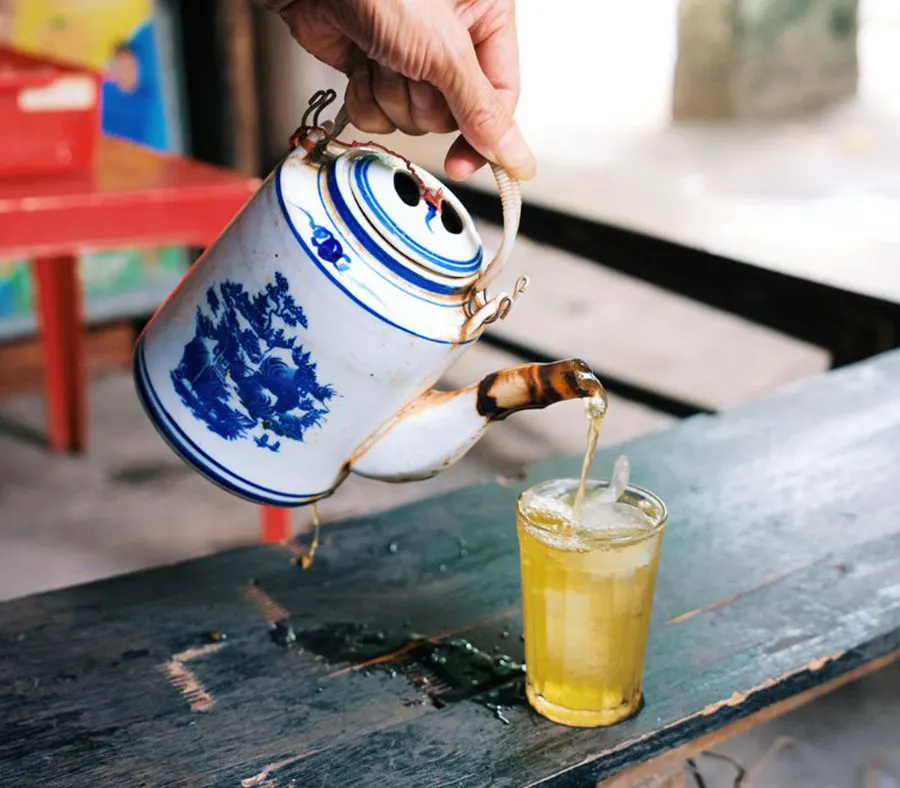
One of the simplest drinks in Saigon is also one of the most common.
Trà đá literally means iced tea. It is usually a light Vietnamese tea served over plenty of ice and is often enjoyed with meals.
At many casual restaurants and street-food stalls, you will notice locals drinking trà đá instead of bottled soft drinks.
Its slightly bitter and refreshing taste works especially well with rich Vietnamese dishes such as grilled pork, noodles or rice.
For travelers, trà đá provides a small glimpse into daily dining culture. It is not designed as a special tourist experience. It is simply what many people drink with lunch or dinner.
Local tip: If tea is already placed on your table, check whether it is complimentary or charged before assuming it is free.
2. Nước Mía – Fresh Sugarcane Juice
Few drinks feel more appropriate on a hot Saigon afternoon than nước mía, or fresh sugarcane juice.
Sugarcane stalks are pressed through a machine, producing a naturally sweet greenish juice that is normally served over ice. Some vendors add a little kumquat or citrus to balance the sweetness.
You can find sugarcane stalls throughout Ho Chi Minh City, especially near markets, parks, residential neighborhoods and busy food streets.
The drink is sweet, refreshing and inexpensive, which explains why it remains popular among students, workers and families.
Watching the sugarcane being pressed is also part of the experience.
Local tip: Choose a busy stall where the sugarcane is pressed fresh in front of you and ingredients appear to be handled cleanly.
3. Trà Tắc – Kumquat Iced Tea
If you see young locals holding large plastic cups filled with amber-colored tea and slices of citrus fruit, there is a good chance they are drinking trà tắc.
This popular drink combines tea, kumquat juice, sugar and ice.
The flavor is usually sweet, sour and slightly bitter, making it especially refreshing in Saigon’s warm climate.
Trà tắc is widely available from takeaway drink stalls, cafés and street vendors. It is especially popular with younger people because it is affordable, easy to carry and pairs well with snacks.
Some versions contain additional toppings or flavored syrups, but the classic combination remains simple.
Travelers who enjoy lemonade or iced tea will probably find trà tắc easy to appreciate.
4. Nước Sâm – Vietnamese Herbal Drink
Nước sâm is one of the more interesting Vietnamese street drinks for travelers who want to try something less familiar.
Despite the name sometimes being translated as “ginseng drink,” recipes vary widely. Vendors may prepare it with combinations of sugarcane, pandan, corn silk, roots, dried herbs or other traditional ingredients.
The drink is typically dark brown, lightly sweet and served chilled.
Locals often enjoy nước sâm as a cooling refreshment, particularly during hot weather.
You may notice bottles or large containers of it at traditional drink stalls around markets and busy neighborhoods.
The flavor can vary considerably from one seller to another, which makes trying it part of the fun.
5. Fresh Coconut Water
Vietnam’s tropical climate makes coconuts easy to find, and fresh coconut water remains a simple favorite throughout southern Vietnam.
Instead of buying coconut water from a carton, you can often drink it directly from the fruit.
Vendors cut open the coconut and add a straw, allowing you to drink the naturally sweet water before scraping out the soft flesh inside.
Coconuts are available at markets, tourist areas, fruit shops and many local restaurants.
While coconut water can be found all over Southeast Asia, enjoying one during a hot afternoon in Ho Chi Minh City feels particularly fitting.
It is also a good choice for travelers who prefer drinks without added syrup or strong flavors.
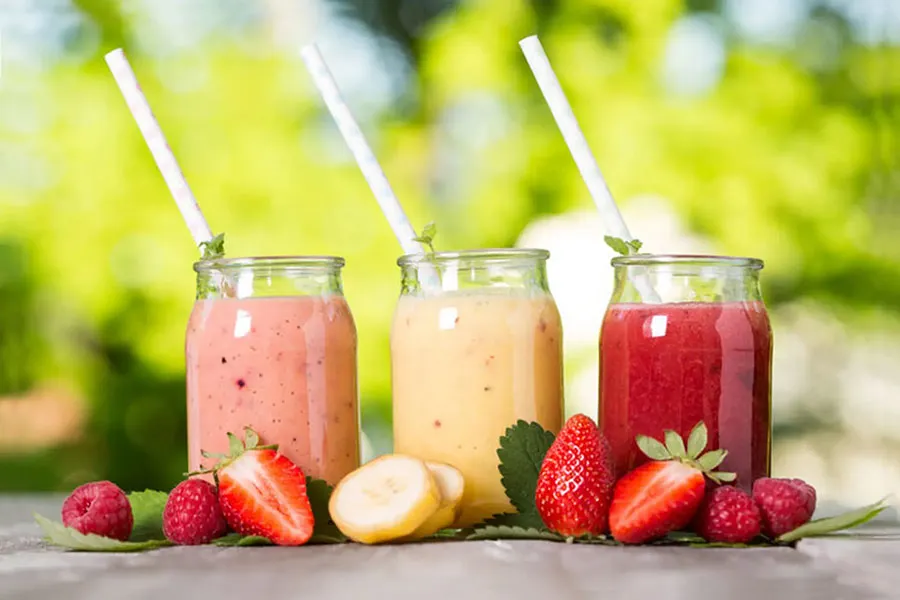
6. Sinh Tố – Vietnamese Fruit Smoothies
Vietnam’s abundance of tropical fruit has created a strong smoothie culture.
Known locally as sinh tố, Vietnamese smoothies are commonly made with fruits such as mango, avocado, sapodilla, dragon fruit, strawberry or soursop.
Depending on the shop, the fruit may be blended with ice, milk, yogurt or condensed milk.
One especially popular option is sinh tố bơ, an avocado smoothie. Visitors sometimes expect avocado to be used only in savory dishes, so its rich and creamy use in a sweet drink can be surprising.
Fruit shops and cafés often have large menus, making sinh tố a great option if you want to explore Vietnamese tropical flavors without ordering a full meal.
7. Fresh Fruit Juice
If smoothies feel too heavy, fresh juice is another everyday choice.
Orange juice, watermelon juice, passion fruit juice, pineapple juice and other tropical combinations are widely available in Ho Chi Minh City.
You may see the Vietnamese term nước ép, meaning pressed or fresh juice.
Fruit drinks are especially common around markets and residential neighborhoods where fresh produce is inexpensive and easily available.
Passion fruit is worth trying if you enjoy bold tropical flavors. Its combination of sweetness, acidity and fragrance makes it particularly refreshing over ice.
When ordering, you can also ask for less sugar if you prefer a more natural fruit flavor.
8. Sữa Đậu Nành – Soy Milk
Soy milk may not immediately come to mind when travelers think about drinks to try in Saigon, but it has long been part of everyday Vietnamese food culture.
Known as sữa đậu nành, it can be served warm or cold.
You may encounter it in the morning alongside breakfast foods, at traditional markets or from vendors selling other soy-based products.
Vietnamese soy milk can be lightly sweetened and has a gentle, nutty flavor.
It is a particularly good option for travelers who want something different from fruit juice or heavily iced drinks.
Some vendors also offer flavored versions made with sesame, peanuts or other ingredients.
9. Local Beer
Beer also plays an important role in Saigon’s social culture.
You will see groups of friends, colleagues and families sharing cold beer over seafood, grilled meat, hot pot or late-night meals.
The experience is often casual rather than formal. Plastic stools, simple tables and plates designed for sharing are common at local gathering spots.
For travelers, the interesting part is not necessarily the brand of beer. It is the social atmosphere surrounding the drink.
Meals can last for hours as dishes arrive gradually and people talk, eat and relax together.
If alcohol is not part of your travel style, you can still enjoy the same atmosphere with tea, soft drinks or fresh juice.
10. Seasonal and Neighborhood Drinks
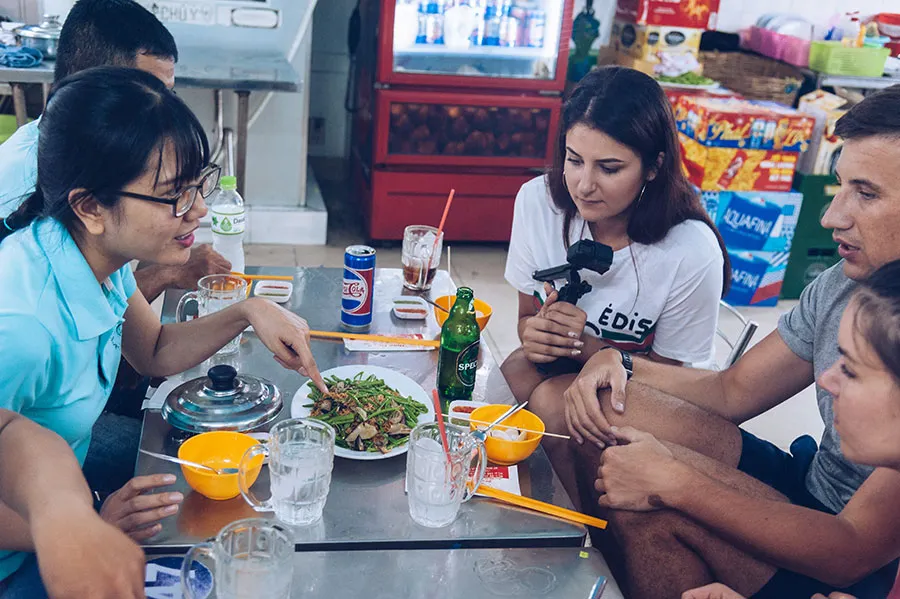
Some of the most interesting drinks in Ho Chi Minh City are not found on every tourist checklist.
Depending on the neighborhood and season, you may encounter drinks made from chrysanthemum, winter melon, pennywort, aloe vera or different combinations of tropical fruit and herbs.
One drink worth recognizing is nước rau má, made from pennywort.
Its green color can look unusual to first-time visitors, and the flavor is distinctly herbal. Modern drink shops sometimes blend it with mung bean, coconut or milk to make the taste softer and creamier.
These drinks are a reminder that Saigon’s beverage culture continues to evolve while remaining connected to traditional ingredients.
Where Do Locals Buy Drinks in Ho Chi Minh City?
You do not need to visit an expensive café to discover authentic Vietnamese drinks.
Some of the most typical places include:
- Traditional wet markets
- Sidewalk drink stalls
- Neighborhood cafés
- Small family restaurants
- Street-food areas
- Fruit shops
- Local bakeries
- Convenience stores
- Modern Vietnamese drink shops
Residential districts can be particularly interesting because prices and drink styles often reflect what local customers actually want rather than what is marketed specifically to tourists.
Simply walking a few streets away from major attractions can reveal an entirely different side of Saigon’s food and drink scene.
How to Order Local Drinks in Saigon
Ordering drinks is usually straightforward, even if you do not speak Vietnamese.
Pointing at a menu or drink display is perfectly normal.
A few useful words can make the experience easier:
Nước – drink or water
Đá – ice
Ít đường – less sugar
Không đường – no sugar
Không đá – no ice
Many younger vendors in central Ho Chi Minh City understand basic English, but learning even one or two Vietnamese phrases often makes the interaction more enjoyable.
Do not worry about perfect pronunciation. A friendly approach goes much further.
Are Street Drinks Safe for Tourists?
Street drinks are part of daily life in Ho Chi Minh City, but travelers should still use normal food-safety judgment.
Look for vendors with plenty of local customers, clean-looking preparation areas and ingredients that are stored properly.
Freshly prepared drinks are generally preferable to something that has been sitting uncovered for a long time.
If you have a sensitive stomach, you may feel more comfortable beginning with fresh coconut water, bottled beverages or drinks from busy established shops before experimenting with smaller street stalls.
Being cautious does not mean avoiding street culture. It simply means choosing vendors thoughtfully.
Which Local Drink Should You Try First?
If it is your first visit to Ho Chi Minh City, start with trà tắc or fresh sugarcane juice.
Both are easy to find, refreshing and representative of everyday Saigon drinking habits.
After that, try nước sâm or rau má if you want something more distinctly Vietnamese.
A tropical fruit smoothie is another excellent choice, especially if you have never tried fruits such as soursop or sapodilla before.
There is no single “best” Vietnamese drink. The fun comes from trying several and discovering which flavors suit you.
Discover Saigon’s Food and Drink Culture Like a Local
The easiest way to understand Ho Chi Minh City is often through the small things locals do every day.
A glass of iced tea beside a bowl of noodles, sugarcane juice pressed at a roadside stall or a cold trà tắc shared with friends may not look like major tourist attractions. Yet these everyday moments reveal a side of Saigon that many visitors miss.
If you want to combine Vietnamese street drinks with local dishes, hidden neighborhoods and authentic food stops, joining a Ho Chi Minh City food tour can help you experience the city through the flavors residents actually enjoy.
Coffee may be the drink that made Vietnam famous internationally, but once you start exploring Saigon, you quickly discover that the city has much more in the glass.