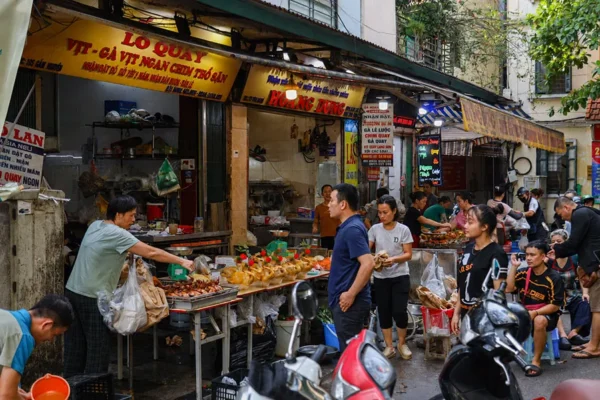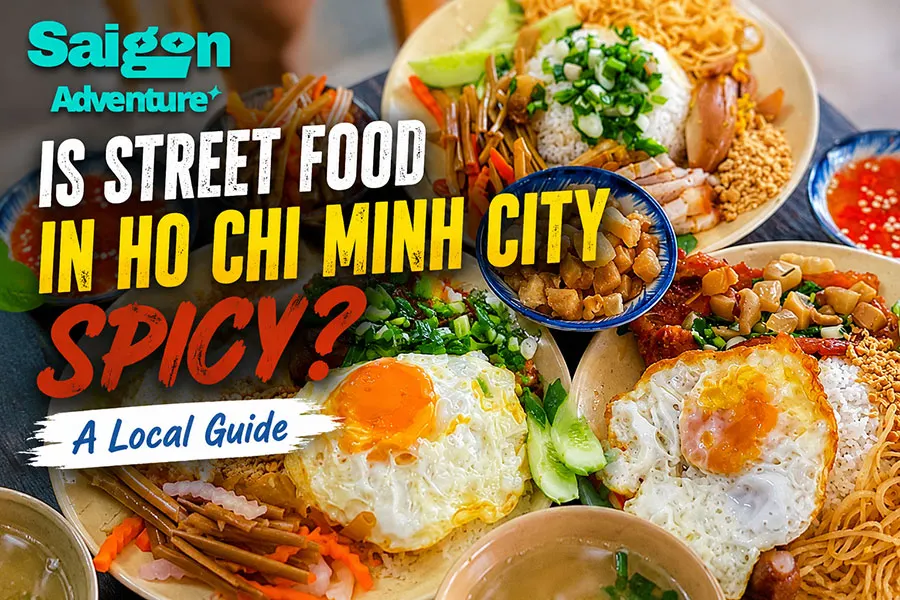
Street food is one of the great pleasures of visiting Ho Chi Minh City. From smoky grilled pork sizzling over charcoal to bowls of noodles served at tiny family-run stalls, eating on the street gives travelers an immediate taste of everyday Saigon.
But there is one question many visitors ask before ordering their first meal: Is street food in Ho Chi Minh City spicy?
The reassuring answer is that most Saigon street food is not automatically very spicy. Southern Vietnamese cooking often balances sweet, salty, sour, savory and aromatic flavors, while fresh chili and chili sauce are frequently served separately.
That means you can explore the city’s food scene even if you have a low tolerance for heat.
Quick Answer: Is Saigon Street Food Spicy?
Most street food in Ho Chi Minh City is mild to moderately spicy, rather than intensely hot.
Many dishes get their main flavor from fish sauce, garlic, lemongrass, scallions, herbs, lime, tamarind, pepper and fermented condiments instead of large quantities of chili.
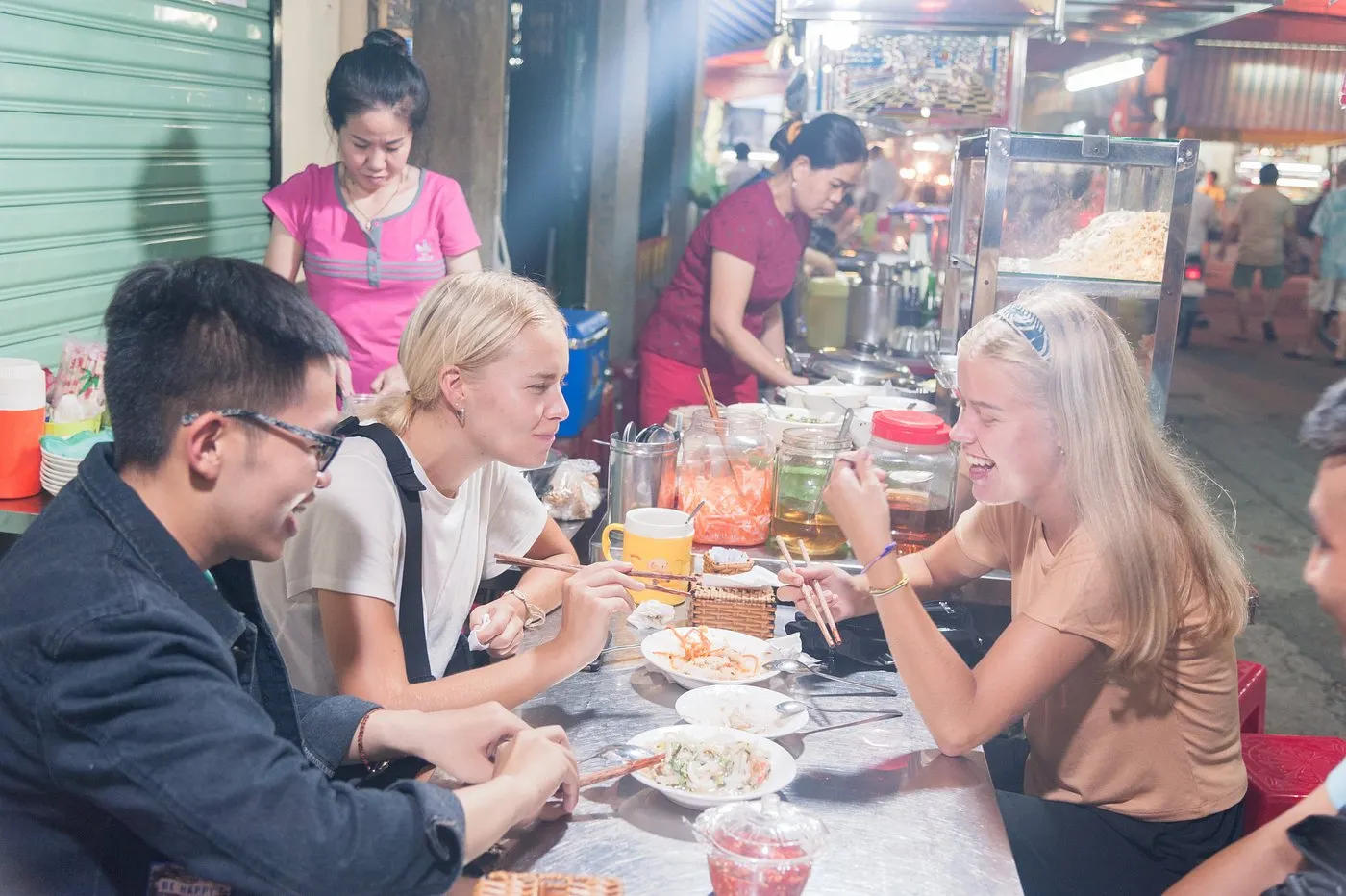
Fresh sliced chilies, chili paste or bottled chili sauce may appear on the table so diners can control the heat themselves.
However, there are exceptions. Some noodle soups, dipping sauces, seafood preparations and regional dishes can arrive noticeably spicy, so it is always worth asking before ordering.
Why Vietnamese Food Is Often Mistaken for Spicy Food
Vietnamese cuisine is packed with flavor, but flavorful does not necessarily mean spicy.
A bowl of noodles might contain aromatic herbs, black pepper, garlic, fried shallots, fish sauce and lime. Together, these ingredients create an intense flavor without producing the burning sensation associated with chili.
Southern Vietnamese cuisine also tends to use sweetness more noticeably than some other regional styles.
This balance is one reason international visitors often find eating in Ho Chi Minh City surprisingly approachable.
Where Does the Heat Come From?
Chili is certainly common in Saigon, but it often appears as a condiment rather than the foundation of a dish.
Fresh Chili
Small bowls of sliced fresh chilies are common at noodle shops and casual restaurants. Diners add as much or as little as they want.
Be careful with the smaller chilies. A tiny slice can sometimes deliver considerably more heat than its size suggests.
Chili Sauce
Bottles or containers of chili sauce frequently sit beside fish sauce and other seasonings.
Rather than adding it immediately, taste your food first. Many dishes are already carefully balanced when they arrive.
Chili in Dipping Sauces
Some Vietnamese dipping sauces combine fish sauce with lime, sugar, garlic and chili.
If you are sensitive to spicy food, try a small amount before pouring the sauce over your meal.
Local tip: Dipping rather than pouring gives you much better control over both spice and saltiness.
Popular Ho Chi Minh City Street Foods That Are Usually Mild
Travelers who dislike spicy food still have plenty of options. Some of Saigon’s most recognizable dishes are naturally mild or can easily be adjusted.
Bánh Mì
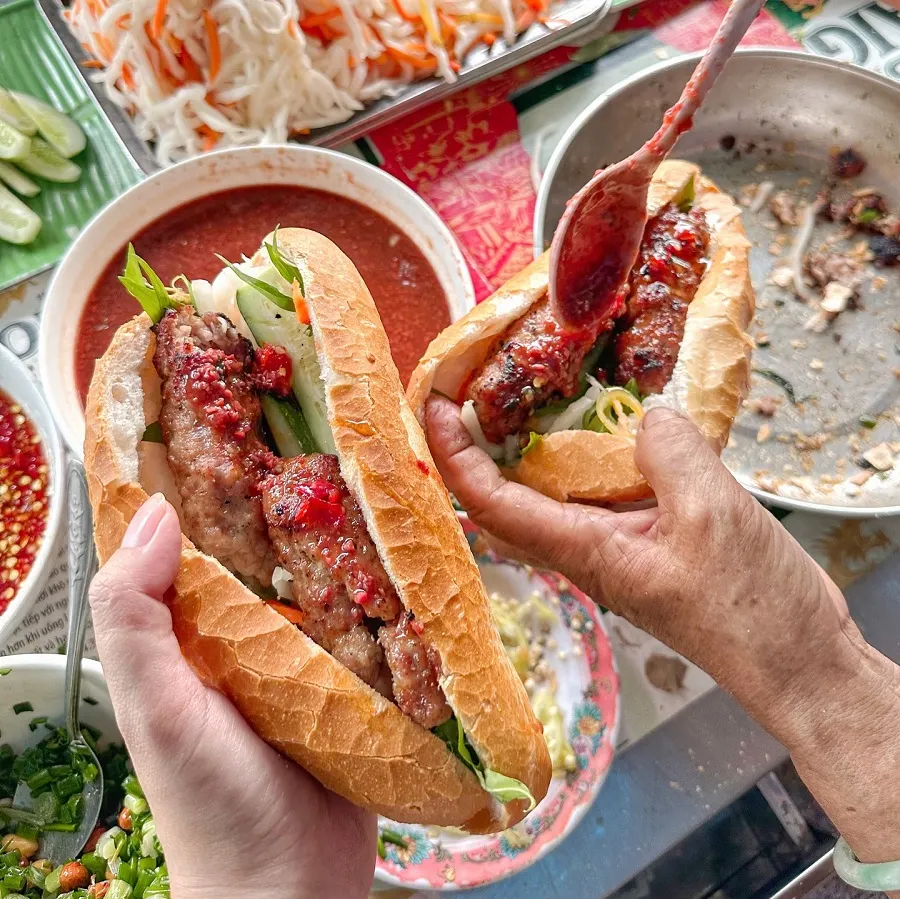
Vietnamese bánh mì combines a crisp baguette with fillings such as grilled pork, cold cuts, pâté, pickled vegetables, cucumber and herbs.
The sandwich itself is usually not extremely spicy, but vendors may add sliced chili.
Simply request yours without chili if you prefer a milder version.
Cơm Tấm
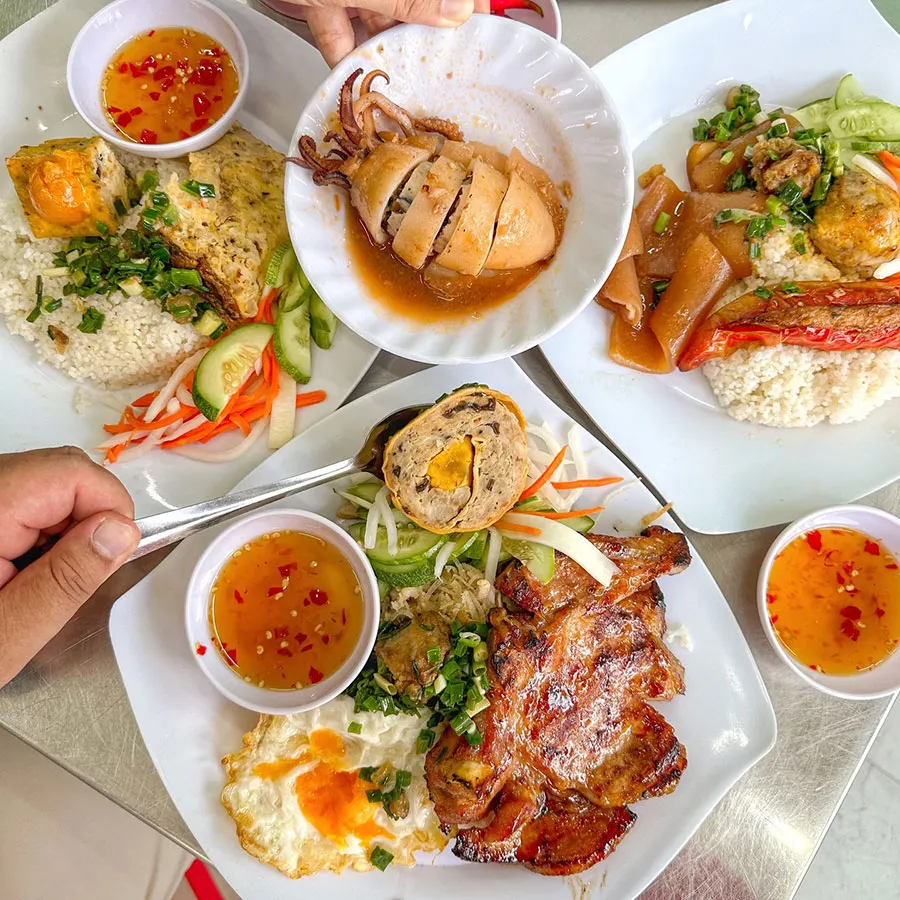
Cơm tấm, or broken rice, is one of the classic foods of Ho Chi Minh City.
A typical plate may include grilled pork, broken rice, scallion oil, pickled vegetables and fish sauce. The dominant flavors are usually smoky, savory and slightly sweet rather than hot.
Chili is often added through the accompanying fish sauce, making the heat relatively easy to control.
Phở
Phở is generally mild when served.
Its aromatic broth gets much of its character from spices and herbs rather than chili. Fresh chili or chili sauce can then be added according to personal preference.
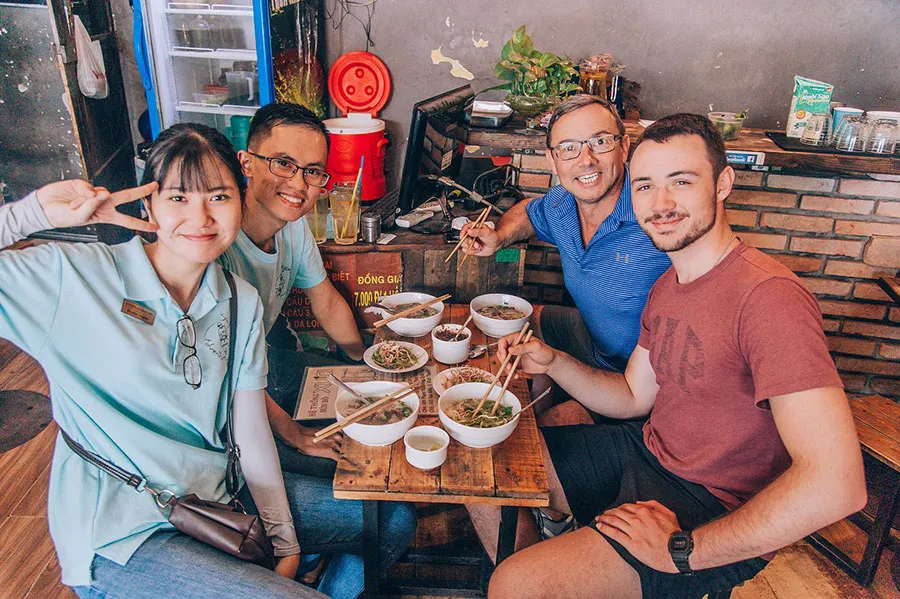
If you are exploring Vietnamese food for the first time, phở is one of the easiest dishes to customize.
Hủ Tiếu
Hủ tiếu is closely associated with southern Vietnam and appears in numerous variations around Ho Chi Minh City.
Depending on the stall, you may encounter pork, shrimp, minced meat, seafood or other toppings. The broth is typically savory and slightly sweet rather than aggressively spicy.
As with phở, chili is commonly available separately.
Bánh Xèo
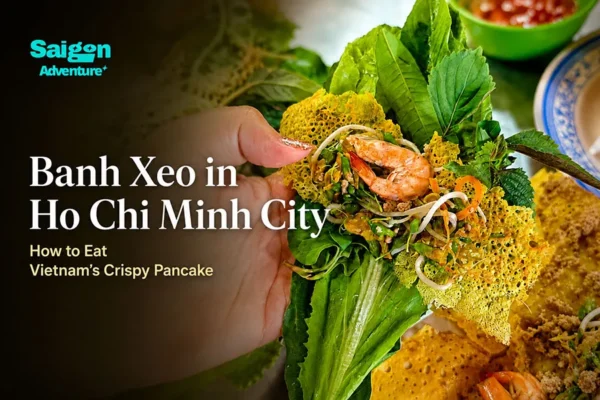
These crispy Vietnamese pancakes are made with rice flour and turmeric and commonly filled with ingredients such as pork, shrimp and bean sprouts.
They are usually wrapped in leafy greens and herbs before being dipped in sauce.
The pancake itself is mild. Most potential heat comes from the dipping sauce served alongside it.
Which Foods Should Spice-Sensitive Travelers Check First?
Not every street food follows the same pattern.
Some dishes deserve a quick question before you order.
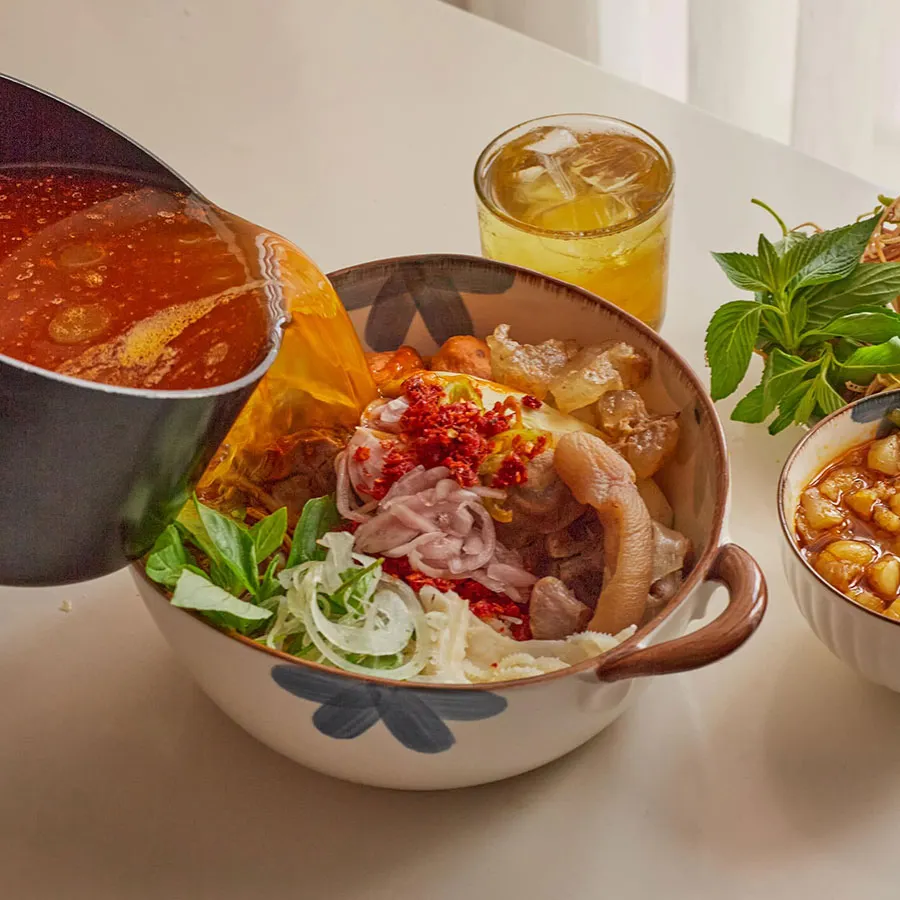
Bún Bò Huế
Despite being widely available in Ho Chi Minh City, bún bò Huế originates from central Vietnam.
Its broth is known for lemongrass and a deeper, more robust flavor, and some versions include spicy chili oil. Heat levels vary considerably between vendors.
If you have a very low spice tolerance, ask before ordering.
Spicy Seafood and Snails
Saigon’s evening seafood and snail stalls offer an enormous range of sauces and cooking styles.
Some preparations use chili, satay-style sauces or spicy seasoning blends, while others rely on garlic, butter, tamarind or coconut.
Instead of avoiding seafood entirely, ask how a particular preparation is seasoned.
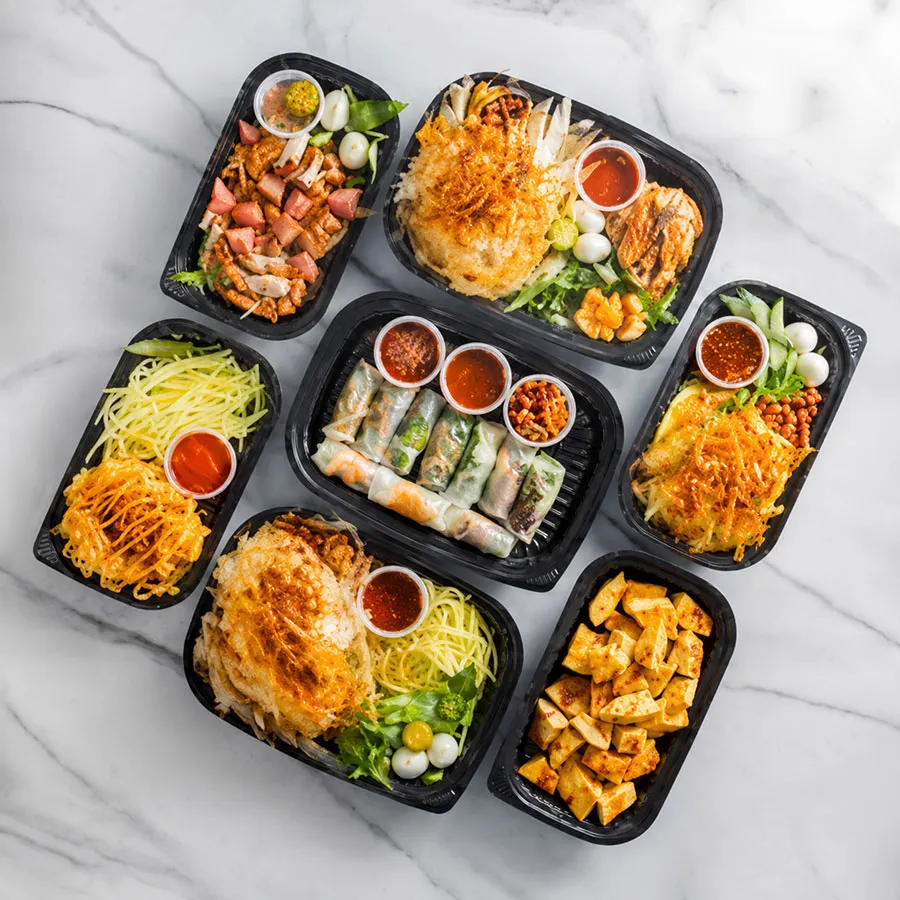
Bánh Tráng Trộn
This popular rice-paper snack can combine shredded rice paper with herbs, peanuts, dried ingredients, sauces and other toppings.
Recipes vary from vendor to vendor, and chili may be part of the mixture.
Because everything is mixed together, removing the heat afterward can be difficult. Requesting less or no chili before preparation is the safer choice.
How to Order Street Food Without Chili
You do not need fluent Vietnamese to communicate your preference.
A useful phrase is:
“Không cay.” — Not spicy.
You can also say:
“Không ớt.” — No chili.
If you can handle a little heat, try:
“Ít cay.” — A little spicy / less spicy.
Most vendors serving international visitors will understand simple requests, especially when accompanied by a friendly gesture toward the chili or sauce.
If you want more useful phrases for ordering meals, our guide to how to order street food in Vietnamese can make eating at local stalls much easier.
Should You Add Chili Before Tasting?
Probably not.
One of the easiest mistakes travelers make is seasoning Vietnamese food before tasting the original version.
Try your first spoonful exactly as the vendor serves it. You can then add chili, lime, fish sauce or other condiments gradually.
This approach is not only safer for spice-sensitive diners; it also lets you understand how the dish was intended to taste.
Is Ho Chi Minh City Good for Travelers Who Cannot Eat Spicy Food?
Absolutely.
The enormous variety of Ho Chi Minh City street food makes the city surprisingly easy for travelers with different spice preferences.
Rice dishes, bánh mì, noodle soups, grilled meats, fresh rolls and many southern specialties can be enjoyed with little or no chili.
The bigger challenge is understanding which sauces and condiments contain heat. Once you learn to ask “Không cay” or “Không ớt,” eating becomes much easier.
Street Food Flavors Change Across Vietnam
It is useful to remember that Vietnamese cuisine is regional.
Northern Vietnamese food is often described through subtle seasoning and balanced broths, while central Vietnamese cooking includes a number of dishes known for stronger seasoning and chili heat. Southern cuisine frequently incorporates sweeter notes, fresh herbs and a broad range of dipping sauces.
Ho Chi Minh City brings all these traditions together.
A single neighborhood may have southern dishes beside specialties originating in Huế, Hanoi or the Mekong Delta. That diversity is part of what makes eating in Saigon so interesting.
How to Explore Saigon Street Food Like a Local
Trying unfamiliar dishes becomes easier when you understand what you are ordering.
Instead of choosing only famous foods, pay attention to busy neighborhood stalls, grills, noodle carts and small family businesses. High local turnover can also mean food is being prepared continuously rather than sitting for long periods.
If you want to discover dishes beyond the usual tourist choices, a food tour in Ho Chi Minh City can introduce you to local specialties while giving you someone who can explain ingredients, sauces and spice levels.
A motorbike food tour can take the experience further by reaching neighborhoods beyond the central tourist districts, where many everyday eateries are located.
Local tip: Tell your guide or vendor about your spice tolerance before the meal begins, rather than after the food arrives.
So, Is Street Food in Ho Chi Minh City Spicy?
Usually, not as much as first-time visitors expect.
The defining character of Saigon street food comes from balance: grilled aromas, fresh herbs, savory sauces, sweetness, acidity, texture and layers of seasoning. Chili is important, but it is only one part of the picture.
For travelers who love spicy food, there are plenty of opportunities to increase the heat. For those who prefer mild food, many dishes can be enjoyed without chili at all.
The best strategy is simple: taste first, season gradually and ask when you are unsure.
Taste Ho Chi Minh City Beyond the Chili
Street food in Saigon is about far more than whether a dish is hot or mild. Every bowl of noodles, plate of broken rice and smoky street-side grill offers another glimpse into how local people actually eat.
If you want to go beyond the familiar dishes, join a Ho Chi Minh City food tour and explore neighborhood eateries with a local guide. Tell them how much spice you enjoy, keep an open mind, and let Saigon do the rest.
Frequently Asked Questions
Is Vietnamese street food very spicy?
Not necessarily. Many Vietnamese street foods are mild when served, with fresh chili or chili sauce available separately so diners can adjust the heat themselves.
What are the best non-spicy foods in Ho Chi Minh City?
Bánh mì without chili, cơm tấm, phở, hủ tiếu, fresh spring rolls and many grilled dishes are good options. Always check accompanying sauces if you are especially sensitive to chili.
How do I say “not spicy” in Vietnamese?
Say “Không cay.” If you specifically want no chili, say “Không ớt.”
Is phở spicy in Ho Chi Minh City?
Phở is generally not spicy by default. Chili, chili sauce and other condiments are usually available for diners who want additional heat.
Is bánh mì spicy?
Most bánh mì is not inherently very spicy, although vendors may add fresh chili. Ask for “không ớt” if you want your sandwich without chili.
What Vietnamese dishes should I avoid if I cannot handle spicy food?
You do not necessarily need to avoid specific dishes, because recipes vary. Take extra care with bún bò Huế, chili-based seafood preparations, spicy dipping sauces and mixed snacks such as bánh tráng trộn.
Can a food tour accommodate people who do not eat spicy food?
Many food experiences can adapt to different spice preferences because chili is often optional or adjustable. Tell the operator about dietary requirements and spice tolerance before booking so they can confirm what can be accommodated.