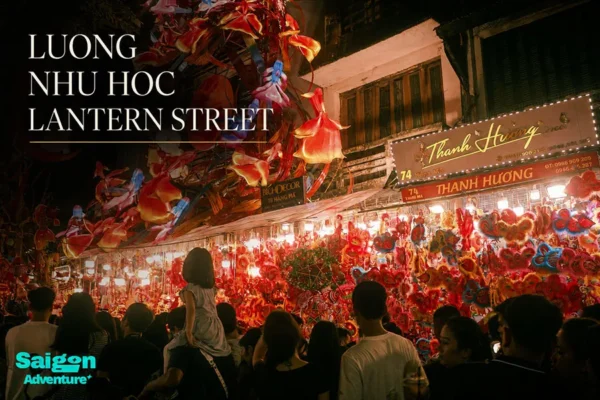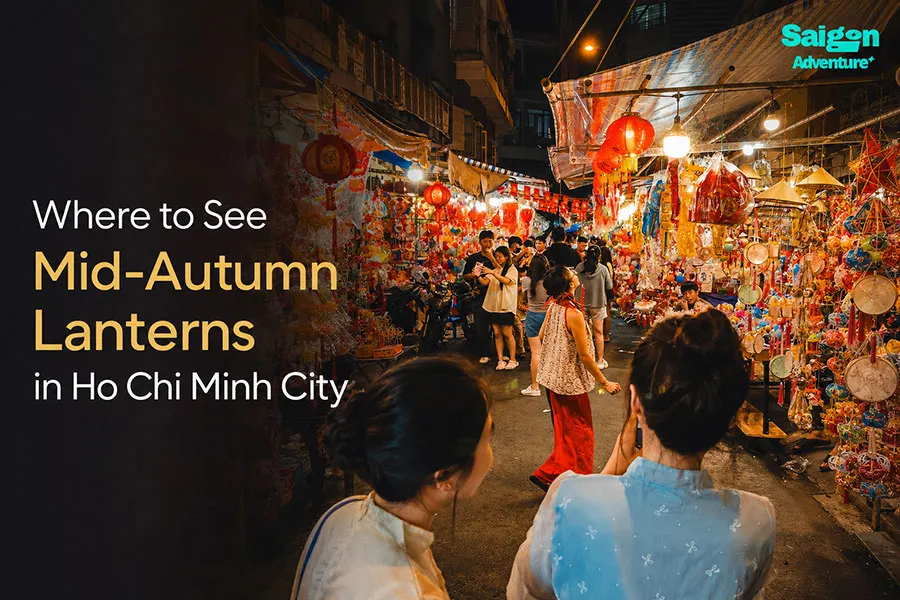
The best place to see Mid-Autumn lanterns in Ho Chi Minh City is Lương Nhữ Học Street and the surrounding lantern quarter in Chợ Lớn, District 5. In the weeks before Tết Trung Thu, family-run shops cover their storefronts with glowing star, carp, rabbit and traditional paper lanterns.
This is not a ticketed attraction or a permanent festival installation. It is a working neighborhood where local families shop, children choose lanterns and visitors experience one of Saigon’s most photogenic seasonal traditions.
In 2026, the Mid-Autumn Festival falls on September 25. However, the best time to explore the lantern streets is usually several days before the main night, when the displays are complete but the crowds remain more manageable.
Where Is the Best Place to See Mid-Autumn Lanterns in Ho Chi Minh City?
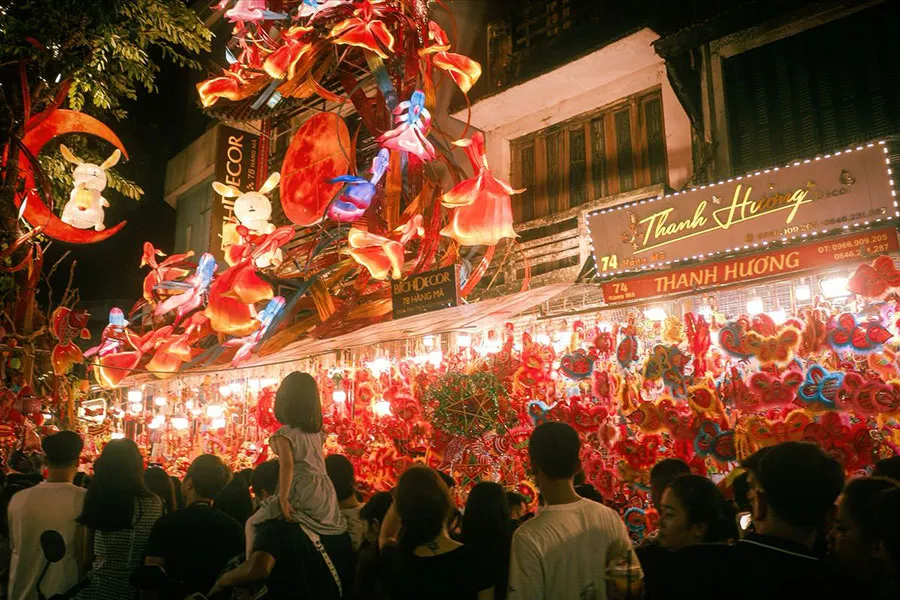
Lương Nhữ Học Street is the city’s best-known Mid-Autumn lantern destination. It sits within Chợ Lớn, Ho Chi Minh City’s historic Chinatown, where Vietnamese and Chinese cultural traditions have developed alongside each other for generations.
The lantern area extends beyond a single street. Displays often appear around parts of Lương Nhữ Học, Phú Định and Nguyễn Án streets, creating a compact quarter that can be explored comfortably on foot.
Visitors will find everything from handmade bamboo-frame lanterns to modern LED toys. The traditional five-pointed star lantern, known as đèn ông sao, remains the most recognizable Vietnamese design, while carp-shaped lanterns reflect ideas of perseverance and transformation.
Quick answer: For the brightest displays, begin on Lương Nhữ Học Street near the surrounding District 5 lantern shops. Arrive between 5:00 PM and 6:00 PM on a weekday, explore before sunset and stay until the lanterns glow after dark.
Why Lương Nhữ Học Lantern Street Is So Popular
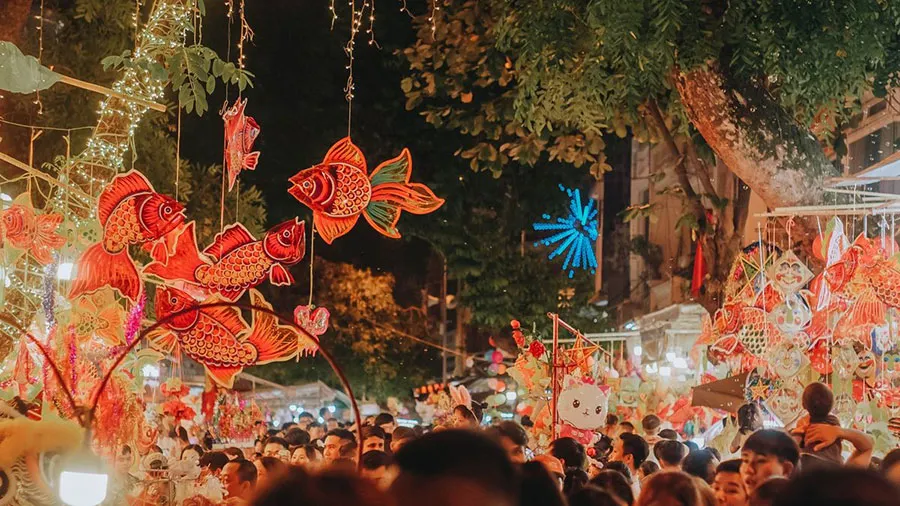
Unlike a decorated shopping center, this area feels closely connected to everyday city life. Lanterns hang above narrow storefronts while vendors arrange toys, masks and festival decorations at street level.
The visual effect becomes especially striking after sunset. Warm lights, colorful cellophane and passing motorbikes create the energetic atmosphere many travelers associate with Saigon.
The street is also popular because admission is free and visitors can choose how long they stay. A quick visit may take 30 minutes, but allowing 60–90 minutes provides more time to browse, photograph the displays and buy a lantern without rushing.
Other Places to See Lanterns During Tết Trung Thu
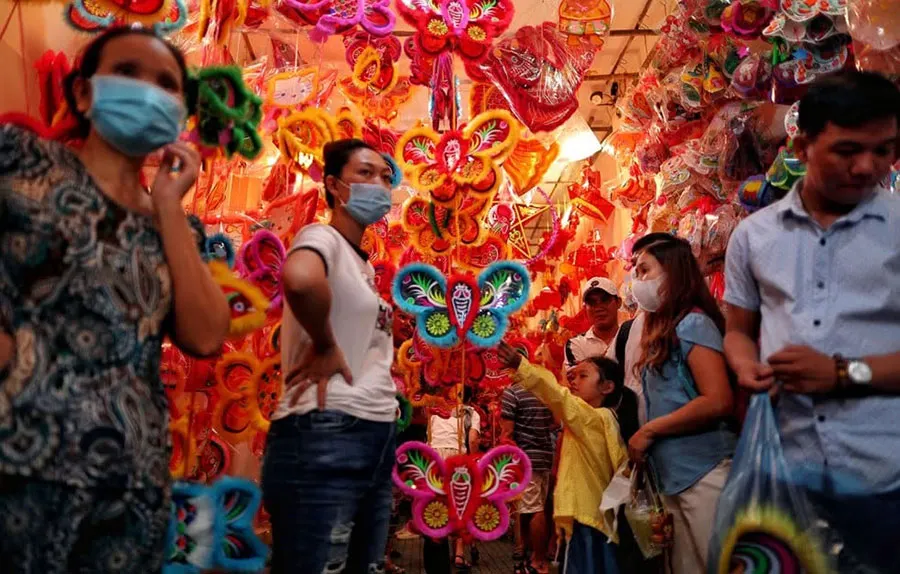
Lương Nhữ Học offers the most dependable concentration of seasonal lanterns, but it is not the only place where visitors may encounter them. Temples, pedestrian areas, shopping centers and neighborhood events can provide different versions of the celebration.
Annual decorations and performance schedules are not fixed. Confirm current programs through official venue pages, your hotel or a local guide before making a special journey.
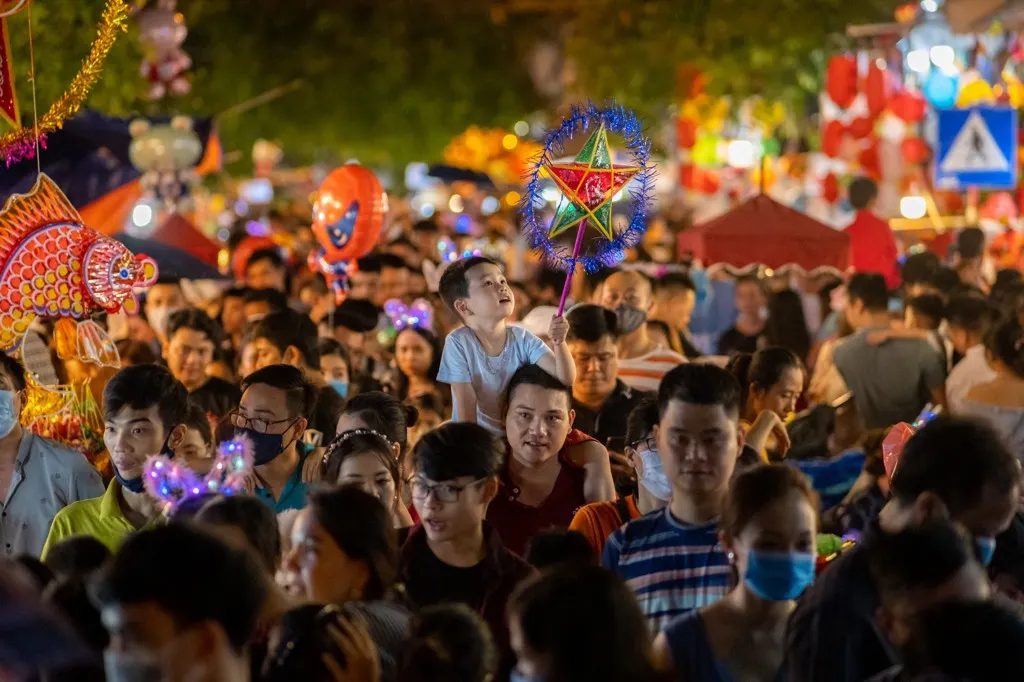
Chợ Lớn Temples and Historic Streets
Chợ Lớn’s temples provide cultural context that a commercial lantern display cannot offer. Thiên Hậu Temple is an excellent addition to a lantern-street itinerary, with traditional architecture, incense-filled courtyards and hanging decorations that reflect the neighborhood’s Chinese-Vietnamese heritage.
Visit temples during daylight, when architectural details are easier to appreciate. Dress modestly, keep your voice low and remember that these are active places of worship rather than festival photography sets.
A self-guided Chợ Lớn Chinatown walking tour can connect the lantern quarter with temples, old shop houses and local markets. Begin in the afternoon and reach Lương Nhữ Học as the evening lights appear.
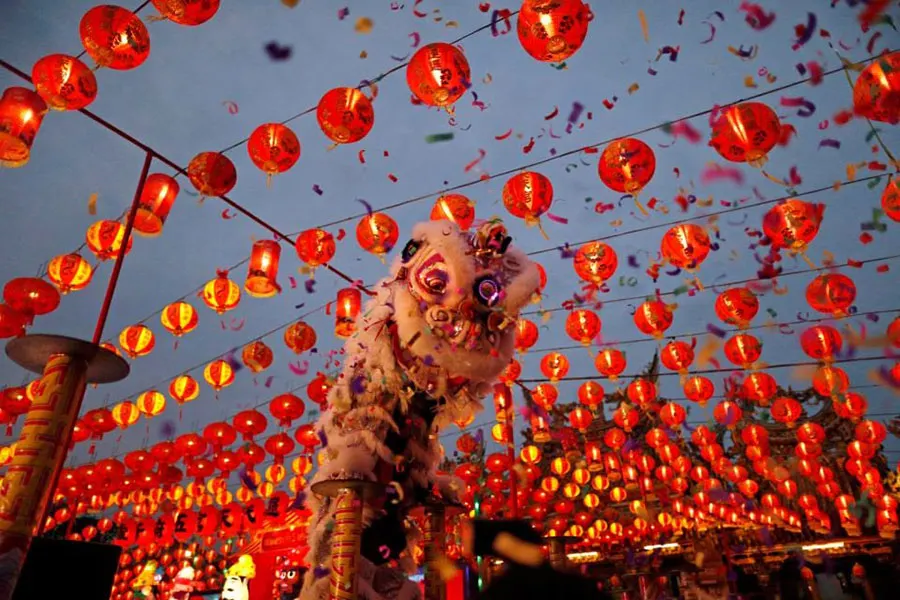
Nguyễn Huệ Walking Street and Central Saigon
Nguyễn Huệ Walking Street sometimes hosts seasonal decorations, family activities or nearby commercial displays. Its broad pedestrian space makes it easier to navigate than District 5, especially for families with strollers or travelers uncomfortable in dense traffic.
However, Nguyễn Huệ is not a dedicated lantern market, and its Mid-Autumn program changes each year. Choose it for an accessible evening in central Saigon, but choose Lương Nhữ Học for the strongest lantern atmosphere and local character.
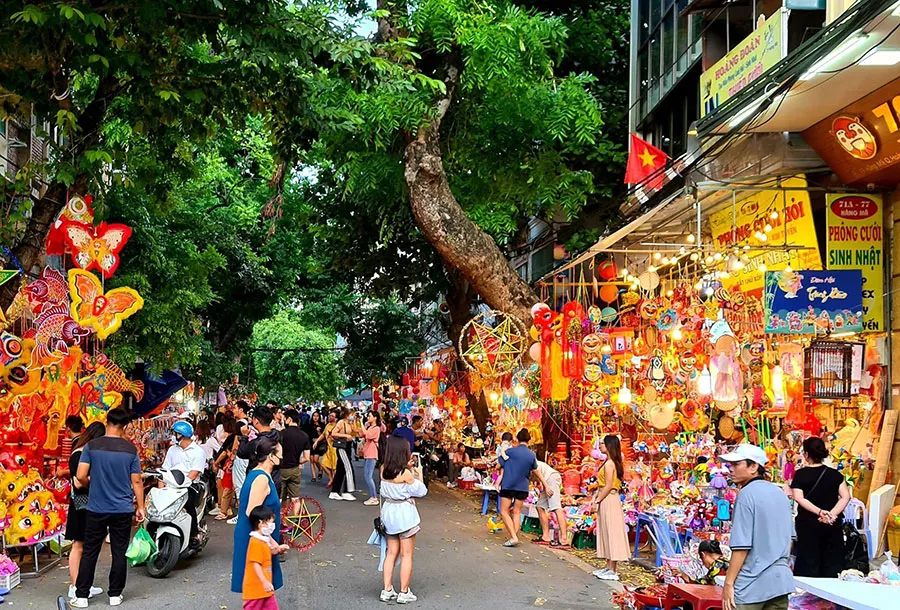
Shopping Centers and Family-Friendly Displays
Major shopping centers often create Mid-Autumn photo areas, children’s workshops or lion-dance performances. These air-conditioned venues are convenient during heavy rain and generally offer toilets, restaurants and easier access for young children.
The trade-off is atmosphere. Mall displays are polished and comfortable, but they rarely feel as distinctive as the lantern shops and busy neighborhood streets of Chợ Lớn.
Check the venue’s current event calendar before visiting. Decorations, workshops and performance times may change annually, and some activities require advance registration or a participation fee.
Neighborhood Lantern Parades and Lion Dances
Smaller celebrations may appear around schools, apartment communities, cultural centers and residential streets. These local events can feel more intimate, but they are usually organized for residents rather than promoted as citywide tourist attractions.
If you encounter a lantern parade or lion dance, watch respectfully from the side and leave space for children. Ask permission before photographing individual families, especially when taking close-up images.
For a broader introduction to local customs, activities and mooncakes, read this complete Mid-Autumn Festival guide to Ho Chi Minh City.
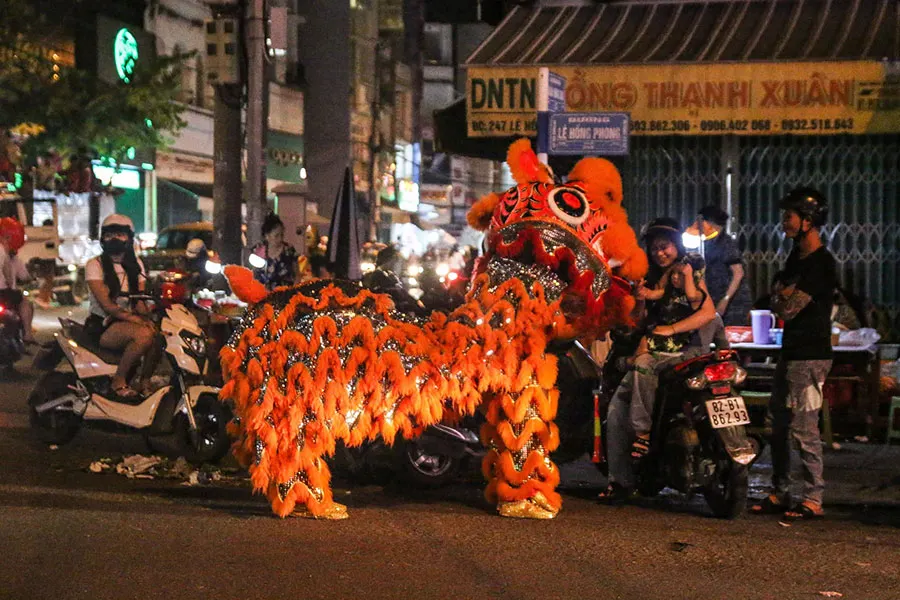
When Should You Visit Saigon’s Lantern Street?
Lantern displays usually build gradually during the weeks leading up to Tết Trung Thu. Visiting too early may mean fewer decorated shops, while arriving on the main festival night can involve intense crowds and slow traffic.
The best balance is generally a weekday evening approximately five to ten days before the festival. Displays should already be colorful, but moving through the area will be easier than during the final weekend.
Daytime or Night: Which Is Better?
Daytime is best for examining handmade lanterns, talking with vendors and photographing details without strong artificial light. The streets are usually calmer, but visitors miss the glowing atmosphere that makes the area famous.
Night offers the most impressive experience because the lanterns are illuminated. It also brings heavier traffic, more photographers and less personal space.
Arriving around 5:00 PM provides both experiences. Browse the shops in daylight, watch the neighborhood change at sunset and take illuminated photographs before the busiest part of the evening.
Should You Visit on the Main Festival Night?
The main night is exciting but not necessarily the best choice for every traveler. It suits visitors who enjoy dense crowds, noise and spontaneous street energy.
Photographers, families with small children and travelers who prefer a relaxed walk should go earlier. The lanterns are already displayed before the festival, and visiting ahead of time does not significantly reduce the visual experience.
How Much Does It Cost to See the Lanterns?
There is normally no admission fee to walk along Lương Nhữ Học or observe public neighborhood celebrations. Your main expenses will be transportation, food and any lanterns, masks or mooncakes you decide to purchase.
Traditional handmade lanterns may cost more than small mass-produced toys because they require bamboo framing and manual assembly. Prices vary by size, material and design, so compare several stalls and ask politely before buying.
Public lion dances are often free to watch. Organized workshops, private shows and activities inside commercial venues may charge separate fees.
How to Plan a Mid-Autumn Evening in Chợ Lớn
Begin around 3:30 PM with a temple or heritage stop in Chợ Lớn. This gives you time to understand the neighborhood before the lantern street becomes the evening’s main attraction.
Reach Lương Nhữ Học at approximately 5:00 PM. Browse the stalls, choose a traditional lantern and remain until after sunset to enjoy the illuminated displays.
Afterward, stop for dumplings, noodles, roasted meats or Chinese-Vietnamese desserts. The guide to the best street food in District 5 and Chợ Lớn can help you plan a meal around the lantern visit.
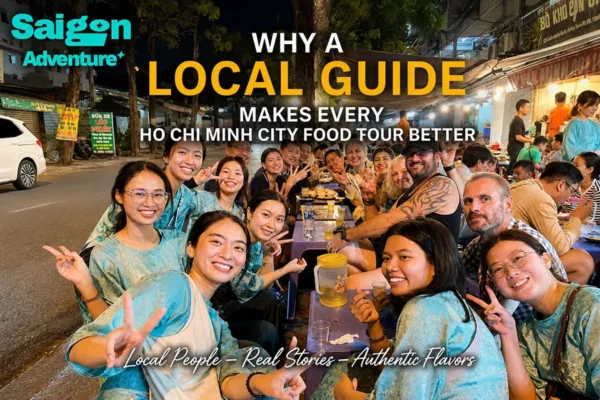
Travelers who want to combine the lantern displays with authentic local cuisine can join Saigon Adventure’s Saigon Street Food Lover Tour. Exploring with local guides makes it easier to discover family-run eateries, understand unfamiliar dishes and experience Saigon’s evening street culture beyond the festival crowds
Practical Tips for Visiting the Lantern Quarter
Wear light clothing and comfortable closed-toe shoes. September weather in Ho Chi Minh City can remain humid after sunset, and sudden rain is possible.
Keep your phone and wallet inside a zipped crossbody bag. The area is not inherently dangerous, but crowded streets increase the risk of accidental loss and opportunistic theft.
Other useful tips include:
- Carry a compact umbrella or lightweight raincoat.
- Use an LED light rather than a candle inside a purchased lantern.
- Ask before photographing vendors or children at close range.
- Avoid blocking storefronts while posing for pictures.
- Do not step backward into the road to frame a photograph.
- Arrange your ride-hailing pick-up point several streets away.
- Bring cash in small denominations for stalls and local eateries.
Motorbikes may continue moving through parts of the neighborhood even when pedestrian numbers increase. Remain alert at intersections and do not assume a crowded road has become pedestrian-only.
Is Seeing the Mid-Autumn Lanterns Worth It?
Yes, particularly for photographers, families, culture-focused travelers and anyone visiting Saigon in September. The experience is free, visually memorable and easy to combine with Chợ Lớn’s temples and food.
Its main disadvantages are heat, rain, traffic and crowding close to the festival. Travelers expecting a carefully managed light show may also be surprised: Lương Nhữ Học is a commercial neighborhood, not an enclosed attraction.
That informality is precisely what makes the experience special. Rather than observing a festival created for tourists, visitors step into a living seasonal tradition shared by local vendors, parents and children.
If you want to discover the neighborhood beyond its busiest photo spots, explore slowly, support a lantern seller and continue the evening over a local meal. Saigon Adventure’s motorbike food tour offers another personal way to experience the city’s food and street culture with local hosts.
Frequently Asked Questions
Where can tourists see Mid-Autumn lanterns in Ho Chi Minh City?
Lương Nhữ Học Street and the surrounding lantern quarter in District 5 are the best-known locations. Seasonal displays commonly extend toward nearby Phú Định and Nguyễn Án streets in Chợ Lớn.
When is the Mid-Autumn Festival in Ho Chi Minh City in 2026?
Tết Trung Thu falls on September 25, 2026, corresponding to the fifteenth day of the eighth lunar month. Lantern shops and seasonal decorations usually appear before the main celebration.
What is the best time to visit Lương Nhữ Học Lantern Street?
Arrive between 5:00 PM and 6:00 PM on a weekday about one week before the festival. You can photograph the stalls before sunset and then see the lanterns illuminated after dark.
Is Lương Nhữ Học Lantern Street free to visit?
Yes. It is a public shopping street, so visitors do not need an entrance ticket. You only pay for transportation, food, lanterns or other products you choose to purchase.
Is the lantern street suitable for children?
Yes, but visit early and avoid the main festival night if your children dislike crowds or loud lion-dance drums. Keep young children close because normal street traffic may continue around the area.
Can tourists take photographs on Lantern Street?
Photography is generally acceptable, but do not block shops or traffic. Ask permission before taking close portraits of vendors, families or children, and avoid handling merchandise only to create photographs.
What should visitors buy at the Mid-Autumn lantern market?
A traditional Vietnamese star lantern makes a meaningful seasonal souvenir. Look for a bamboo frame, colored paper or cellophane and small handmade variations rather than choosing only mass-produced electronic toys.