Table of Contents
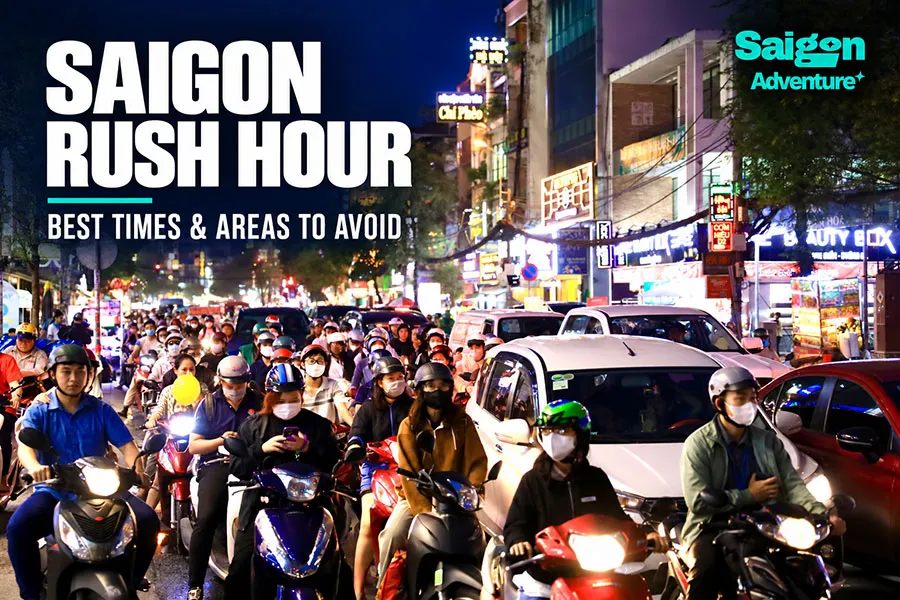
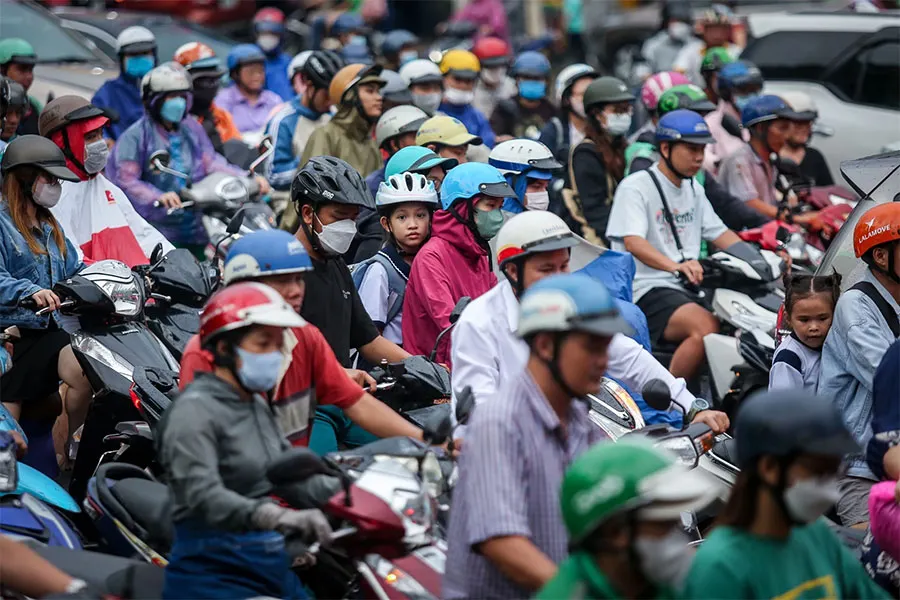
ToggleSaigon rush hour can turn a short cross-city ride into the most unpredictable part of your day. Weekday traffic is generally heaviest around 7:00–9:00 a.m. and 5:00–7:00 p.m., but rain, school dismissal, roadworks and major events can extend congestion beyond those windows.
This guide explains when to travel, which corridors often slow down, and how to build a realistic Ho Chi Minh City itinerary without treating entire districts as no-go zones.
When Is Rush Hour in Saigon?
Morning traffic usually builds as commuters and students head toward central and business areas. The busiest period is commonly 7:00–9:00 a.m., with pressure beginning earlier on roads leading from outer districts and around schools.
If you have a timed attraction, meeting or departure, leaving before 6:30 a.m. or after 9:00 a.m. is often more comfortable.
The evening peak commonly runs from about 5:00–7:00 p.m. and may last longer on Fridays or wet days. TomTom’s 2025 traffic data recorded an average rush-hour speed of 15.7 km/h in Ho Chi Minh City, with a 10-kilometre evening journey taking longer on average than the same distance during the morning peak.
These figures provide useful citywide context, but they should not be treated as a guaranteed travel time for a particular route.
Late morning, roughly 9:30–11:00 a.m., is often a useful sightseeing window. After 7:30 or 8:00 p.m., commuter pressure usually eases, although restaurant and entertainment streets may remain busy.
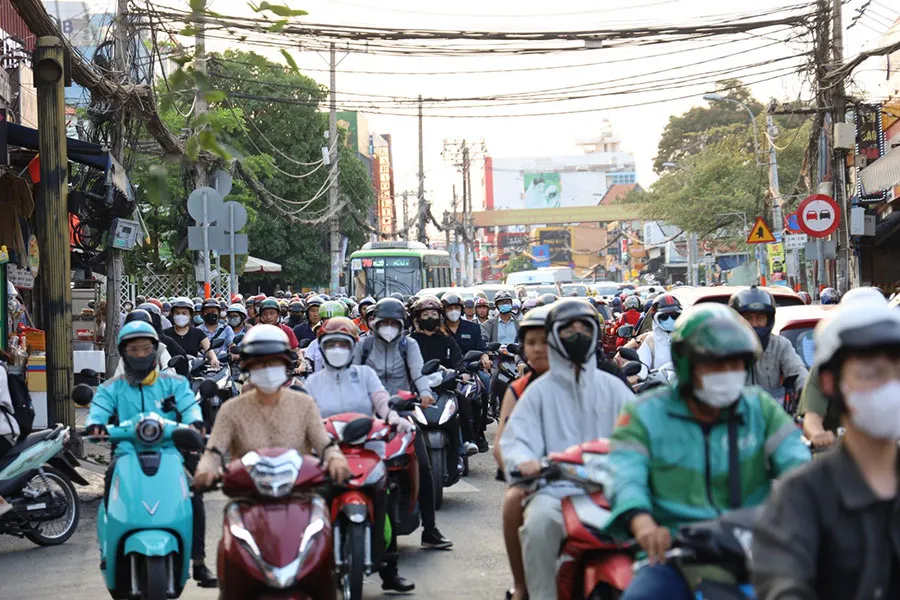
Saigon Traffic Hotspots Travelers Should Plan Around
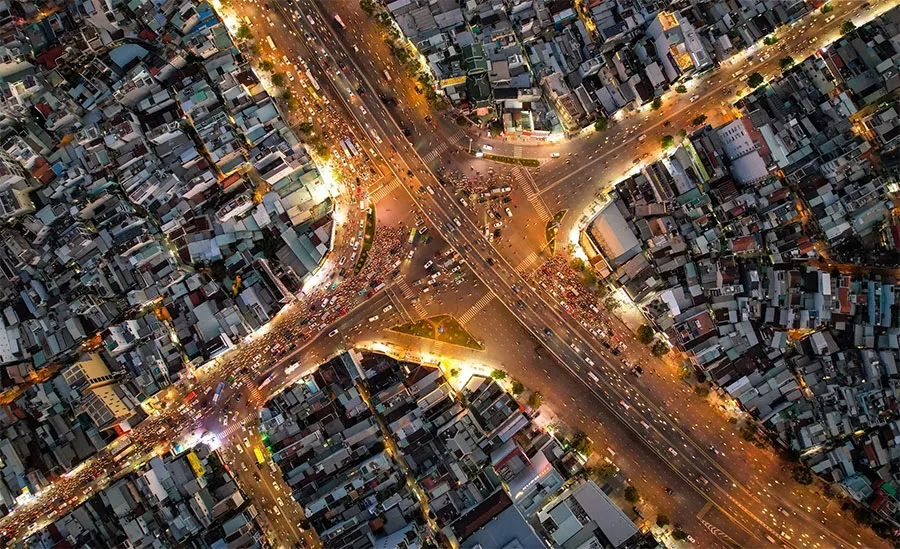
Traffic conditions can change significantly from one junction to the next. It is therefore more accurate to identify congested roads and transport corridors than to advise visitors to avoid entire districts.
District 1, District 3, Bình Thạnh, Phú Nhuận, Tân Bình and the former Thủ Đức City all contain worthwhile attractions. Congestion usually concentrates around bridges, airport approaches, large intersections and major roads connecting residential areas with the city center.
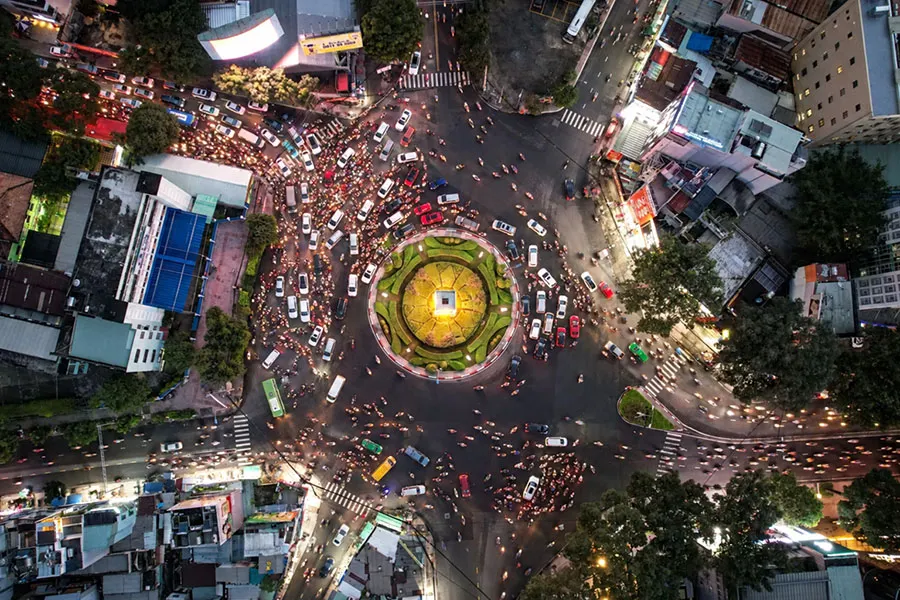
Tan Son Nhat Airport Approaches
Trường Sơn Street and the roads surrounding Tân Sơn Nhất International Airport can become heavily congested when flight traffic overlaps with commuting hours. The short distance between the airport and central Ho Chi Minh City can therefore be misleading.
For domestic or international departures, follow your airline’s check-in guidance, check live traffic and add a generous travel buffer. Do not rely entirely on an estimated travel time calculated during quiet traffic conditions.
Travelers who prefer a prearranged ride can review Saigon Adventure’s airport pickup service. Confirming the pickup location, vehicle and meeting instructions in advance can reduce uncertainty after a flight.
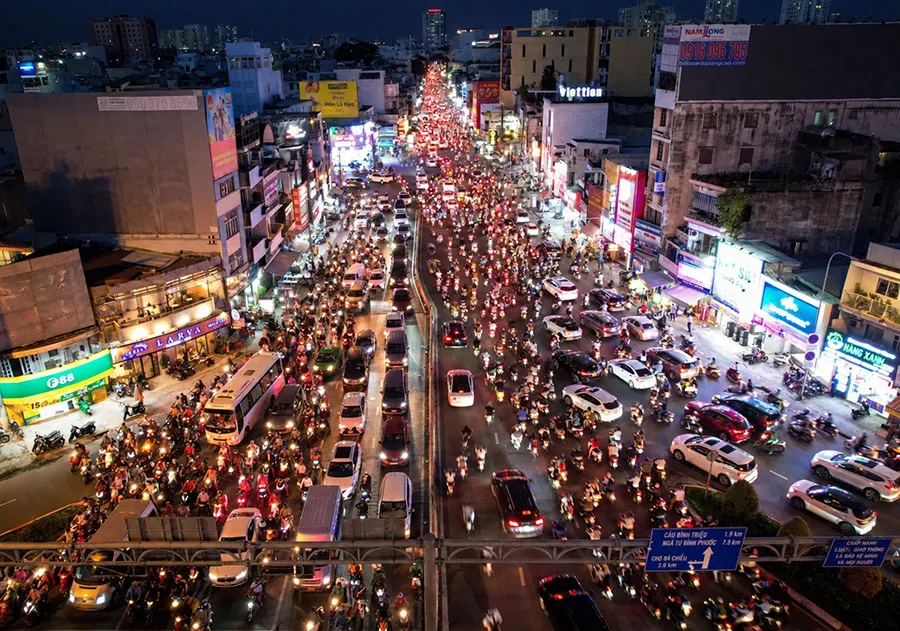
Central District 1 and District 3
The central streets around markets, offices, hotels and major landmarks carry a large amount of mixed traffic. Routes involving Pasteur Street, Nam Kỳ Khởi Nghĩa Street, Võ Thị Sáu Street, Cách Mạng Tháng Tám Street or the approaches to Bến Thành can become slow during peak periods.
Traffic conditions may also change around Nguyễn Huệ Walking Street and nearby roads during festivals, public events or temporary street closures.
Visitors do not need to avoid the city center. A more practical strategy is to group nearby attractions and walk between them where pavements and crossings make that possible.
Notre-Dame Cathedral, Saigon Central Post Office, the Independence Palace and other central landmarks can be organized into one compact sightseeing session. Neighborhoods farther west, south or east can then be explored separately.
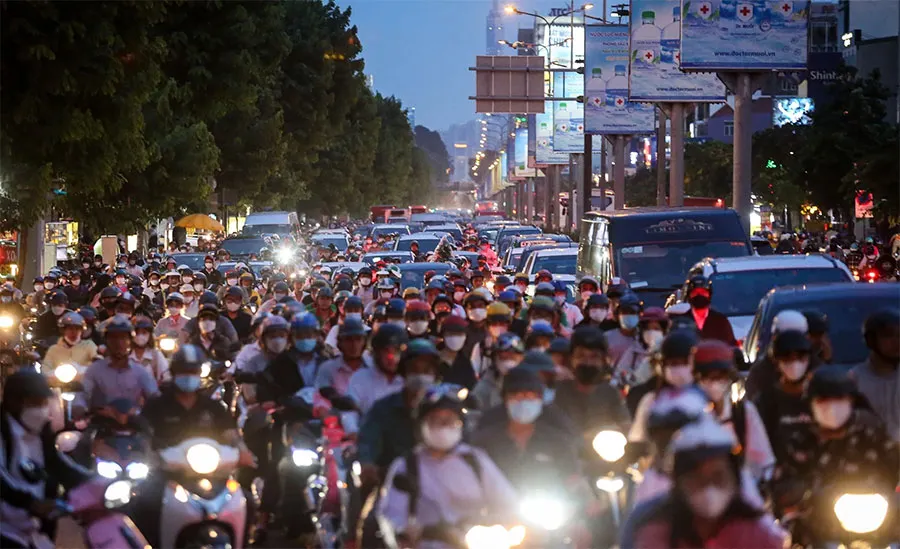
Bridges and Cross-River Routes
Bridges are natural traffic bottlenecks because vehicles from several roads must converge onto a limited number of crossings. Journeys between the city center and Bình Thạnh or the eastern side of Ho Chi Minh City may be delayed near bridge approaches, particularly during commuting hours.
The same principle applies to routes crossing canals toward District 4, District 7 and District 8. A traffic problem at one bridge can place additional pressure on nearby alternatives.
Choose one geographical area for the morning and another for the afternoon rather than repeatedly crossing the river throughout the day.
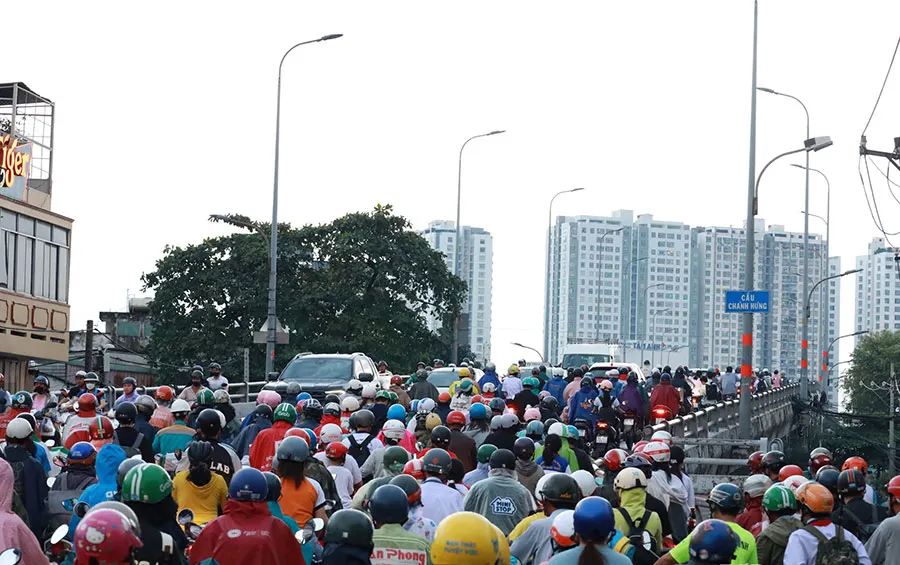
Western and Southern Gateways
Major corridors such as Trường Chinh Street, Cộng Hòa Street, Nguyễn Văn Linh Boulevard and sections connecting with National Highway 1 carry commuters, buses, trucks and interprovincial vehicles.
These roads are particularly relevant to visitors traveling to suburban accommodation, bus terminals or destinations outside Ho Chi Minh City. Traffic may become heavier before weekends and public holidays when residents begin leaving the urban area.
For day trips, ask where the pickup will take place and which route the vehicle will use to leave the city. The advertised departure time may refer to the first hotel pickup rather than the time the vehicle reaches the highway.
Travelers can browse all Saigon Adventure tours and confirm the latest pickup arrangements before booking because routes and operating details may change.
The Best Times for Common Tourist Journeys
For central sightseeing, consider beginning early enough to enjoy cooler temperatures and quieter streets. You can then visit an indoor attraction or take a break when late-afternoon traffic begins building.
Starting at approximately 9:30 a.m. is another practical choice for travelers who prefer to avoid the morning commute. However, midday heat should be considered when creating a walking itinerary.
For airport transfers, live conditions are more important than a fixed travel rule. Check the route shortly before leaving and treat the airline’s required airport arrival time as the non-negotiable deadline.
Avoid planning a museum visit, shopping trip or long meal immediately before a flight. Even a minor traffic delay can become stressful when your schedule has no flexibility.
For evening dining, choose a restaurant near your final afternoon attraction or wait until the main commuter peak has passed. Travelers can also join an organized Ho Chi Minh City food experience, subject to the tour’s confirmed pickup time.
For an intercity bus or day tour, ask whether the stated time means hotel pickup or actual departure from the terminal. Avoid booking a flight, train or important reservation immediately after returning from a day trip.
How to Move Around During Busy Periods
A car or taxi offers air-conditioning, protection from rain and space for luggage. However, cars can move slowly on crowded streets and cannot access some narrow alleys.
Ride-hailing motorbikes may be more agile for solo travelers carrying minimal belongings, but they are not suitable for everyone. Use a correctly fitted helmet, follow the platform’s safety procedures and never choose a motorbike simply because you feel pressured to save time.
Walking works well when several central attractions are close together. Crossing busy streets requires patience, so use marked crossings or traffic lights when available, remain visible and move predictably.
Avoid stepping backward suddenly or running between moving vehicles. Never assume that a turning driver or rider has already seen you.
Metro Line 1 can provide a useful alternative when its stations align with your planned route. Operating information can change, so consult an official source or current journey-planning application on the day of travel.
Visitors who want to experience the city by motorbike without driving themselves can compare an organized Saigon motorbike city tour. Before booking, review the itinerary, helmet arrangements, insurance terms and pickup information.
A guided motorbike tour can make navigating unfamiliar streets easier, but it cannot guarantee that every traffic delay will be avoided.
Practical Planning Tips That Save Time
• Group attractions by neighborhood instead of traveling back and forth across the city.
• Add extra time before flights, trains, buses and prepaid activities.
• Check live traffic immediately before leaving rather than only when creating your itinerary.
• Ask your hotel, tour operator or local guide about current roadworks and temporary closures.
• Keep rain protection accessible during the wet season because a sudden downpour can quickly affect traffic.
• Pin your destination on a map and verify the address with your driver, as businesses with similar names may cause confusion.
• Include at least one flexible activity in each day’s schedule so a delay does not disrupt the entire itinerary.
A realistic itinerary should leave room for the natural pace of the city. The objective is not to eliminate traffic completely but to ensure that important journeys do not depend on perfect road conditions.
Common Mistakes First-Time Visitors Make
The first mistake is estimating travel time only by looking at distance. A five-kilometre journey through several congested intersections may take longer than a much greater distance on a clearer road.
Always compare the estimated travel duration rather than focusing only on kilometres.
The second mistake is labeling an entire district as an area to avoid. Traffic conditions vary by street and time, so travelers should plan around specific bottlenecks rather than removing interesting neighborhoods from their itinerary.
The third mistake is scheduling reservations too close together. A delayed pickup, sudden rainstorm or congested bridge can create a chain reaction that affects the rest of the day.
Limit the number of fixed bookings and place flexible activities between appointments whenever possible.
FAQs About Saigon Rush Hour
What Time Is Rush Hour in Ho Chi Minh City?
Weekday rush hour commonly occurs from approximately 7:00–9:00 a.m. and 5:00–7:00 p.m. Conditions vary according to the road, weather, school schedules and public events, so visitors should check live traffic before any time-sensitive journey.
Is Saigon Traffic Worse in the Morning or Evening?
Citywide TomTom data for 2025 indicates that evening rush-hour travel was slower on average than the morning peak. However, the actual difference depends on the route, weather and day of the week.
How Early Should I Leave for Tan Son Nhat Airport?
Start with your airline’s recommended airport arrival time and work backward. Add a traffic buffer based on current road conditions and allow additional time during rush hour, heavy rain, weekends or major public holidays.
Should Tourists Avoid District 1 During Rush Hour?
No. District 1 remains convenient for sightseeing because many important attractions are relatively close together. Travelers can reduce road travel by grouping nearby landmarks and walking between them where conditions are suitable.
Are Motorbike Taxis Faster During Rush Hour?
Motorbike taxis may move more easily than cars on certain roads, but the advantage varies. They may not be appropriate for travelers with large luggage, limited mobility or discomfort with riding on two wheels.
Does Rain Make Saigon Traffic Worse?
Heavy rain can reduce visibility, slow vehicles and cause localized water accumulation. Allow additional time, wait for intense rainfall to ease when practical and never enter flooded sections when you cannot see the road surface or judge the water depth.
Build Your Saigon Day Around Places, Not Traffic
The simplest strategy is to travel outside the two main commuter peaks, organize each half-day within one geographical area and protect every important departure with additional travel time.
Instead of trying to avoid every busy street, create an itinerary that can absorb occasional delays. This approach allows you to experience central landmarks, local neighborhoods and Saigon’s food culture without spending unnecessary time crossing the city.
For help connecting major sights, local neighborhoods and food stops efficiently, explore Saigon Adventure’s Ho Chi Minh City tours and confirm the latest itinerary and pickup details before booking.