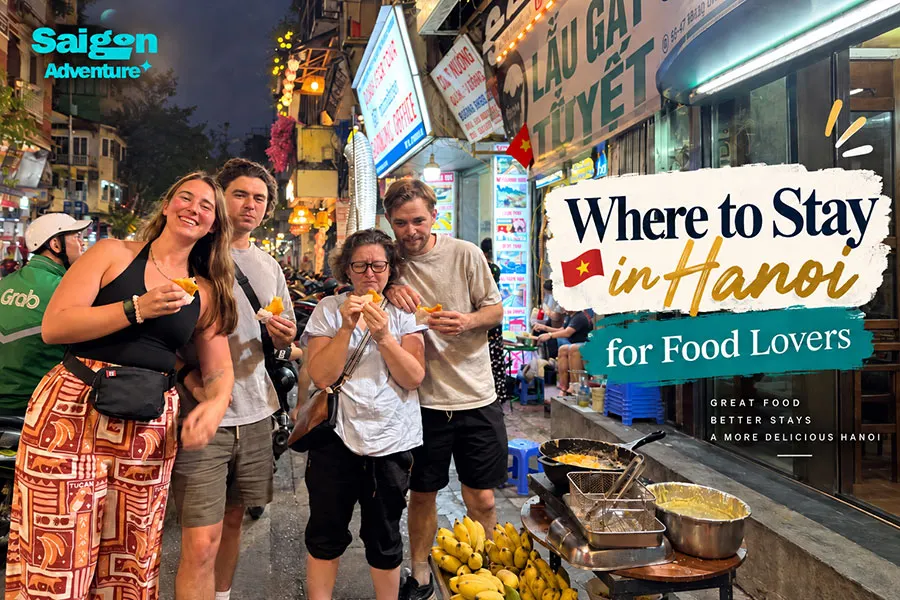
Choosing where to stay in Hanoi for food lovers can shape your food experience almost as much as the restaurants you choose. For most first-time visitors, the Old Quarter is the most convenient base thanks to its dense mix of street food, local restaurants, markets and cafés.
However, it is not the only good option. Trúc Bạch and Ngũ Xã offer a calmer neighborhood atmosphere with easy access to local dishes, while the French Quarter keeps you close to central Hanoi without the same level of noise and crowds.
For longer stays, Tây Hồ can be a better choice for travelers who enjoy cafés, relaxed meals and a slower pace. The right area depends on whether you prioritize street food access, quieter evenings or a more spacious neighborhood experience.

Quick Answer: What Is the Best Area to Stay in Hanoi for Food?
For most first-time visitors, the Old Quarter is the best area to stay in Hanoi for food lovers because traditional noodle shops, breakfast stalls, coffee houses, markets and evening street-food streets sit within a compact walking area. It is especially practical for a two- or three-night visit.
Choose Trúc Bạch or nearby Ngũ Xã for a quieter local atmosphere, the French Quarter for a calmer central base, and Tây Hồ for longer stays focused on cafés and slow dining. These areas offer different balances of food access, atmosphere and convenience.
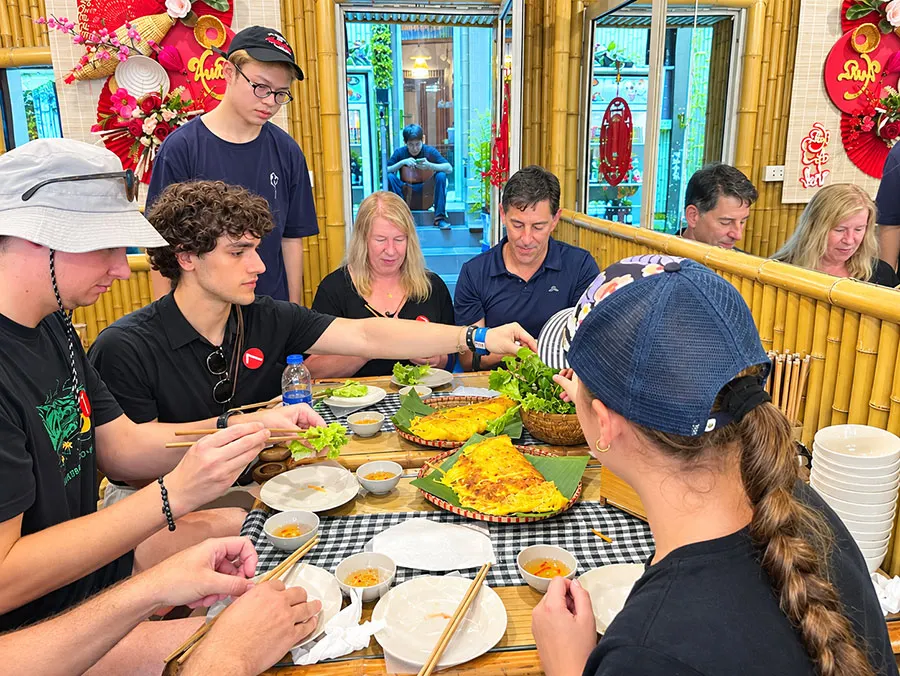
1. Old Quarter: Best for First-Time Food Lovers
The Old Quarter is the easiest food-focused base because many of Hanoi’s best-known dishes can be found within walking distance. Around Đồng Xuân Market, Hàng Buồm, Lý Quốc Sư and the streets toward Hoàn Kiếm Lake, travelers can move between phở, bánh cuốn, bún chả, grilled snacks, desserts and coffee without arranging transport for every meal. Saigon Adventure’s guide to Hanoi’s best food streets explores these eating areas in more detail.
A breakfast shop may be only a few minutes from your hotel, while an evening food walk can begin almost immediately after you step outside. This convenience becomes particularly valuable because some traditional Hanoi dishes are associated with particular meal times rather than being equally available all day.
The trade-off is noise and crowds. Light sleepers should choose a smaller side street, request a room away from the road or consider the quieter edge of Hoàn Kiếm.

Who Should Stay in the Old Quarter?
The Old Quarter suits first-time visitors, solo travelers, couples and anyone staying only a few nights.
It is less suitable if you need very quiet nights, wide pavements or a spacious residential atmosphere. Food access is excellent, but the energy that makes the neighborhood convenient can also make it feel intense.
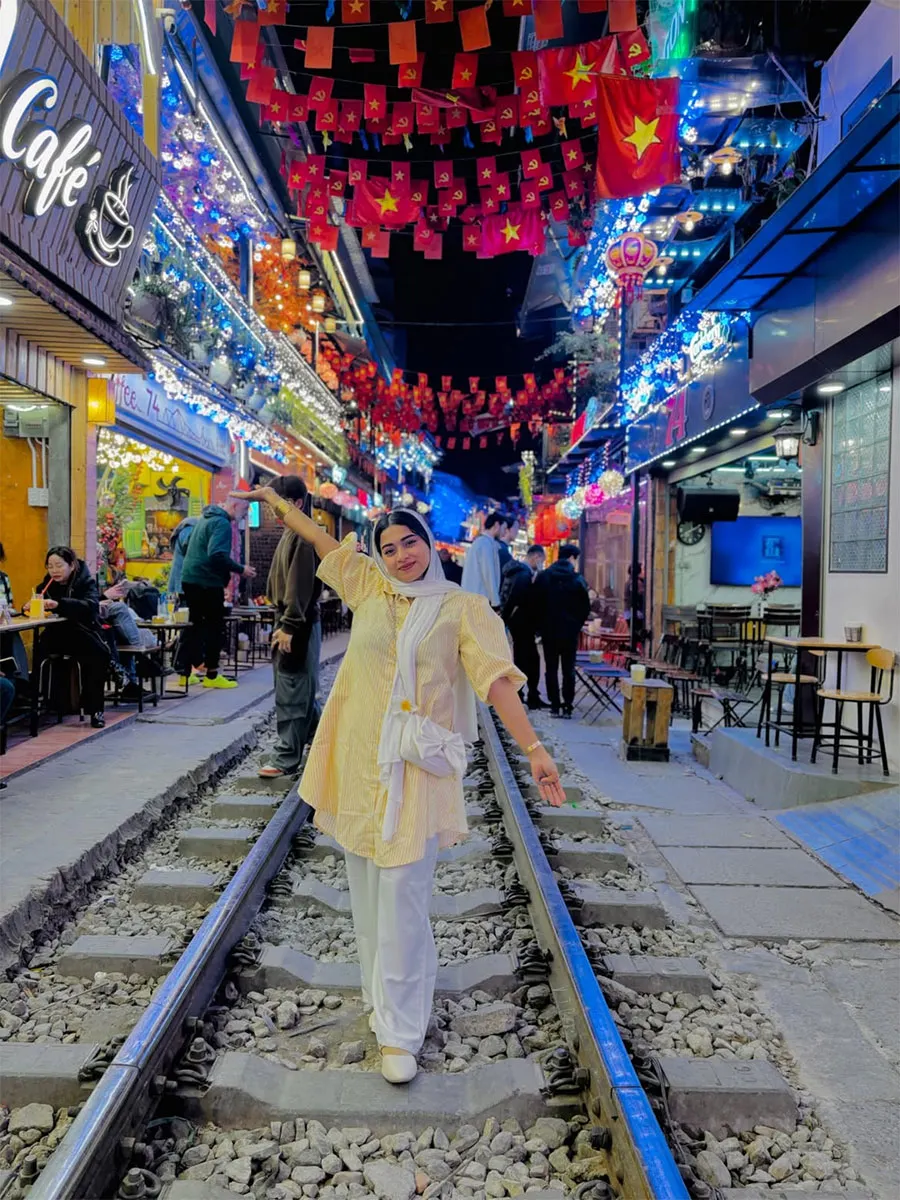
2. Trúc Bạch and Ngũ Xã: Best for a Calmer Local Food Base
Trúc Bạch is one of the strongest alternatives for travelers who want local eating without staying in the busiest tourist streets. The lakeside neighborhood has casual restaurants, cafés and a slower evening rhythm, while nearby Ngũ Xã is strongly associated with phở cuốn and phở chiên phồng.
Ngũ Xã is particularly useful for a focused food outing. Try phở cuốn, made with fresh rice noodle sheets wrapped around beef, herbs and vegetables, then share phở chiên phồng for a contrasting crisp texture.
This area can be particularly attractive for repeat visitors who already know central Hanoi and would rather stay slightly outside the most heavily visited streets. You remain close enough to reach the Old Quarter when needed without having its busiest nightlife directly outside your accommodation.
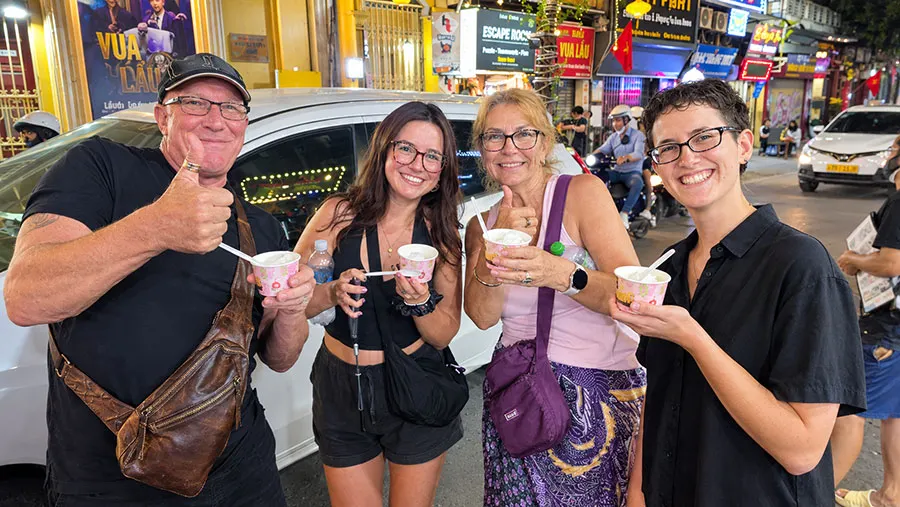
3. French Quarter: Best for Comfort With Central Food Access
The French Quarter, south of Hoàn Kiếm Lake, is a useful compromise for travelers who want to remain central without sleeping in the most crowded part of the Old Quarter. Current Hanoi stay guides regularly position it as the calmer central alternative, with convenient access back toward Hoàn Kiếm and the Old Quarter.
The neighborhood is not as dense with pavement food as the Old Quarter. That can be an advantage if you prefer comfortable cafés, restaurants and a quieter return to your hotel after a busy evening of eating.
It suits couples, older travelers and anyone who wants food and sightseeing without constant nightlife outside the hotel. You can walk or take a short ride into denser eating areas whenever you want a more informal street-food experience.

4. Tây Hồ: Best for Long Stays, Cafés and Slow Mornings
Tây Hồ, around West Lake, offers a different kind of food experience. Instead of concentrating street food into a small historic grid, the area spreads cafés, Vietnamese restaurants, brunch spots and international dining around a much larger lakeside neighborhood.
This makes it more attractive for travelers staying a week or longer than for someone with only two nights in Hanoi. Recent accommodation guides similarly recommend Tây Hồ more strongly for slower or longer stays than for short first-time visits.
West Lake is also associated with bánh tôm, or crispy shrimp cakes. Saigon Adventure’s first-timer guide to what to eat in Hanoi covers bánh tôm alongside phở, bún chả, bánh cuốn and other essential Hanoi dishes.
The limitation is distance: if nearly every meal on your personal food list is in the Old Quarter, repeated rides can become inconvenient. For a short first visit focused on classic Hanoi dishes, the Old Quarter or Trúc Bạch will usually be more efficient.

5. Ba Đình: Best When Food Shares the Trip With Sightseeing
Ba Đình is better known for major landmarks than for concentrated street-food tourism, but it can suit travelers who want a quieter base with neighborhood restaurants nearby. It makes sense if your itinerary gives equal importance to museums, monuments and food.
The drawback is that many famous central eating streets are not directly outside your hotel. You may need short taxi or ride-hailing trips for evening food walks, so this is not the strongest choice if you want to eat spontaneously at every hour. Current stay guides similarly rank Ba Đình more strongly for history and calm than for a food-first short break.

How to Choose Your Hanoi Hotel Around Food
Do not choose an area only because a famous restaurant appears nearby on a map. Hanoi’s specialist food shops may serve limited meal periods, close after selling out or change operating hours, so one restaurant should not determine your entire stay.
Also read recent hotel reviews for noise and street access. A hotel technically inside the Old Quarter can feel very different depending on whether it faces a nightlife street, market lane or quieter side road.
For a broader overview before booking accommodation, browse Saigon Adventure’s Hanoi destination and tour collection. This makes it easier to see whether your planned activities are concentrated around the historic center or spread across the city.
A Simple Food-First Stay Strategy
For a two- or three-night first visit, stay in the Old Quarter or on the Hoàn Kiếm edge. Use your first day for classic dishes and coffee, then explore one additional neighborhood such as Trúc Bạch or Ngũ Xã.
If you prefer guidance on your first evening, the Hanoi Michelin Street Food Walking Tour connects central Hanoi food stops with local context. Travelers still comparing formats can also read how to choose the right Hanoi food tour before booking.
After one guided outing, independent meals may feel easier because you understand more about Hanoi’s specialist eateries, meal times and compact food neighborhoods.
Which Hanoi Area Should Food Lovers Choose?
The Old Quarter remains the strongest all-round choice for a short food-focused trip because convenience matters when breakfast, lunch and evening specialties operate on different schedules. Trúc Bạch and Ngũ Xã are better for a quieter local feel, the French Quarter balances comfort with central access, and Tây Hồ suits travelers who want café culture and a slower stay.
The best base is not necessarily the neighborhood with the single most famous dish. It is the area that lets you eat well without spending too much of your trip getting to and from every meal.
Frequently Asked Questions
Is the Old Quarter the Best Place to Stay in Hanoi for Street Food?
For most first-time food travelers, yes. It has a dense concentration of central street-food choices, coffee shops and market lanes within walking distance.
Is Trúc Bạch Better Than the Old Quarter for Food?
Trúc Bạch is better if you value a calmer local atmosphere. The Old Quarter offers more variety and convenience, while Trúc Bạch feels more relaxed.
Where Should I Stay in Hanoi for a Two-Night Food Trip?
Choose the Old Quarter or the Hoàn Kiếm edge. With only two nights, walking access to breakfast, coffee, lunch and evening food is more valuable than staying farther away for extra space.
Is Tây Hồ a Good Area for Food Lovers?
Yes, especially for longer stays and travelers interested in cafés, brunch, lakeside dining and international options. It is less efficient for a short trip focused on classic Old Quarter street food.
Which Area Is Best for Quiet Nights and Easy Access to Hanoi Food?
The French Quarter is a strong compromise because it is calmer than much of the Old Quarter while remaining close to central eating areas. Trúc Bạch is another good choice.
Should I Stay Near a Michelin-Listed Restaurant in Hanoi?
Not necessarily. Choose a convenient food neighborhood rather than booking around one restaurant. Opening hours, queues and your wider itinerary matter more than proximity to a single venue.