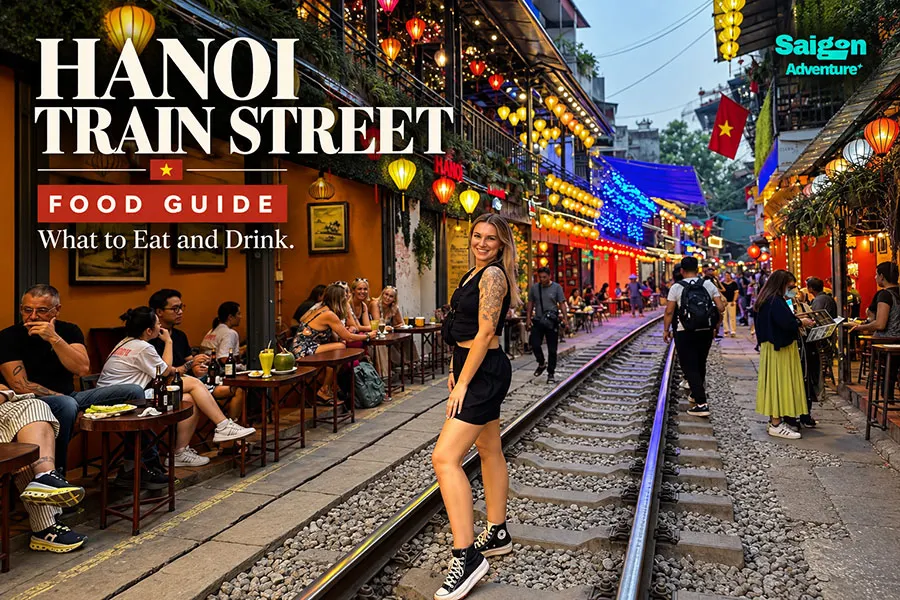
A train horn sounds beyond the houses, café owners begin folding tables, and steaming cups are moved safely away from the tracks. Visiting this famous railway is about more than taking a dramatic photograph—the best Hanoi Train Street food experience combines the spectacle with egg coffee, cold local beer and simple Vietnamese snacks.
Train Street is not a large food market, so arrive with realistic expectations. Its cafés are best for drinks and light bites, while the surrounding Old Quarter offers a much wider choice of traditional Hanoi dishes.
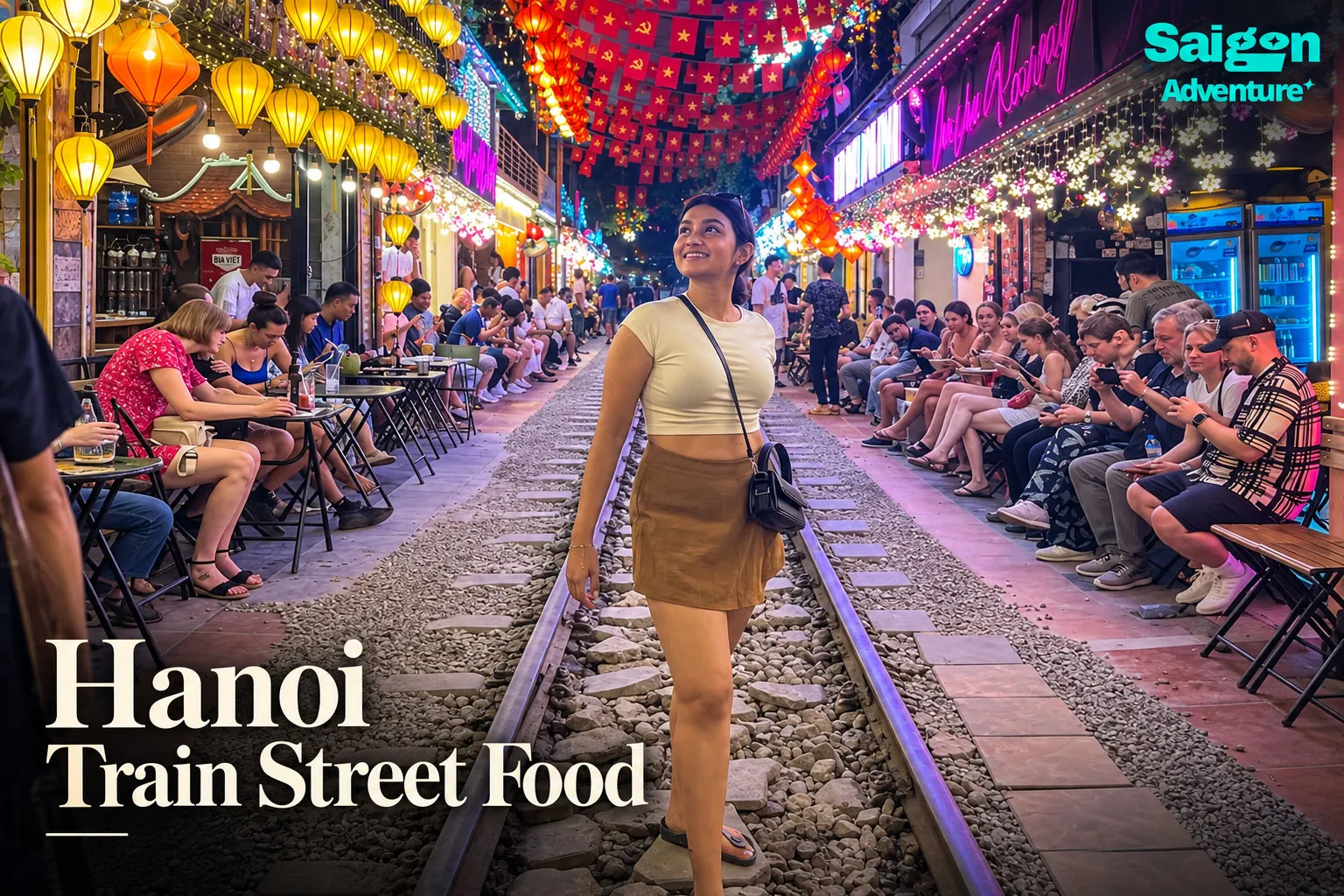
Quick Answer: What Should You Eat and Drink at Hanoi Train Street?
The best things to try at Hanoi Train Street are Vietnamese egg coffee, bánh mì, fried spring rolls and refreshing local drinks. Most railway cafés serve coffee, beer and light snacks rather than full traditional Vietnamese meals.
For an authentic Hanoi food experience, start with egg coffee beside the railway, then explore nearby streets for local specialties such as bún chả, phở or bánh cuốn.
Local Tip: Expect to spend around VND 30,000–60,000 on a standard drink or VND 70,000–150,000 for a drink with a light snack. Always check café prices and current railway access restrictions before visiting.
What Is the Food Experience at Hanoi Train Street Really Like?
Hanoi Train Street is an active railway corridor running through a densely built neighborhood near central Hanoi. Small cafés occupy narrow spaces beside the tracks, giving visitors an unusual place to drink coffee while observing everyday life around the railway.
The atmosphere is the main attraction. Plastic stools, handwritten menus, old walls and the sudden arrival of a train create an experience unlike a conventional Hanoi café.
Most establishments offer a similar combination of Vietnamese coffee, fruit drinks, beer and easy-to-prepare snacks. Visitors expecting dozens of street-food vendors may be disappointed, but those seeking a memorable refreshment stop will probably enjoy it.
For a broader introduction to the capital’s cuisine, continue with our Hanoi street food guide after your railway visit.
What to Drink at Hanoi Train Street
Egg Coffee: Hanoi’s Signature Treat
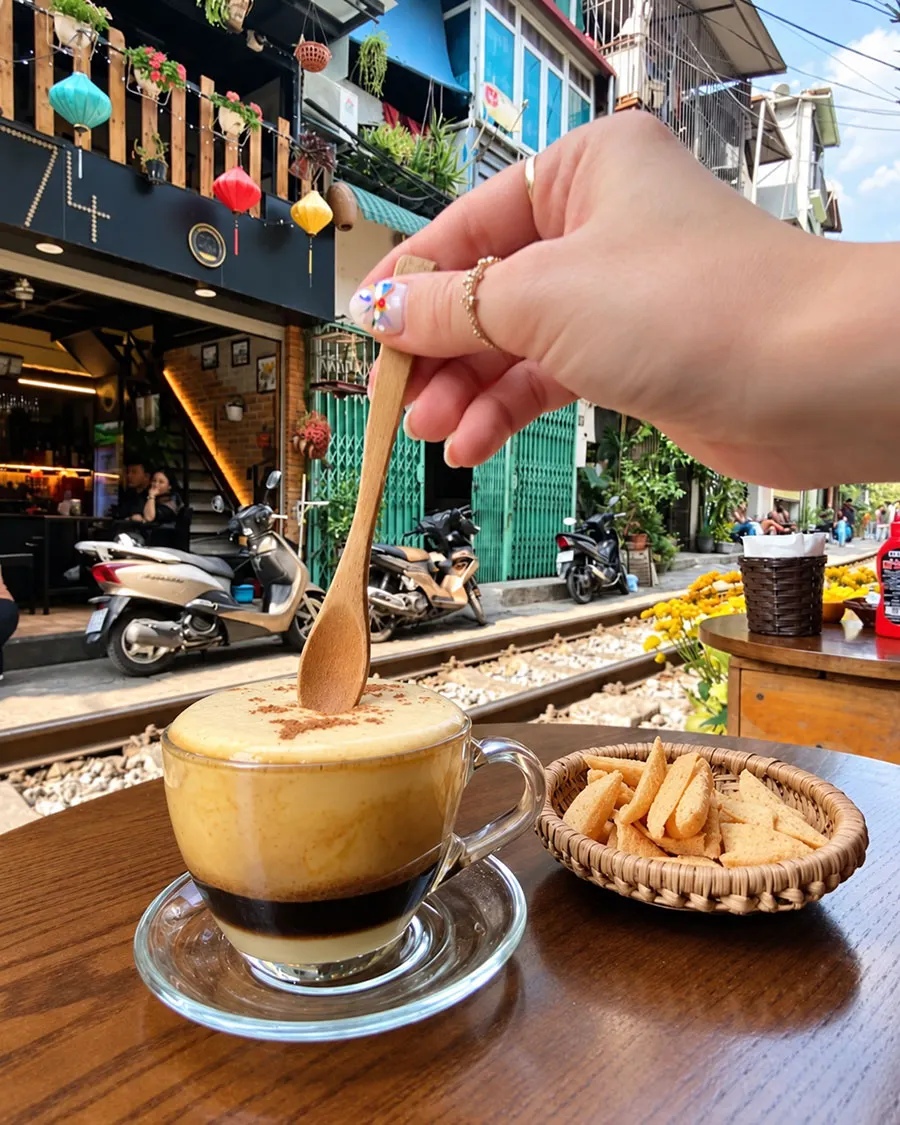
Egg coffee, or cà phê trứng, is the most fitting drink to order near the railway. It usually combines strong Vietnamese coffee with a thick topping made from whipped egg yolk, sugar and condensed milk.
The flavor is closer to coffee-flavored custard than an ordinary latte. It is sweet, rich and creamy, with the bitterness of the coffee preventing the topping from becoming overwhelming.
Some cafés serve the cup in warm water to maintain its temperature. Stir lightly if you want the layers to blend, or taste the foam and coffee separately before mixing them.
Local Tip: Egg coffee is quite filling. If you plan to eat a full meal in the Old Quarter afterward, share one cup or order it as your dessert.
Vietnamese Black Coffee and Coffee with Condensed Milk
Travelers who prefer a stronger drink can choose cà phê đen, Vietnamese black coffee. It is normally prepared with robusta beans and has an intense, earthy character.
Cà phê sữa đá softens that strength with condensed milk and ice. It is refreshing during Hanoi’s warm, humid months but can be noticeably sweeter than coffee commonly served in Europe or North America.
Ask for “less sweet” when ordering if you do not enjoy heavily sweetened drinks. Not every café can adjust a mixture that has already been prepared, but it is worth requesting.
Hanoi Beer
A cold Hanoi beer is a simple choice for a late-afternoon visit. Its light, crisp profile works well with fried snacks and provides relief from the heat.
Drink responsibly, particularly beside an active railway. Train Street is not an appropriate place to become distracted or unsteady, and the tracks should never be treated like a bar terrace.
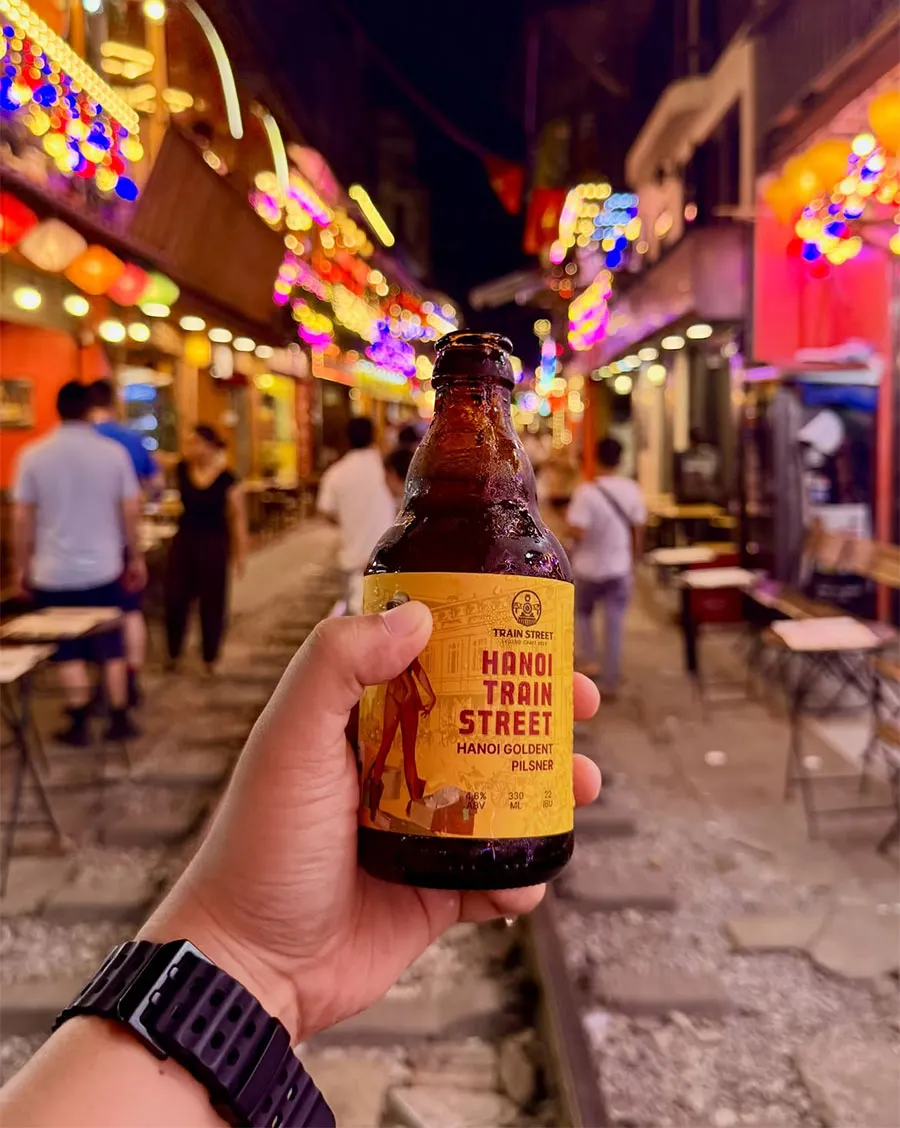
Tea, Juice and Coconut Drinks
Non-coffee drinkers can usually find lemon tea, peach tea, bottled soft drinks, juice or fresh coconut. Menus vary between cafés, and seasonal fruit may not always be available.
Lemon tea is light and inexpensive, while coconut water is particularly refreshing in summer. Bottled water is also worth ordering if you have been walking through central Hanoi.
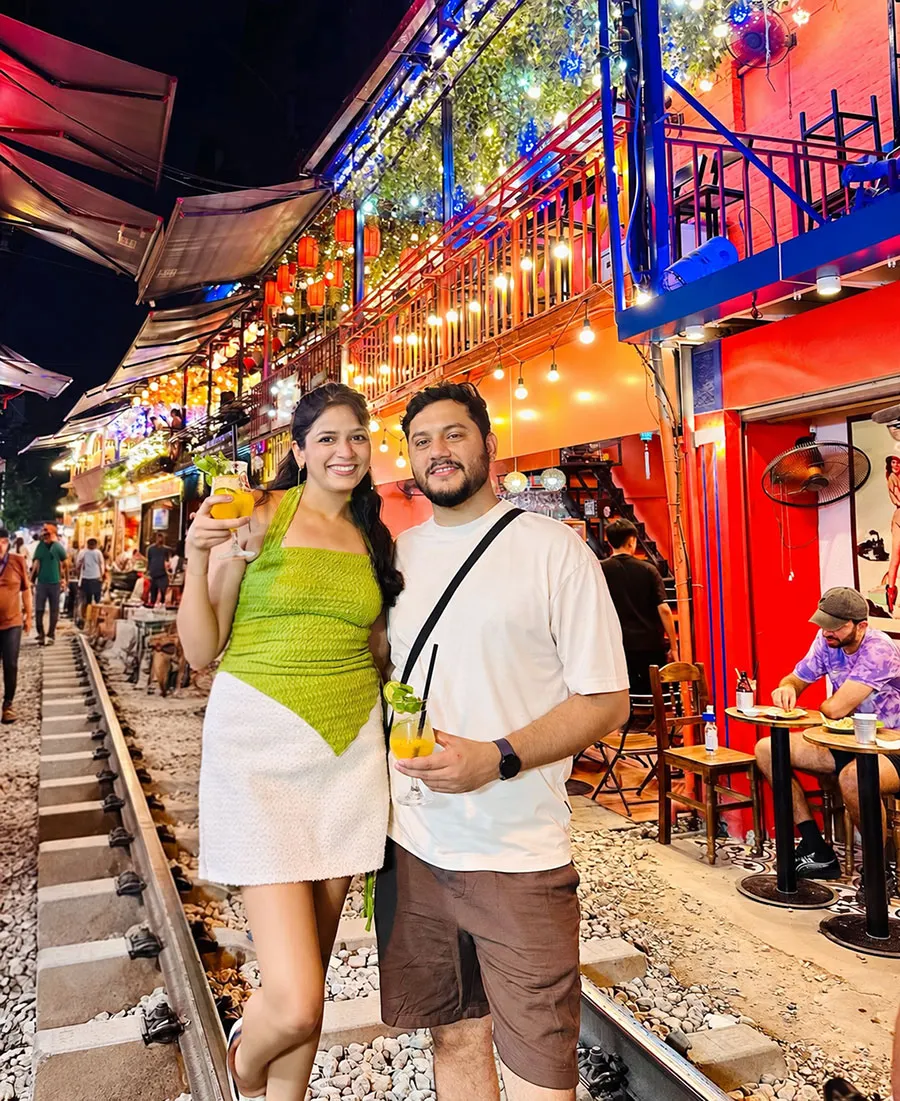
What to Eat at Hanoi Train Street
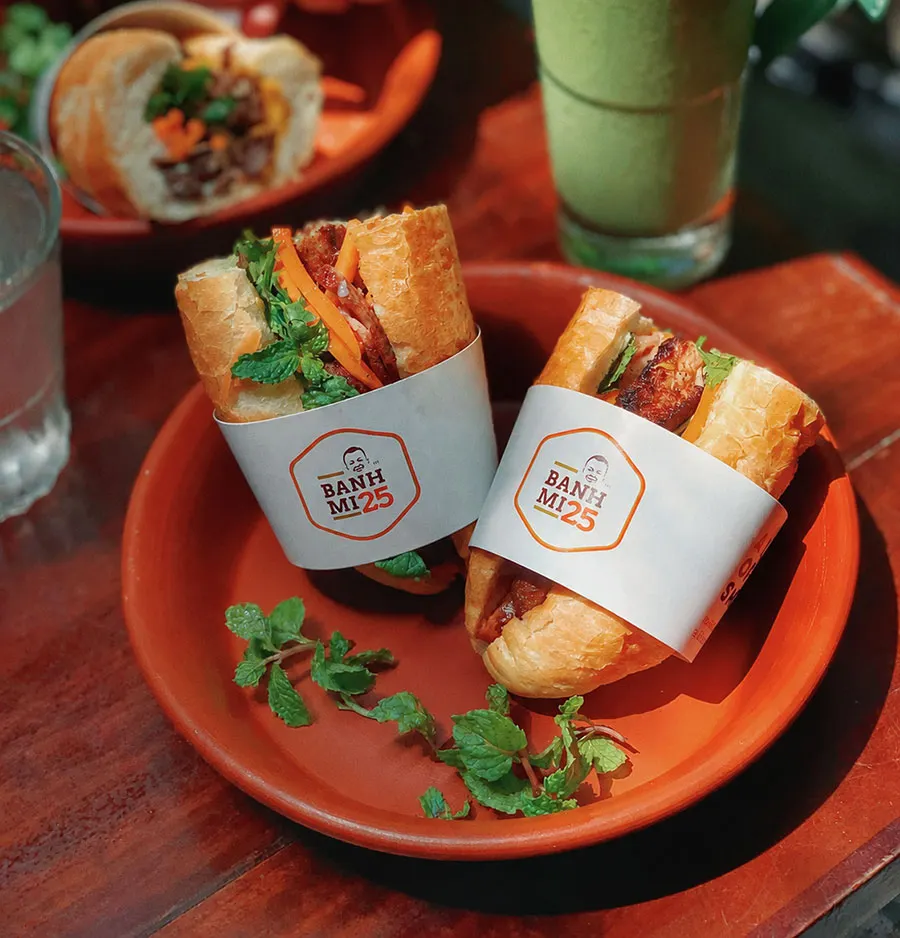
Bánh Mì for a Quick Meal
A Vietnamese bánh mì is one of the most practical foods to eat near Train Street. The crisp baguette may be filled with pork, pâté, egg, cucumber, herbs, pickled vegetables and chili sauce.
Quality and fillings differ between vendors. A busy stall preparing sandwiches to order is generally preferable to one displaying completed bánh mì for a long period.
For travelers with limited time, a bánh mì and Vietnamese coffee make a convenient light breakfast or lunch. Vegetarians should confirm whether the filling, pâté and sauce contain meat or fish products.
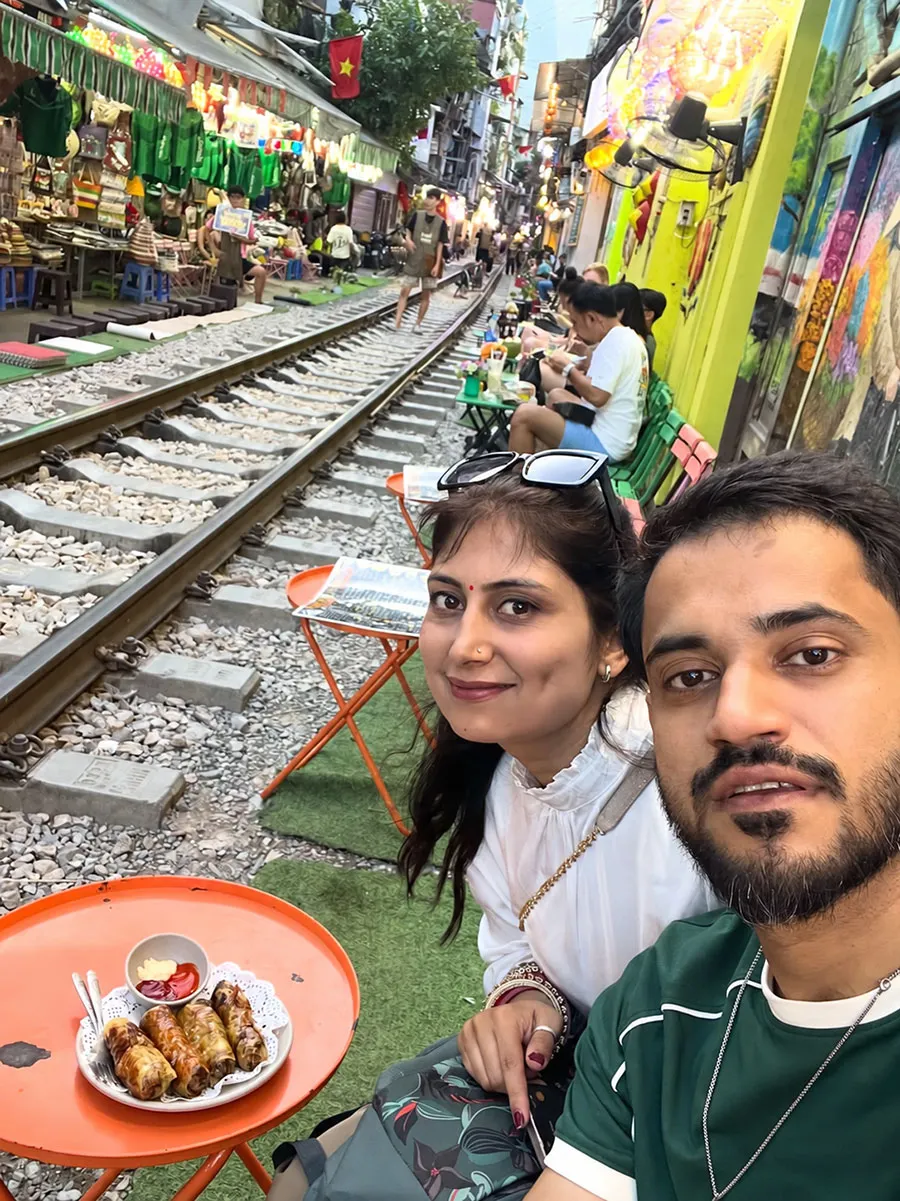
Fresh and Fried Spring Rolls
Fresh spring rolls may contain rice noodles, herbs, vegetables and pork or shrimp wrapped in rice paper. They taste clean and refreshing, although availability depends on the café.
Fried spring rolls, known in northern Vietnam as nem rán, are richer and more satisfying. The crisp wrapper often contains minced pork, mushrooms, glass noodles and vegetables.
Eat fried rolls while they are hot and freshly cooked. If you have a sensitive stomach, choose cooked fillings and avoid sauces that appear to have been sitting uncovered.
French Fries, Toast and Café Snacks
Many railway cafés cater to international visitors, so menus often include fries, toast, crackers or packaged snacks. These are not essential Hanoi specialties, but they can be useful for families, picky eaters and travelers who only want something familiar with their drink.
The advantage is convenience; the disadvantage is that these foods reveal little about the city’s culinary identity. Order a simple snack here, then save your appetite for a proper local meal nearby.
Should You Order Phở on Train Street?
A café may advertise phở or another noodle dish, but Train Street is not necessarily the best place to seek Hanoi’s finest bowl. Specialist shops usually have faster turnover, better broth and a more focused menu.
If tasting local food is your priority, enjoy a drink beside the railway and look for phở, bún chả or chả cá elsewhere. Our guide to what to eat in Hanoi can help you plan the next stop.
Best Food to Try Near Hanoi Train Street
The streets surrounding the railway provide a much deeper food experience than the café-lined tracks themselves. Depending on which section you visit, central Hanoi and the Old Quarter can be reached on foot or by a short taxi ride.
Look for these local favorites:
- Bún chả: Grilled pork, rice noodles, herbs and a savory dipping broth.
- Phở bò: Rice noodles served in fragrant beef broth with herbs.
- Chả cá: Turmeric-marinated fish cooked with dill and spring onion.
- Bánh cuốn: Delicate steamed rice rolls with minced pork and mushrooms.
- Xôi: Sticky rice served plain or with savory toppings.
- Nộm bò khô: A refreshing salad with green papaya, herbs and dried beef.
Rather than choosing a restaurant only because it is closest to the tracks, look for a focused menu and steady local trade. A guided Hanoi food tour can also make unfamiliar dishes easier to understand and order.
How to Choose a Good Café at Hanoi Train Street
Choosing the right café at Hanoi Train Street can make a noticeable difference to your experience. Although many cafés offer similar drinks and snacks, seating arrangements, menu choices and service can vary.
Rather than choosing a café simply because it appears closest to the railway, focus on comfort, clear pricing and whether the seating area is officially accessible.
Check the Menu Before Ordering
Most Train Street cafés specialize in Vietnamese coffee, tea, bottled drinks and simple snacks. Some offer bánh mì, spring rolls or other light dishes, but availability can change throughout the day.
Ask to see the menu before sitting down, especially if you have a limited budget. Confirm the price of specialty coffee, beer or food combinations rather than assuming every café charges the same amount.
Local Tip: If your main goal is to try traditional Hanoi cuisine, order one drink at Train Street and enjoy your main meal at a dedicated local restaurant nearby.
Choose Comfort and Safety Over the Closest View
A seat directly beside the railway may look exciting in photographs, but proximity to the tracks should never be your priority. Hanoi Train Street is an active railway area, and public access may be restricted without notice.
Choose only an authorized seating area, follow official instructions and avoid cafés encouraging visitors to stand or pose on the tracks. If access is closed, enjoy coffee elsewhere rather than attempting to enter through another route.
Know What Makes the Experience Worthwhile
The appeal of a Train Street café is the combination of Vietnamese coffee, a historic neighborhood and an unusual railway setting. It is not necessarily the best location for a complete Vietnamese meal.
For first-time visitors, a relaxed coffee stop followed by a traditional lunch or dinner nearby offers a better balance of sightseeing and local food.
How Much Do Food and Drinks Cost?
A typical drink at Hanoi Train Street costs approximately VND 30,000–60,000, although prices depend on the café and order. Specialty beverages, alcoholic drinks and large fruit drinks may cost more.
Simple snacks commonly fall around VND 30,000–80,000, while a fuller dish can be higher. Menus and prices change, so check the listed price before ordering rather than relying on an old social-media post.
A reasonable budget is:
| Experience | Estimated budget per person |
|---|---|
| One coffee or soft drink | VND 30,000–60,000 |
| Drink with a light snack | VND 70,000–150,000 |
| Railway café plus a meal nearby | VND 150,000–300,000 |
Carry small Vietnamese banknotes, but keep valuables secure. Card payments should not be assumed at small independent cafés.
When Is the Best Time to Eat and Drink There?
Early morning offers cooler temperatures, softer light and a calmer atmosphere. Late afternoon has more energy but can also bring heavier crowds.
Train times and access arrangements can change without notice. Never build your entire visit around an unofficial online timetable; ask at your accommodation or check conditions locally on the day.
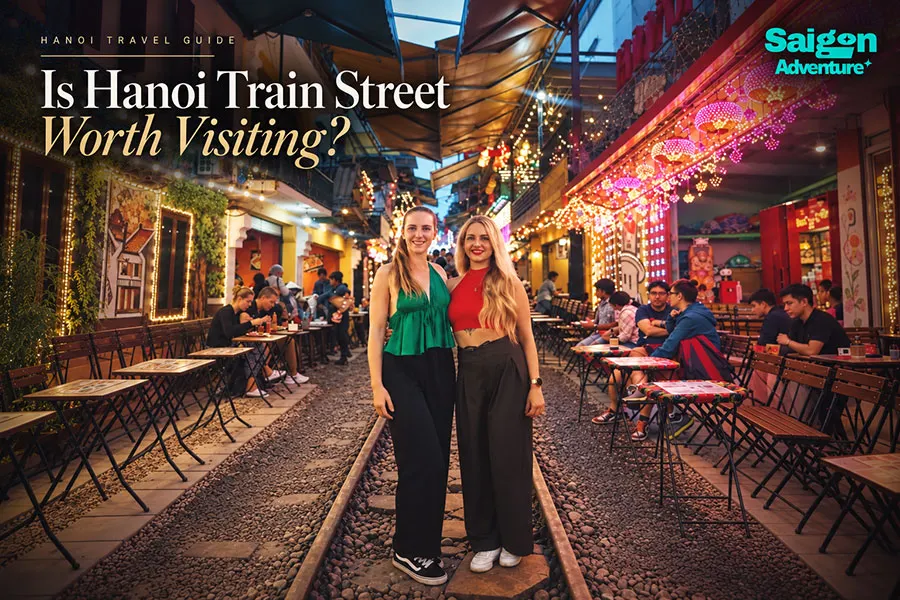
If you want to photograph the neighborhood without a train, visit during daylight when visibility is good. For more realistic planning advice, read our honest guide to whether Hanoi Train Street is worth visiting.
Rain can make the narrow area slippery, while summer midday heat may feel uncomfortable. October to April generally provides milder walking conditions, although Hanoi’s winter can be cool and damp.
Is Eating at Hanoi Train Street Worth It?
Yes—if you see the café visit as part of the railway atmosphere rather than Hanoi’s ultimate food experience. Egg coffee beside the tracks is distinctive, photogenic and easy to combine with sightseeing in central Hanoi.
The main advantages are the memorable location, accessible drinks and unusual urban setting. The disadvantages include crowds, limited menus, variable access and prices that may be higher than at ordinary neighborhood cafés.
Food-focused travelers should spend only enough time for one drink and perhaps a snack. Continue into the Old Quarter for a fuller introduction to northern Vietnamese cooking and local dining culture.
Who Will Enjoy the Experience Most?
Train Street works particularly well for first-time visitors, photographers, couples and travelers who enjoy unconventional cafés. Families can visit, but adults must supervise children continuously.
It may not suit travelers who dislike noise, crowds or tight spaces. People with limited mobility may also find the uneven surfaces, narrow entrances and small stools uncomfortable.
Visitors seeking a quiet cultural experience should arrive early or choose a traditional café elsewhere. Our Hanoi first-time visitor guide can help you compare the railway with other attractions.
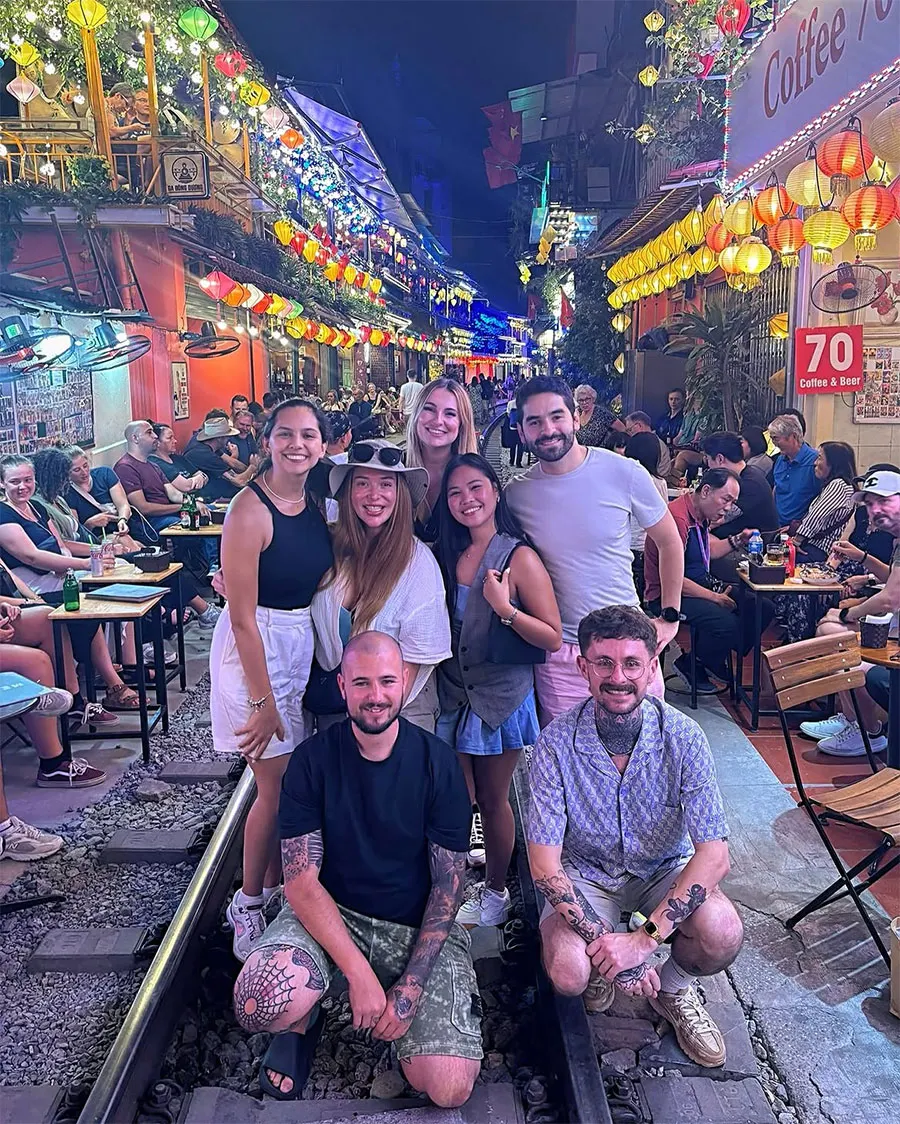
Safety and Etiquette Beside the Railway
Hanoi Train Street remains an active railway environment, and authorities may restrict entry because of safety concerns. Barriers, café access and operating conditions can change, so follow police instructions and never argue with officials.
Remain inside the designated café area and obey staff immediately when they ask you to move. Do not sit, walk, film or place belongings on the rails, even when no train is visible.
Keep these rules in mind:
- Never chase a photograph in front of an approaching train.
- Do not lean toward the train as it passes.
- Keep children beside you rather than near the tracks.
- Avoid headphones while walking around the railway.
- Do not block residents’ homes or private entrances.
- Leave immediately if police or railway staff close the area.
Visitors should also remember that this is a residential neighborhood, not a film set. Speak at a reasonable volume, request permission before photographing residents and support businesses without pressuring owners for access.
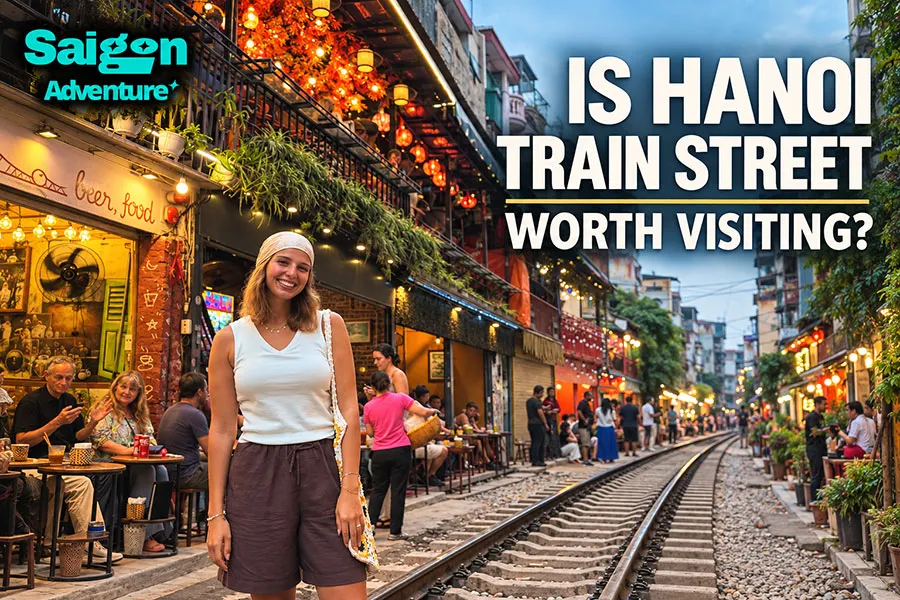
How to Plan the Perfect Train Street Food Stop
Allow approximately 45–60 minutes for a relaxed drink, but remain flexible. Choose a café only after confirming the menu, prices and seating arrangement.
Order egg coffee if you want a Hanoi specialty, or iced Vietnamese coffee during hot weather. Add a freshly cooked snack if hungry, then continue to a specialist restaurant for your main meal.
The best plan is simple: treat Train Street as one memorable café stop within a larger Hanoi food itinerary. This creates a more satisfying day than expecting one narrow railway corridor to represent the capital’s entire culinary scene.
Experience Hanoi Train Street Through Its Food and Coffee
Hanoi Train Street delivers something genuinely unusual: the comfort of a small coffee, the textures of an old neighborhood and the sudden intensity of a working train passing through an impossibly narrow space.
Come for the railway atmosphere, order an egg coffee or cold local drink, and save room for bún chả, phở or bánh cuốn nearby. With realistic expectations and careful respect for safety rules, this can become one of the most memorable short stops on your Hanoi journey.
Frequently Asked Questions
What food is available at Hanoi Train Street?
Visitors can usually find bánh mì, fried spring rolls, fresh rolls, fries, toast and other light café snacks. Menus vary, and the selection is far smaller than in Hanoi’s established food streets or markets.
What is the best drink to order at Hanoi Train Street?
Egg coffee is the most distinctive choice because it originated in Hanoi and combines strong coffee with a rich, custard-like topping. Vietnamese iced coffee, local beer, lemon tea and coconut water are also popular.
How much is coffee at Hanoi Train Street?
Coffee and other standard drinks commonly cost around VND 30,000–60,000. Prices vary by café, drink size and ingredients, so inspect the menu before ordering.
Do you have to buy a drink to visit Train Street?
There is no universal attraction ticket, but access through a café may involve ordering something. Entry conditions are changeable, and visitors must respect barriers, official restrictions and instructions given on the day.
Can vegetarians eat near Hanoi Train Street?
Yes, but confirm ingredients carefully. Vegetarian bánh mì, fresh rolls and fruit drinks may be available, while sauces, pâté and fillings can contain fish sauce, meat or egg.
Is Hanoi Train Street safe for tourists?
It involves an active railway and therefore carries genuine risk. Remain in an authorized area, follow staff and police directions, stay off the rails and never approach a moving train for photographs.
When should I visit Hanoi Train Street?
Early morning is generally cooler and less crowded, while late afternoon offers a livelier atmosphere. Access and train movements can change, so verify local conditions rather than relying on an old timetable.