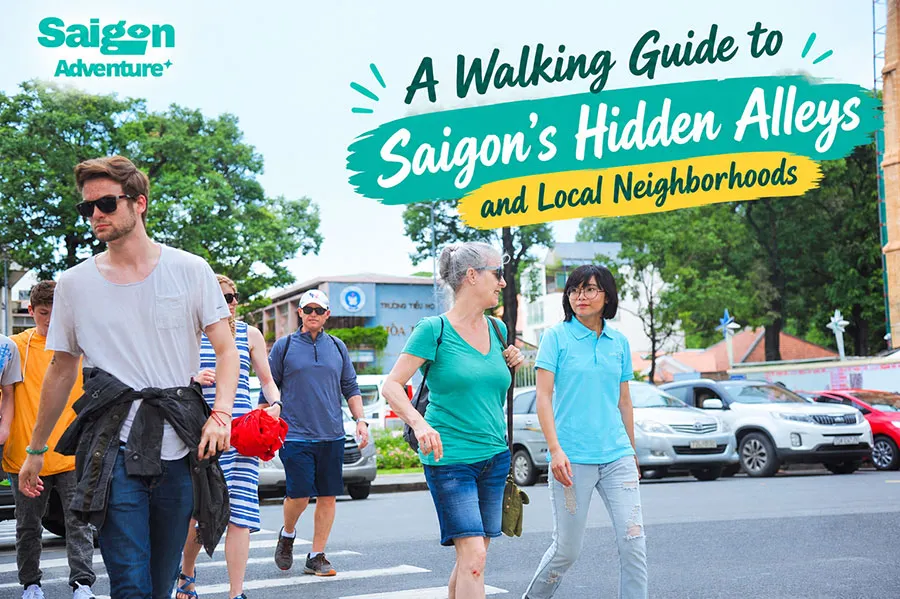
Saigon’s grand boulevards may lead you to famous landmarks, but its narrow alleys reveal how the city truly lives. Exploring Saigon’s hidden alleys on foot brings you past family kitchens, tiny coffee stalls, neighborhood markets, old apartment blocks and homes that have stood for generations.
These lanes, known locally as hẻm, are not designed as tourist attractions. They are living communities where residents cook, work, socialize and raise their families, sometimes only a few meters from the traffic of a major road.
A thoughtful walk through them offers something conventional sightseeing rarely can: an intimate view of everyday Ho Chi Minh City.
Travelers who want more local context can join a guided Saigon walking tour to discover neighborhood stories and hidden places that are easy to miss alone.
Why Saigon’s Alleys Matter
Many visitors initially see an alley as a shortcut between two busy streets. In Saigon, however, an alley can function as an entire neighborhood.
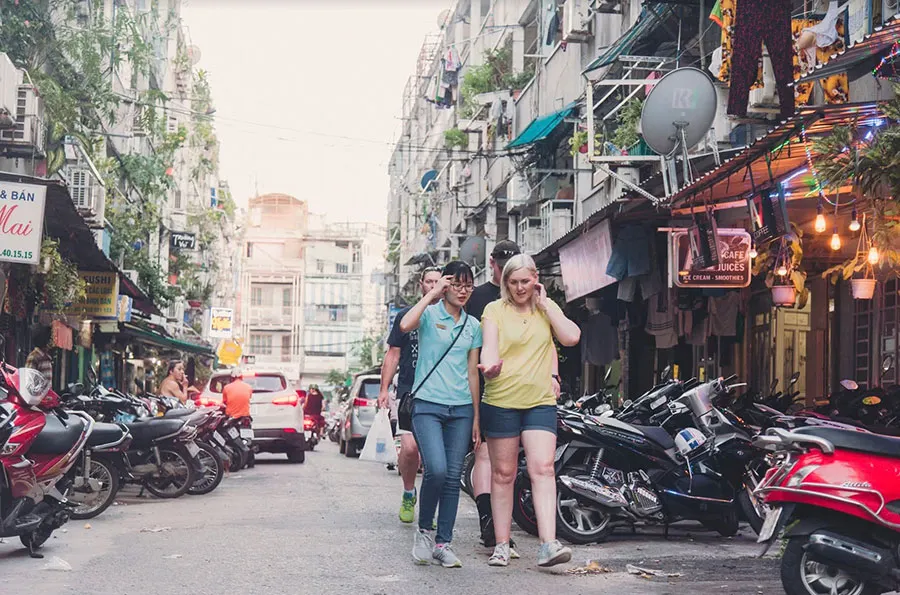
Walk a little farther inside and you may find grocery shops, barbers, workshops, cafés, shrines and food vendors. Motorbikes are parked outside narrow homes, neighbors chat from their doorways and the smell of grilled pork drifts from a kitchen preparing the next meal.
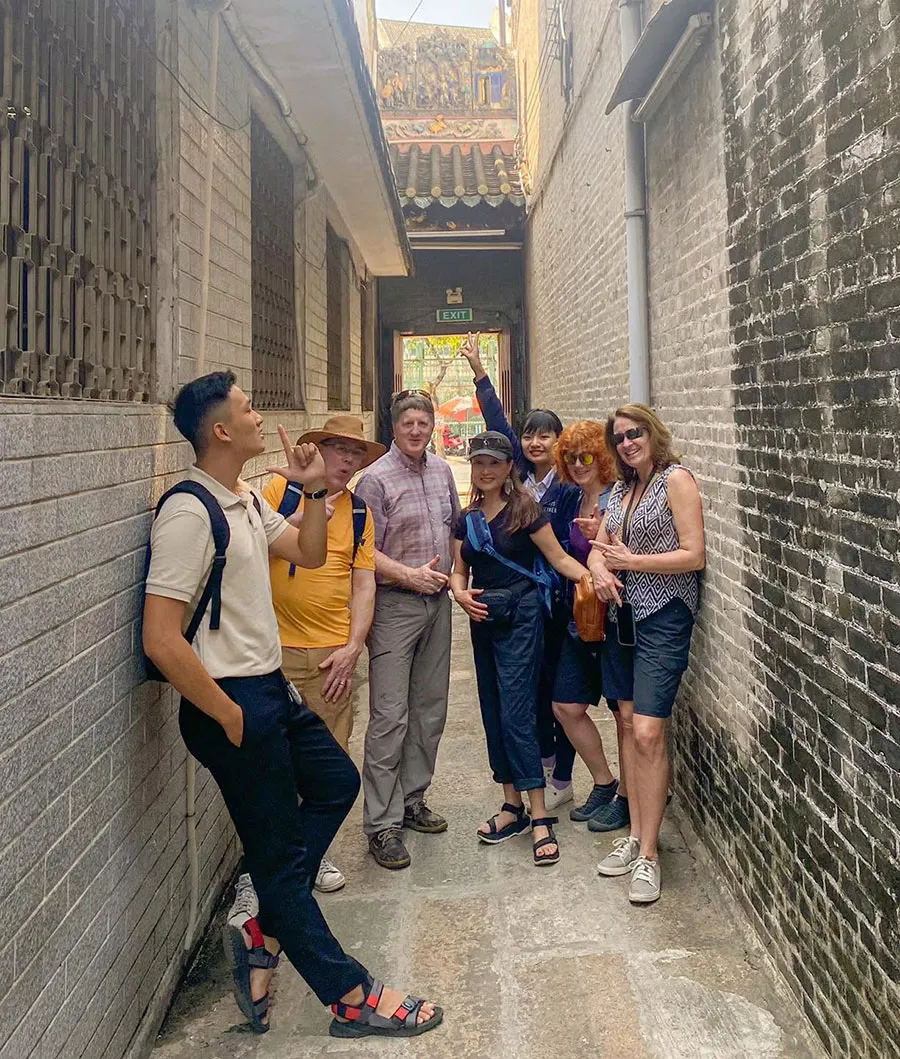
Some alleys are wide enough for cars, while others narrow into passages where two people can barely walk side by side. Several divide repeatedly, forming a maze of smaller lanes that feels completely removed from the avenue outside.
This contrast is part of what makes an alley walking tour in Ho Chi Minh City so rewarding. Within minutes, you can move from commercial chaos into a quiet residential world.
Understanding Saigon’s Addresses Before You Walk
An address containing a slash often indicates that the property is inside an alley. For example, a location written as 25/8 may be reached by entering the alley at number 25 and continuing until you find house number 8.
Some addresses contain several slashes because the home sits deeper inside a network of smaller branches. Finding these places can be confusing, even for local residents who are unfamiliar with the neighborhood.
Google Maps is helpful, but it does not always distinguish between pedestrian passages, private entrances and lanes accessible to motorbikes. Look for house numbers near the entrance and politely ask a resident or vendor if you lose your way.
Local Tip: Save your destination and nearby main street before entering. Mobile signals usually work, but closely packed buildings can make map positioning less precise.
Start with the Old Residential Alleys of Central Saigon
Begin your walk near the central area, where residential lanes sit behind some of the city’s busiest streets. The former District 1 area is an easy starting point because it combines historic buildings, local food and convenient access from most central hotels.
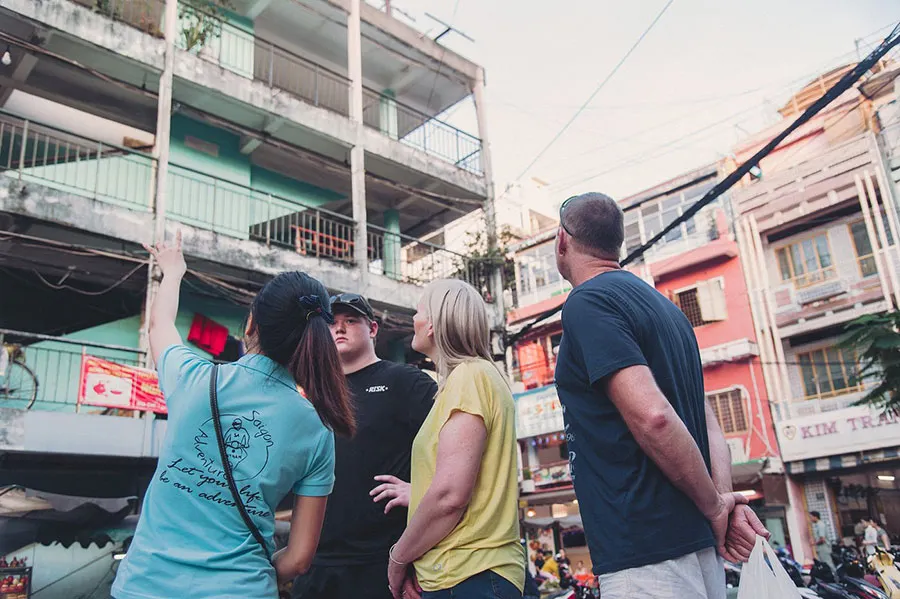
Step away from roads such as Trần Hưng Đạo, Cô Giang or Nguyễn Cư Trinh and the atmosphere quickly changes. You may see weathered townhouses with tiled floors, metal balconies, potted plants and open front rooms that double as small businesses.
These central alleys are especially interesting in the morning. Residents buy breakfast, delivery drivers unload ingredients and vendors prepare coffee before the heat becomes intense.
Do not expect every alley to contain a famous attraction. The pleasure comes from noticing small details: a handwritten menu, a family shrine above a doorway, birds singing in cages or a chess game taking place beside parked scooters.

Explore Bàn Cờ’s Chessboard-Like Neighborhood
The residential streets of the former District 3 contain some of the best areas for slow urban exploration. Bàn Cờ is particularly suitable because its intersecting lanes resemble a chessboard and create a dense neighborhood filled with food stalls, cafés and everyday activity.
District 3 was officially reorganized in July 2025, and its former territory is now divided among Bàn Cờ, Xuân Hòa and Nhiêu Lộc wards. Travelers and businesses still commonly use “District 3” as a familiar geographic name. Vietcetera’s post-merger guide explains the updated ward structure.
Around Bàn Cờ, you can combine quiet residential lanes with a visit to a wet market or a casual lunch. Look for dishes such as cơm tấm with grilled pork, bún thịt nướng, noodle soup or freshly prepared Vietnamese snacks.
The area feels liveliest in the early morning and late afternoon. At midday, many stalls close or slow down, while residents retreat indoors to avoid the strongest heat.
Local Tip: Instead of searching for one “famous” alley, choose a market as your starting point and explore the surrounding lanes. This creates a more natural walk and reduces the temptation to treat someone’s home as a sightseeing prop.
Discover Community Life in the Former District 4
Crossing from the city center into the former District 4 area reveals another side of Saigon. The neighborhood is known for compact residential blocks, lively food streets and a strong connection to the waterways surrounding it.
The most rewarding lanes are often those branching away from busy roads such as Tôn Đản and Vĩnh Khánh. Inside, you may find family-run eateries serving snails, seafood, rice dishes, sweet soups and savory pancakes.
Evening is the best time for food, but morning provides a calmer atmosphere for walking and photography. Laundry hangs between houses, residents shop for ingredients and small cafés serve strong iced coffee to regular customers.
If you visit after dark, remain aware of motorbikes moving through narrow spaces. Walk close to the side without blocking doorways or food stalls.

Walk Through Chợ Lớn’s Chinese-Vietnamese Heritage
For architecture and cultural history, head toward Chợ Lớn, Saigon’s historic Chinatown. The former District 5 area contains temples, herbal medicine shops, traditional businesses and residential lanes shaped by generations of Chinese-Vietnamese community life.
Hào Sĩ Phường is one of the best-known heritage alleys in the area. Its closely arranged two-story houses and Chinese-influenced architecture provide a glimpse of an older urban Saigon. The city’s official tourism map lists it at 206/17 Trần Hưng Đạo Street in Chợ Lớn Ward. Ho Chi Minh City Tourism describes it as an alley with more than a century of history.
However, it is important to remember that this is a residential space rather than an outdoor photography studio. Residents have previously expressed concerns about intrusive visitors and unauthorized photography.
Enter quietly, obey any signs and never photograph people, house interiors or private activities without permission. If access appears restricted, admire the entrance and continue exploring public streets nearby.
You can combine the area with a walk around traditional markets, temples and old shopfronts. This provides richer cultural context than visiting one photogenic alley alone.
What to Eat During an Alley Walk
Food is one of the best reasons to explore local neighborhoods in Saigon. Many excellent vendors operate from modest spaces with only a few tables, a compact cooking station and a menu displayed on the wall.
Food lovers who want to explore beyond one neighborhood can take a Ho Chi Minh City motorbike food tour to reach family-run eateries hidden across the city.
Morning options may include bánh mì, bánh cuốn, broken rice, noodle soup, sticky rice or Vietnamese coffee. In the afternoon, look for fresh spring rolls, savory cakes, fruit, sweet soup and small snacks served from carts.
Travelers interested in tasting a wider variety of local specialties can also explore the Saigon Street Food Lover tour, which combines neighborhood discoveries with authentic Vietnamese dishes.
Choose stalls that are busy with local customers and prepare food continuously. High turnover usually means ingredients spend less time sitting at room temperature.
Prices may not always be displayed, so ask before ordering if you are uncertain. You can say, “Bao nhiêu tiền?” meaning “How much?” Carrying small Vietnamese banknotes makes paying easier.
Local Tip: Order one dish at a time and share it if you are walking with someone. You will have more opportunities to taste different foods without becoming full at the first stop.

Alley Etiquette Every Visitor Should Know
The most important rule is simple: behave as if you have entered someone’s neighborhood—because you have.
Keep your voice low, move aside for residents and avoid standing in front of doorways. Never lean on parked motorbikes, enter private courtyards or point a camera into an open home.
Always ask before photographing people. A smile and a gesture toward your camera are often enough, but a person who turns away or looks uncomfortable has already given you an answer.
Dress comfortably but respectfully, particularly if your route includes temples or community shrines. Shoulders and knees should be covered when entering religious spaces, and shoes may need to be removed.
Avoid bringing large groups into extremely narrow alleys. A solo walk, a small group or a responsible local tour creates far less disruption.
Safety Tips for Walking Through Saigon
Saigon is generally rewarding to explore on foot, but its traffic requires constant attention. Motorbikes can enter alleys from either direction, even where the passage appears too narrow for vehicles.
Walk predictably and avoid sudden movements. When crossing a street, choose a clear moment, move at a steady pace and continue watching all directions.
Keep your phone and camera secure, especially near the entrance to a busy road. Do not stand at the edge of traffic while checking maps or taking photos.
Daylight is best for unfamiliar residential areas. Early morning from approximately 7:00 to 10:00 offers cooler temperatures, active markets and good natural light, while late afternoon from around 4:00 to 6:00 brings another wave of neighborhood activity.
Bring water, sun protection and a lightweight rain jacket during the wetter months. Comfortable shoes with good grip are more useful than fashionable footwear because pavements can be uneven or slippery.

Self-Guided Walk or Local Walking Tour?
A self-guided walk offers freedom. You can pause for coffee, change direction and explore at your own pace without following a fixed itinerary.
The disadvantage is that much of what you see may lack context. A small shrine, unusual architectural detail or humble food stall can have a fascinating story that is difficult to understand without local knowledge.
A guided Saigon walking tour is better for travelers who want cultural explanations, help ordering food and reassurance when navigating complicated neighborhoods. A local guide can also identify which passages are public and which should remain private.
For a wider route covering neighborhoods located farther apart, consider combining walking with a scooter tour. Walking reveals the details within each community, while a scooter makes it possible to experience several different areas in one morning or evening.
A Simple Half-Day Alley Walking Plan
Begin around 7:30 a.m. in a central residential neighborhood and stop for Vietnamese coffee or breakfast. Spend about an hour observing the morning rhythm before moving toward Bàn Cờ.
Explore the market area and surrounding lanes, then try one or two local dishes for an early lunch. Finish near a main road where you can easily book a taxi or continue to another attraction.
Do not attempt to walk from central Saigon to every neighborhood mentioned in this guide. The distances, heat and traffic would make the experience exhausting.
Visitors with limited time can join a Saigon motorbike city tour to connect local neighborhoods, markets and hidden alleys without spending hours walking between them.
Choose one area for a two-hour walk or connect two neighborhoods using a reputable taxi, ride-hailing service or guided scooter experience.
Discover the Real Saigon Beyond the Main Streets
The city’s famous attractions explain important chapters of its history, but its alleys show how Saigon functions from one ordinary day to the next. They reveal a city built around close communities, adaptable homes, informal businesses and food shared only steps from the family kitchen.
Exploring Saigon’s hidden alleys and local neighborhoods is not about collecting secret locations. It is about slowing down, paying attention and entering residential spaces with genuine respect.
You can explore independently, but traveling with a knowledgeable local guide may help you understand the stories behind what you see. However you choose to go, remain curious, ask before taking photographs and leave each neighborhood exactly as you found it.
Frequently Asked Questions
Are Saigon’s hidden alleys safe for tourists?
Most active residential alleys are comfortable to explore during the day. Stay aware of motorbikes, secure your valuables and avoid poorly lit or deserted passages late at night.
What is a Saigon alley called in Vietnamese?
The Vietnamese word is hẻm. It may describe anything from a broad residential lane to a narrow pedestrian passage between houses.
What is the best time for an alley walking tour?
Early morning from around 7:00 to 10:00 is ideal for markets, breakfast and cooler weather. Late afternoon is also pleasant, while midday can be hot and quieter.
Can I photograph people inside Saigon’s alleys?
Always request permission before photographing residents, children, house interiors or private activities. Architecture and general street scenes may be photographed where permitted, but posted restrictions must be respected.
Which neighborhoods are best for exploring local Saigon?
The central residential lanes, Bàn Cờ, the former District 4 area and Chợ Lớn each offer a different experience. Choose one or two areas rather than trying to cover all of them in a single walk.
Should I explore alone or join a guided tour?
Independent walking is suitable for confident travelers who enjoy wandering. A local guide is more valuable if you want cultural context, food recommendations and easier navigation through complicated alleys.
What should I bring on a Saigon walking tour?
Wear comfortable shoes and bring water, sunscreen, small Vietnamese banknotes and a charged phone. During the rainy season, add a compact umbrella or lightweight rain jacket.