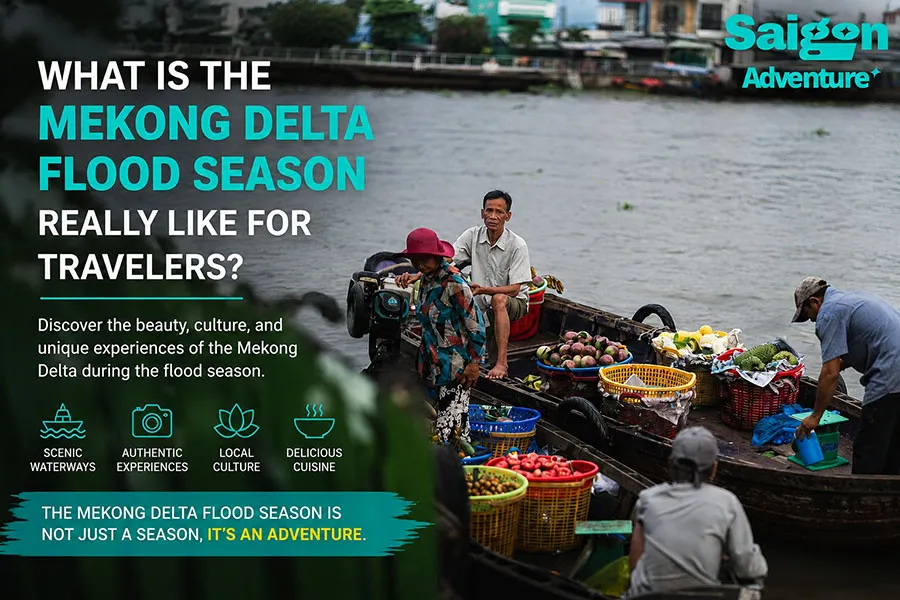
The word “flood” can make travelers imagine roads disappearing underwater, cancelled tours and endless rain. In the Mekong Delta, however, the annual flood season can look very different.
Locally known as mùa nước nổi, the floating season is a remarkable natural cycle. Water rises through rivers, canals and low-lying fields, changing the landscape and shaping the daily lives of communities across southern Vietnam.
For travelers, this can be one of the most fascinating times to visit the Mekong Delta. Boats become even more important, wetlands come alive, seasonal foods appear in local markets, and rural landscapes take on a completely different character.
But is it actually a good time to go?
Yes—with one important condition: you need to travel with the season rather than fight it.
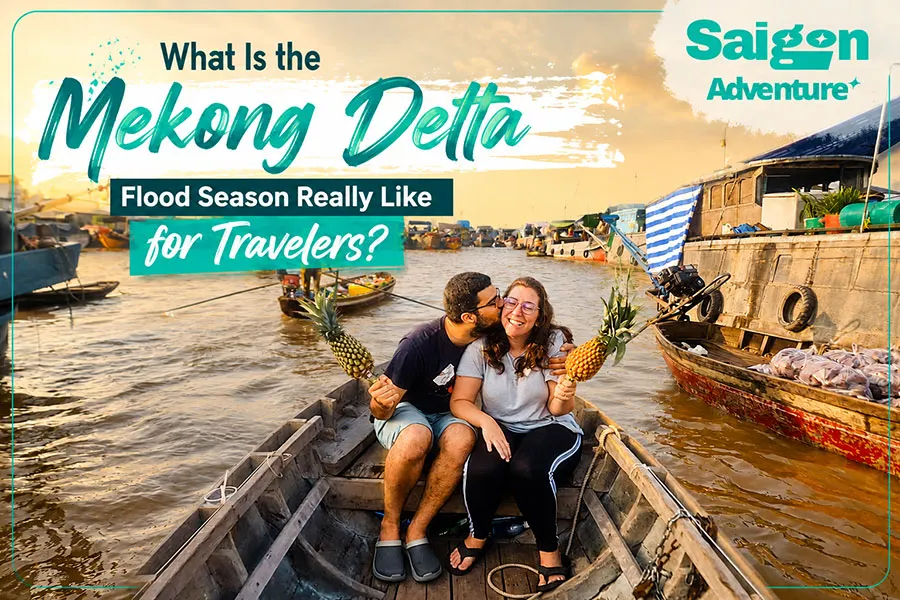
When Is the Mekong Delta Flood Season?
The broader Mekong Delta rainy season usually falls between May and November. However, the true floating season is more closely associated with the later part of the wet season, when water levels rise across floodplains and wetlands.
For many travelers, September to November is the most interesting period to experience seasonal flooding, particularly in parts of An Giang and Dong Thap.
The exact timing is never identical from one year to another. Rainfall, upstream water flow, tides and local conditions all influence how much water reaches individual areas.
That means a calendar can tell you when the season normally happens—but it cannot guarantee what a particular river, canal or field will look like on the day you arrive.
Flood season is not the same as nonstop rain
This is one of the biggest misconceptions about traveling to the Mekong Delta during flood season.
You may have a sunny morning, a humid afternoon and a short tropical downpour later in the day. Some days are wetter, while others can be surprisingly bright.
The important difference is between the rainy season and the floating season. Rain is weather. The annual flood pulse is a much larger natural process involving the Mekong River and surrounding floodplains.
What Does the Floating Season Actually Look Like?
Forget the image of a disaster zone.
In many parts of the Delta, seasonal flooding is a natural rhythm that people have lived with for generations. Water spreads across low-lying areas, fish move through flooded habitats and boats become an even more practical way to travel.
The scenery can feel wonderfully open.
Instead of seeing a dry rice field stretching toward the horizon, you might find shallow water reflecting the sky, palm trees rising from the flooded landscape and small boats moving quietly between patches of vegetation.
For photographers, the changing light can be spectacular. For travelers, the bigger attraction is seeing how the Mekong Delta way of life adapts to water.
Where Should You Go During Mekong Delta Flood Season?
Not every destination experiences the season in exactly the same way.
If your main goal is to see flooded landscapes, wetlands and seasonal rural life, look beyond the most famous tourist stops.
An Giang: one of the best places for seasonal water landscapes
An Giang, in the western Mekong Delta, is one of the most interesting provinces for experiencing the floating season.
The area around Chau Doc offers access to waterways, fishing communities, rural landscapes and wetlands. It is also a convenient base for exploring attractions further into the countryside.
The atmosphere here feels different from a quick floating-market excursion. You begin to see how rivers influence food, transport, agriculture and everyday routines.
Tra Su Cajuput Forest
One of An Giang’s most atmospheric attractions is Tra Su Cajuput Forest, a wetland area known for its waterways, cajuput trees and rich birdlife.
Small boats move through narrow channels surrounded by green vegetation. When conditions are right, the water becomes almost completely framed by layers of green.
Go early if possible.
Morning light is softer, temperatures are generally more comfortable and the forest can feel wonderfully peaceful before the day’s activity builds.
Dong Thap and the floodplain landscape
Dong Thap is another excellent choice for travelers interested in the Mekong Delta floating season.
The province includes parts of the Dong Thap Muoi floodplain, where seasonal water has long influenced agriculture, fishing and local livelihoods.
Depending on current conditions, visitors may see flooded fields, wetlands, water lilies and seasonal fishing activity.
This is the kind of experience where a knowledgeable local guide can make a major difference. They can explain what you are seeing instead of simply taking you from one photo stop to another.
What Can You Actually Do During Flood Season?
The best experiences are often simple.
Take a small boat through flooded wetlands
A boat ride feels particularly appropriate when water is the landscape.
Rather than speeding between attractions, small boats allow you to notice details: fishing nets, floating vegetation, riverside houses, birds above the trees and people moving between waterways.
Always wear the provided life jacket and follow your boat operator’s instructions, especially when boarding narrow boats.
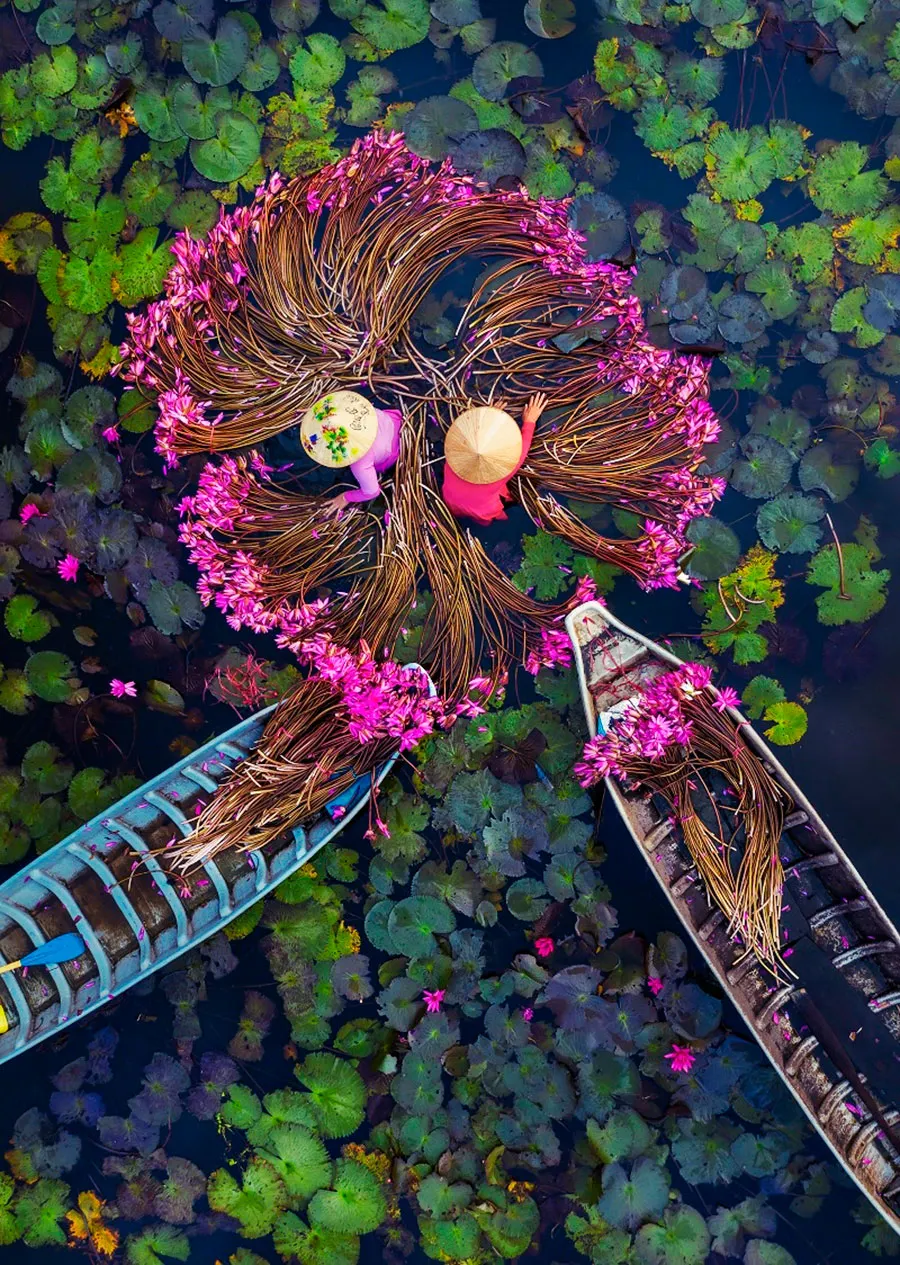
See seasonal water lilies
Water lilies are closely associated with the visual character of parts of the floating season.
In flooded areas of the western Delta, local people may collect water lilies for food or trade. When conditions are suitable, the sight of long stems and flowers spreading across shallow water can be unforgettable.
Do not assume every beautiful field is open for visitors.
Some areas are working agricultural or fishing zones. A responsible guide will know where visitors can enter without disrupting local activities.
Try seasonal Mekong Delta food
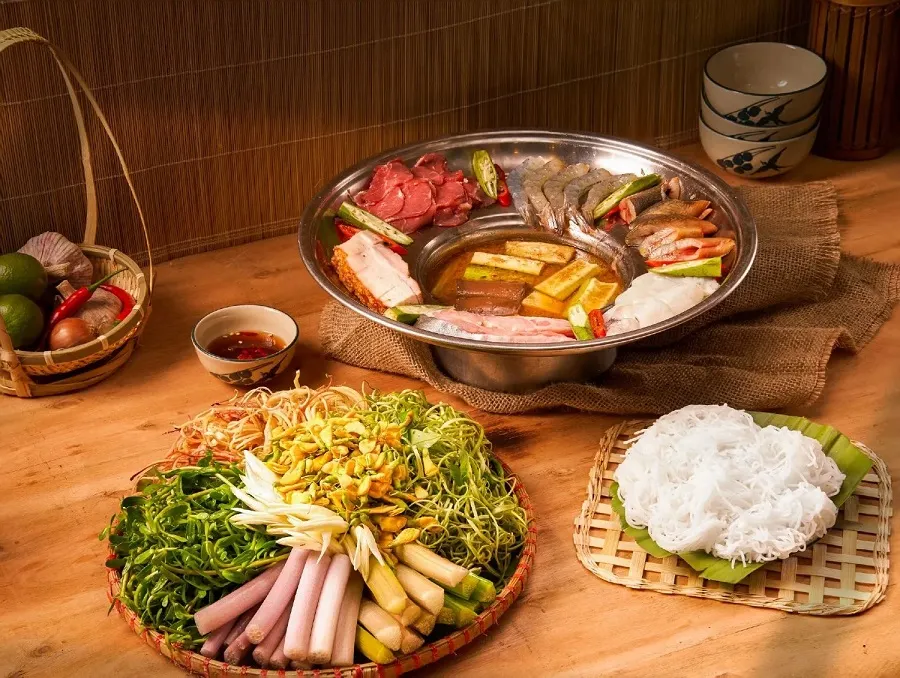
One of the most delicious reasons to travel during the floating season is the food.
You may encounter seasonal ingredients such as cá linh—a small freshwater fish—and bông điên điển, the yellow flower commonly used in regional dishes.
These ingredients are often associated with southern Vietnamese cooking during the flood season.
Ask what is fresh that day rather than looking for a fixed “flood season menu.” Local availability can change quickly with weather and water conditions.
Explore Chau Doc’s river culture
Chau Doc is particularly interesting because its identity is deeply connected to waterways and trade.
A local experience can introduce you to floating fish farms, riverside communities and the cultural diversity of the region.
Travel slowly here.
The most memorable moments may not be a major attraction. They can be a morning coffee beside the river, a ferry crossing or watching boats begin their daily routines.
Is the Mekong Delta Flood Season Safe for Tourists?
Under normal seasonal conditions, traveling the Mekong Delta during flood season can be perfectly manageable.
Tour operators, boat drivers and local communities are accustomed to changing water levels. Routes can often be adjusted according to weather and local conditions.
Still, seasonal water requires common sense.
Heavy rain can make paths slippery. Thunderstorms may affect boat trips, and unusually high water or strong currents can make certain routes unsuitable.
A good operator should be willing to change an itinerary rather than take unnecessary risks just to keep the original schedule.
Simple boat-safety tips
Keep your life jacket on during boat rides.
Step carefully when boarding and leaving the boat, particularly where wooden piers or narrow gangways are wet.
Keep cameras and phones inside a waterproof bag. A tropical rain shower can arrive much faster than expected.
Most importantly, listen to your local guide. They understand current river conditions better than a generic travel forecast written months earlier.
What Is the Weather Like During Flood Season?
Expect hot, humid and changeable weather.
Temperatures can remain high even when skies are cloudy. A rain shower may last only 20 or 30 minutes, while another day could bring several hours of unsettled weather.
The trick is to plan around the weather rather than expecting perfect conditions.
Early morning is often the best time for boat trips, cycling and outdoor photography. If possible, keep afternoons flexible for lunch, village visits or indoor activities.
And bring a rain jacket.
A compact poncho takes almost no space in a day bag and can save you from turning a beautiful rural adventure into a very wet memory.
What Should You Pack for the Mekong Delta Rainy Season?
You do not need specialist equipment.
Pack lightweight, breathable clothing, comfortable shoes with good grip and a compact rain jacket or poncho. Quick-drying fabrics are particularly useful.
A waterproof phone pouch or small dry bag is highly recommended for boat trips.
Also bring sunscreen, insect repellent, a hat and drinking water. If you plan to visit pagodas or religious sites, pack clothing that can cover your shoulders and knees.
One final tip: keep your luggage light.
Small boats, narrow paths and rural jetties are much easier to navigate with a compact day bag.
Why Visit the Mekong Delta During Flood Season?
There is a special feeling to seeing the Delta when water is everywhere.
The landscape becomes more dynamic. Rivers, canals and wetlands seem to merge, and activities that might look ordinary during the dry season suddenly make more sense.
Fishing, farming, boat transportation and seasonal food are all connected to the annual rise and fall of water.
It also offers a more authentic perspective on the region.
Instead of simply visiting a floating market and leaving, you begin to understand why water is central to life in the Mekong Delta.
For travelers who enjoy nature, local culture, photography and slow travel, this can be an excellent time to visit.
What Are the Downsides?
Flood season is not perfect for everyone.
Rain can interrupt outdoor activities. Humidity can feel intense, mosquitoes may be more noticeable around wetlands and muddy paths can make cycling or walking less comfortable.
The scenery is also unpredictable.
One year may produce spectacular flooded landscapes, while another may bring less dramatic water levels. Anyone promising exactly what the floodplain will look like months in advance is making a promise that nature cannot guarantee.
That uncertainty is part of the experience.
How to Plan a Mekong Delta Trip During Flood Season
If you have only one day, choose your destination carefully rather than trying to cover the entire Delta.
Can Tho is convenient for travelers who want easy access from Ho Chi Minh City, local food and an early-morning floating-market experience.
For a stronger focus on floating season landscapes, consider going farther west toward Chau Doc, An Giang or Dong Thap.
A flexible itinerary is always better.
Leave enough time between activities for rain, traffic, boat transfers and spontaneous local experiences. The Mekong Delta rewards travelers who are willing to slow down.
Local tip: check conditions shortly before you travel
Do not rely entirely on a travel article written months earlier.
A few days before your trip, ask your hotel or local tour operator about current water levels, weather and the best areas to visit.
Local information can tell you whether a particular wetland is looking spectacular, whether a boat route has changed or whether another destination currently offers a better experience.
That small conversation can make a big difference.
So, Is the Mekong Delta Flood Season Worth Experiencing?
Absolutely—if you know what you are signing up for.
The Mekong Delta flood season is not simply about rain. It is about water reshaping the countryside, feeding wetlands, influencing food and connecting communities.
You may get wet. Your boat schedule may change. Your shoes may get muddy.
But you may also glide through a flooded forest at sunrise, taste a seasonal dish you would never find at home, watch local boats move through the countryside and see a side of southern Vietnam that disappears when the water retreats.
That is what makes the floating season special.
If you want to experience the Mekong Delta beyond a rushed checklist of tourist attractions, Saigon Adventure can help you choose a route that fits your schedule while leaving room for real local experiences and changing seasonal conditions.
Ready to see the Delta from the water? Explore our Mekong Delta tours from Ho Chi Minh City and discover a side of southern Vietnam shaped by the river.
Frequently Asked Questions
What months are the Mekong Delta flood season?
The broader rainy season generally runs from May to November, while the most recognizable floating-season conditions often occur from September through November. Timing varies according to rainfall and river conditions each year.
Is the Mekong Delta worth visiting during flood season?
Yes. It can be an excellent time for travelers interested in wetlands, seasonal food, rural culture, photography and boat experiences. Just allow some flexibility for rain and changing local conditions.
Does the Mekong Delta flood every year?
Seasonal high water is a natural part of the Mekong system, but the extent and timing vary from year to year. Not every location will experience the same level of inundation.
Is it safe to take a boat during the Mekong Delta flood season?
Boat trips generally operate during normal seasonal conditions, but weather and water levels can affect individual routes. Wear a life jacket, follow your operator’s instructions and accept route changes when conditions require them.
Where is the best place to see the floating season?
An Giang and Dong Thap are among the strongest choices for travelers specifically interested in floodplain landscapes. Chau Doc is a useful base for exploring western An Giang, including Tra Su Cajuput Forest.
What should I wear during the Mekong Delta rainy season?
Wear lightweight, breathable and quick-drying clothing. Comfortable shoes with good grip, a rain jacket or poncho, sun protection and insect repellent are useful throughout the trip.
Is the Mekong Delta rainy season bad for photography?
Not at all. Dramatic clouds, reflections, lush vegetation and soft morning light can create excellent photography conditions. The key is protecting your camera and allowing your schedule to remain flexible.