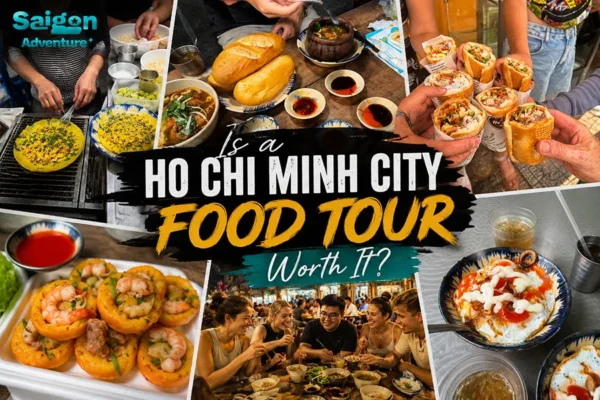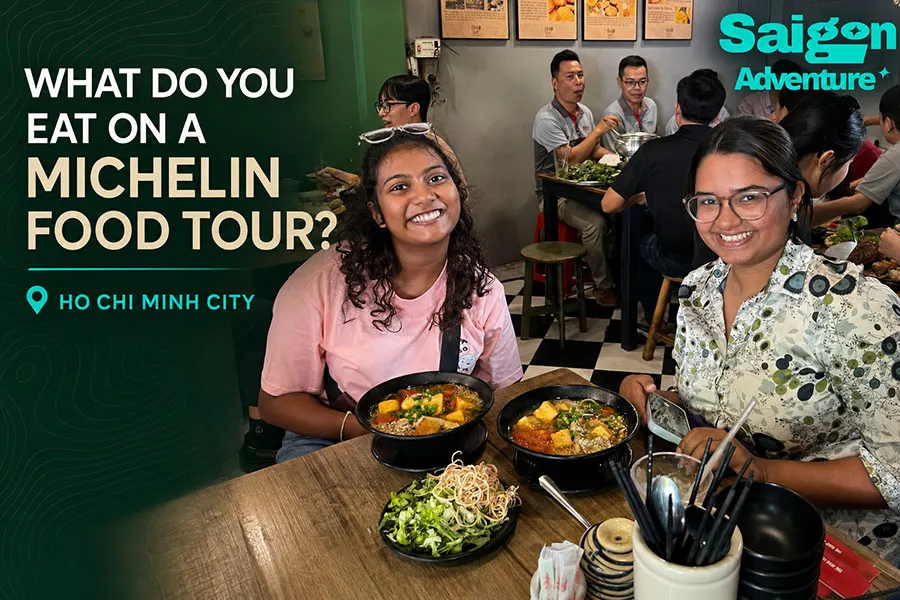
The first thing you notice is the aroma. Charcoal smoke drifts from a grill, a pot of broth bubbles beside the pavement, and somewhere nearby, a thin rice pancake lands in a hot pan with a dramatic sizzle.
So, what do you eat on a Michelin food tour in Ho Chi Minh City? Depending on the chosen route, you may taste dishes such as phở, bánh xèo, cơm tấm, bún bò Huế, hủ tiếu, grilled seafood and Vietnamese desserts. Some stops may be recognized by the Michelin Guide, while others are carefully selected local eateries that help complete the story of Saigon’s food culture.
This is rarely a formal fine-dining experience with white tablecloths and tiny portions. A Michelin-focused food tour in Saigon is more likely to lead you through busy neighborhoods, family-run restaurants and open kitchens where local recipes have been perfected over many years.
Menus and restaurants can change according to opening hours, availability and the specific tour itinerary. However, the dishes below offer a realistic taste of what travelers may discover along the way.

Michelin dining in Saigon is more diverse than you may expect
The word “Michelin” often creates images of luxury restaurants, celebrity chefs and expensive tasting menus. Ho Chi Minh City offers that world, but it also shows a more approachable side of the Michelin Guide.
Michelin Stars recognize exceptional cooking, while the Bib Gourmand distinction highlights restaurants offering good-quality food at good value. Michelin Selected establishments are also recommended by the Guide, although they have not received a Star or Bib Gourmand.
That difference matters when booking a Michelin food tour in Ho Chi Minh City. A tour may include Bib Gourmand eateries, Michelin Selected restaurants and additional neighborhood stops chosen for their history, flavor or local reputation.
Not every stop will necessarily be Michelin-starred. A trustworthy operator should describe the experience accurately instead of using “Michelin” as a vague marketing label.
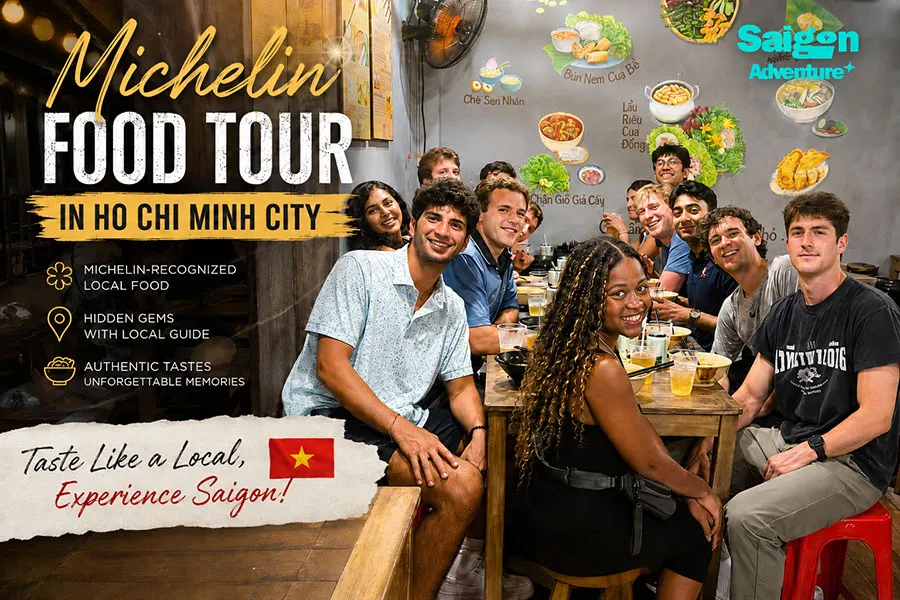
What dishes might you eat on a Michelin food tour?
A well-planned tour should feel like a progressive meal rather than a race through random restaurants. Lighter dishes may come first, richer flavors appear later, and something sweet often closes the experience.
The goal is not simply to consume as much food as possible. It is to understand how Saigon’s ingredients, migration history and everyday dining habits come together on the plate.
Phở with fragrant southern herbs
For many travelers, phở is the most recognizable Vietnamese dish. Yet tasting it in Ho Chi Minh City reveals details that are difficult to notice when ordering alone for the first time.
Southern-style phở is commonly accompanied by bean sprouts, lime, chilli and a generous plate of fresh herbs. The broth may carry the perfume of star anise, cinnamon, charred onion and slowly simmered beef bones.
Depending on the restaurant, your bowl could include rare beef, brisket, tendon, meatballs or a combination. A guide can explain each cut and help you order a version that suits your preferences.
Do not immediately cover the noodles with chilli and sauces. Taste the broth first, then add herbs and condiments gradually so you can appreciate the balance created by the kitchen.
Local tip: Tear the herbs lightly before adding them. This releases their aroma without overwhelming the broth.
Bánh xèo that crackles at the first bite
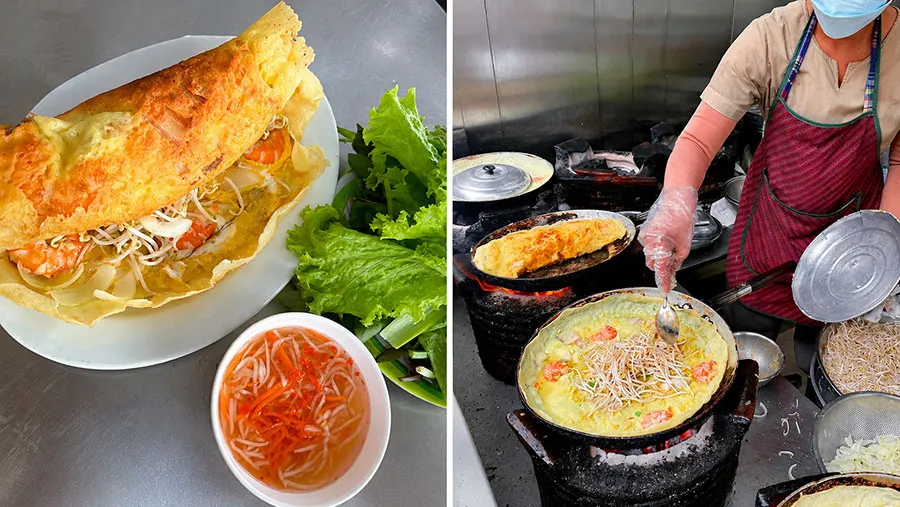
Few dishes create more excitement at the table than bánh xèo. Its name comes from the sizzling sound produced when rice batter hits a hot pan.
The golden Vietnamese crêpe may be filled with shrimp, pork, mung beans and crunchy bean sprouts. It usually arrives with a mountain of leafy greens, aromatic herbs and a bowl of dipping sauce.
Instead of eating it like a Western pancake, break off a small piece and wrap it in lettuce or mustard leaves. Add herbs, roll everything together and dip it lightly into nước chấm.
The result is a brilliant contrast of textures: crisp batter, juicy filling, fresh leaves and sweet-savoury fish sauce. Even travelers who expect bánh xèo to feel heavy are often surprised by how fresh each wrapped bite tastes.
Bánh Xèo 46A is currently identified by the Michelin Guide as a Bib Gourmand restaurant. Its long-running popularity also demonstrates an important point: Michelin-recognized food in Saigon can be deeply traditional, generous and accessible.
Cơm tấm, the flavor of everyday Saigon
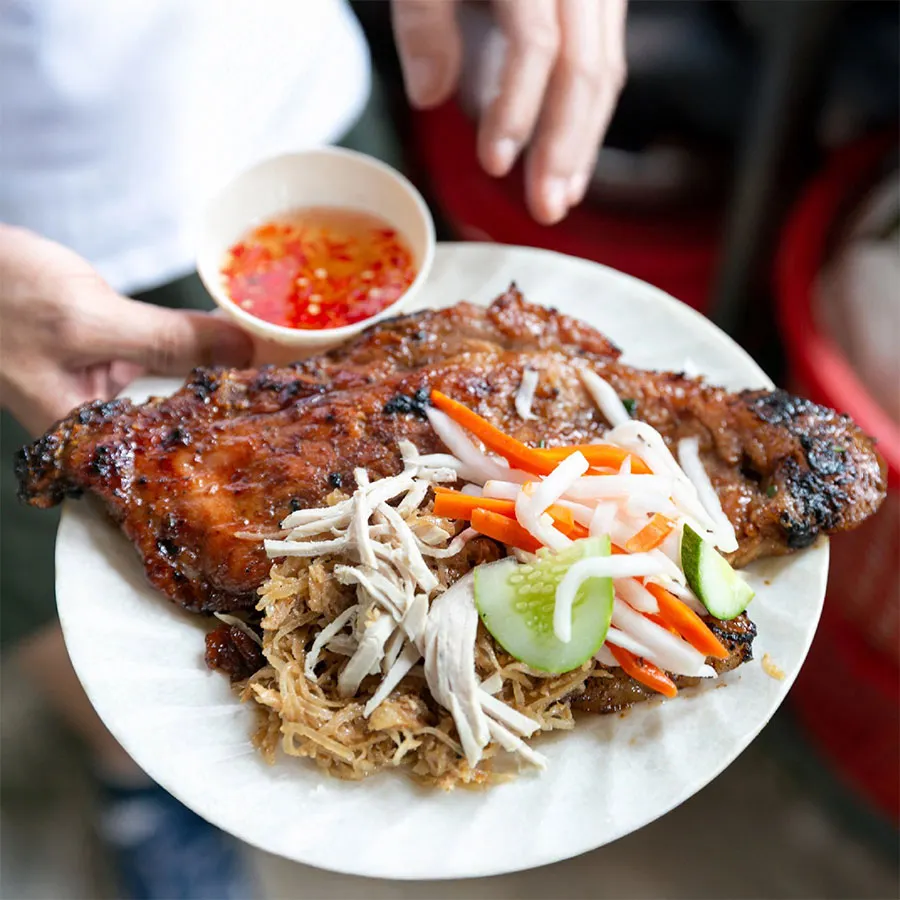
Cơm tấm began with broken rice grains that were once considered less valuable than whole rice. Today, the dish has become one of Ho Chi Minh City’s most characteristic meals.
A classic plate may include grilled pork, shredded pork skin, a steamed pork-and-egg cake, pickled vegetables and spring onion oil. Fish sauce is served separately so diners can control the balance of sweetness, acidity and saltiness.
The aroma of the pork often reaches you before the plate does. Its caramelized edges contrast with the slightly chewy rice, while the pickles cut through the richness.
Cơm tấm is not a ceremonial dish reserved for tourists. Locals eat it for breakfast, lunch, dinner and sometimes late at night, making it an excellent window into the city’s daily rhythm.
Because it is filling, food tours may serve one plate for several guests to share. Pace yourself, especially if more noodle dishes and desserts are still ahead.
Bún bò Huế with a deeper, spicier broth
Despite originating in central Vietnam, bún bò Huế has found a devoted following in Saigon. Its bold flavor makes it a memorable stop on a Vietnamese food tasting tour.
The broth is usually fragrant with lemongrass and may contain fermented shrimp paste for extra depth. Thick round rice noodles, slices of beef, pork and fresh herbs turn it into a satisfying complete meal.
Compared with phở, the taste is often richer, spicier and more robust. However, each kitchen has its own approach, so the chilli level and toppings can vary considerably.
If you are sensitive to heat, ask your guide before adding extra chilli. It is easy to make the bowl hotter, but much harder to reverse the decision.
Hủ tiếu and Saigon’s multicultural history
Hủ tiếu tells a broader story about southern Vietnam. Its origins and development reflect culinary connections between Vietnamese, Cambodian and Chinese communities.
The dish can be served as a clear noodle soup or hủ tiếu khô, with seasoned dry noodles and broth on the side. Depending on the restaurant, toppings may include pork, shrimp, minced meat, quail egg or liver.
The dry version is especially enjoyable when someone shows you how to mix it properly. Tossing the noodles distributes the sauce, garlic and spring onions so every bite carries the intended flavor.
This is where a guided Michelin food experience in Ho Chi Minh City becomes more valuable than following a saved map. You do not simply receive a bowl; you learn why it tastes the way it does and how local diners enjoy it.
Bò kho with crusty Vietnamese bread
Bò kho is Vietnamese beef stew, but that simple description does not capture its fragrance. Lemongrass, star anise and warm spices give the broth an unmistakable Vietnamese character.
The beef is cooked until tender, while carrots add gentle sweetness. Fresh herbs, lime and chilli can be added at the table to brighten the richer flavors.
Bò kho may be served with noodles, although many Saigon diners enjoy it with bánh mì. The airy bread and crisp crust are perfect for absorbing the reddish broth.
For international visitors, this dish offers a balance between the familiar and the unexpected. It feels comforting like a slow-cooked stew, yet the herbs and spices place it firmly in southern Vietnam.

Grilled seafood and the social side of eating
An evening itinerary may include a seafood or ốc stop. In Saigon, the word ốc can refer to a much wider dining experience involving snails, clams, scallops, prawns and other shellfish.
The cooking style is often just as important as the seafood. Ingredients may be grilled with spring onion oil, steamed with lemongrass or tossed in tamarind, garlic, chilli or coconut-based sauces.
These dishes are designed for sharing. Plates arrive one by one, everyone reaches toward the center of the table, and the meal naturally becomes more social.
Do not worry if you cannot identify every shell or know how to use the small seafood pick. Your guide can demonstrate the easiest way to eat each dish and explain which sauce belongs with it.
Travelers with shellfish allergies should notify the operator when booking. Cross-contact is possible in kitchens where several seafood dishes are cooked using the same equipment.
A sweet ending with flan, chè or tropical fruit
After savoury broths, grilled meat and dipping sauces, dessert provides a gentle change of pace. It also shows that Vietnamese sweets extend far beyond the packaged snacks seen in souvenir shops.
You may try bánh flan, a caramel custard sometimes served with crushed ice and strong Vietnamese coffee. The creamy custard, bitter coffee and cool ice create a surprisingly sophisticated final bite.
Another possibility is chè, a broad family of desserts made with ingredients such as beans, coconut milk, jelly, fruit or sticky rice. Recipes range from warm and comforting to cold and refreshing.
Seasonal tropical fruit may also appear, particularly when guides want to introduce flavors that visitors have not tried before. Depending on the time of year, this could include rambutan, mangosteen, longan or jackfruit.
Will you eat full portions at every stop?
Usually not. A multi-stop Saigon Michelin food tour is designed around variety, so dishes may be shared or served in tasting portions.
Even small servings become surprisingly filling when the itinerary includes noodles, rice, pancakes, seafood and dessert. Arrive hungry, but avoid skipping every meal before the tour.
Eat slowly and do not feel obliged to finish the first dish. Saving room allows you to appreciate the final stops instead of treating them as a challenge.
Comfortable clothing is also a wise choice. Saigon’s best food experiences are much more enjoyable when you are prepared for warm weather, short walks and a generous dinner.
Can dietary restrictions be accommodated?
Vietnamese food appears light and herb-filled, but many recipes contain ingredients that are not immediately visible. Broths may use meat bones, while dipping sauces frequently contain fish sauce or fermented seafood.
Peanuts, shellfish, soy, eggs and gluten can also appear in sauces, marinades and garnishes. Travelers with allergies should name the exact ingredient and explain the severity when booking.
Vegetarian substitutions may be available with advance notice, but removing visible meat does not automatically make a dish vegetarian. Ask whether separate broths and sauces can be provided.
A carefully chosen Food tour in Ho Chi Minh City should provide clear information before departure. This allows the guide to plan appropriate stops instead of searching for last-minute alternatives.
Why take a guided Michelin food tour instead of going alone?
It is possible to visit Michelin-listed restaurants independently. However, finding a restaurant is not the same as understanding its food.
A local guide can explain the ingredients, translate unfamiliar menu items and demonstrate how each dish should be assembled. You learn why herbs are added at a particular moment, how dipping sauces are balanced and which condiments should be used sparingly.
The guide also manages practical details such as ordering, portion sizes, transportation and changing opening hours. This is especially helpful when a popular family-run eatery closes early after selling out.
Most importantly, the evening becomes a connected journey. Instead of collecting famous restaurant names, you experience how each bowl and plate fits into the wider story of Saigon.
Taste the Michelin side of Ho Chi Minh City with local insight
A Michelin food tour in Ho Chi Minh City is not simply about prestige. It is a chance to discover the precision hidden inside a clear bowl of broth, the years of experience behind a crisp bánh xèo and the cultural history carried by an everyday serving of noodles.
The most memorable moments may happen in surprisingly modest places. You could find yourself beside an open kitchen, wrapping herbs around a hot pancake or sharing seafood while scooters flow past the restaurant.
Join Saigon Adventure for a locally guided Ho Chi Minh City Food Tour and discover the city through its most rewarding flavors. Come hungry, share your dietary needs in advance and let a local guide lead you beyond the usual dining checklist.
Frequently asked questions
What food is included on a Michelin food tour in Ho Chi Minh City?
The menu depends on the itinerary, but possible dishes include phở, bánh xèo, cơm tấm, bún bò Huế, hủ tiếu, bò kho, seafood and Vietnamese desserts. Restaurants and dishes may change because of opening hours or availability.
Does a Michelin food tour only visit Michelin-starred restaurants?
No. A tour may visit Bib Gourmand and Michelin Selected eateries as well as additional local restaurants. Check the description carefully to understand what type of Michelin recognition applies to each stop.
Is the food on a Saigon Michelin tour very spicy?
Not every dish is spicy, and chilli is often served separately. Tell your guide if you prefer mild food so suitable dishes or adjustments can be arranged where possible.
Is a Michelin food tour suitable for first-time visitors?
Yes. A guided tour is particularly helpful for first-time visitors who want to sample several Vietnamese dishes without struggling with unfamiliar menus, ingredients or dining customs.
How much food should I expect?
Most multi-stop tours include enough tastings to replace dinner. Portions may be shared so guests can enjoy several dishes without becoming full too early.
Can vegetarians join a Michelin food tour in Saigon?
Vegetarian options may be available with advance notice. Confirm carefully because traditional broths, marinades and dipping sauces can contain meat, fish sauce or shrimp paste.
What should I wear on a food tour in Ho Chi Minh City?
Wear lightweight clothing and comfortable, secure shoes. If the experience involves traveling by scooter, avoid loose clothing that could interfere with the vehicle.