You are ready to explore Saigon. Then, without much warning, dark clouds roll in and tropical rain starts pouring over the city.
For many visitors, the first thought is simple: Should I cancel my motorbike tour?
Usually, you don’t have to.
A short shower does not automatically ruin a Saigon motorbike tour. With an experienced local driver, proper rain protection, and a flexible itinerary, you can still explore Ho Chi Minh City comfortably when the weather turns wet.
And there is something surprisingly beautiful about Saigon after rain.
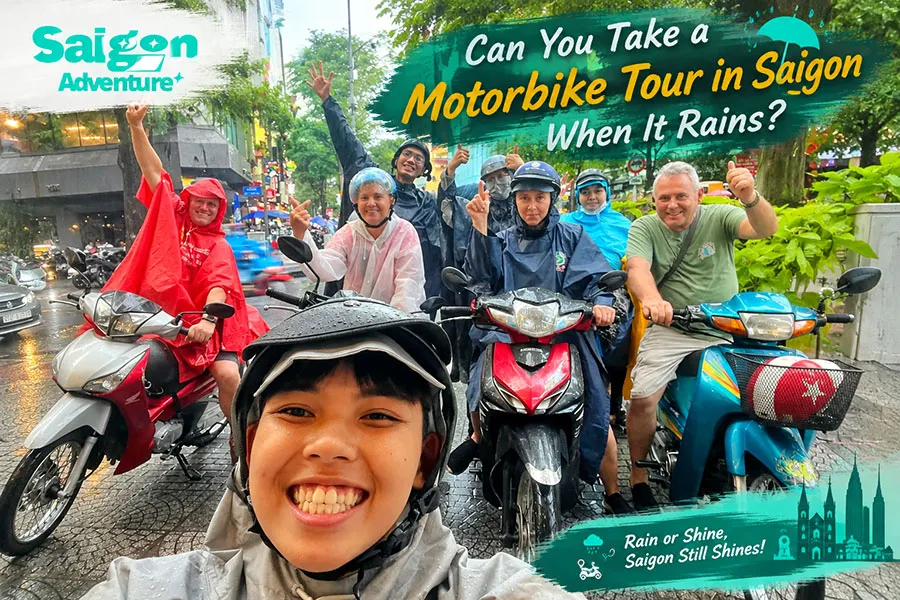
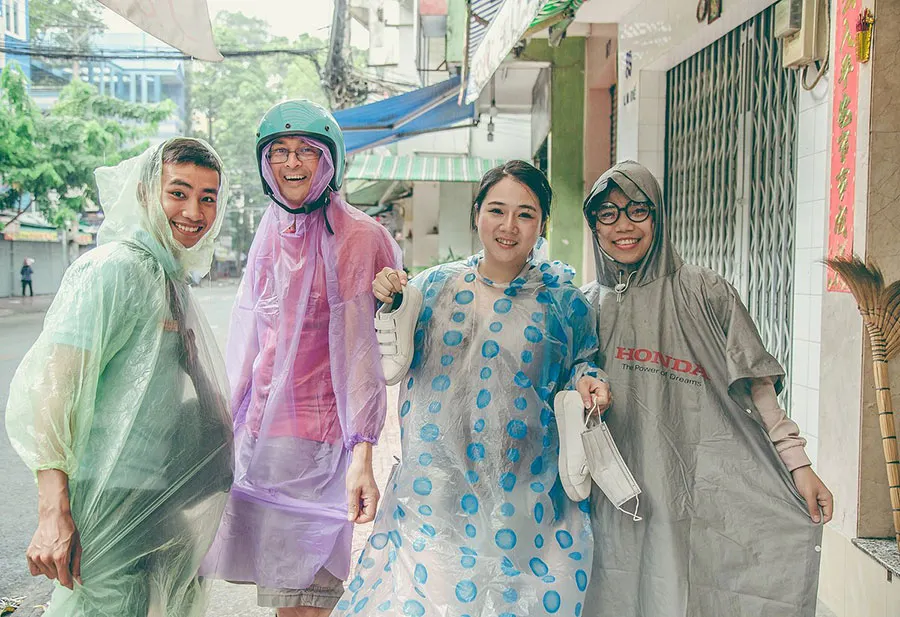
Wet streets reflect neon signs. Food stalls become cozy under awnings. Locals pull on colorful ponchos and carry on with their day as if nothing happened.
Can You Take a Motorbike Tour in Saigon When It Rains?
Yes, you can—provided the weather and road conditions are safe.
Rainy weather in Ho Chi Minh City is often unpredictable. A heavy shower can appear suddenly, last for a while, and then give way to sunshine.
That is why rain should not automatically be treated as a reason to cancel.
Instead, the key question is how heavy the rain is and how your tour operator responds to it.
With light rain, a tour may continue with suitable rain gear. If conditions become uncomfortable or unsafe, your driver and guide can slow down, find shelter, wait for the shower to pass, or adjust the route.
A good tour is not about following the schedule at all costs. It is about enjoying the city safely while adapting to what the day brings.
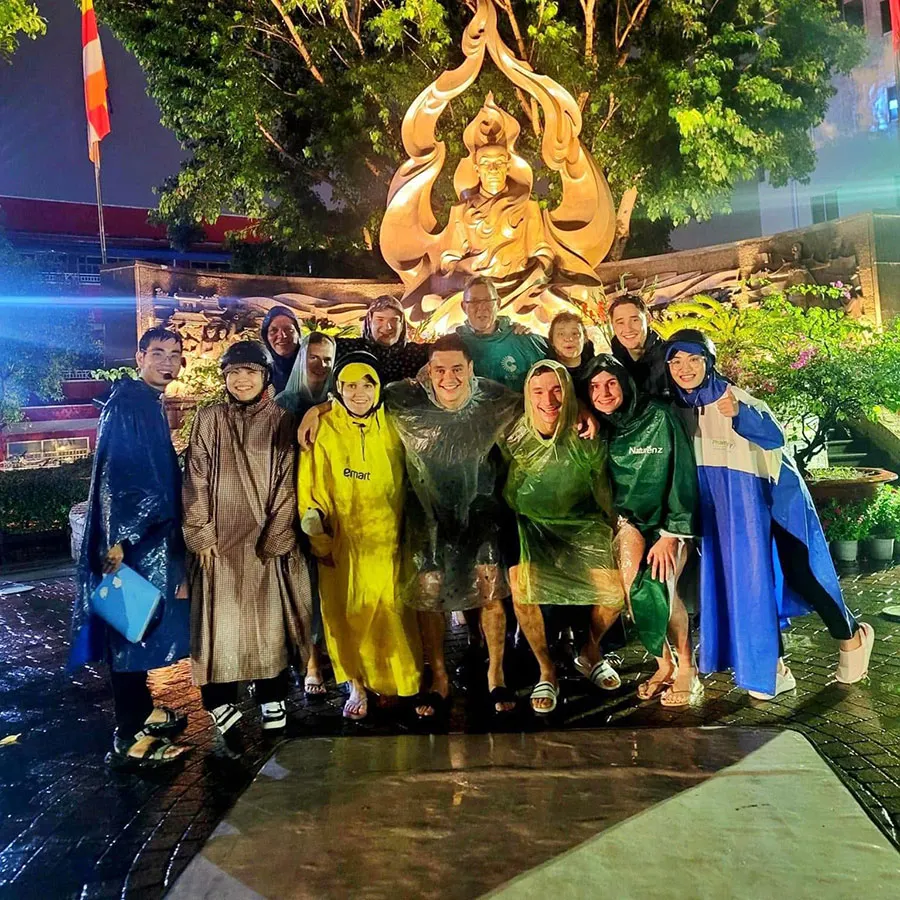
What Happens If It Rains During a Saigon Motorbike Tour?
Imagine you are riding through District 1 when the sky suddenly turns dark.
Within minutes, umbrellas appear along the sidewalks. Street vendors pull plastic covers over their stalls, cafés become temporary shelters, and hundreds of motorbikes move more carefully through the wet streets.
Your tour does not necessarily have to stop.
If the shower is manageable, your driver can continue at a safer pace. If it becomes heavier, stopping somewhere sheltered may be the better choice.
This flexibility is especially useful for travelers who have never experienced tropical weather in Vietnam.

Light Rain vs. Heavy Rain
Not all rain creates the same riding conditions.
A brief shower can be manageable with a poncho and careful riding. Heavy rain is different because visibility can decrease and wet surfaces can become more difficult to navigate.
Standing water and sudden changes in traffic also require extra attention.
For this reason, experienced drivers should make decisions based on real road conditions, not simply whether rain is falling.
Is a Motorbike Tour in Saigon Safe in the Rain?
This is one of the most common concerns among first-time visitors.
Ho Chi Minh City traffic can look overwhelming if you have never ridden through Vietnam before. Rain can make the streets appear even more challenging.
But there is an important distinction between driving yourself and traveling as a passenger with a local driver.
As a passenger, you do not need to navigate unfamiliar streets or figure out how to react to every movement in traffic.
Your driver already understands the city’s roads, intersections, traffic patterns, and riding culture.
Why an Experienced Local Driver Matters
Rain requires a different riding style.
Drivers need to be more cautious with speed, following distance, visibility, and road surfaces. Local experience becomes particularly valuable when conditions change suddenly.
For visitors, this is one of the biggest advantages of choosing a guided motorbike tour in Ho Chi Minh City instead of renting a scooter and exploring independently.
You can concentrate on the scenery, conversations, food, and atmosphere while someone familiar with Saigon handles the road.
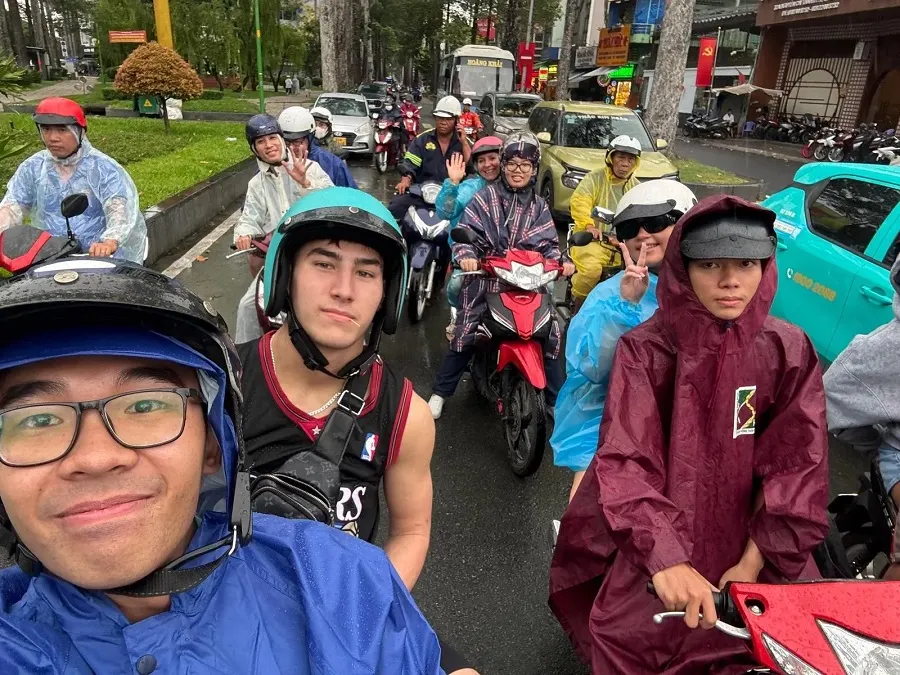
Do Saigon Motorbike Tours Provide Rain Ponchos?
If you are traveling during rainy season, this is worth checking before you book.
Rain protection can turn an unexpected shower from a problem into a minor inconvenience.
Saigon Adventure’s Saigon By Night motorbike tour, for example, lists a rain poncho among its inclusions, together with a helmet, motorbike, fuel, guide, and driver.
Saigon By Night motorbike tour
Still, tour inclusions vary. Always check the specific experience you plan to book rather than assuming every operator provides the same equipment.
What Should You Wear?
Lightweight clothing is your best friend in Ho Chi Minh City’s tropical climate.
Quick-drying trousers and a breathable shirt are practical choices. Comfortable shoes with decent grip are also preferable to loose flip-flops when roads are wet.
Keep your phone, passport, camera, and wallet inside a waterproof pouch or protected bag.
Local tip: Pack one spare pair of socks. They take almost no room in your luggage and can make a wet-weather adventure much more comfortable.
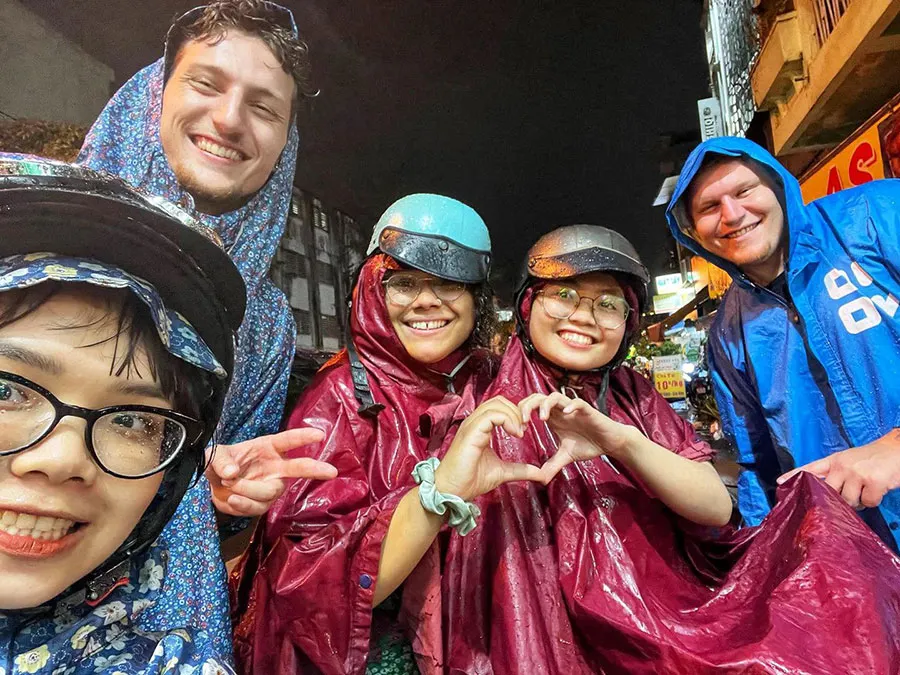
What Does Saigon Look Like in the Rain?
Rain changes the mood of the city almost instantly.
Shop signs glow against dark clouds. Headlights stretch across wet roads, while small food stalls continue serving customers beneath plastic covers.
The streets become a moving picture of everyday life.
You may see office workers waiting under awnings, delivery riders protecting their phones, families sharing a table at a local eatery, and vendors calmly preparing food while rain falls outside.
For travelers interested in authentic Ho Chi Minh City local life, this can be one of the most interesting parts of the experience.
You are not simply looking at a tourist attraction. You are seeing how a huge Southeast Asian city responds when the weather suddenly changes.
When Should You Postpone the Tour?
There are situations when postponing is definitely the smarter choice.
Extremely heavy rain, severe storms, strong winds, flooding, or very poor visibility can create uncomfortable or unsafe riding conditions.
Your own comfort matters, too.
If you feel nervous about riding in wet weather, there is nothing wrong with choosing another day. A holiday should feel exciting—not stressful.
Safety should always come before the itinerary.
What to Bring on a Rainy Motorbike Tour in Saigon
You do not need to carry much.
A few practical items can make a big difference:
- Lightweight, quick-drying clothes
- Comfortable shoes with good grip
- Waterproof phone pouch
- Small waterproof bag
- Spare socks
- Tissues or a small towel
- Sunscreen for when the rain stops
- Essential personal items
Avoid bringing a large backpack if possible.
A compact bag is easier to manage on a motorbike and keeps you comfortable throughout the ride.
Can You Still Enjoy Street Food When It Rains?
Absolutely.
Saigon’s street food culture does not disappear when the clouds arrive.
Small restaurants, food stalls, cafés, and covered markets continue serving locals and travelers. In fact, a rainy evening can make a food stop feel even more atmospheric.
Imagine sitting beneath an awning while rain falls just outside, with the smell of grilled meat, herbs, noodles, or Vietnamese coffee in the air.
That is a very different experience from simply eating in a restaurant.
A street food tour in Ho Chi Minh City by motorbike can still be enjoyable when conditions are manageable.
The pace may simply become more relaxed.
Instead of rushing between stops, you may spend extra time at one location and continue once the shower becomes lighter.
What About a Night Motorbike Tour During Rainy Season?
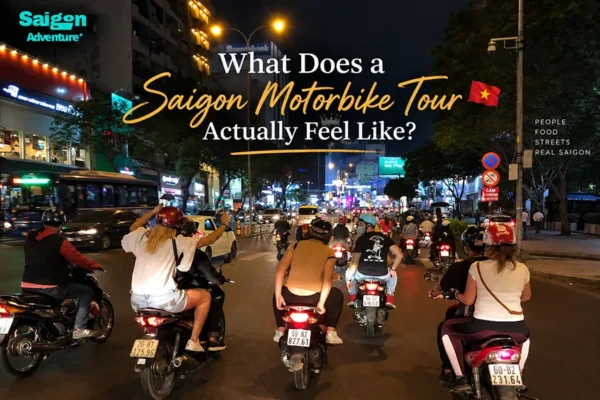
Saigon after rain can be spectacular at night.
Wet streets reflect headlights and colorful signs. Food stalls glow beneath their awnings, while cafés fill with people escaping a sudden shower.
If the rain has eased, the atmosphere can be even more dramatic than on a completely dry evening.
A Saigon by Night motorbike tour is a great example of how a motorbike experience can combine local neighborhoods, food, nightlife, and city scenery.
Of course, heavy rain is a different story.
If conditions become unsafe, the sensible choice is to slow down, shelter, or modify the itinerary.
What If It Starts Raining in the Middle of Your Tour?
Don’t panic.
Your guide and driver should assess the conditions and decide what makes the most sense.
Depending on the situation, they may continue more slowly, stop under shelter, adjust the route, or wait for the shower to pass.
This is one reason a guided experience can be easier for international visitors than exploring independently.
You have someone local who understands the city and knows how quickly conditions can change.
The best tour operators are not the ones that stubbornly follow a fixed schedule.
They are the ones that know when to adapt.
Is Rainy Season a Bad Time for a Saigon Motorbike Tour?
No.
Rainy season simply requires a little more flexibility.
If you want guaranteed sunshine every day, you may prefer traveling during a drier period. But occasional tropical showers should not automatically put you off a motorbike experience.
You may actually see a more authentic side of Saigon.
People still eat, shop, work, socialize, and travel through the city. The rain simply changes the rhythm for a while.
That everyday resilience is part of what makes Ho Chi Minh City so fascinating.
A Better Way to Think About Rain in Saigon
Instead of asking only, “Will it rain?”, ask:
“What happens if it rains?”
That question is much more useful.
Look for an operator with experienced local drivers, appropriate safety equipment, a realistic approach to weather, and enough flexibility to adjust the experience.
That matters more than finding a day with a perfect forecast.
Because sometimes, the rain becomes part of the adventure.
Rain Doesn’t Have to Ruin Your Saigon Motorbike Adventure
So, can you take a motorbike tour in Saigon when it rains?
Yes—when the weather and road conditions are safe.
A short shower does not have to ruin your plans. With rain protection, an experienced local driver, and a flexible itinerary, you can still experience the food, neighborhoods, nightlife, and everyday energy of Ho Chi Minh City.
If heavy rain or severe weather arrives, safety comes first. A responsible tour operator should be prepared to pause or adapt the experience.
For first-time visitors, riding as a passenger is also far easier than trying to navigate Saigon’s traffic alone.
And when the rain finally stops?
Look around.
The streets are shining, the food stalls are busy again, and Saigon is already moving.
That moment—when the city comes back to life after a tropical shower—might just become one of your favorite memories from Vietnam.
Ready to explore beyond the usual tourist route? Discover the Ho Chi Minh City Motorbike City Tour and experience Saigon from the back of a scooter with local drivers and guides.
Frequently Asked Questions
Can you take a motorbike tour in Saigon when it rains?
Yes. Light or passing rain does not necessarily mean a tour must be canceled. The experience can be adjusted according to rainfall, road conditions, and passenger comfort.
Is it safe to take a motorbike tour in Ho Chi Minh City during rain?
It can be safe when conditions are manageable and you travel with an experienced local driver. Heavy rain, flooding, severe storms, or poor visibility may require the tour to pause or change.
Do Saigon motorbike tours provide rain ponchos?
Some do. Saigon Adventure’s Saigon By Night tour lists a rain poncho among its inclusions. Always check the specific tour page before booking because inclusions can vary.
What should I wear on a rainy motorbike tour?
Choose lightweight, quick-drying clothing and comfortable shoes with good grip. Protect your phone, passport, camera, and other valuables from water.
Does it rain all day during the rainy season in Saigon?
Not usually. Tropical showers can be sudden and intense but may also pass relatively quickly. Weather can vary considerably throughout the day.
What happens if heavy rain starts during my motorbike tour?
Your guide and driver can assess the conditions and may slow down, stop for shelter, wait for the rain to ease, or modify the route. If conditions become unsafe, the tour should be paused.
Is a motorbike tour worth doing during Saigon’s rainy season?
Vâng, nếu bạn không ngại thời tiết thay đổi. Mưa có thể hé lộ một khía cạnh khác của thành phố, từ những quầy bán đồ ăn đường phố có mái che đến những con phố rực rỡ sắc màu và cuộc sống thường nhật của người dân địa phương.