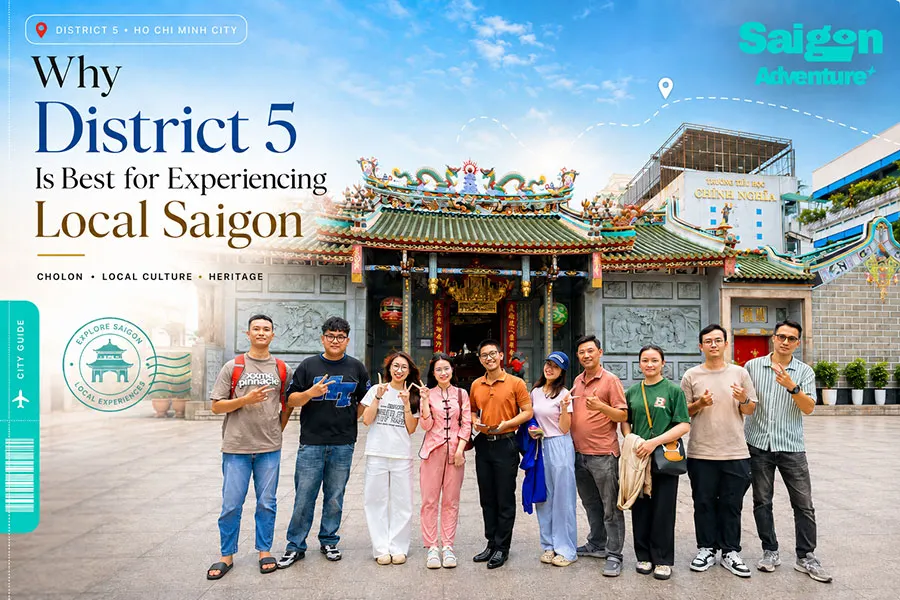
The atmosphere begins to change as you travel west from central Ho Chi Minh City. Glass towers become less dominant, shop signs appear in both Vietnamese and Chinese, and the fragrance of incense blends with herbal medicine, roasted duck and freshly steamed dumplings.
This is District 5, the historic heart of Cholon and one of the best places to experience local Saigon. While District 1 introduces visitors to famous landmarks, District 5 reveals how culture, commerce, religion and food have shaped the city across generations.
The neighborhood is not a polished attraction created for tourists. Temples still welcome worshippers, family businesses remain active, and modest restaurants continue serving the people who live nearby.
That living character is what makes District 5 worth visiting.
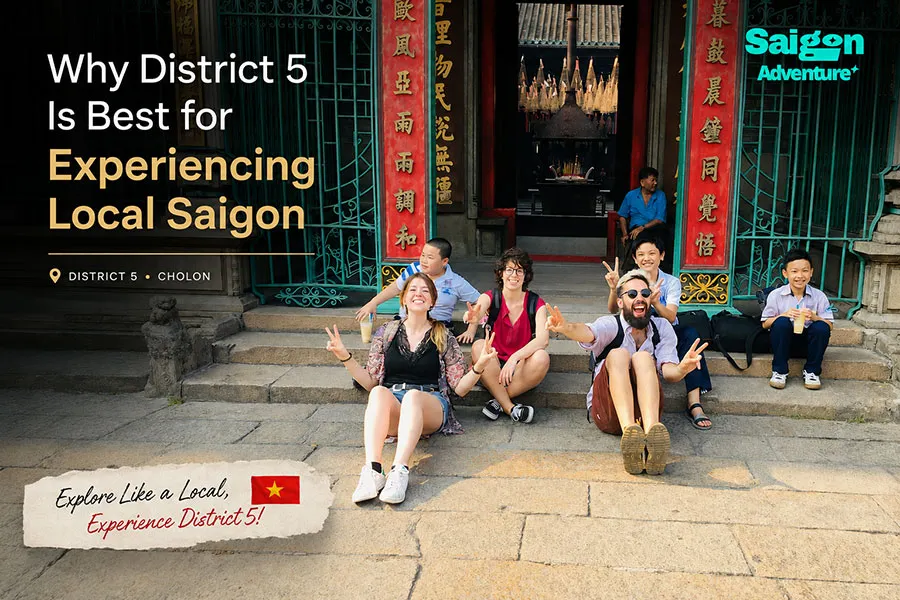
District 5 reveals a different side of Ho Chi Minh City
Many first-time visitors spend most of their trip around Ben Thanh Market, Nguyen Hue Walking Street and the historic buildings of District 1. These sights deserve their popularity, but they show only one part of Saigon.
District 5 feels more lived-in. Its streets are filled with wholesalers, herbal medicine shops, neighborhood markets, places of worship and family restaurants that have developed around the needs of the local community.
The experience is also slower and more observational. Instead of moving between headline attractions, you begin noticing carved wooden doors, fading shop signs, coils of incense, handwritten menus and carts delivering goods through crowded streets.
Travelers who want to explore Ho Chi Minh City beyond its famous landmarks will find that District 5 adds valuable cultural depth to a city itinerary.
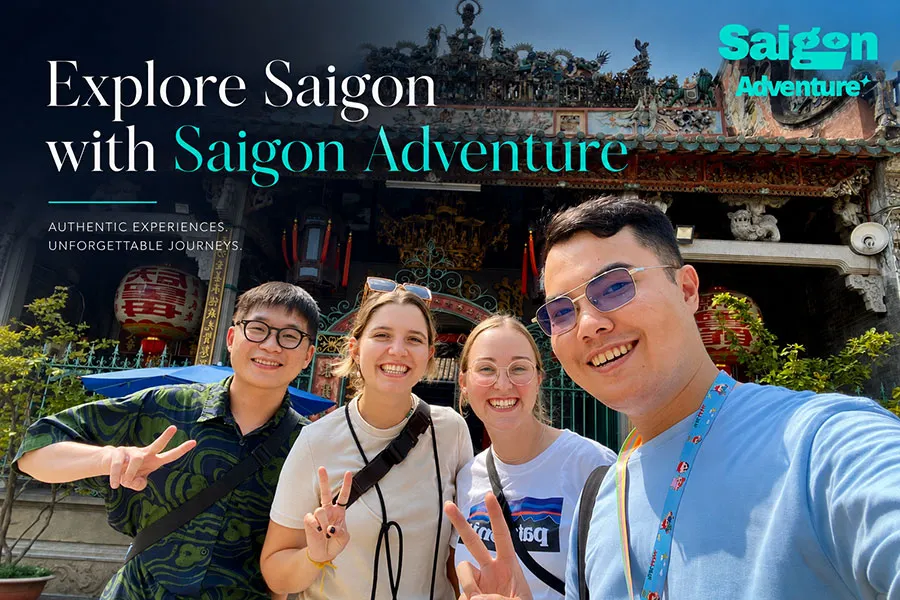
Understanding District 5 Saigon and Cholon
District 5 is closely associated with Cholon, commonly called Ho Chi Minh City’s Chinatown. However, the wider Cholon area extends beyond the traditional boundaries of District 5 into neighboring parts of the city.
The name “Cholon” means “big market,” reflecting the area’s long history as a center of trade. Generations of Hoa, or ethnic Chinese, residents helped develop its markets, trading streets, temples, assembly halls and distinctive food culture.
Chinese-Vietnamese heritage remains visible throughout the neighborhood today. It appears in architecture, religious practices, festival decorations, family businesses and recipes influenced by several southern Chinese communities.
These traditions are not separate from Saigon’s identity. They are an important part of the city’s multicultural history and the reason District 5 feels different without feeling disconnected.
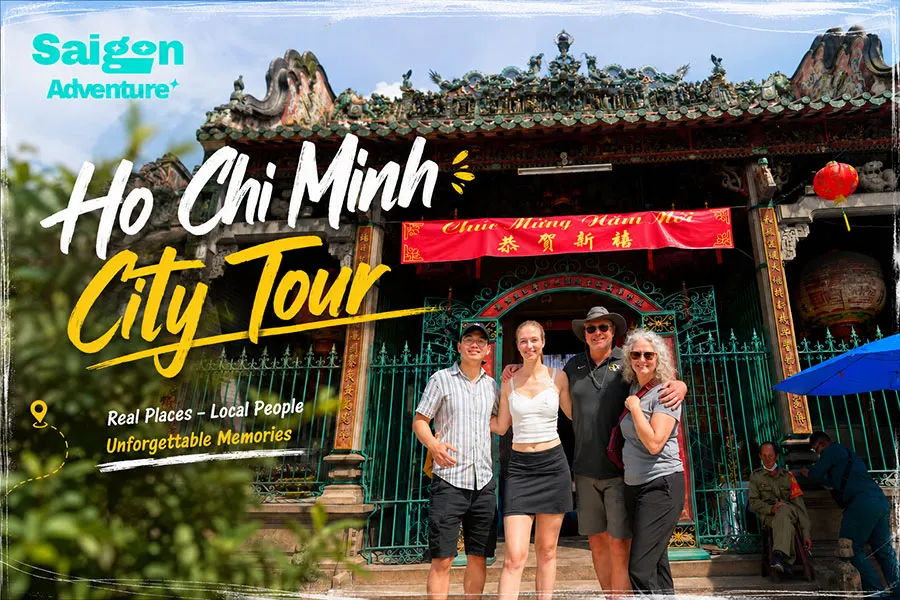
Historic temples remain part of everyday life
District 5 contains some of the most beautiful Chinese-style temples and assembly halls in Ho Chi Minh City. Their importance lies not only in their age or design, but also in their continuing role within the community.
Thien Hau Temple
Thien Hau Temple, officially associated with Tue Thanh Assembly Hall, is one of the best-known religious landmarks in Cholon. It is dedicated to Mazu, a sea goddess traditionally respected by Chinese communities connected with migration and maritime travel.
Visitors often notice the detailed ceramic roof decorations, shaded courtyard and large incense coils hanging overhead. When sunlight passes through the drifting smoke, the temple becomes especially atmospheric.
It remains an active place of worship rather than a photography set. Dress respectfully, speak quietly and avoid standing between worshippers and the altar.
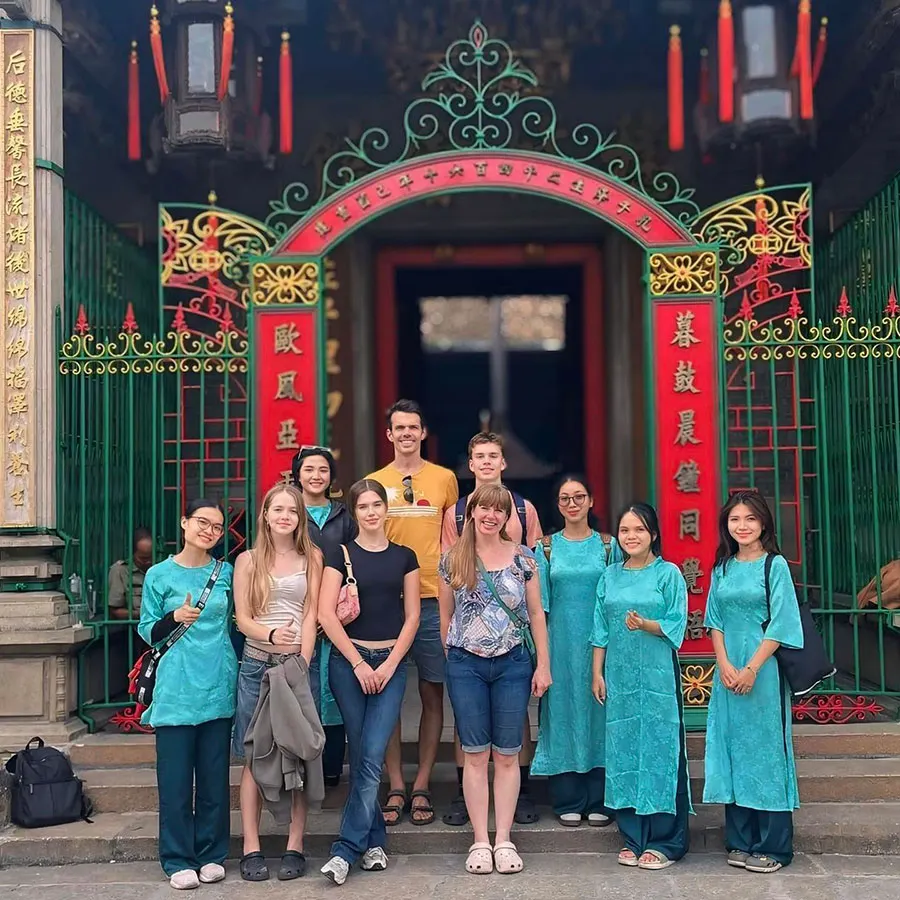
Nghia An Assembly Hall
Nghia An Assembly Hall is another significant cultural site in District 5. Its interior features carved woodwork, elaborate altars and the red-and-gold decorative details associated with traditional southern Chinese architecture.
The hall has close ties to the local Teochew community and is principally dedicated to Guan Yu, known in Vietnamese as Quan Cong. He is widely respected as a symbol of loyalty, courage and integrity.
You do not need extensive knowledge of Chinese folk religion to appreciate the building. However, a local guide can explain the figures, offerings and architectural symbols that are easy to overlook during an independent visit.
The streets tell stories that landmarks cannot
Some of the strongest impressions of District 5 come from moving between its major sights. The journey introduces visitors to a neighborhood where traditional trades continue alongside modern urban life.
Hai Thuong Lan Ong Street is particularly known for herbal medicine businesses. Shops display dried roots, bark, seeds and other ingredients while workers weigh products, prepare orders and move boxes between narrow storefronts.
The air carries a distinctive earthy fragrance that can remain in your memory long after the visit. Yet these shops are working businesses, not staged displays, so ask permission before photographing people or interiors at close range.
Other nearby streets may specialize in decorations, textiles, household goods, religious items or particular food products. This pattern of similar businesses gathering together reflects Cholon’s long commercial history.
Travelers interested in discovering more of the city’s everyday neighborhoods can also consider joining one of Saigon Adventure’s locally guided walking tours in Ho Chi Minh City.
Local markets show how the neighborhood functions
Markets in and around District 5 offer a vivid introduction to local trade. Depending on where you explore, you may see fresh produce, spices, dried seafood, clothing, textiles, household products and ingredients used in Chinese-Vietnamese kitchens.
An Dong Market is one of the area’s better-known commercial destinations, particularly for clothing, fabric and wholesale goods. It is busy and practical rather than designed as a polished tourist attraction.
Binh Tay Market is also frequently included in Cholon itineraries. It sits in the broader Chinatown area rather than District 5 itself, making it a natural extension for visitors who have more time.
Markets are generally most energetic earlier in the day. Walk carefully, avoid blocking narrow passages and keep valuables secure without becoming overly anxious—the usual precautions for a crowded urban market are sufficient.
District 5 is one of Saigon’s most interesting food areas
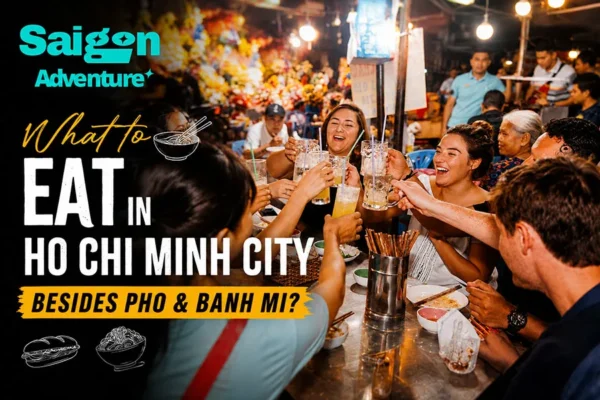
Food is one of the strongest reasons to visit District 5. The area brings together Vietnamese flavors and culinary traditions associated with several Chinese communities, creating one of the city’s most varied dining scenes.
Visitors may encounter dim sum, wonton noodles, dumplings, roasted meats, rice dishes, herbal soups and traditional sweet desserts. The selection changes from one street and family restaurant to another.
Many eateries are simple and specialize in only a few dishes. Plastic stools, shared tables and limited English do not indicate poor quality; they often signal that a restaurant mainly serves regular local customers.
Look for places with a steady flow of diners and food prepared continuously. If you have allergies or dietary restrictions, ask clearly before ordering because broths, sauces and fillings can contain ingredients that are not immediately visible.
Rather than following a rigid checklist, stay open to what looks fresh and popular that day. A busy noodle shop or small dumpling counter may become more memorable than a restaurant heavily promoted online.
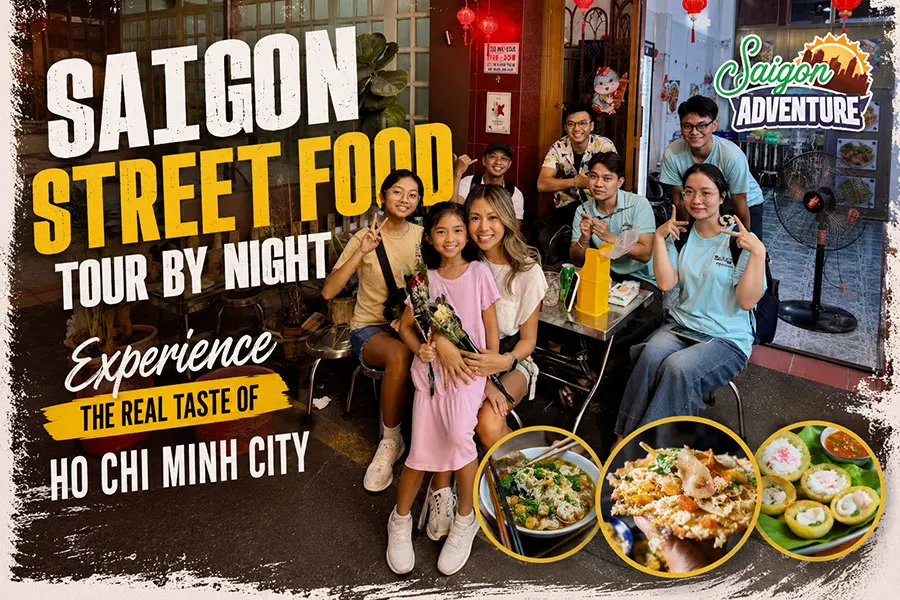
Joining a locally guided Ho Chi Minh City Food Tour can make this experience easier, especially when menus are unfamiliar or you want to understand the cultural story behind each dish.
Festivals bring Cholon’s traditions into the streets
District 5 becomes especially colorful during important Chinese-Vietnamese celebrations. Lanterns, offerings, lion dances and temple activities can transform familiar streets into vibrant community spaces.
Nguyen Tieu, often described as the Lantern Festival, is one of the area’s most significant celebrations. Mid-Autumn Festival also brings seasonal decorations and increased activity to streets associated with lantern making and sales.
These occasions are exciting for photographers, but they remain meaningful cultural and religious events. Avoid touching offerings, interrupting ceremonies or pushing past worshippers to capture a picture.
Because many festival dates follow the lunar calendar, confirm the schedule shortly before visiting. Older travel articles may list dates that are no longer relevant.
Is District 5 Saigon suitable for first-time visitors?
District 5 is suitable for first-time visitors who want to experience more than a standard sightseeing itinerary. It is busy, energetic and less immediately familiar than District 1, but this is part of its appeal.
English is not spoken everywhere, and some cultural sites provide limited interpretation for foreign visitors. A translation app can help with basic communication, while a guide can explain stories and customs that signs may not cover.
The area may not be the most convenient accommodation base for travelers spending only one or two days in Ho Chi Minh City. Staying centrally and visiting District 5 for half a day is usually easier.
Those with a strong interest in Chinese-Vietnamese culture, traditional food, markets or historic neighborhoods may prefer a full day.
How to explore District 5 without feeling rushed
A balanced half-day visit should combine two or three cultural landmarks with time for street observation and a local meal. Trying to visit every temple and market can make the experience feel repetitive.
Morning is ideal for markets, medicine streets and breakfast dishes. Late afternoon often offers softer light and a more comfortable atmosphere, although individual temples and businesses may follow different opening hours.
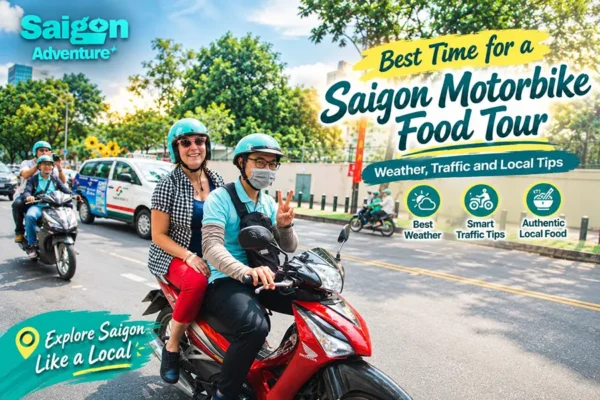
Some areas can be explored on foot, but the main attractions are spread across busy roads. Taxis, ride-hailing services and guided scooter experiences make it easier to connect them without becoming exhausted in the heat.
Local tips for a better visit
Wear lightweight clothing and comfortable shoes, but carry something that covers your shoulders and knees when entering religious sites. Bring water, small-denomination cash and a securely closed bag.
Cross roads slowly and predictably instead of running between vehicles. If Saigon traffic feels intimidating, wait beside local pedestrians or explore with somebody familiar with the area.
Ask before taking close photographs of residents, shopkeepers or worshippers. A friendly gesture and a little patience will create a far more respectful interaction.
Most importantly, allow room for unplanned discoveries. District 5 rewards people who pay attention to ordinary details rather than treating the neighborhood as a collection of attractions to complete.
Why District 5 deserves a place in your Saigon itinerary
District 5 does not compete with central Saigon by offering grander monuments or more modern entertainment. Its appeal comes from something quieter and more enduring: living heritage.
Historic temples still receive worshippers, traders maintain long-established businesses, and family recipes continue reflecting the communities that shaped Cholon. The neighborhood helps visitors understand Ho Chi Minh City as a multicultural place rather than simply a destination of colonial buildings and nightlife.
If you want to discover Saigon through its people, food and everyday neighborhoods, explore the city with Saigon Adventure. A carefully planned motorbike city tour can help you move comfortably between local areas while learning the stories that many visitors pass without noticing.
Frequently asked questions
Is District 5 the same as Chinatown in Ho Chi Minh City?
District 5 forms the historic heart of Cholon, commonly known as Ho Chi Minh City’s Chinatown. However, the broader Cholon area also extends into neighboring parts of the city.
What is District 5 famous for?
District 5 is known for Chinese-Vietnamese culture, historic temples, assembly halls, herbal medicine streets, traditional commerce and a diverse local food scene.
How much time should I spend in District 5?
Half a day is enough to visit two or three important sites and enjoy a local meal. Allow a full day if you want to explore temples, markets and the wider Cholon area at a slower pace.
What are the best places to visit in District 5?
Popular stops include Thien Hau Temple, Nghia An Assembly Hall, Hai Thuong Lan Ong Street and An Dong Market. Nearby Binh Tay Market can be added to a broader Cholon itinerary.
Is District 5 safe for tourists?
District 5 is generally suitable for tourists using normal urban precautions. Pay attention when crossing roads, secure valuables in crowded markets and avoid displaying large amounts of cash.
What food should travelers try in District 5?
Depending on availability, look for dim sum, wonton noodles, dumplings, roasted meats, Chinese-style rice dishes, herbal soups and traditional sweet desserts.
What is the best time to visit District 5?
Morning is best for markets and local food, while late afternoon offers a more relaxed atmosphere for walking and photography. Check individual opening times before traveling.