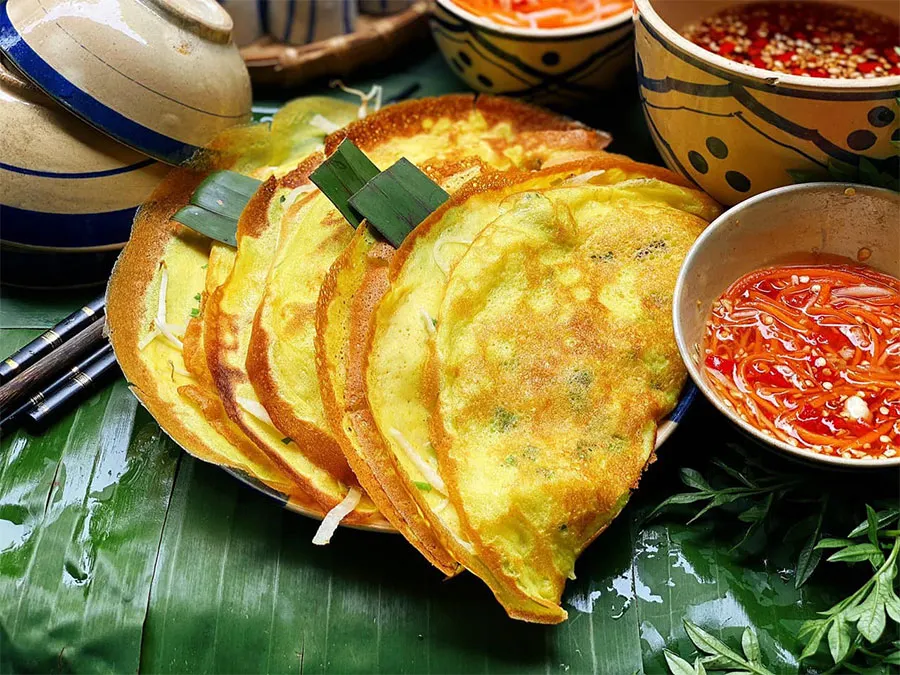
If you want to taste the best Vietnamese Pancakes in the Mekong Delta, you need to know what makes this local banh xeo so special. The first thing you’ll notice isn’t the taste—it’s the sound.
As the rice batter touches a hot pan, it creates the unmistakable “xeo,” a sizzling sound that gives Vietnam’s famous pancake its name. Moments later, a golden, crispy pancake arrives at your table, surrounded by a colorful basket of fresh herbs and a small bowl of flavorful dipping sauce.
This is banh xeo, one of Southern Vietnam’s most beloved dishes.
While banh xeo can be found throughout the country, many travelers agree that the Mekong Delta offers one of the most authentic places to enjoy it. Here, the ingredients are incredibly fresh, the recipes have been passed down through generations, and every meal reflects the relaxed lifestyle of Vietnam’s fertile countryside.
If you’re planning a trip beyond Ho Chi Minh City, tasting banh xeo in the Mekong Delta is an experience that combines local food, culture, and hospitality in one unforgettable meal.
What Is Banh Xeo?
Banh xeo is a savory Vietnamese pancake made from rice flour, coconut milk, turmeric, and water. The thin batter is poured into a hot pan until it becomes perfectly crisp before being filled with fresh ingredients.
Traditional fillings often include:
- Fresh shrimp
- Thinly sliced pork
- Bean sprouts
- Green onions
- Mung beans
Some local families also add duck, squid, mushrooms, or seasonal river seafood depending on what’s available that day.
Unlike sweet pancakes served in many Western countries, banh xeo is a savory meal enjoyed with fresh vegetables, aromatic herbs, and a light fish sauce. Every bite combines crunchy, fresh, sweet, and savory flavors that perfectly represent Southern Vietnamese cuisine.
Why the Mekong Delta Is Famous for Banh Xeo
Vietnam has many regional styles of banh xeo, but the Mekong Delta version stands out for its generous size, crispy texture, and incredibly fresh ingredients.
The Delta is one of Vietnam’s richest agricultural regions. Rice fields stretch for miles, coconut palms line quiet canals, and vegetable gardens grow beside family homes. Because everything is produced locally, cooks can prepare each pancake using ingredients harvested only hours before reaching the kitchen.
This freshness is difficult to replicate anywhere else.
Many small restaurants even buy shrimp directly from nearby rivers and canals each morning, while herbs are picked fresh from home gardens before being served to guests.
The result is a pancake that’s lighter, fresher, and more flavorful than many visitors expect.
If you’re hoping to taste authentic banh xeo beyond the usual tourist spots, joining one of our Mekong Delta tours is one of the best ways to experience it. Many itineraries include stops at family-run restaurants, local markets, and peaceful villages where banh xeo is freshly prepared using recipes passed down through generations.
The Secret Behind Its Incredible Flavor
Although the recipe seems simple, every ingredient plays an important role.
Rice flour creates the pancake’s delicate crispiness.
Fresh coconut milk adds a subtle sweetness while keeping the batter light.
Turmeric gives banh xeo its beautiful golden color without artificial coloring.
Bean sprouts contribute a refreshing crunch, while shrimp and pork provide natural sweetness and richness.
However, the true secret isn’t found inside the pancake.
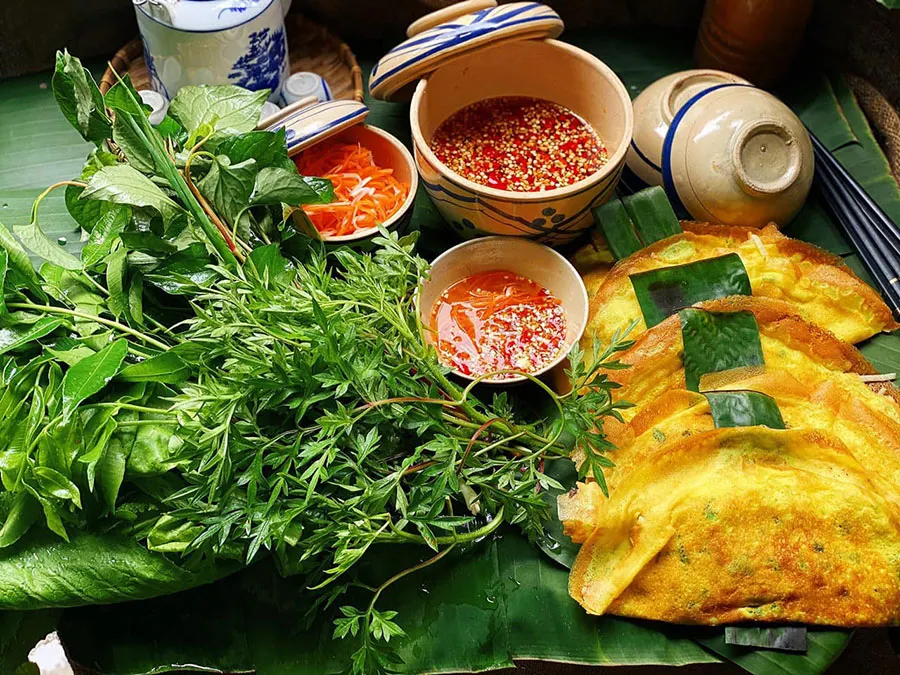
It’s the enormous basket of herbs served alongside it.
A typical meal may include:
- Lettuce
- Vietnamese mint
- Perilla leaves
- Fish mint
- Vietnamese coriander
- Mustard greens
- Young mango slices
- Star fruit when in season
These herbs completely transform the eating experience. Instead of feeling heavy, every bite becomes fresh, fragrant, and perfectly balanced.
More Than Food—It’s a Family Tradition
For local families, banh xeo is much more than a delicious meal.
It’s a reason to gather together.
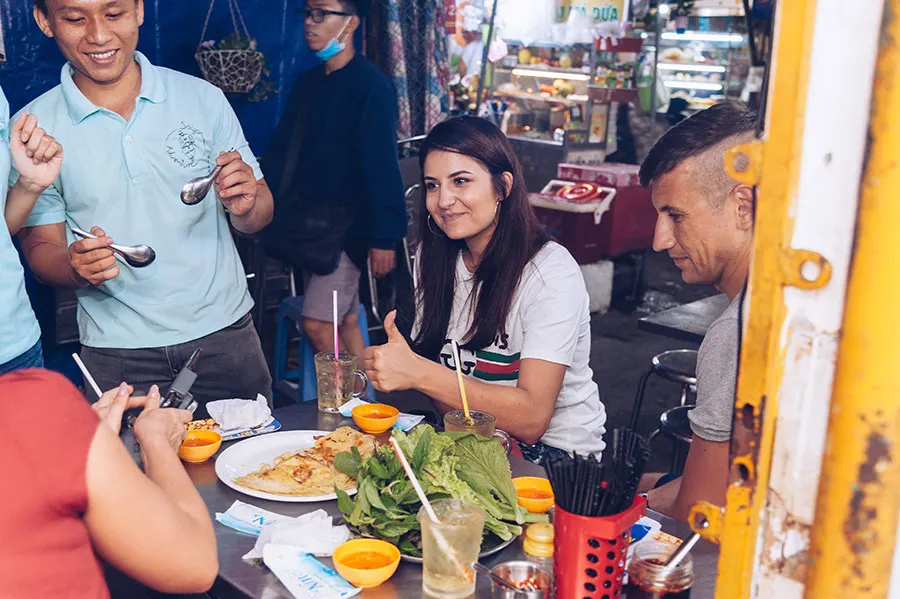
Instead of preparing individual portions, one person usually stands beside the hot pan while everyone else sits around the table waiting for each freshly cooked pancake.
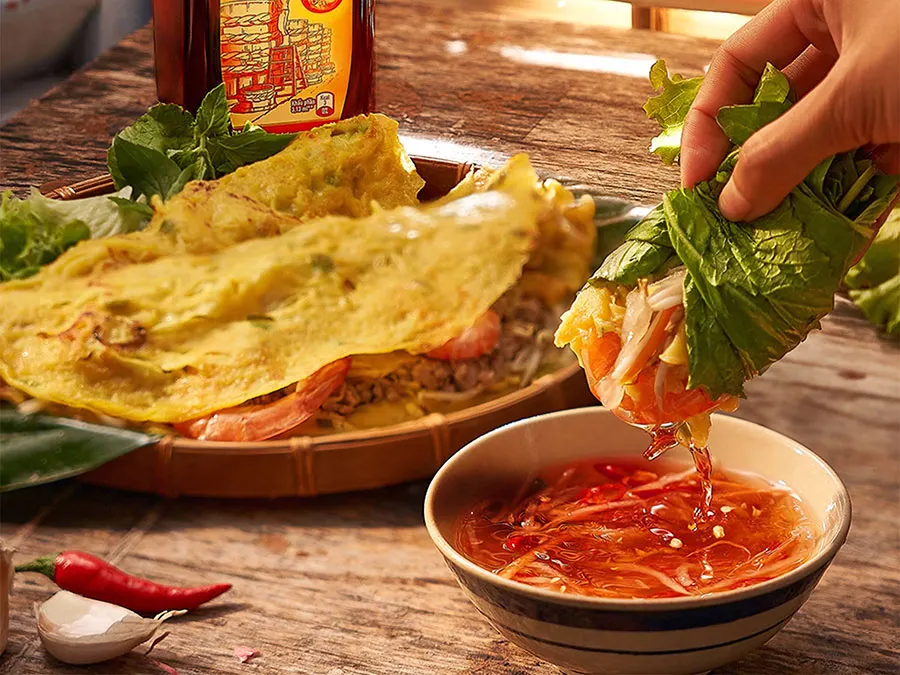
As soon as one is ready, family members break it into smaller pieces, wrap it with herbs and lettuce, dip it into fish sauce, and continue chatting while another pancake cooks.
The process is relaxed, interactive, and full of laughter.
Unlike many meals that are eaten quickly, banh xeo encourages people to slow down and enjoy each other’s company.
For visitors, sharing this experience often becomes one of the highlights of their journey through the Mekong Delta.
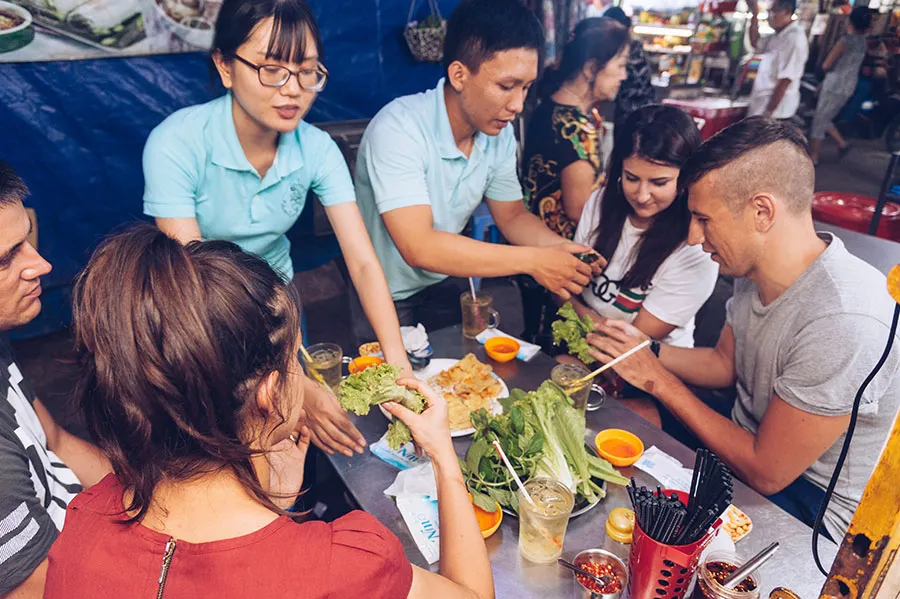
How to Eat Banh Xeo Like a Local
If it’s your first time trying banh xeo, don’t worry.
There’s no complicated etiquette.
Start by breaking off a piece of the crispy pancake.
Place it inside a large lettuce leaf, then add several different herbs. Roll everything together before dipping it into the sweet-and-savory fish sauce.
The combination is what makes banh xeo unforgettable.
You’ll taste the crispiness of the pancake, the sweetness of fresh shrimp, the aroma of herbs, and the tangy dipping sauce—all in a single bite.
Many first-time visitors are surprised by how many vegetables accompany the meal, but after one or two wraps, it’s easy to understand why locals never eat banh xeo without them.
Don’t worry if your first roll falls apart.
Most local hosts are delighted to show visitors the traditional way to enjoy the dish.
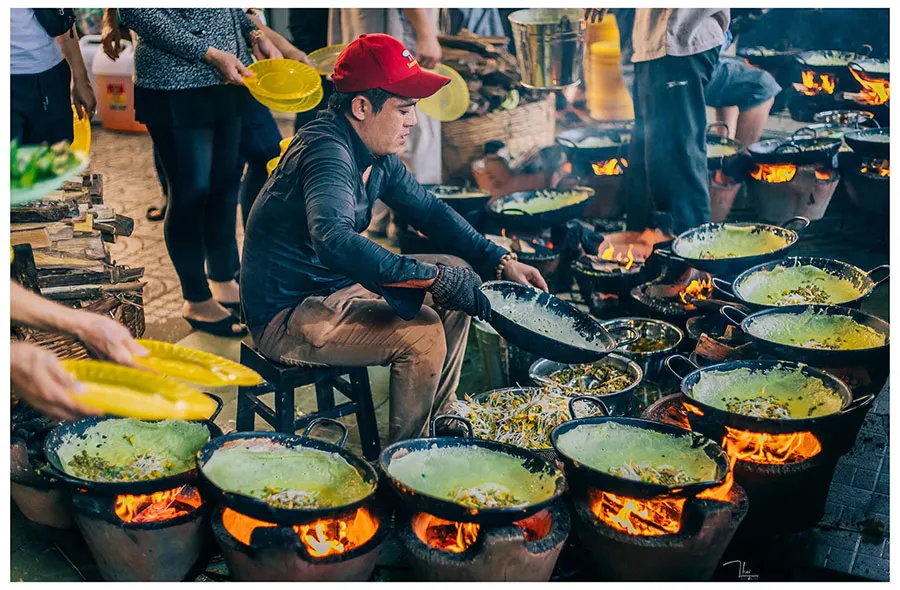
Every Pancake Is Cooked Fresh
Unlike many popular street foods, banh xeo isn’t prepared in advance.
Each pancake is cooked only after you place your order.
You’ll hear the familiar sizzling sound from the kitchen before the delicious aroma of coconut milk and grilled shrimp fills the air.
Watching skilled cooks swirl the batter around a hot pan before adding fresh fillings is part of the experience itself.
In countryside restaurants and family-run eateries, the cooking area is often open, allowing visitors to watch every step.
The anticipation makes the first bite even more satisfying.
Why Travelers Love This Dish
Many visitors arrive expecting banh xeo to be just another local specialty.
Instead, they discover something much more memorable.
The dish brings together everything people love about the Mekong Delta—fresh ingredients, generous hospitality, traditional cooking, and authentic countryside life.
Unlike meals served in busy city restaurants, eating banh xeo in the Delta feels personal. You aren’t simply ordering food; you’re taking part in a local tradition that has been shared around family tables for generations.
For food lovers, photographers, and curious travelers alike, it’s one of those experiences that captures the true spirit of Southern Vietnam.
Where to Enjoy the Best Vietnamese Pancakes in the Mekong Delta
One of the best things about traveling through the Mekong Delta is that authentic banh xeo is never far away. You don’t need a luxury restaurant or a famous food street to enjoy an unforgettable meal. In fact, some of the most delicious pancakes are served in small family-run eateries where recipes have been passed down for generations.
You’ll often find excellent banh xeo at:
- Riverside restaurants overlooking peaceful canals
- Local markets filled with regional specialties
- Countryside homestays
- Fruit garden restaurants
- Family-owned eateries in small villages
These places focus on freshness rather than presentation. The vegetables often come from gardens just a few steps away, while shrimp and fish are purchased from nearby fishermen early each morning. Every pancake is cooked to order, ensuring it’s hot, crispy, and full of flavor.
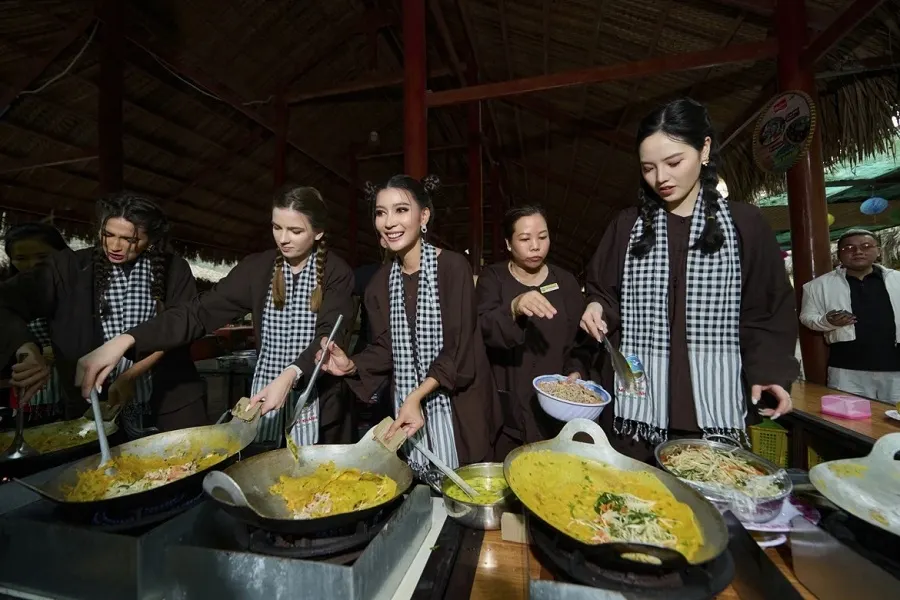
Learn to Cook Banh Xeo Like a Local
For many travelers, tasting banh xeo is only the beginning. Learning how to make it is an experience you’ll remember long after your trip ends.
Many villages and homestays in the Mekong Delta now offer cooking sessions where guests prepare the dish alongside local families.
During a typical class, you’ll learn how to:
- Mix the traditional rice flour batter
- Prepare fresh herbs and vegetables
- Season shrimp and pork
- Pour the batter into a hot pan
- Fold the pancake without breaking it
- Wrap and dip banh xeo the traditional way
Don’t expect perfection on your first attempt. Even locals admit that making a perfectly thin and crispy pancake takes practice.
The best part isn’t creating the perfect pancake—it’s spending time with local hosts, sharing stories, and learning about everyday life in the Mekong Delta.
How Mekong Delta Banh Xeo Differs from Other Regions
If you’ve already tasted banh xeo elsewhere in Vietnam, you’ll quickly notice that the Mekong Delta version has its own personality.
Compared with the smaller pancakes often found in Central Vietnam or Ho Chi Minh City, Mekong Delta banh xeo is generally:
- Larger and thinner
- Crispier around the edges
- Richer thanks to fresh coconut milk
- Served with a wider variety of herbs
- Made using incredibly fresh local ingredients
Because the Delta is one of Vietnam’s agricultural heartlands, cooks have access to seasonal vegetables, river seafood, fragrant herbs, and tropical produce throughout the year.
This connection between the land and the kitchen gives Mekong Delta cuisine its distinctive character.
Simple Tips for First-Time Visitors
Trying banh xeo is easy, but these tips will help you enjoy it like a local.
Don’t skip the herbs.
The fresh vegetables are an essential part of the meal, not just decoration.
Wrap, don’t fold.
Use a lettuce leaf to wrap the pancake together with several herbs before dipping it into the sauce.
Eat it while it’s hot.
Banh xeo tastes best immediately after it’s leaves the pan, when every bite is wonderfully crispy.
Share with others.
The pancakes are usually quite large, making them perfect for sharing with friends or family while ordering several local dishes.
Be adventurous.
Some herbs may taste unfamiliar at first, but together they create the unique balance that makes banh xeo so special.
More Than a Meal—A Window into Local Life
One of the reasons travelers fall in love with the Mekong Delta is its slower pace of life.
People still shop at neighborhood markets, grow vegetables in their gardens, and gather around the table for home-cooked meals.
Banh xeo reflects that lifestyle perfectly.
Every ingredient tells part of the region’s story. The rice comes from surrounding fields, coconuts from nearby groves, shrimp from winding waterways, and herbs from family gardens.
Sharing this meal isn’t simply about satisfying your appetite—it’s about experiencing the warmth and hospitality that define the Mekong Delta.
Many visitors discover that their favorite travel memories aren’t created by famous attractions but by simple moments spent enjoying authentic food with local people.
Add Banh Xeo to Your Mekong Delta Adventure
If you want to experience the Mekong Delta beyond the typical tourist attractions, food is one of the best places to start.
Joining a Mekong Delta tour that visits local villages, traditional markets, and family-run restaurants gives you the opportunity to enjoy authentic banh xeo exactly as locals do. Instead of eating in busy tourist areas, you’ll discover peaceful countryside settings where every pancake is prepared with fresh local ingredients and genuine hospitality.
Combining delicious food with scenic canals, fruit orchards, and village life creates a travel experience that’s both authentic and unforgettable.
Why Banh Xeo Deserves a Place on Your Vietnam Food Bucket List
Vietnam is home to countless incredible dishes, but few capture the spirit of Southern Vietnam quite like banh xeo.
Its crispy texture, fresh herbs, locally sourced ingredients, and interactive way of eating make it much more than a simple pancake. Every bite reflects the fertile landscape and welcoming culture of the Mekong Delta.
Whether you’re exploring floating markets, cycling through peaceful villages, or cruising along narrow canals, taking time to enjoy a freshly cooked banh xeo is one of the most rewarding experiences of the journey.
Sometimes, the best way to understand a destination isn’t by visiting another attraction—it’s by sitting at a local table, sharing a traditional meal, and discovering the stories behind every flavor.
Frequently Asked Questions
Is banh xeo spicy?
No. Traditional banh xeo is not spicy. Fresh chili is usually served separately, allowing you to adjust the heat to your preference.
Can vegetarians eat banh xeo?
Yes. Many restaurants offer vegetarian versions made with mushrooms, tofu, and seasonal vegetables instead of meat or seafood.
Is banh xeo gluten-free?
The batter is mainly made from rice flour, but recipes may vary. Travelers with food allergies should always check with the restaurant before ordering.
What drink goes well with banh xeo?
Fresh coconut water, sugarcane juice, iced tea, or Vietnamese coffee are all excellent choices, depending on the time of day.
Is banh xeo suitable for children?
Absolutely. Its crispy texture and mild flavor make it a popular choice for families traveling with children.
When is the best time to eat banh xeo?
Locals usually enjoy banh xeo for lunch or dinner, although it’s available throughout the day in many markets and local restaurants.
Can I learn to make banh xeo during my trip?
Yes. Many cooking classes, countryside homestays, and local experiences in the Mekong Delta allow visitors to prepare banh xeo alongside local families, making it one of the most enjoyable culinary activities in Southern Vietnam.