The best Cu Chi Tunnels photo spots are not limited to the famous hidden trapdoor. Forest paths, underground entrances, wartime kitchens, bunkers, historical exhibits and quiet moments with a local guide can all produce meaningful travel photographs.
Good photography at Cu Chi requires more than finding an attractive background. The site represents conflict, survival and human ingenuity, so the strongest images balance visual interest with historical respect. This guide explains where to photograph, when to visit, what equipment to bring and which mistakes to avoid.

What Makes the Cu Chi Tunnels Photogenic?
The Cu Chi Tunnels combine dense tropical vegetation, reddish earth, camouflaged entrances and reconstructed wartime structures. Light changes quickly between open forest, shaded shelters and dark underground passages, giving photographers several distinct environments within one visit.
The experience is also highly visual. Guides demonstrate hidden trapdoors, smoke-dispersing kitchens and ventilation systems that are easy to overlook without explanation. Reading about how the Cu Chi Tunnels were built before visiting can help you recognize and photograph these details with greater context.
Are the Cu Chi Tunnels Worth Visiting for Photography?
Yes, particularly for travelers interested in documentary, historical and environmental photography. Cu Chi is not a polished architectural landmark; its appeal comes from textures, human scale and the contrast between peaceful forest and underground wartime history.
It suits smartphone users as well as experienced photographers. You do not need professional equipment, but patience, respectful observation and a guide who can explain each location will improve both your photographs and your understanding of the site.

Best Cu Chi Tunnels Photo Spots
The Camouflaged Trapdoor Entrance
The small wooden trapdoor concealed beneath dry leaves is one of the most recognizable scenes at Cu Chi. Its scale demonstrates how carefully entrances were hidden within the forest floor.
Photograph the entrance before and during the guide’s demonstration. A wider horizontal frame provides environmental context, while a closer vertical composition emphasizes the contrast between the visitor and the narrow opening.
Local Tip: Stand slightly to one side instead of directly behind the group. This often produces a clearer view while allowing other visitors to watch the demonstration.
Tunnel Entrances and Underground Passages
Designated visitor tunnels offer dramatic compositions using low light, repeating lines and natural framing. Photographing from an entrance toward the light usually produces better results than pointing the camera deeper into complete darkness.
Visitors who want to understand the physical experience beforehand can read what it is like to crawl through the Cu Chi Tunnels. Tunnel crawling is optional, so never enter solely for a photograph if you feel uncomfortable in confined spaces.
Use a secure wrist strap and keep both hands available when moving. Stop only where permitted, and never block the route while adjusting camera settings.
Wartime Kitchens and Smoke Vents
Reconstructed kitchens show how meals could be prepared while smoke was dispersed away from the cooking area. These displays work well for detail photography because they include earthen surfaces, simple utensils and low wooden structures.
Look for rising steam, filtered sunlight and guide demonstrations. A photograph becomes more informative when it shows how an object functioned rather than presenting it as an isolated exhibit.
Bunkers, Workshops and Meeting Areas
Above-ground and semi-underground displays recreate workshops, meeting rooms, medical spaces and storage areas. These locations provide useful visual context for understanding that the tunnel network supported many activities beyond movement and hiding.
Use doorways and wooden beams as natural frames. If mannequins or reconstructed scenes are present, include signs or surrounding details so the image is clearly understood as an interpretation rather than an untouched wartime scene.
Forest Paths and Historical Exhibits
The shaded paths connecting the attractions are ideal for candid travel photography. Guides explaining exhibits, visitors observing ventilation mounds and groups walking beneath the trees often create more natural images than posed portraits.
Give your subject space within the frame and include the surrounding vegetation. This helps communicate how effectively tunnel features blended into the landscape.
Tapioca and Tea Experience
Boiled tapioca with tea is commonly presented near the end of a guided visit. The simple setting offers an opportunity for food, detail and human-interaction photographs.
Capture the serving plate, hands sharing food or a wider scene of travelers resting after exploring. Avoid over-staging the moment; its simplicity is part of its historical meaning.
The Optional Shooting Range
The shooting range can create visually dramatic scenes, but photography must follow staff instructions. Noise, barriers and safety rules make spontaneous movement inappropriate.
Ask before photographing participants or equipment. Visitors considering this optional activity should review the Cu Chi shooting range experience separately because ammunition is generally not included in a standard tour.

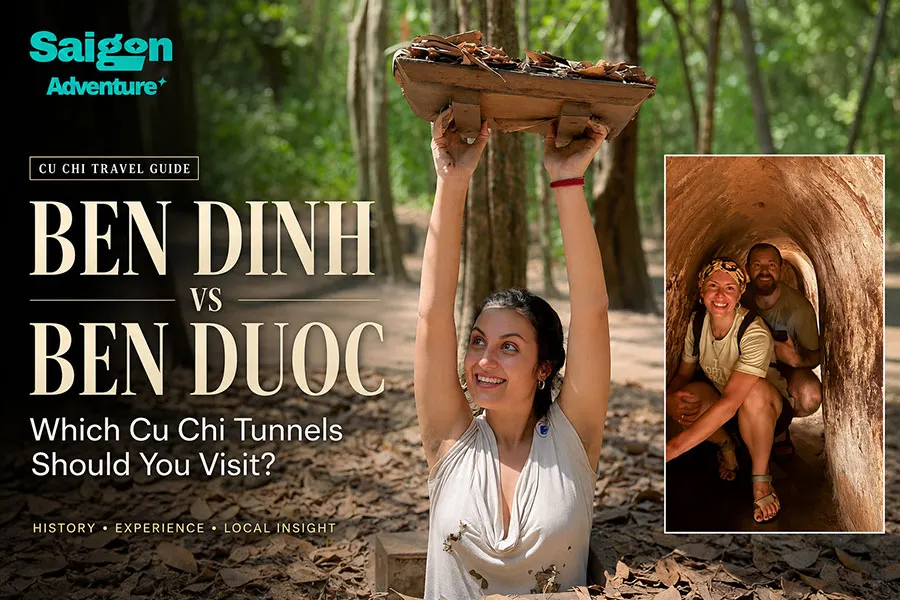
Ben Dinh or Ben Duoc for Better Photos?
Ben Dinh is generally more convenient for half-day visitors and has recognizable demonstrations, maintained visitor tunnels and established displays. It is often busier, so arriving early can make compositions easier.
Ben Duoc is farther from central Ho Chi Minh City and usually offers a quieter, more spacious atmosphere. Its memorial areas and rural surroundings may appeal to travelers seeking slower documentary photography.
Neither site is automatically better. Choose Ben Dinh for convenience and familiar highlights; consider Ben Duoc when atmosphere, additional time and fewer tour groups matter more.
Best Time to Photograph the Cu Chi Tunnels
Morning visits generally offer more comfortable temperatures and softer outdoor light. Arriving earlier may also help you photograph popular demonstrations before larger groups gather.
Afternoon tours can still work well, particularly when the sky is overcast. During the rainy season, forest colors may appear richer, but paths can become wet and equipment needs extra protection.
Avoid planning your visit around golden-hour photography. Much of the experience takes place beneath trees or inside structures, and tour schedules may not align with sunrise or sunset.

How Much Does a Photography Visit Cost?
Photography itself normally does not require a separate fee in standard visitor areas, but current site rules should always take priority. Tours vary according to transportation, duration, group size and inclusions.
Budget road tours may start from around $15, while private vehicles and speedboat experiences cost more. Compare current prices and formats on the Cu Chi Tunnels tours from Ho Chi Minh City page before choosing.
For convenient hotel pickup and a straightforward half-day itinerary, a Cu Chi Tunnels tour by car is usually practical. Travelers who want river scenery as part of their photography experience can consider a luxury speedboat tour to Cu Chi.
Camera and Smartphone Tips
A modern smartphone is sufficient for most Cu Chi photographs. Keep the lens clean, use exposure compensation in dark areas and avoid excessive digital zoom.
Useful items include:
- A wrist strap or secure camera strap
- A microfiber lens cloth
- A lightweight rain cover or waterproof pouch
- A portable power bank
- A small lens rather than a heavy camera kit
- Comfortable shoes and clothing that can get dusty
Flash can flatten the atmosphere of a tunnel and disturb other visitors. Use available light when possible, stabilize the camera against a solid surface and accept some natural shadow rather than forcing every area to appear bright.
Photography Etiquette and Mistakes to Avoid
Cu Chi is a historical site, not an adventure-themed photo set. Avoid humorous poses with traps, weapons, memorials or displays connected to injury and death.
Always follow posted signs and instructions from guides or site staff. Ask permission before photographing local workers, guides or other travelers closely, especially children.
Other mistakes to avoid include blocking narrow pathways, stepping beyond barriers, placing equipment on exhibits and delaying the group for repeated staged shots. A respectful photograph usually communicates more than an exaggerated pose.
Who Will Enjoy This Photography Experience?
The site is particularly rewarding for history enthusiasts, travel storytellers, documentary photographers and visitors who prefer meaningful details over polished landmarks. Couples and families can also create a memorable visual record without entering every tunnel.
Travelers with limited mobility or claustrophobia can photograph many exhibits above ground. Tell the guide about your needs early so you can follow an appropriate route without feeling pressured to crawl underground.
Plan a More Meaningful Cu Chi Visit
The most memorable Cu Chi images show relationships: a guide revealing a hidden entrance, a visitor listening carefully, filtered light across an earthen bunker or a quiet pause over tapioca and tea.
Choose a tour that provides enough time to observe rather than rushing between photo stops. Explore the available Cu Chi Tunnels tours, select the transportation and group size that suit your travel style, and let the history guide your photography.
Frequently Asked Questions
Can visitors take photos at the Cu Chi Tunnels?
Photography is generally possible in visitor areas, but restrictions may apply in specific locations. Follow signs and instructions from guides or site staff, particularly around the shooting range, memorial spaces and controlled exhibits.
What camera should I bring to the Cu Chi Tunnels?
A smartphone, compact camera or lightweight mirrorless camera is sufficient. Heavy equipment can become inconvenient on forest paths and inside narrow spaces, so prioritize mobility and secure your device with a strap.
Can I photograph inside the tunnels?
You may be able to photograph inside designated visitor tunnels, but conditions are dark and confined. Do not use equipment that blocks movement, and avoid stopping when other visitors need to pass.
Is morning or afternoon better for Cu Chi photography?
Morning is generally more comfortable and can be less crowded. Afternoon visits remain suitable, but tropical heat, rain and return traffic may affect the experience depending on the season.
Which site is better for photos: Ben Dinh or Ben Duoc?
Ben Dinh offers recognizable demonstrations and convenient access. Ben Duoc generally provides a quieter setting and more time for environmental photography, although it requires a longer journey from central Ho Chi Minh City.
Do I need to crawl through a tunnel to get good photos?
No. Hidden entrances, forest paths, kitchens, bunkers, exhibits and guide demonstrations are all above ground or accessible without crawling. Entering the tunnel is optional.
Should I book a private tour for photography?
A private tour offers greater flexibility and may provide more time at individual exhibits. A small-group tour offers better value and can still work well if you photograph efficiently without delaying the group.