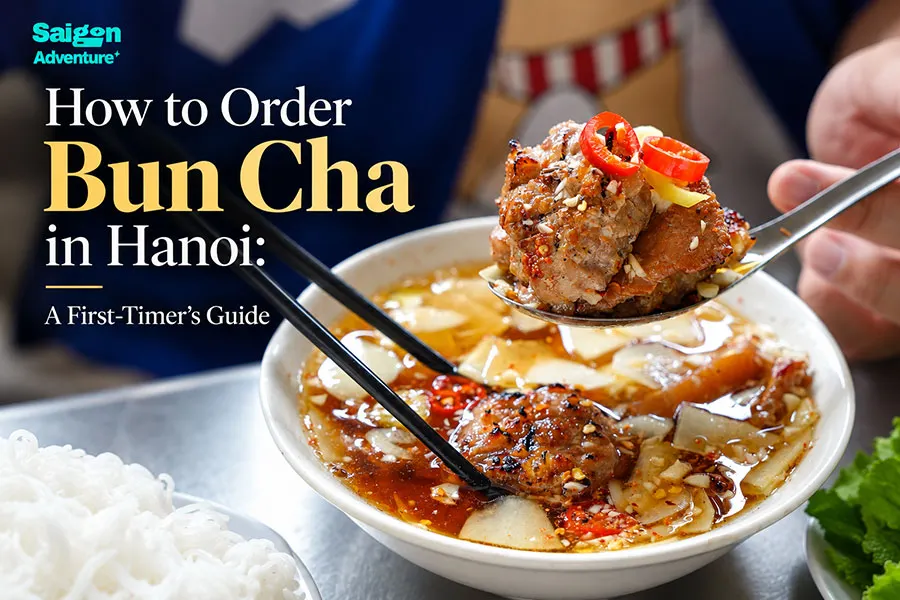
Ordering bún chả in Hanoi is easier than the table setup may suggest. In most specialist shops, you are ordering grilled pork with rice vermicelli, fresh herbs and a warm fish-sauce-based dipping broth, then deciding whether to add extras such as fried spring rolls.
For a first visit, order one standard portion per person, add nem if you want something crisp on the side, and taste the broth before adding chili. This guide explains how to order bun cha in Hanoi, what each plate is for, useful Vietnamese phrases and the simplest way to eat the meal.
For a broader overview, see Saigon Adventure’s guide to what to eat in Hanoi.
What Do You Get When You Order Bun Cha?
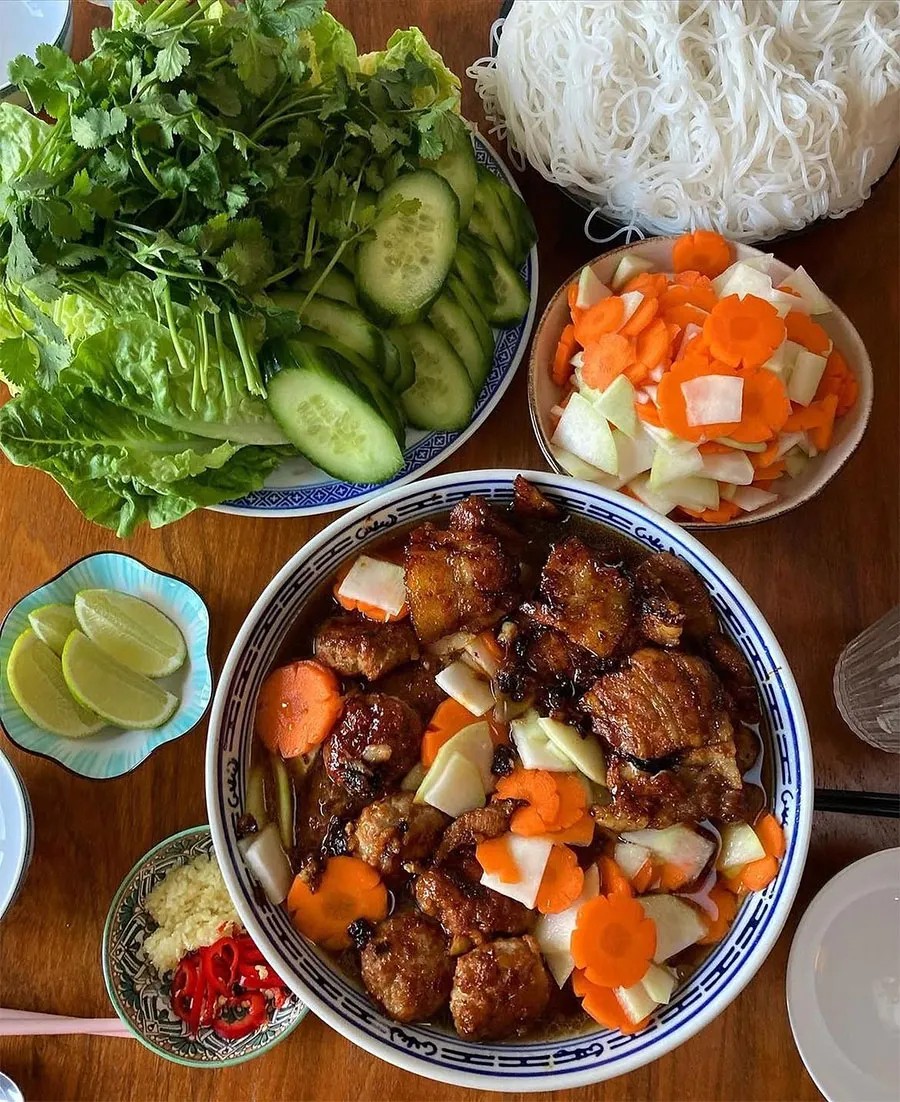
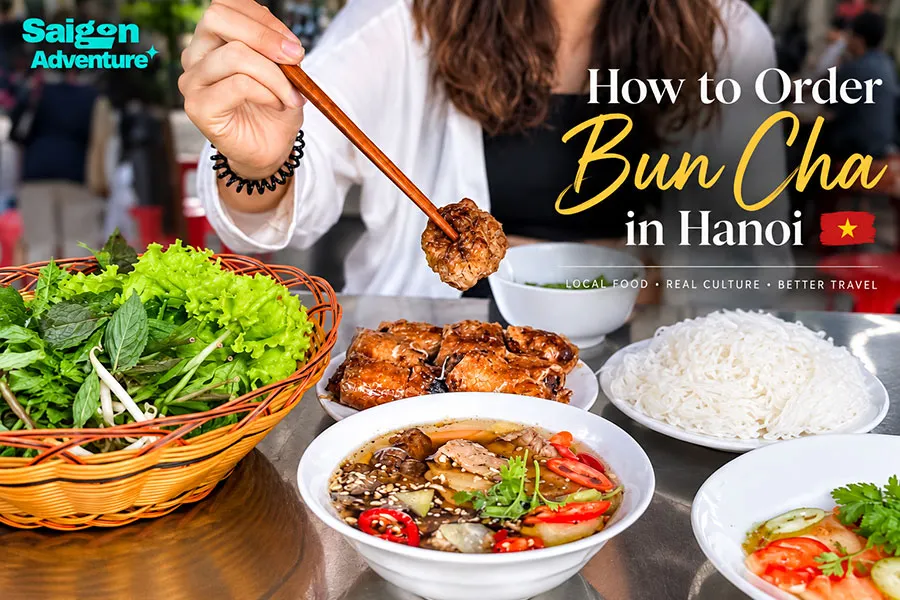
A standard bún chả meal usually arrives in separate components rather than one finished noodle bowl. You normally receive rice vermicelli, grilled pork, fresh herbs and lettuce, plus a light savory-sweet dipping broth made with fish sauce.
The pork may include minced patties, sliced pork, or both. Pickled vegetables often appear in the broth, with garlic and chili served separately.
Nothing is missing when the dishes arrive apart. Bún chả is designed to be combined gradually as you eat rather than mixed into one large bowl at the start.
How to Order Bun Cha in Hanoi Step by Step
1. Start With One Standard Portion
At a specialist bún chả shop, the menu may be short. One portion per person is the easiest starting point.
A useful phrase is “Cho tôi một suất bún chả.” It means “Please give me one portion of bún chả.” For two portions, say “Cho tôi hai suất bún chả.”
If pronunciation feels uncomfortable, say “bún chả,” hold up the number of fingers you need, or point politely at the menu.
2. Decide Whether You Want Fried Spring Rolls
Many bún chả shops offer fried spring rolls as an optional extra. You may see nem rán or, at some places, nem cua bể, a crab-style fried spring roll.
To add spring rolls, say “Cho tôi thêm nem.” Do not assume every restaurant serves the same type, so point to the menu or display if there are several choices.
If you are planning several food stops, sharing nem can help you save room.
3. Wait Before Ordering Extra Noodles or Meat
First-time visitors sometimes order extras immediately and then discover that the standard serving is already enough. Let the food arrive before deciding.
If you want more rice vermicelli, say “Cho tôi thêm bún.” Some extras may cost more, so ask if the price is unclear rather than assuming refills are free.
4. Taste the Broth Before Adding Chili
Bún chả does not need to be strongly spicy. Fresh chili is often served separately so each diner can adjust the heat.
If you do not want chili, say “Không ớt, cảm ơn.” Taste the dipping broth first, because adding too much chili or garlic immediately can overpower its sweet, salty and sour balance.
5. Confirm the Price When Necessary
If you cannot see the price, ask “Bao nhiêu tiền?”, meaning “How much?”
Prices and opening hours can change, so rely on the current menu. Smaller Vietnamese đồng notes can also make payment easier.
How Do You Eat Bun Cha Once It Arrives?
There is no complicated ritual. Take a small amount of noodles, add herbs if you like, place or dip them into the broth with a piece of grilled pork, and eat them together.
Work in small portions instead of putting the entire plate of noodles into the broth at once. This keeps the textures separate and lets you adjust each bite.
If you ordered fried spring rolls, you can dip a piece into the same broth. The main mistake is treating bún chả exactly like phở: the broth accompanies and seasons the noodles and pork rather than functioning as a large noodle soup.
You can also compare formats in this guide to choosing the best food tour in Hanoi.
When Is the Best Time to Order Bun Cha?
Bún chả is strongly associated with lunch in Hanoi, and many specialist shops are busiest from late morning through early afternoon. Some restaurants serve it for longer hours, so individual schedules vary.
For the classic atmosphere, go in late morning or around noon and check current opening hours before making a special trip.
Saigon Adventure’s guide to the best time of day for a Hanoi street food tour explains how different dishes fit Hanoi’s morning, lunchtime and evening food rhythms.
What If the Staff Do Not Speak Much English?
A language gap rarely makes bún chả difficult to order because the menu at specialist shops is usually simple. Use the dish name, number of portions and a few short requests instead of trying to translate a long sentence.
Useful phrases include:
- Một suất bún chả — one portion of bún chả
- Hai suất bún chả — two portions
- Thêm nem — extra fried spring rolls
- Thêm bún — extra rice vermicelli
- Không ớt — no chili
- Bao nhiêu tiền? — how much?
Keep the phrases on your phone. Use a translation app for allergies or dietary restrictions, where pointing is not precise enough.
Dietary Restrictions: What First-Timers Should Know
Traditional bún chả is a pork dish, so the standard version is not suitable for vegetarians, vegans or travelers who avoid pork. The dipping broth also commonly contains fish sauce.
Do not assume that removing visible pork makes a normal serving vegetarian. Sauces, broth and shared cooking equipment may still contain animal ingredients.
Travelers with serious allergies should identify the exact ingredient and ask clearly about preparation. Cross-contact can be difficult to assess in small kitchens.
Common First-Timer Mistakes to Avoid
The first mistake is ordering too much. Bún chả can be more substantial than it looks, especially after adding fried spring rolls.
The second is adding every condiment before tasting the broth. Start with the kitchen’s version, then adjust it.
The third is expecting every shop to serve an identical plate. Pork cuts, marinade, broth balance, herbs and spring rolls can vary, which is part of the interest of trying the dish in Hanoi.
Finally, do not build a self-guided route around one fixed restaurant without checking current hours. Independent eateries can close, sell out or change their schedule.
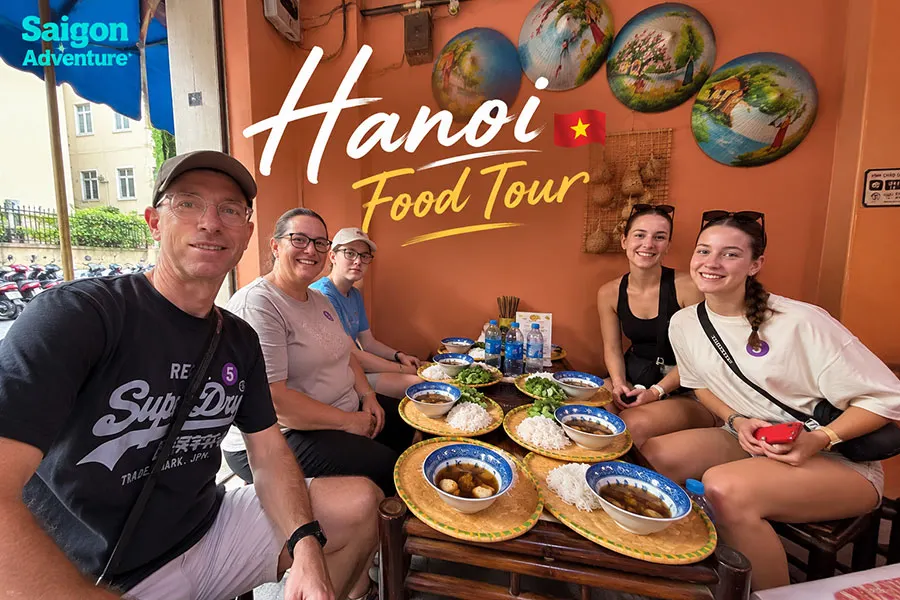
For a planned route, the Hanoi Michelin Street Food Walking Tour includes bún chả within a broader Old Quarter food experience. The Hanoi local food tour with Train Street and Old Quarter highlights offers a wider rotating selection of local dishes.
Frequently Asked Questions About Ordering Bun Cha in Hanoi
Do I Need to Speak Vietnamese to Order Bun Cha?
No. Saying “bún chả,” indicating the number of portions and pointing to any extras is usually enough. A few basic phrases make the process smoother but are not essential.
Should I Order One Portion Per Person?
One standard portion per adult is a practical starting point. If you are doing a food crawl or have a small appetite, sharing may make more sense, especially if you add spring rolls.
Is Bun Cha Spicy?
It does not have to be. Chili is often adjustable, so taste the broth first and add heat gradually. Say “không ớt” if you want no chili.
Can Vegetarians Order Traditional Bun Cha?
Traditional bún chả contains pork and usually fish sauce, so the standard dish is not vegetarian. Look for a restaurant offering a clearly identified vegetarian version rather than simply asking to remove the meat.
What Is the Difference Between Bun Cha and Pho?
Phở is a noodle soup served with noodles and broth together. Bún chả serves rice vermicelli separately from grilled pork, herbs and dipping broth, which you combine in small amounts as you eat.
Should I Add Nem to My Order?
Add nem if you enjoy fried spring rolls and want a fuller meal. If you plan to taste several dishes, sharing an order can help you save room for later stops.
Make Your First Bun Cha Order Simple
You do not need a long vocabulary list to order bún chả confidently in Hanoi. Start with one portion, add nem only if you want it, taste the broth before adjusting condiments and combine noodles, herbs and pork a little at a time.
That leaves more attention for the smoky pork, fresh herbs and balance of the dipping broth. If you want to explore the dish in a wider culinary context, this guide to Michelin street food in Hanoi’s Old Quarter can help you plan the next stops in your Hanoi food journey.
If Hanoi is only one stop on your Vietnam journey, the food experience does not have to end with bún chả. Travelers continuing south can explore a very different side of Vietnamese cuisine on a Saigon street food tour, where local dishes, neighborhood eateries and the energy of Ho Chi Minh City create a completely different food experience.