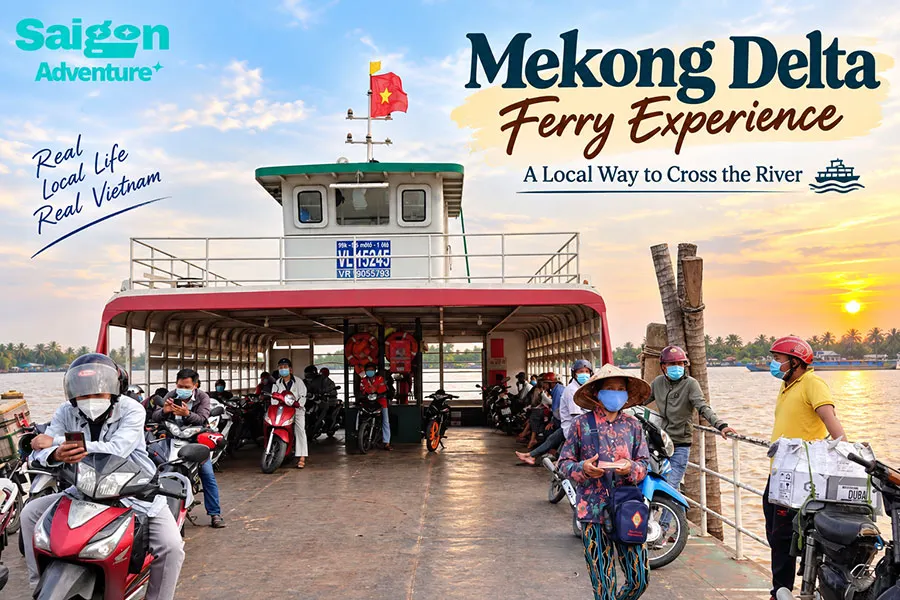
A Mekong Delta ferry experience is one of the simplest ways to understand how everyday life still moves with the rivers of southern Vietnam. Instead of boarding a sightseeing boat, you wait beside commuters, motorbikes, market goods and families heading from one bank to another.
The crossing may last only a few minutes, yet it often feels more revealing than another scheduled attraction. You see the river as transport rather than scenery.
If you are planning a wider journey, compare routes in the Mekong Delta tours collection before deciding where a ferry can fit naturally into your day.
What Is a Mekong Delta Local Ferry?
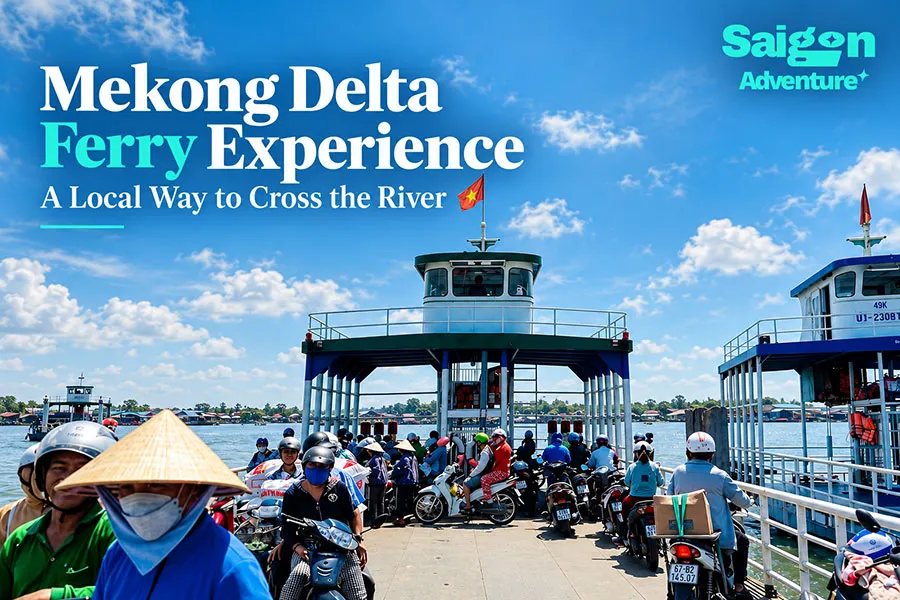
A local ferry is working transportation. It carries people and vehicles across a river where a bridge may be distant or inconvenient.
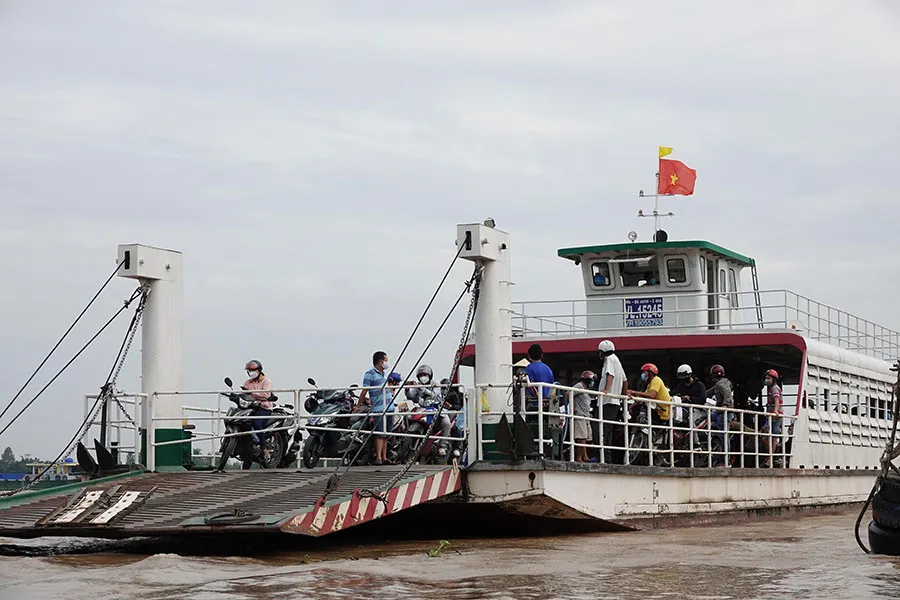
That makes it different from a tourist sampan or sightseeing cruise. Ferries may carry scooters, bicycles, produce and residents going to work, while tourism boats are designed mainly for visitors.
For travelers, little is staged. You buy a ticket, wait your turn and cross as part of the Delta’s normal rhythm.
Why Is a Mekong Delta Ferry Ride Worth Experiencing?
The value is not the length of the ride but the perspective. From the deck, you may watch cargo boats pass, see houses facing the water and notice motorcycles forming a steady stream as the ferry reaches the opposite bank.
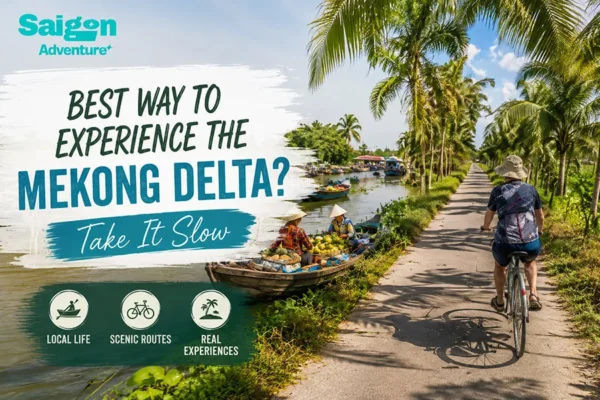
It also suits slow travel. The Delta is more rewarding when you leave room for small moments instead of racing between attractions. Our guide to experiencing the Mekong Delta without feeling rushed explains why a focused route often works better than trying to cover several distant places in one day.
Where Can Travelers Take Local Ferries in the Mekong Delta?
There is no single “best Mekong ferry.” Crossings serve many river communities, and routes can change as bridges, roads and local transport patterns develop.
Good opportunities appear around Vinh Long, the Ben Tre travel area, Dong Thap, Can Tho and An Giang. The easiest approach is to include a ferry in a route you already want to travel.
Ben Tre and Vinh Long for Rural River Life
The Ben Tre area works well with coconut countryside, cycling and small rural roads. Since Vietnam’s 2025 administrative reorganization, Ben Tre is part of the expanded Vinh Long Province, although “Ben Tre” remains a familiar destination name for travelers.
Vinh Long also offers islands, orchards and river branches. Ask locally about nearby crossings on the day you travel because routes can change.
Can Tho, Dong Thap and An Giang for Longer Trips
Travelers spending two or three days in the Delta have more chances to encounter ferries naturally. In these areas, a ferry often feels less like an activity and more like part of getting from one community to another.
If you are still planning the journey south, read our guide on how to get from Ho Chi Minh City to the Mekong Delta before building the local section of your route.
What Happens During a Local Ferry Crossing?
Buying a Ticket and Boarding
Follow the vehicle or pedestrian flow, find the ticket point and pay the posted fare. Smaller terminals may have little English signage, so keep small Vietnamese banknotes ready and show your destination on a map if you need help.
Boarding can be busy when motorbikes roll onto the deck. Stand where staff direct you and avoid stopping on the ramp for photographs.
Crossing the River Like a Local
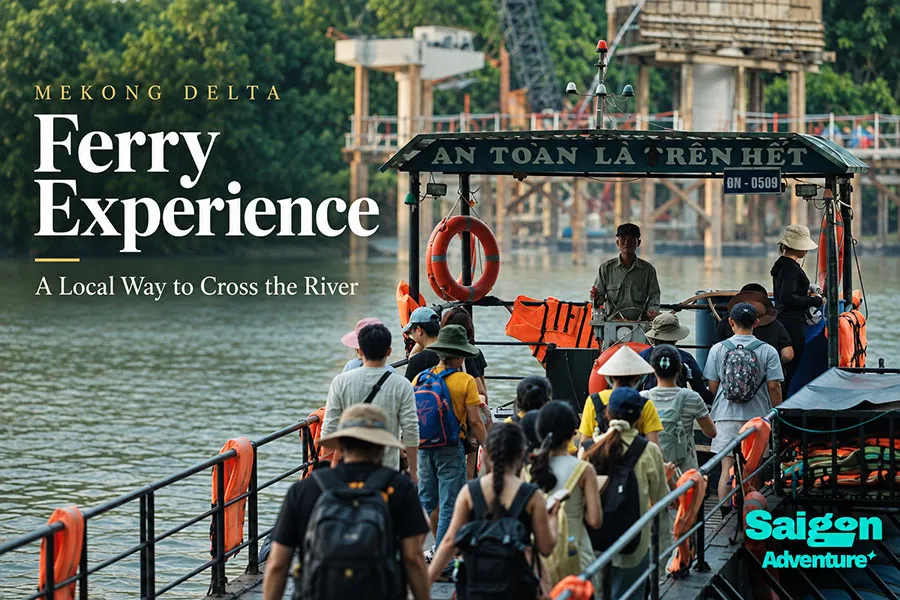
Once the ferry leaves the bank, look for cargo boats, baskets tied to motorcycles, riverside homes and activity on the opposite shore. Photograph without blocking passengers, and ask permission before close-up portraits.
How Much Does a Mekong Delta Ferry Cost?
There is no single Mekong Delta ferry price because fares vary by crossing and vehicle type.
As a real-world reference, Vam Cong Ferry published a 2025 tariff of VND 7,000 for a two-wheel motorbike and VND 32,000 for a car with fewer than seven seats. Treat this only as an example, not a universal Delta fare, and check the posted price where you board.
Local Tip: Carry VND 10,000, 20,000 and 50,000 notes. Small cash makes quick transactions easier where card payment is not available.
What Is the Best Time for a Mekong Ferry Experience?
Early morning is excellent for cooler temperatures and active local traffic. Commuters, market deliveries and riders give the crossing energy without the harsher midday heat.
Late afternoon is better for warm river light and photography. During the rainy season, protect electronics and wear shoes with grip because ramps can become slippery.
Avoid depending on a late crossing unless you have confirmed the schedule. Service can vary by route, weather and local operating conditions.
Local Ferry vs Tourist Boat: Which Is Better?
| Experience | Local Ferry | Tourist Boat |
|---|---|---|
| Purpose | River transport | Sightseeing |
| Duration | Usually short | Usually longer |
| Atmosphere | Everyday local life | Curated visitor experience |
| Best for | Slow travel, photography | Guided sightseeing |
| Comfort | Basic | Often more comfortable |
You do not have to choose one. A local ferry shows how people cross the river, while a Mekong Delta boat tour from Ho Chi Minh City gives you more time on canals and waterways.
Combining both creates a clearer understanding of how the river functions as both transport and destination.
Who Will Enjoy a Local Ferry Ride Most?
This experience suits travelers who enjoy observing daily life. Photographers, repeat visitors and independent travelers often appreciate its spontaneous nature.
Families can enjoy it too, but children should stay close during loading. Travelers with limited mobility should check access because some terminals may have uneven surfaces, steep ramps or limited seating.
It is less suitable for anyone expecting English interpretation, fixed photo stops or polished tourist facilities.
How to Take a Mekong Ferry Safely and Respectfully
A few simple habits make the experience easier:
- Carry small cash before boarding.
- Follow staff instructions and vehicle flow.
- Keep phones and loose belongings secure near ramps.
- Do not block commuters for photographs.
- Ask before taking close portraits.
- Wear shoes with good grip after rain.
- Confirm your return crossing if the route depends on it.
If you are riding a motorbike, make sure your license, insurance and rental conditions are valid for Vietnam. Rural roads may look quiet but can still include trucks, wet surfaces and sudden local traffic.
How to Add a Ferry to Your Mekong Delta Itinerary
Build the ferry around somewhere you already want to visit. A countryside day around Ben Tre or Vinh Long, or a longer journey toward Can Tho, can create natural opportunities without turning the crossing into a forced attraction.
Travelers coming from Saigon can compare destinations in our Beyond Ho Chi Minh City guide. If you prefer guided logistics, ask whether a local ferry can be included when it makes sense for the route.
The best ferry experience often happens almost casually: a short wait, a few minutes on the river and then the journey continues.
A Small Crossing That Reveals a Bigger Mekong Story
A Mekong Delta ferry experience is memorable because it remains ordinary. For a few minutes, you share the same crossing used by workers, families and riders moving through the river country every day.
Combine it with a market, orchard, village road or canal trip and it becomes part of a richer picture of southern Vietnam. Start with Saigon Adventure to compare Mekong routes and create a journey with space for these quieter local moments.
Frequently Asked Questions
Is a Mekong Delta ferry ride worth it for tourists?
Yes. It is especially worthwhile for travelers interested in local life, photography and slow travel. The ride is short, but it offers a close look at how residents and vehicles move across the region’s rivers.
How much does a Mekong Delta ferry cost?
There is no standard fare across the Delta. Prices vary by crossing and vehicle type, so check the posted tariff at the terminal and carry small Vietnamese banknotes.
Can tourists take local ferries independently?
Usually yes when the ferry is a public crossing and accepts pedestrians or your vehicle type. Follow staff directions and confirm the correct destination before boarding.
Where is the best place to try a local ferry?
Good opportunities appear around Vinh Long, Ben Tre, Dong Thap, Can Tho and An Giang. The best one is usually a crossing that already fits your route.
Is a local ferry the same as a sampan ride?
No. A ferry mainly moves people and vehicles across a river, while a sampan is a smaller boat commonly used on canals and may be part of a tourism experience.
What should I bring?
Bring small cash, sun protection, water and a waterproof pouch for electronics. In wet weather, add a lightweight rain layer and shoes with good grip.