Ho Chi Minh City does not reveal its best food in a single restaurant. It appears in the smoke rising from a charcoal grill, the metallic rhythm of a noodle cart and the narrow alleys where families have served the same neighborhood for years.
The real challenge is not finding something to eat. It is deciding whether to explore alone or join a local guide who can help you understand what is happening around the table.
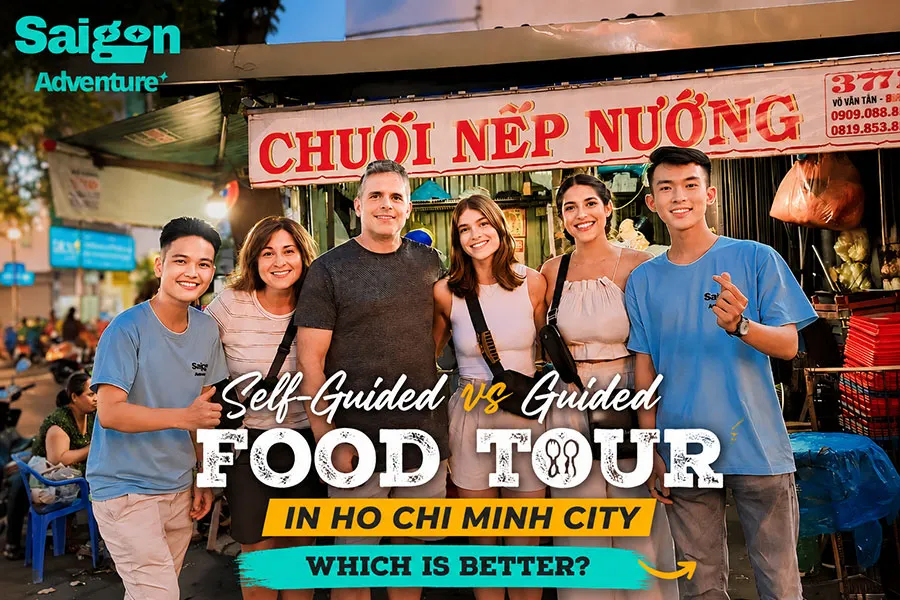
When comparing a self-guided vs guided food tour in Ho Chi Minh City, neither choice is automatically better for everyone. Independent exploration offers freedom and lower costs, while a guided experience delivers local insight, smoother logistics and easier access to eateries beyond the tourist center.
Quick answer: Choose a guided food tour if this is your first visit, you have limited time or you want cultural context with every tasting. Go self-guided if you enjoy research, prefer complete flexibility and feel comfortable navigating busy streets and unfamiliar menus.
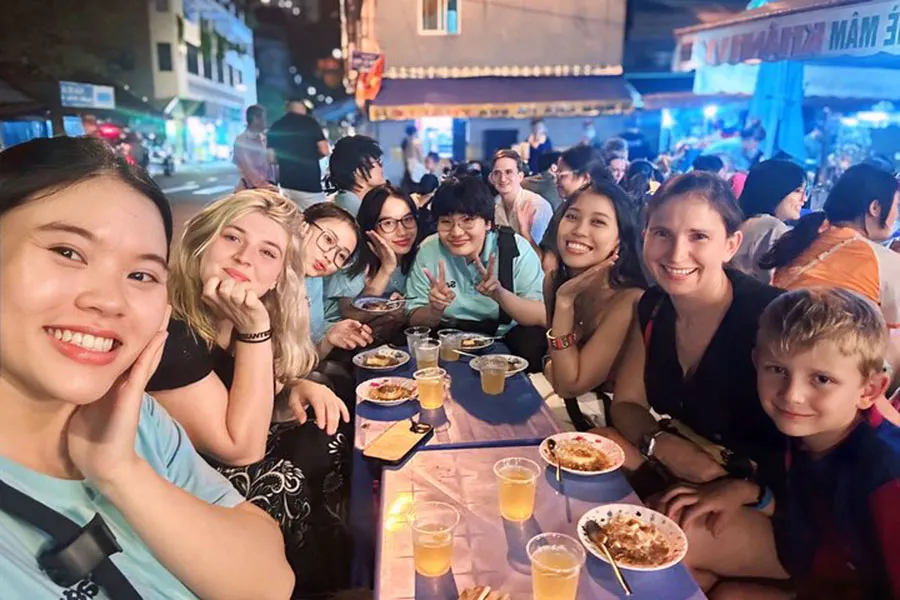
What Is a Self-Guided Food Tour in Ho Chi Minh City?
A self-guided food tour is a culinary route that you plan and complete independently. You select the dishes, locate the vendors, arrange transportation and decide how long to stay at each stop.
The route can be carefully organized or completely spontaneous. You might build an evening around cơm tấm, bánh xèo and chè, or walk through a neighborhood market and follow whichever stall attracts the local crowd.
Central District 1 is an easy place to begin, but it represents only one part of the city’s dining culture. Districts 3, 4, 5 and 10 offer residential streets, Chinese-Vietnamese influences and countless family-run businesses that receive fewer international visitors.
For a full day of independent exploration, use a practical Saigon food tour itinerary to organize dishes by neighborhood and time of day.
Why Independent Food Exploration Can Be Rewarding
Freedom is the clearest advantage. You can begin whenever you like, skip an unappealing dish, change neighborhoods or spend an extra hour drinking cà phê sữa đá.
A self-guided route also gives you complete control over the budget. You pay vendors directly, select your own portions and decide whether the evening should involve three signature dishes or ten small tastings shared with friends.
Spontaneity is another pleasure. Some of the most memorable meals in Saigon begin with an unplanned turn into an alley or the smell of grilled pork drifting across the pavement.
This approach suits repeat visitors, experienced independent travelers and anyone who genuinely enjoys researching food. It can feel less like a scheduled activity and more like temporarily joining the rhythm of the city.
Where a Self-Guided Tour Becomes Difficult
Addresses in Ho Chi Minh City are not always as simple as they appear on a map. A vendor may operate only in the morning, move a cart after sunset or close unexpectedly when ingredients sell out.
Language can create another barrier. Pointing at a dish may be enough to order it, but it will not necessarily reveal what is in the broth, which condiments to add or how the dish is traditionally eaten.
Distances are deceptive as well. Two restaurants may look close on a screen but require a hot walk, a complicated crossing or separate rides through heavy traffic.
The greatest loss is often context. You may enjoy an excellent bowl of hủ tiếu without learning how its Chinese and Southeast Asian influences became part of southern Vietnamese food culture.
What Is a Guided Food Tour in Ho Chi Minh City?
A guided food tour is a planned tasting experience led by someone who understands the city’s streets, vendors and culinary traditions. It may take place on foot, by car or on the back of a scooter.
The strongest tours do more than deliver guests to popular restaurants. They connect food to family recipes, migration, local customs and the character of each neighborhood.
A well-designed motorbike food tour in Ho Chi Minh City can combine several districts in one evening. This is difficult to achieve independently without spending a large part of the night arranging transport.

Why a Local Guide Changes the Experience
A guide removes much of the logistical work. You do not need to translate menus, check every opening time or determine which stall is the correct one in a crowded street.
More importantly, the food begins to make sense. A local host can identify unfamiliar herbs, explain the balance of a dipping sauce and show you why bánh xèo should be wrapped with leaves rather than eaten like a Western pancake.
Guides may also introduce dishes that visitors would not confidently order alone. Snails, grilled rice paper, southern-style noodle soups and seasonal desserts become more approachable when someone explains the ingredients first.
This is especially useful for travelers searching for more than pho and bánh mì. A specialized street food tour for food lovers can reveal the variety that exists beyond Vietnam’s most internationally famous dishes.
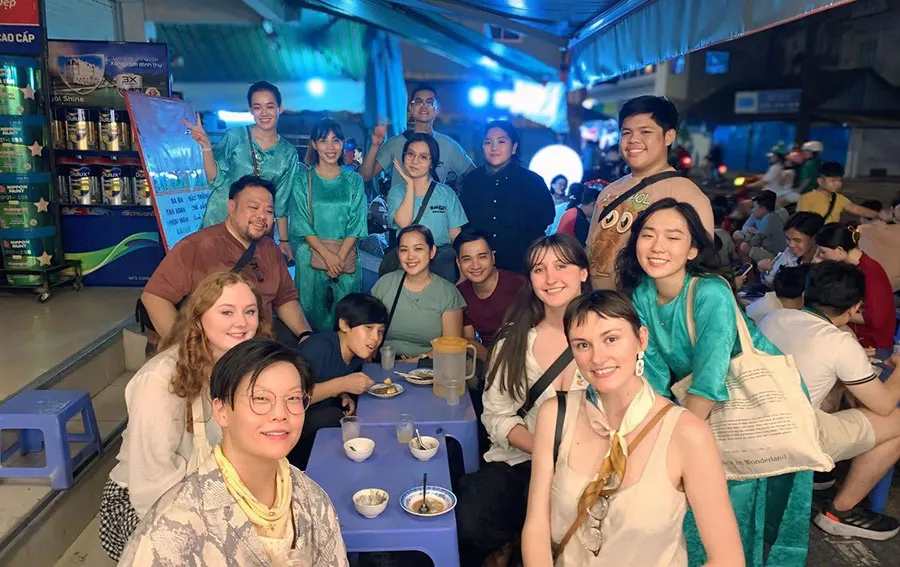
Guided tours also create natural human interaction. Solo travelers can share a table instead of dining alone, while couples and families gain someone who can help them communicate with vendors.
What Are the Drawbacks of a Guided Food Tour?
The obvious disadvantage is cost. A tour costs more than purchasing the same dishes independently because the price may include planning, transportation, tastings and the guide’s time.
There is less flexibility, too. Vendors have operating hours and the group must maintain a reasonable pace, so spending an extra 45 minutes at one stop may not be possible.
Quality varies between operators. A route that stays entirely inside the most tourist-oriented area may not provide the same value as one that explores residential districts and offers thoughtful interpretation.
Look beyond the number of dishes when comparing tours. Group size, neighborhood selection, host quality, dietary support and transportation can matter far more than one additional tasting.
Self-Guided vs Guided Food Tour: A Practical Comparison
The right choice depends on what you want to gain from the evening. This side-by-side comparison covers the factors that matter most to international visitors.
| Factor | Self-Guided Tour | Guided Food Tour |
|---|---|---|
| Cost | Usually cheaper and easy to control | Higher, with food, guidance and often transport included |
| Flexibility | Complete control over timing and dishes | Planned route with a fixed meeting time |
| Preparation | Requires research and backup options | Operator manages the itinerary |
| Local knowledge | Limited to your research | Real-time explanations and cultural context |
| Neighborhood access | Easiest in compact central areas | Can connect several non-touristy districts |
| Ordering | Possible language and menu difficulties | Guide assists with vendors and ingredients |
| Social experience | Private and independent | Shared with a host or small group |
| Best for | Confident and repeat visitors | First-time visitors and curious food lovers |
Which Food Tour Is More Affordable?
A self-guided food tour is generally the cheaper option. Street meals can be purchased individually, and sharing portions allows two travelers to sample more without ordering a full serving at every stop.
However, compare the total experience rather than food prices alone. Multiple taxi or ride-hailing journeys, planning time and ordering mistakes can reduce the apparent savings.
A guided experience may provide stronger overall value when transportation and numerous tastings are included. You are also paying for cultural interpretation and an efficient route, not simply a collection of dishes.
Which Option Provides More Authentic Local Access?
Travelers often assume that exploring alone is automatically more authentic. Independence can certainly create genuine encounters, but it can also keep visitors close to highly reviewed English-friendly businesses.
A good local guide can take guests into districts they would otherwise overlook. The advantage is not entering “secret” places; it is understanding ordinary eateries through someone familiar with the community.
Night tours are particularly effective because Saigon’s dining scene becomes livelier after sunset. A Saigon after-dark scooter tour with female riders combines street food with the atmosphere of neighborhoods changing between work, dinner and nightlife.
Which Choice Is Better for First-Time Visitors?
A guided Saigon food tour is usually better for a first visit. The scale of the city, intensity of its traffic and enormous number of dining choices can feel overwhelming during the first few days.
Book the tour near the beginning of your stay. What you learn about ordering, sauces, herbs and dining etiquette will make later independent meals more enjoyable.
The most effective strategy is often to combine both formats. Start with a local guide, then use your new confidence to create a self-guided route through another neighborhood.
Choose the Right Tour for Your Travel Style
Choose a self-guided tour if you enjoy planning, want complete control and do not mind finding an alternative when a stall is closed. It is also ideal if you already have a short list of specific dishes rather than wanting a broad culinary introduction.
Choose a guided tour if time matters more than budget, you want to visit several districts or you value the stories behind each recipe. It is also a reassuring option for solo travelers who would prefer not to navigate unfamiliar streets at night alone.
Families and older visitors should check the walking distance, seating conditions and transportation format before booking. The best tour is the one that suits everyone’s comfort and mobility.
Travelers with allergies or dietary restrictions should contact the operator in advance. Fish sauce, shrimp paste, peanuts and meat-based stock may appear in recipes even when they are not visible on the plate.
Local Tips for a Better Saigon Food Tour
Arrive hungry, but do not skip every meal before an evening tour. Saigon’s heat and humidity can make an empty stomach feel uncomfortable long before the first tasting.
Wear lightweight clothing and secure, comfortable shoes. If traveling by scooter, follow the operator’s safety instructions and avoid loose accessories.
On a self-guided route, choose vendors with steady customer turnover and food cooked in view. Save at least one alternative stop in every neighborhood because local operating hours can change.
Order smaller portions whenever possible. Pacing leaves space for grilled dishes, noodles, snacks, desserts and Vietnamese coffee rather than ending the experience after two heavy meals.
Finally, remain curious and respectful. Ask before photographing vendors closely, be patient when communication takes time and remember that the places you visit are businesses serving their local communities.
Which Saigon Food Tour Is Right for You?
For first-time visitors, a guided food tour is the stronger introduction to Ho Chi Minh City. It offers efficient transportation, local communication and stories that transform a series of tastings into a meaningful picture of Saigon.
For repeat visitors and confident explorers, a self-guided route provides greater flexibility and the excitement of making personal discoveries. It can also be tailored precisely to a particular budget or list of dishes.
The best answer, however, may be both. Let a local host introduce the city, then continue independently once its dining culture feels less mysterious.
Ready to experience Saigon beyond the familiar tourist streets? Join Saigon Adventure for a carefully planned food journey filled with local flavors, welcoming hosts and neighborhoods you might never discover from a guidebook alone.
Frequently Asked Questions
Is a guided food tour in Ho Chi Minh City worth it?
Yes, particularly for first-time visitors and travelers with limited time. A well-organized tour combines tastings, transportation, local knowledge and assistance with ordering.
Is a self-guided food tour in Saigon safe?
It can be safe when normal travel precautions are followed. Protect your belongings, use reputable transport, cross busy streets carefully and choose vendors with visible preparation and good customer turnover.
Is a walking or motorbike food tour better?
Walking tours suit compact routes and travelers who prefer a slower pace. Motorbike tours cover more districts, making them useful for seeing a broader side of Ho Chi Minh City in one evening.
How long should a Saigon food tour take?
Three to four hours provides enough time for several tastings without rushing. A self-guided route may take longer because navigation and transportation are not prearranged.
Can vegetarians join a guided food tour?
Many operators can accommodate vegetarians with advance notice. Vegan diets and serious allergies require more careful discussion because broths, sauces and garnishes may contain animal products or allergens.
How many dishes should I try on a self-guided tour?
Four to six small tastings are manageable for most travelers. Sharing portions and alternating heavier meals with lighter snacks will help you experience more variety.
When should I book a food tour during my trip?
The first or second evening is ideal. You will gain practical knowledge that helps you order confidently and explore more local food throughout the rest of your stay.