Saigon does not have one official dining hour. Before sunrise, charcoal grills are already smoking beside the road; at lunchtime, noodle shops fill with office workers; and after dark, entire neighborhoods turn into open-air dining rooms.
For international travelers wondering what to eat in Saigon, the challenge is not finding food. It is choosing the right dishes, neighborhoods and times without becoming full after the first two stops.
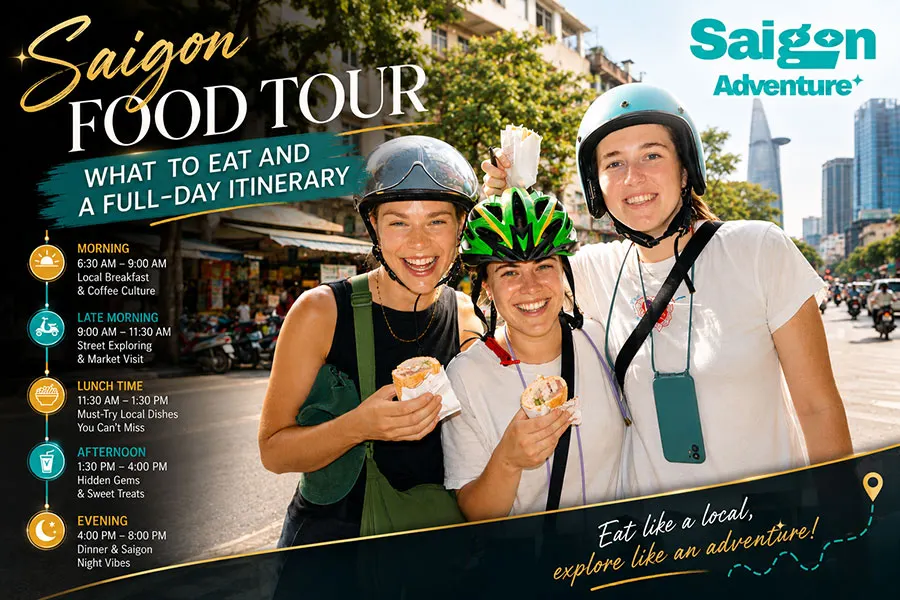
This Saigon food tour itinerary follows the rhythm of the city from breakfast to late evening. It combines iconic southern dishes, market snacks, local dining customs and practical advice so you can experience more than the familiar restaurant scene of District 1.
What Makes a Saigon Food Tour Special?
Ho Chi Minh City has welcomed people from every region of Vietnam for generations. Their recipes have traveled with them, making the city an extraordinary meeting point for southern cooking, regional noodle dishes and Chinese-Vietnamese culinary traditions.
Yet Saigon’s food still has a recognizable character. Flavors tend to be vibrant and generous, with fresh herbs, pickled vegetables, chili, lime and fish sauce balancing sweeter southern seasonings.
The setting matters just as much as the food. A memorable meal may come from a market stall, a family kitchen hidden inside an alley or a tiny shop specializing in one dish perfected over decades.
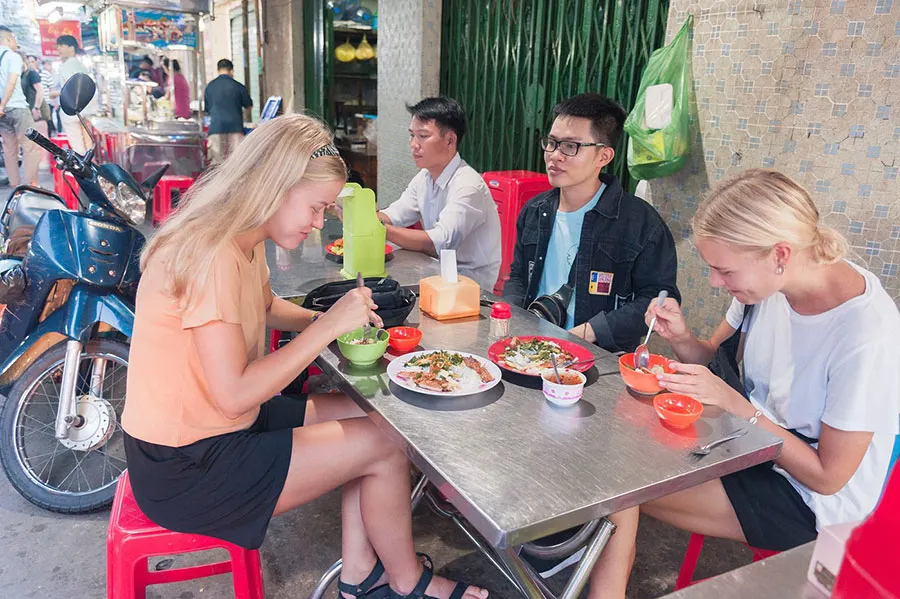
Street dining is also highly social. Diners sit close together, share condiments and watch cooks prepare each plate only a few steps away.
Morning: Start With a True Saigon Breakfast
7:00 AM: Cơm Tấm With Charcoal-Grilled Pork
Begin your Saigon food itinerary with cơm tấm, or broken rice. Once associated with fractured rice grains that could not be sold as premium rice, it has become one of the city’s most recognizable everyday meals.
A classic plate includes rice, grilled pork, cucumber, tomato, pickled vegetables and scallion oil. Sweet-savory fish sauce is served on the side, allowing you to adjust the flavor yourself.
For the complete version, order cơm tấm sườn bì chả. It adds shredded pork skin and a steamed pork-and-egg loaf to the grilled pork chop.
Choose a stall where the meat is being grilled in full view and customers arrive continuously. The scent of caramelizing pork drifting through the morning air is usually the best sign that you are close.
Local tip: Add the fish sauce gradually. Every stall uses a slightly different balance of sweetness, saltiness and acidity.
8:30 AM: Vietnamese Coffee and Bánh Mì
After breakfast, slow down with cà phê sữa đá, strong Vietnamese coffee mixed with condensed milk and poured over ice. If you prefer coffee without milk, ask for cà phê đen đá.
Coffee in Saigon is not merely a caffeine stop. Locals linger over small glasses, talk with friends and watch the city move around them.
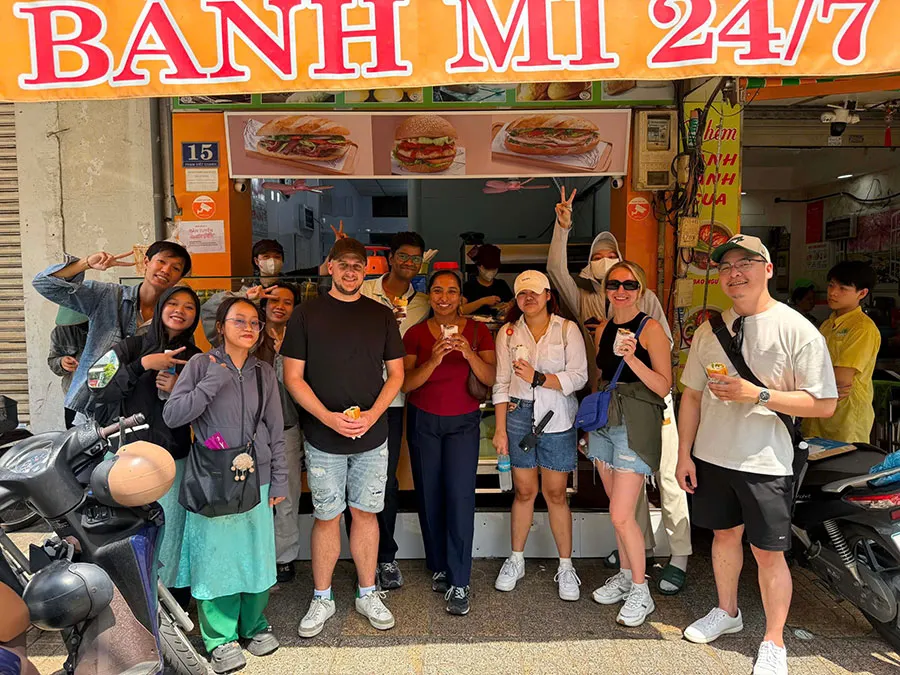
If you want another bite, share a bánh mì. The crisp baguette may contain pâté, Vietnamese cold cuts, grilled meat, cucumber, pickled carrot, coriander and fresh chili.
District 1 is convenient, but District 3 offers a calmer morning atmosphere with leafy streets and traditional cafés. Either area works well before the temperature begins to rise.
Late Morning: Explore a Local Market
10:00 AM: Tropical Fruit and Light Snacks
Traditional markets reveal the ingredients behind Vietnamese cooking. Ben Thanh Market is accessible for first-time visitors, while neighborhood markets in Districts 3, 5 and 10 feel more connected to everyday shopping.
Rather than ordering another full meal, try seasonal fruit such as rambutan, mangosteen, longan or dragon fruit. You may also find gỏi cuốn, fresh rice-paper rolls filled with noodles, herbs, pork or shrimp.
Walk through the market slowly and observe which stalls attract local shoppers. High customer turnover often means ingredients are replenished frequently.
Ask for the price before ordering and carry small Vietnamese đồng notes. Some traditional vendors accept only cash and may struggle to change large bills.
Local tip: Morning is generally the most rewarding time to visit fresh-food sections. Wear closed shoes and avoid standing in the narrow paths used by vendors transporting goods.
Lunch: Go Beyond Phở
12:00 PM: Hủ Tiếu Nam Vang or Bún Thịt Nướng
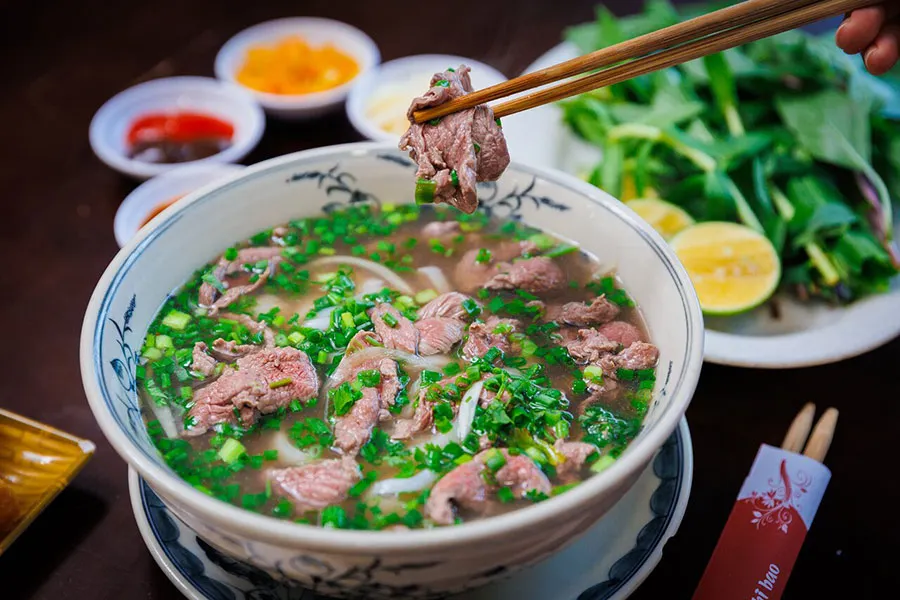
Phở may be Vietnam’s most internationally famous noodle soup, but Saigon has a much broader noodle culture. Lunch is an excellent opportunity to explore it.
Try hủ tiếu Nam Vang, a southern noodle dish shaped by Cambodian and Chinese influences. It may include pork, shrimp, minced meat, quail egg and garlic chives, although the exact toppings vary.
You can order it with clear broth or khô, meaning dry, with the broth served in a separate bowl. The dry version is particularly interesting because the noodles are mixed with a savory sauce before the toppings are added.
For something lighter, choose bún thịt nướng. This colorful bowl combines rice vermicelli, charcoal-grilled pork, herbs, cucumber, pickled vegetables, peanuts and fish sauce.
Mix everything thoroughly before eating. The contrast between smoky meat, cool noodles, crunchy vegetables and bright dressing makes it especially satisfying during Saigon’s warmer hours.
Travelers who want more reliable local recommendations can also read this guide to where locals eat in Saigon. It is useful for discovering neighborhood specialties beyond heavily promoted tourist restaurants.
1:30 PM: Cool Down With Chè
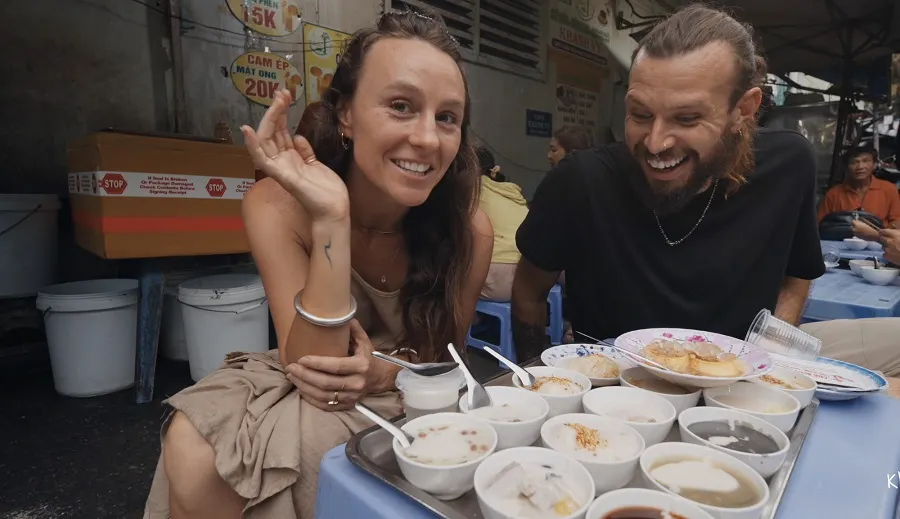
Finish lunch with chè, a large family of Vietnamese sweet soups, puddings and drinks. A serving may contain beans, jelly, tropical fruit, sticky rice, coconut milk or crushed ice.
There is no single standard recipe. Examine the ingredients at the counter and point to the combination that looks most appealing.
Travelers with allergies should be cautious because peanuts, coconut milk, dairy products and different beans may not be obvious. Carry a translated allergy card rather than relying on a quick verbal explanation.
Afternoon: Discover Saigon’s Snack Culture
3:30 PM: Crispy Bánh Xèo
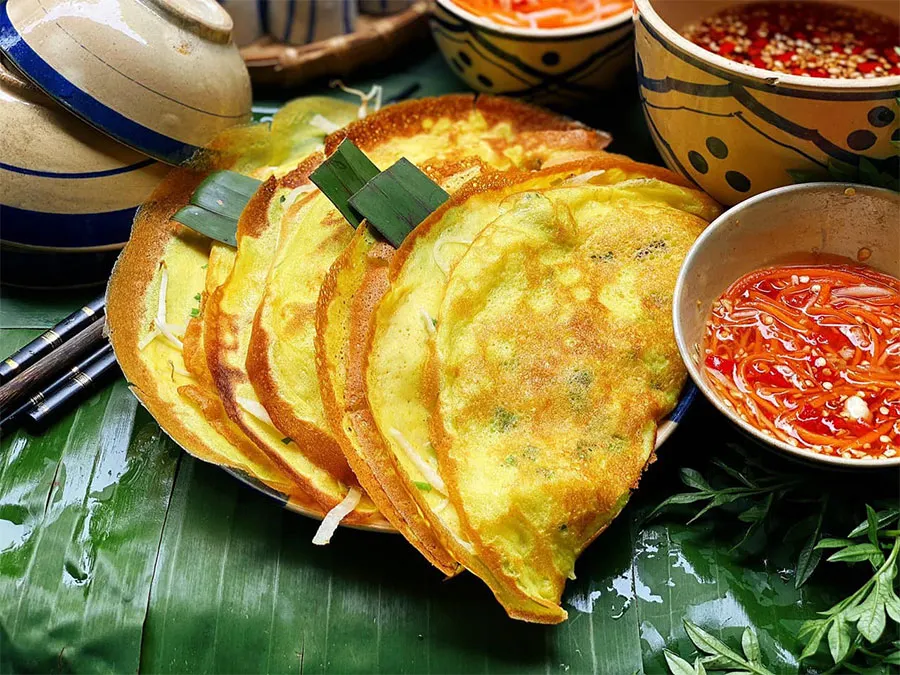
You often hear bánh xèo before you see it. Its name refers to the sizzling sound produced when rice batter hits a hot pan.
The thin golden pancake is commonly filled with pork, shrimp and bean sprouts. It arrives with a generous basket of lettuce and aromatic herbs.
Do not eat it like a Western pancake. Tear off a crisp piece, wrap it in leaves and dip the bundle into nước chấm.
The pleasure comes from the contrast: hot pancake, cool herbs, juicy filling and sweet-savory sauce. Portions can be large, so sharing one is sensible during a full-day Saigon food tour.
5:00 PM: Bánh Tráng Trộn Before Sunset
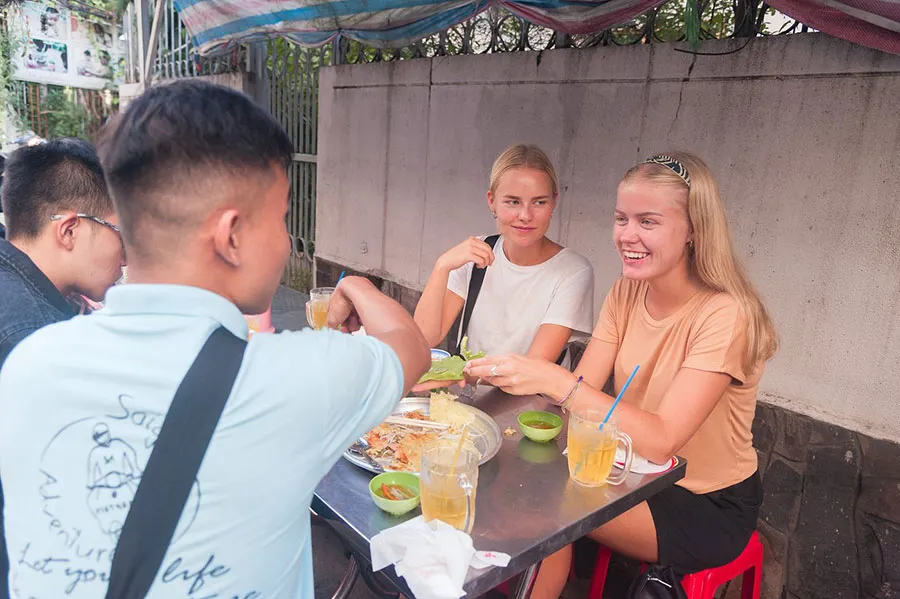
As offices and schools empty, mobile snack vendors become more visible. Look for bánh tráng trộn, strips of rice paper tossed with herbs, citrus, chili and savory seasonings.
Depending on the vendor, the mixture may include green mango, dried shrimp, peanuts, quail eggs or fried shallots. Each version has its own texture and level of heat.
Say không cay if you do not eat spicy food. Order a small portion because the richest part of the itinerary begins after sunset.
Evening: Explore Saigon’s Street-Food Neighborhoods
6:30 PM: Bò Lá Lốt From the Charcoal Grill
Begin the evening with bò lá lốt, seasoned beef wrapped in betel leaves and grilled over charcoal. Cooking transforms the leaves into fragrant, slightly peppery wrappers around the juicy beef.
The rolls may arrive with rice paper, vermicelli, lettuce, herbs and pickled vegetables. Place a little of each ingredient inside the rice paper, roll it tightly and dip it into the accompanying sauce.
Do not worry if your first roll falls apart. Eating neatly is far less important than experiencing the combination of smoke, herbs, meat and contrasting textures.
Some of Saigon’s most interesting food areas are spread across Districts 4, 5 and 10. Travelers who want to connect these neighborhoods efficiently can explore the city through Saigon food tours by motorbike.

8:00 PM: Seafood, Snails and Shared Plates
An evening ốc meal is one of Saigon’s most social dining experiences. Although ốc means snails, specialist restaurants often serve clams, scallops, crab claws and other seafood.
Cooking styles are equally diverse. Seafood may be grilled with scallion oil, stir-fried with tamarind, steamed with lemongrass or enriched with coconut milk.
Order several small plates for the table instead of choosing one individual meal. Sharing allows everyone to compare different sauces and preparation methods.
Select a busy venue with steady turnover and clearly handled ingredients. For market-priced seafood, confirm the cost before the kitchen begins preparing it.
A guided Street Food Tour in Ho Chi Minh City by Motorbike is particularly valuable in the evening. A local rider can manage the traffic, explain unfamiliar dishes and lead you into alleys that most first-time visitors would never find alone.
9:30 PM: End With Something Sweet
Complete the evening with sugarcane juice, coconut water or another small serving of chè. These refreshing choices offer a gentle finish after grilled meat and seafood.
Hồ Thị Kỷ Market in District 10 is one possible area for late snacks and a lively local atmosphere. Individual vendors may change their schedules, so approach the market as a flexible food neighborhood rather than building your evening around one stall.
Visitors with serious appetites may prefer a structured tasting experience such as the Ho Chi Minh Food Safari with 20 tastings. It brings together numerous small flavors across several non-tourist districts without requiring guests to research every stop independently.
Practical Tips for Your Saigon Food Tour
Choose places that cook food in front of you and serve a steady stream of customers. Freshly grilled, boiled or stir-fried dishes are generally more sensible choices than food left uncovered for long periods.
Drink bottled or properly filtered water and clean your hands before eating. If you have serious allergies or strict dietary requirements, carry a Vietnamese translation that identifies the exact ingredients you must avoid.
Crossing the entire city on foot is unrealistic. The heat, traffic and distance between food neighborhoods make short taxi journeys, ride-hailing services or guided motorbike tours more practical.
Wear lightweight clothing and comfortable shoes. A small bag is easier to manage than a backpack inside crowded markets and narrow eateries.
Most importantly, pace yourself. Share dishes, drink water and leave enough time between stops to appreciate each flavor.
Should You Take a Guided or Self-Guided Food Tour?
A self-guided route suits confident travelers who enjoy research and have enough time to explore. It offers flexibility, but language barriers, unfamiliar menus and widely scattered neighborhoods may limit how deeply you experience the local food scene.
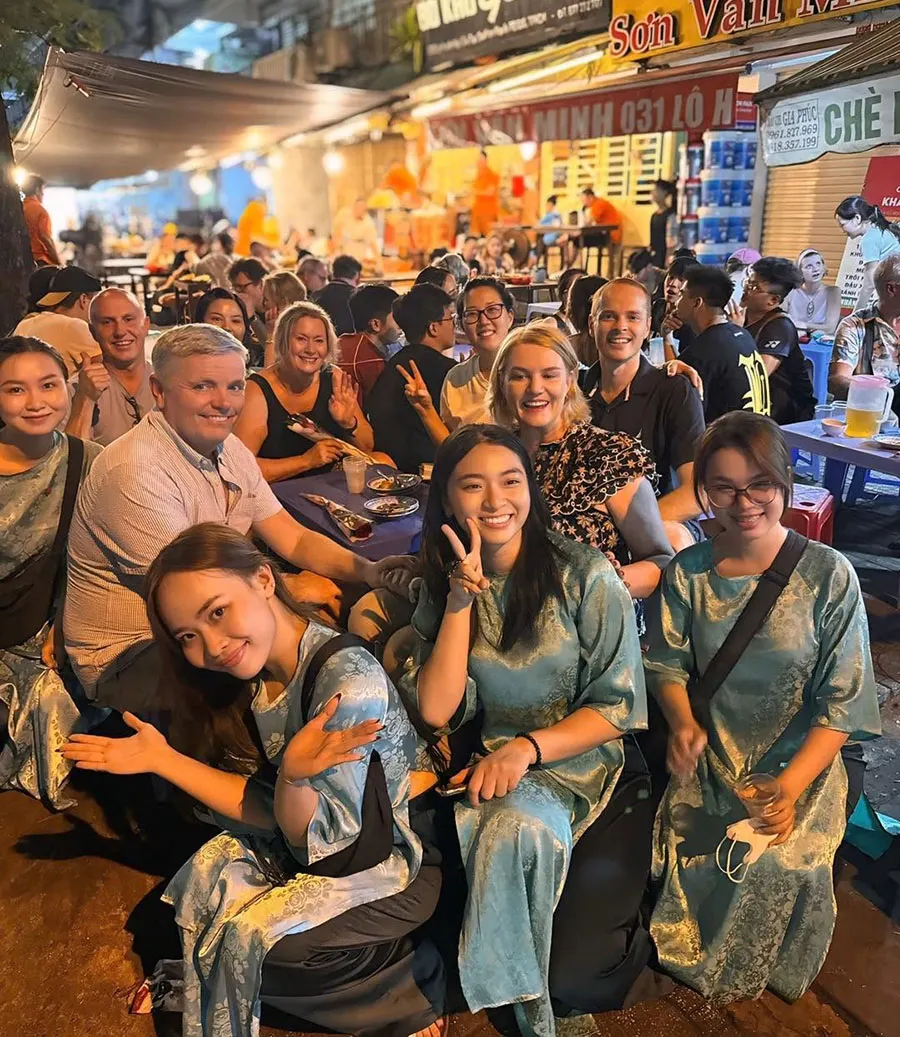
A guide can explain ingredients, demonstrate dining etiquette and communicate dietary needs. Local knowledge also helps distinguish a genuinely popular neighborhood stall from a place designed mainly for passing tourists.
Motorbike tours cover more ground than walking routes and turn transportation into part of the experience. For first-time visitors, this can be the easiest way to understand how Saigon’s districts, communities and dishes connect.

Frequently Asked Questions
What food should I try first in Saigon?
Start with cơm tấm, bánh mì or hủ tiếu. These dishes are approachable for international visitors while remaining closely connected to everyday life in Ho Chi Minh City.
What is the best time for a Saigon food tour?
Morning is ideal for breakfast stalls and markets, while evening provides the liveliest street-food atmosphere. Travelers with limited time usually gain more variety from an evening tour.
Is street food in Saigon safe for tourists?
No dining experience is completely risk-free. Choose busy vendors, order freshly cooked dishes, drink safe water and communicate allergies clearly.
Can vegetarians join a Ho Chi Minh City food tour?
Yes. Look for chay, the Vietnamese word commonly used for vegetarian food, but confirm whether fish sauce, egg or dairy is included if your diet is strict.
How many dishes should I eat during one food tour?
Six to eight small tastings are usually more enjoyable than several full meals. Share portions whenever possible so you can experience more variety without becoming full too early.
Is a walking or motorbike food tour better?
A walking tour works well within one compact neighborhood. A motorbike tour is better for reaching hidden eateries across several districts in a limited amount of time.
Do I need to book a food tour in advance?
Booking ahead is recommended during weekends, holidays and peak travel periods. Early notice also gives the operator time to prepare for allergies or special dietary needs.
Taste the Real Saigon One Stop at a Time
The best food in Saigon is not defined by one restaurant or famous dish. It emerges through an entire day of smoky grills, market conversations, fresh herbs, family recipes and shared tables.
Use this itinerary as a flexible guide rather than a race between meals. Eat slowly, remain curious and leave room for the unexpected stall that catches your attention along the way.
Whether you explore independently or ride with a local guide, a Saigon food tour offers something sightseeing alone cannot provide: a taste of how the city lives.