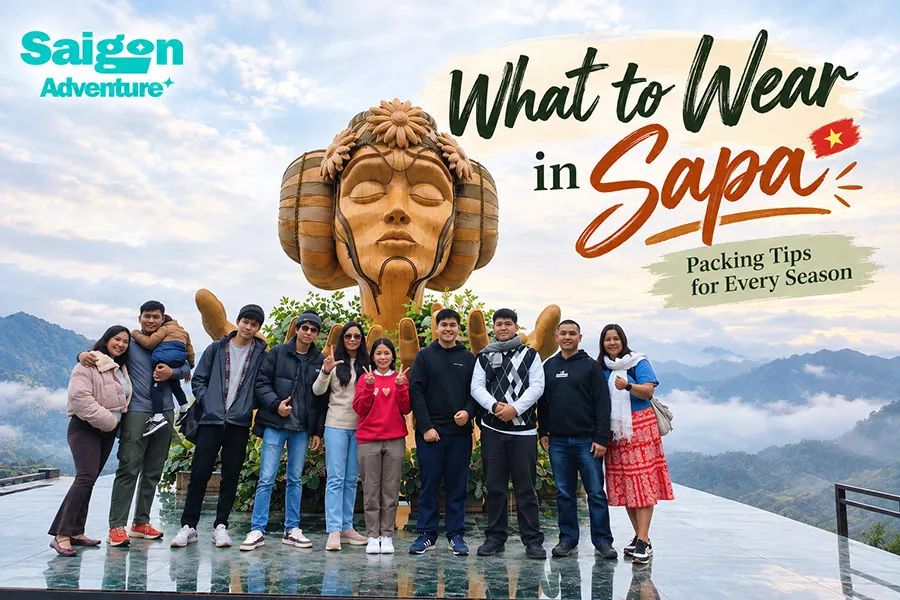
Wondering what to wear in Sapa? Pack lightweight layers, comfortable walking shoes and a waterproof jacket, whatever the season. This mountain destination in northern Vietnam can feel surprisingly cool in the morning, warm during a sunny afternoon and chilly again after sunset.
The right clothes depend on when you visit and what you plan to do. Exploring Sapa town, trekking through Muong Hoa Valley and climbing Fansipan all call for slightly different outfits. This guide explains exactly what to pack, what to leave behind and how to stay comfortable without carrying an oversized suitcase.

What is the weather like in Sapa throughout the year?
Sapa sits at roughly 1,500 metres above sea level in Lao Cai Province, giving it a cooler climate than much of lowland Vietnam. Temperatures change with the seasons, but mountain weather can also shift dramatically within a single day.
Before planning your outfits, check the forecast for your travel dates rather than relying entirely on monthly averages. If you’re still choosing when to travel, compare seasonal conditions in a Sapa travel guide.
| Season | Typical conditions | What to wear |
|---|---|---|
| Spring (March–May) | Mild, sometimes misty or rainy | Light layers, long trousers, rain jacket |
| Summer (June–August) | Warm, humid and rainy | Breathable clothes, quick-dry trousers, waterproofs |
| Autumn (September–November) | Pleasant days, increasingly cool evenings | T-shirts, fleece, light jacket |
| Winter (December–February) | Cold, foggy, occasionally near freezing | Thermal layers, insulated jacket, warm accessories |
These are seasonal patterns, not guaranteed daily conditions. Higher elevations, especially Fansipan, can be considerably colder than Sapa town.

What to wear in Sapa in spring (March to May)
Spring is a lovely time for countryside walks, with green landscapes, flowering plants and changing mountain scenery. However, mist and occasional rain can make the air feel colder than the temperature suggests.
Best clothes for Sapa in March, April and May
Start with a breathable T-shirt or long-sleeved top, then add a fleece or lightweight sweater. A water-resistant outer layer is useful when clouds settle over the hills.
Choose comfortable trousers rather than relying entirely on shorts. Mornings in March can feel especially cool, while afternoons later in spring may be warm enough for lighter clothing.
Local tip: Keep a thin jacket in your daypack even when the morning begins sunny. Mountain clouds can arrive quickly, particularly along exposed viewpoints.

What to wear in Sapa in summer (June to August)
Summer brings warmer temperatures, lush rice terraces and frequent rainfall. It is also the season when choosing the wrong fabric can make a trekking day unnecessarily uncomfortable.
What should you pack for Sapa during the rainy season?
Quick-drying T-shirts, lightweight hiking trousers and moisture-wicking socks are better choices than heavy denim. Cotton jeans can remain wet for hours after a downpour.
Pack a proper rain jacket or poncho, ideally one that also protects your backpack. Shoes with reliable grip matter more than fashionable sneakers when paths become muddy.
If you’re trekking through villages such as Lao Chai and Ta Van, bring spare socks in a sealed bag. A dry pair can make the journey home much more pleasant.
Local tip: Avoid white shoes and long, loose trousers on muddy trails. Heavy rain can also create slippery paths and landslide risks, so follow local guidance and change trekking plans when conditions are unsafe.

What to wear in Sapa in autumn (September to November)
Autumn offers a comfortable balance between sightseeing and outdoor adventures. September can still be rainy, while October and November generally bring cooler conditions, especially after dark.
What to wear for Sapa rice terrace photography
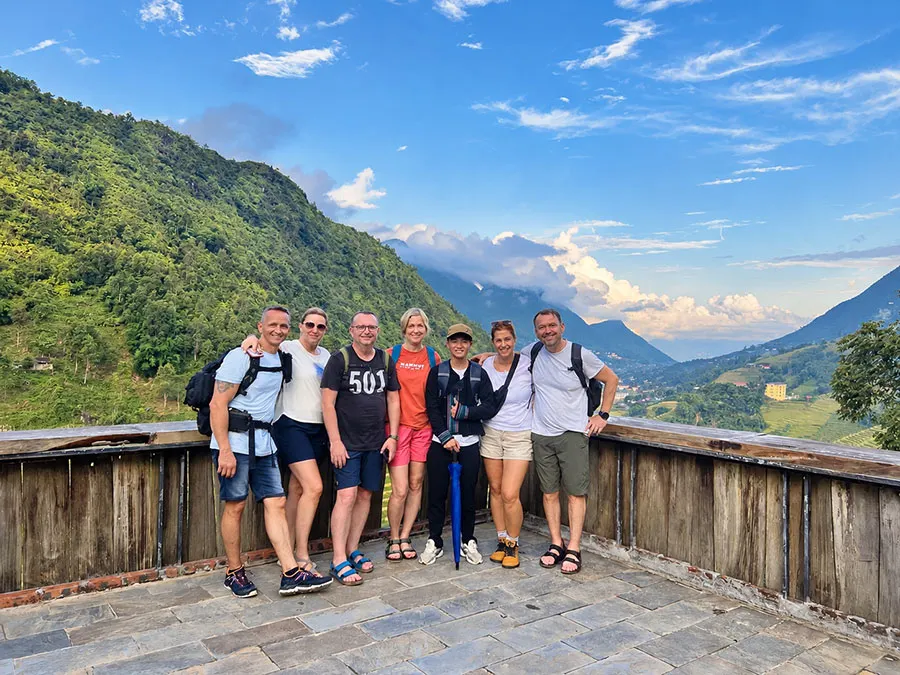
For daytime sightseeing, a breathable top, comfortable trousers and a light jacket usually work well. Neutral or earthy clothing also looks beautiful against the golden rice terraces during the harvest period.
Bring an extra layer for early-morning photography or sunset viewpoints. If you plan to spend several hours outdoors, a lightweight windproof jacket is worth carrying.
The harvest period varies with location and growing conditions, so golden terraces are not guaranteed throughout autumn.

What to wear in Sapa in winter (December to February)
Winter is when many travellers underestimate Sapa’s mountain climate. Cold winds, persistent fog and damp conditions can make outdoor sightseeing feel uncomfortable without proper clothing.
Do you need thermal clothes in Sapa in December and January?
Yes, thermal clothing is a sensible choice during colder winter periods, especially for early starts, overnight stays and higher-elevation excursions.
Wear a thermal base layer, fleece or sweater, and an insulated outer jacket. Add warm socks, gloves, a scarf and a beanie when temperatures drop.
Sapa occasionally experiences frost or snow, but snowfall is uncommon and should never be expected as part of a winter itinerary.
Local tip: Ask whether your accommodation has effective heating. Some mountain homestays can feel cold indoors, and a warm sleeping outfit is often more useful than another daytime shirt.
What shoes should you wear in Sapa?
Footwear deserves more attention than almost anything else in your suitcase. The best choice depends on whether you’re strolling around town, visiting viewpoints or hiking through mountain villages.
| Activity | Recommended footwear | Avoid |
|---|---|---|
| Sapa town sightseeing | Comfortable walking trainers | Uncomfortable fashion shoes |
| Muong Hoa Valley trekking | Trail shoes or hiking boots with grip | Smooth-soled sneakers |
| Rainy-season village walks | Grippy, quick-drying trail footwear | Canvas shoes |
| Fansipan cable car visit | Closed-toe shoes with good traction | Slippery sandals |
| Relaxing at your hotel | Lightweight sandals or slippers | Heavy boots all evening |
Are hiking boots necessary for Sapa trekking?
Not always. For easy walks in dry weather, good trail-running shoes may be sufficient. Longer routes, steep descents and muddy village paths often justify more supportive hiking footwear.
Choose shoes you have already worn comfortably. New boots can cause blisters, particularly when descending uneven trails.
For a multi-day trek, pack an additional pair of socks for each walking day and allow your footwear time to dry overnight.
What to wear for Fansipan mountain
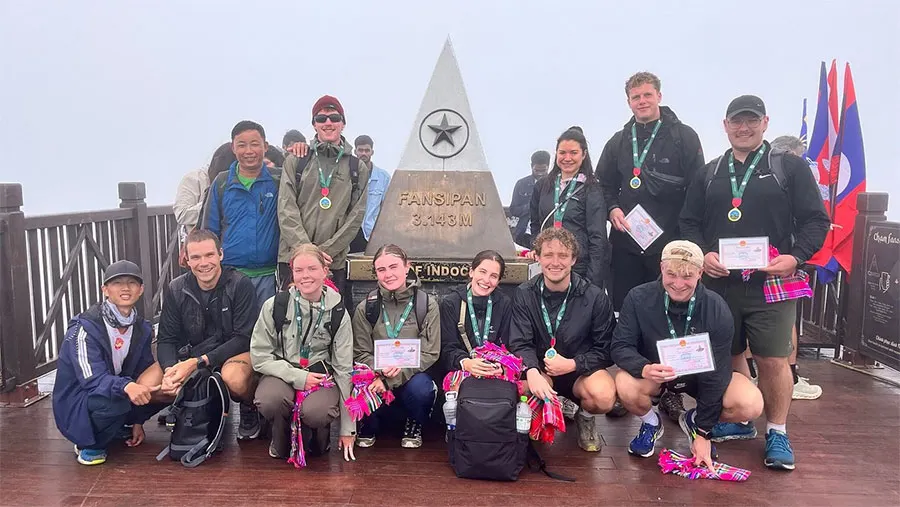
At 3,143 metres, Fansipan is much colder and windier than Sapa town. Even visitors travelling by cable car should prepare for exposed outdoor areas and rapidly changing visibility.
What should you wear on the Fansipan cable car?
Take a warm mid-layer, wind-resistant jacket, long trousers and comfortable closed-toe shoes. During winter or cold spells, add gloves and a hat.
The cable car reduces the physical effort of reaching the mountain’s upper area, but visitors may still encounter stairs and outdoor walking. Allow for reduced visibility, wet steps and altitude-related discomfort.
If you plan to hike Fansipan rather than take the cable car, you’ll need route-specific equipment, suitable fitness and a properly arranged trekking plan.
What to pack for a 2–3 day Sapa trip
A short trip to Sapa doesn’t require a large suitcase. Focus on versatile clothing, comfortable footwear and weather protection.
Essential Sapa packing checklist:
-
2–3 breathable T-shirts or tops
-
1 fleece or warm sweater
-
1 waterproof or windproof jacket
-
1–2 pairs of comfortable trousers
-
3 pairs of socks and underwear
-
Comfortable walking or trekking shoes
-
Sleepwear suitable for the season
-
Hat, sunglasses and sunscreen
-
Small daypack and reusable water bottle
-
Phone charger and waterproof bag
-
Personal medication and basic blister care
-
Thermal layers for winter or extra rain protection for summer
Local tip: Pack an extra pair of dry socks if you’re trekking through Sapa’s rice terraces, especially during the rainy season.
What should you carry in your daypack?
Keep your rain jacket, water, sunscreen, tissues, a small snack and spare socks within easy reach. A waterproof pouch is useful for protecting your phone, passport and electronics.
For longer walks, bring enough drinking water and any personal medication you may need. Don’t assume every rural trail has convenient shops or reliable mobile reception.
What should you avoid wearing in Sapa?
Certain clothes look appealing in holiday photos but perform poorly in mountain conditions.
-
High heels: Impractical on steep streets, uneven steps and village trails.
-
Heavy jeans: Slow to dry after rain and uncomfortable for extended hiking.
-
Thin sandals: Offer little protection on rocky or slippery paths.
-
Bulky cotton clothing: Can feel cold when damp and takes up unnecessary luggage space.
-
Brand-new hiking boots: Increase the risk of painful blisters.
You can still bring a stylish outfit for cafés and photographs. Just keep it separate from the clothes you’ll use for trekking.
What to wear when visiting ethnic minority villages
Sapa is home to communities including the Hmong and Red Dao, whose traditional textiles and clothing are an important part of local cultural identity.
Ordinary casual clothing is generally appropriate for village visits. Choose comfortable, respectful outfits and ask permission before photographing residents, particularly during everyday activities or private gatherings.
If you buy locally made textiles, purchasing directly from artisans can be a meaningful way to support their work. Avoid treating traditional clothing as a costume without considering its cultural significance.
Can you buy warm clothes in Sapa?
Yes. Shops in Sapa town sell jackets, scarves, rain ponchos, gloves and other travel essentials. This can be convenient if the weather turns colder than expected.
However, quality, sizing and availability vary. Travellers who need reliable technical hiking gear, larger sizes or specific waterproof clothing should bring their preferred equipment from home or purchase it in Hanoi before travelling north.
Basic accessories may be inexpensive, but prices vary by shop and product quality. Compare items rather than assuming locally available gear will perform like specialist outdoor equipment.
Frequently asked questions about what to wear in Sapa
1. Can you wear shorts in Sapa?
Yes, shorts are comfortable for warm summer afternoons and casual sightseeing. However, long trousers are usually better for trekking because they protect your legs from vegetation, insects and minor scratches.
2. Is Sapa cold at night?
Sapa can feel cool at night throughout much of the year and particularly cold in winter. Bring a warm layer even during warmer months, especially if you’re staying in a mountain homestay.
3. Do you need a raincoat in Sapa?
A lightweight raincoat is useful in every season. It becomes especially important during the wetter summer months, when sudden showers can interrupt walks and outdoor sightseeing.
4. What should women wear in Sapa?
Women can wear ordinary comfortable travel clothing, including T-shirts, trousers, leggings and jackets. For trekking, prioritize breathable fabrics, secure footwear and weather protection rather than a particular style.
5. What should you wear in Sapa in December?
Wear warm layers, including a thermal top, fleece, insulated jacket, long trousers and thick socks. Gloves and a beanie are useful for cold mornings, windy viewpoints and Fansipan excursions.
6. Can you trek in Sapa wearing sneakers?
Sneakers may work for short, dry and easy paths if they have good grip. For steep, muddy or longer treks, proper trail shoes or hiking boots are a safer and more comfortable option.
7. Do you need special clothes for a Sapa homestay?
No special outfit is required. Pack comfortable casual clothing, warm sleepwear when appropriate and easy-to-remove footwear. Respect household customs and ask your host about any specific expectations.
Final thoughts: Pack smart and enjoy Sapa
Knowing what to wear in Sapa makes it easier to enjoy the mountains without worrying about cold mornings, muddy trails or unexpected rain. A few versatile layers, dependable shoes and a waterproof jacket will serve most travellers better than a suitcase full of outfits.
Whether you’re exploring terraced valleys, meeting local communities or heading towards Fansipan, pack for the activities rather than just the photographs. For more inspiration, explore Saigon Adventure’s Sapa travel experiences and plan a trip that suits your season and travel style.