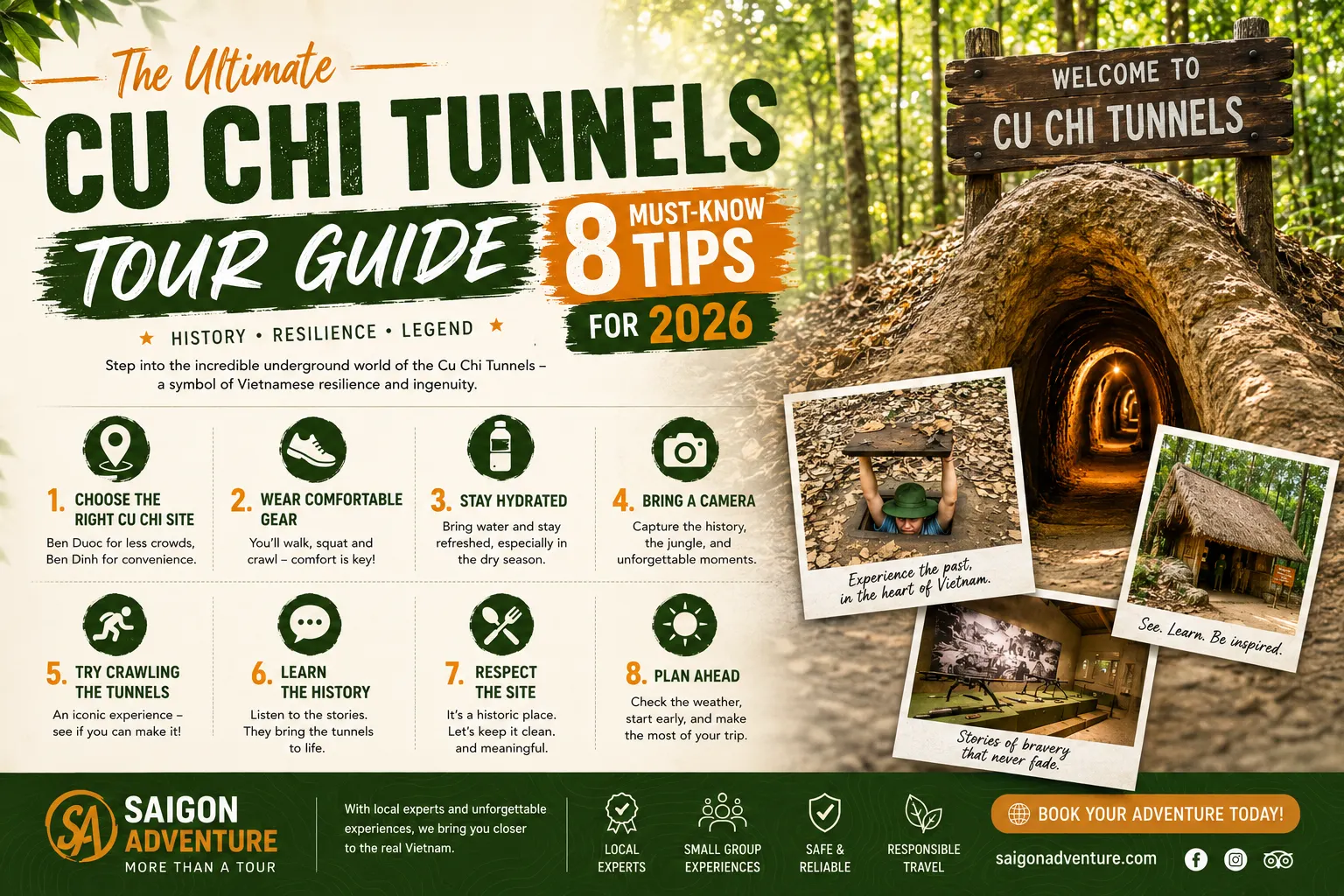
The Cu Chi Tunnels are more than just a historical site—they are a testament to human ingenuity and resilience. Located about 60 kilometers from Ho Chi Minh City, this extensive underground network played a critical role during the Vietnam War. Booking a Cu Chi Tunnels tour offers an immersive experience into history, adventure, and local culture.
In this ultimate guide, you’ll find everything you need to plan your perfect Cu Chi Tunnels tour, from the tunnels’ hidden history to must-try activities, local delicacies, and expert travel tips.
The Fascinating History of the Cu Chi Tunnels
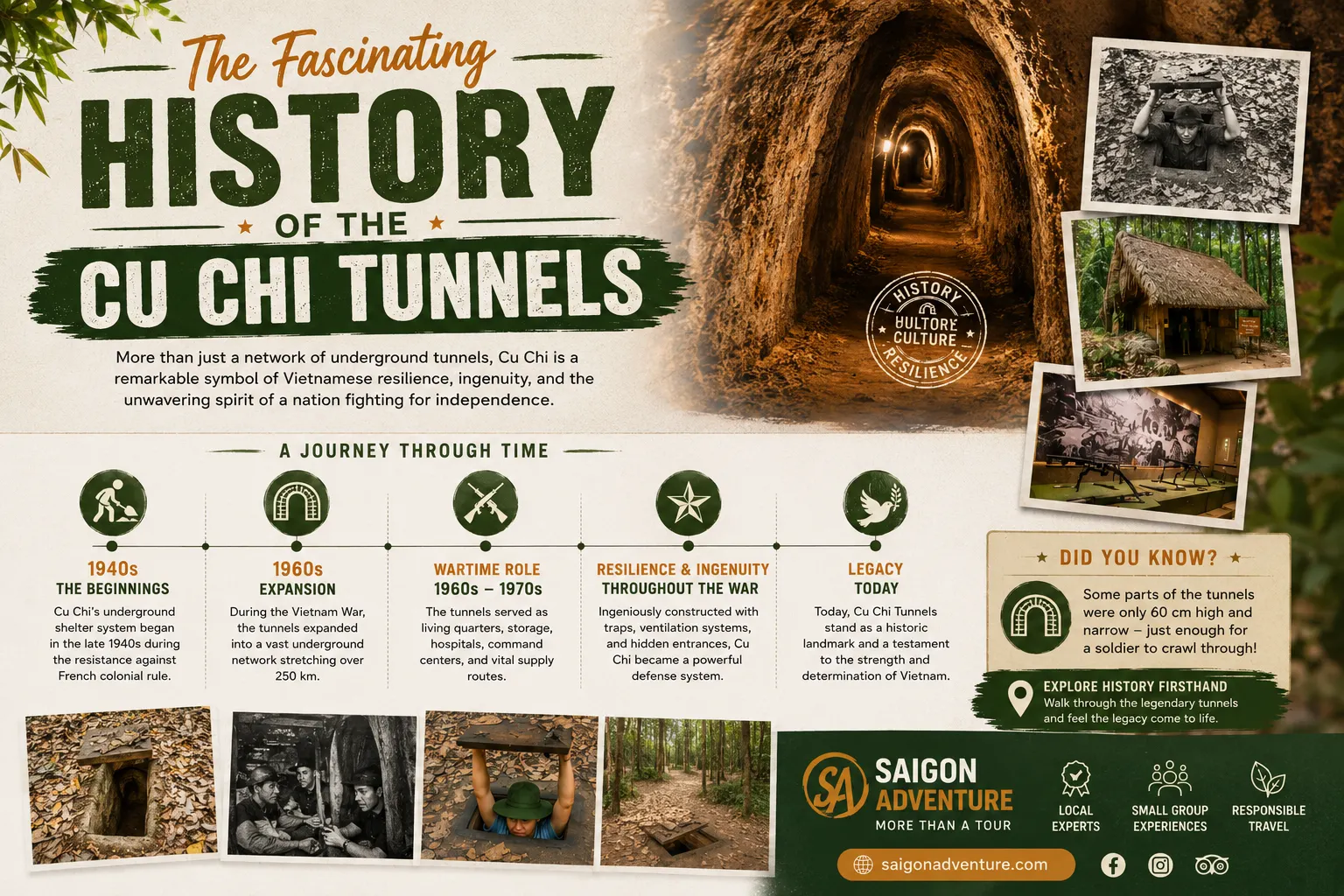
The Cu Chi Tunnels were originally built in the late 1940s during the French colonial period. By the 1960s, they became a key operational base for the Viet Cong during the Vietnam War.
The Role of the Tunnels in the Vietnam War
The tunnels served as a vital supply route, hiding spot, and communication hub. They connected villages and provided shelter against airstrikes and enemy attacks. The Viet Cong utilized the tunnels for guerrilla warfare, surprising opponents with hit-and-run tactics.
Life Underground: A Story of Resilience
Living conditions in the tunnels were tough. Soldiers and civilians endured cramped spaces, poor ventilation, and constant threats. Despite this, they adapted, creating kitchens, hospitals, and even schools underground.
Inside the Cu Chi Tunnels Tour: A Hidden Underground Metropolis
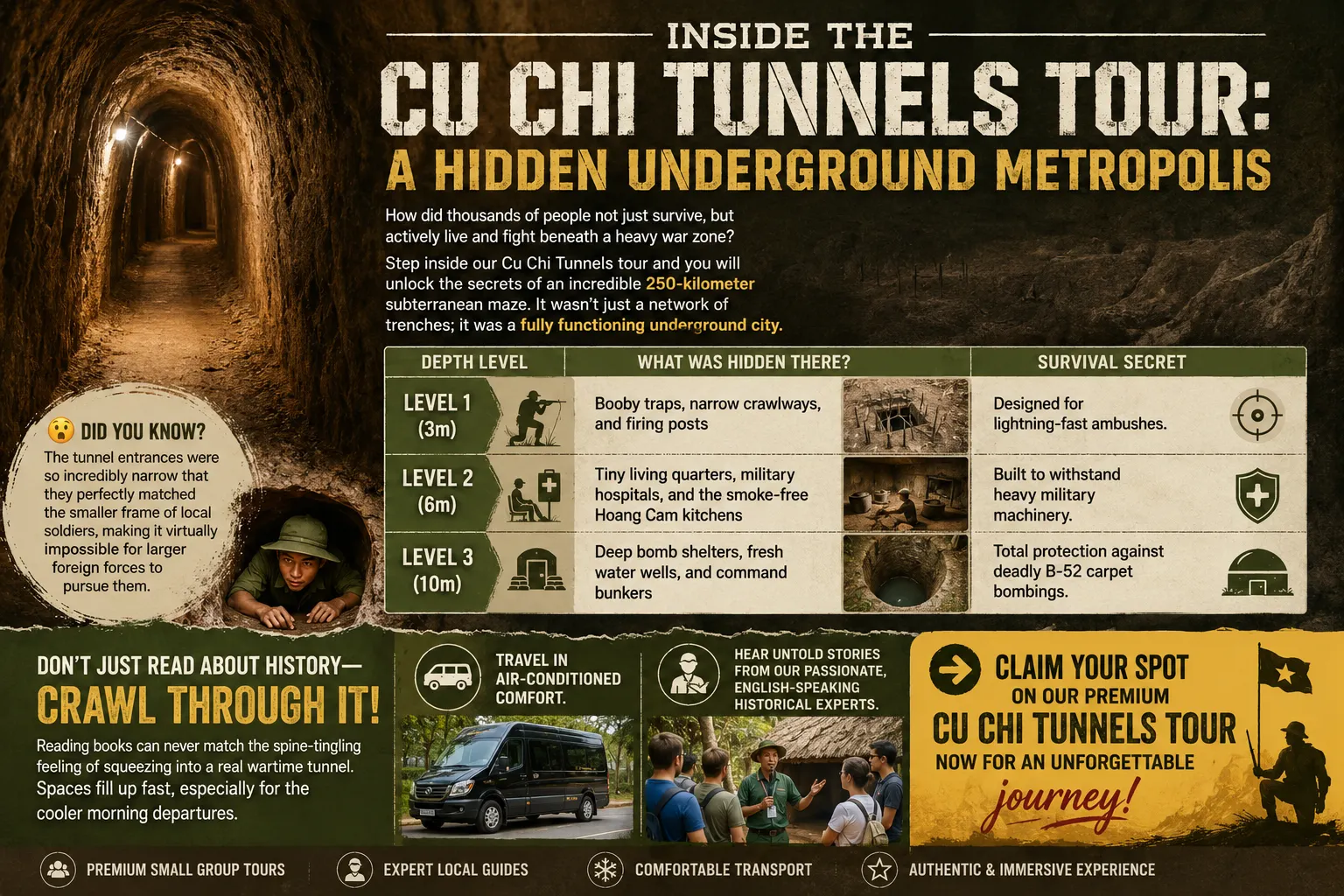
How did thousands of people not just survive, but actively live and fight beneath a heavy war zone? Step inside our Cu Chi Tunnels tour and you will unlock the secrets of an incredible 250-kilometer subterranean maze. It wasn’t just a network of trenches; it was a fully functioning underground city.
| Depth Level | What Was Hidden There? | Survival Secret |
| Level 1 (3m) | Booby traps, narrow crawlways, and firing posts | Designed for lightning-fast ambushes. |
| Level 2 (6m) | Tiny living quarters, military hospitals, and the smoke-free Hoang Cam kitchens | Built to withstand heavy military machinery. |
| Level 3 (10m) | Deep bomb shelters, fresh water wells, and command bunkers | Total protection against deadly B-52 carpet bombings. |
😮 Did you know? The tunnel entrances were so incredibly narrow that they perfectly matched the smaller frame of local soldiers, making it virtually impossible for larger foreign forces to pursue them.
Don’t Just Read About History—Crawl Through It!
Reading books can never match the spine-tingling feeling of squeezing into a real wartime tunnel. Spaces fill up fast, especially for the cooler morning departures.
-
Skip the suffocating public buses and travel in air-conditioned comfort.
-
Hear untold stories from our passionate, English-speaking historical experts.
👉 Claim your spot on our premium Cu Chi Tunnels tour now for an unforgettable journey!
Top Activities to Experience During Your Cu Chi Tunnels Tour
A visit to the Cu Chi Tunnels isn’t complete without engaging in some of the unique activities offered.
Crawling Through the Tunnels
Visitors can crawl through sections of the tunnels, experiencing firsthand the tight spaces where people once lived and fought. Some areas have been widened for tourists, but the experience remains authentic.
Shooting Range Adventure
Test your aim with historical weapons such as the AK-47 or M16 at the shooting range located near the tunnels. This activity offers a hands-on glimpse into wartime life.
Reenact Wartime Activities
Join reenactments of wartime tasks such as preparing food or creating simple tools, giving you a deeper appreciation for the ingenuity of the tunnel inhabitants.
Discover Local Cuisine and Traditional Foods
Food is a window into the past, and the Cu Chi Tunnels tour offers a chance to taste the flavors of wartime Vietnam.
Boiled Cassava with Sesame Salt
Cassava was a staple for Viet Cong fighters. Paired with sesame salt, it represents simplicity and survival. Visitors can sample this dish to experience the taste of history.
Regional Delicacies
The Cu Chi area is known for dishes like:
- Grilled Pork Rolls (Nem Nướng): A savory delight.
- Bánh Tráng (Rice Paper): Often served with fresh vegetables and fish sauce.
Nature and Surroundings: The Role of the Environment
The natural environment around the Cu Chi Tunnels played a crucial role in their success. Today, it offers a serene escape for visitors.
Camouflage and Protection
The dense jungle surrounding the tunnels provided natural cover, making it nearly impossible for enemies to locate them. The Viet Cong also used natural resources to create traps and fortifications.
Ecological Beauty
Visitors can enjoy the area’s lush greenery, which has been preserved to reflect its wartime appearance. Take a stroll and immerse yourself in the tranquil surroundings.
Educational and Research Opportunities
The Cu Chi Tunnels are not just a tourist attraction—they’re a living classroom for history enthusiasts and researchers.
Programs for Students
Many schools organize field trips to the tunnels, offering students a hands-on way to learn about the Vietnam War and its impact.
Research Opportunities
Historians and military experts can study the strategies employed in the tunnels, which are a testament to guerrilla warfare tactics.
Nearby Attractions and Combined Tours
Make the most of your trip by exploring nearby attractions or booking combined tours.
Ben Duoc Temple
This temple honors the war heroes who fought bravely in the Cu Chi area. It’s a peaceful site to reflect on Vietnam’s history.
Binh My Ecotourism Park
Relax in this nearby park, which offers scenic river tours, cycling, and local food experiences.
Combined Tours from Ho Chi Minh City
Pair your Cu Chi Tunnels tour with visits to:
- War Remnants Museum: Learn more about the Vietnam War.
- Ben Thanh Market: Explore local shopping and street food.
Souvenirs and Memorabilia
Don’t leave without picking up a piece of Cu Chi’s history to take home.
Handcrafted Items
Look for local wood carvings, pottery, and woven goods that reflect Vietnamese culture.
Historical Memorabilia
Many shops offer replicas of wartime artifacts, such as old coins, military badges, and postcards with historical images.
Tips for Planning Your Cu Chi Tunnels Tour
Best Time to Visit
- Dry Season (November to April): Ideal for outdoor exploration.
- Rainy Season (May to October): Offers fewer crowds but can be muddy.
What to Wear
- Comfortable, breathable clothing.
- Sturdy shoes for walking and crawling.
Transportation Options
- Guided Tours: The easiest way to visit.
- Public Transport: Take a bus from Ho Chi Minh City for a budget-friendly option.
Conclusion
The Cu Chi Tunnels are a remarkable site that offers a unique blend of history, adventure, and cultural discovery. Whether you’re crawling through the tunnels, sampling local foods, or reflecting on Vietnam’s history, this tour promises a memorable experience for all.
Book your Cu Chi Tunnels tour today and step into the past while exploring one of Vietnam’s most iconic destinations!