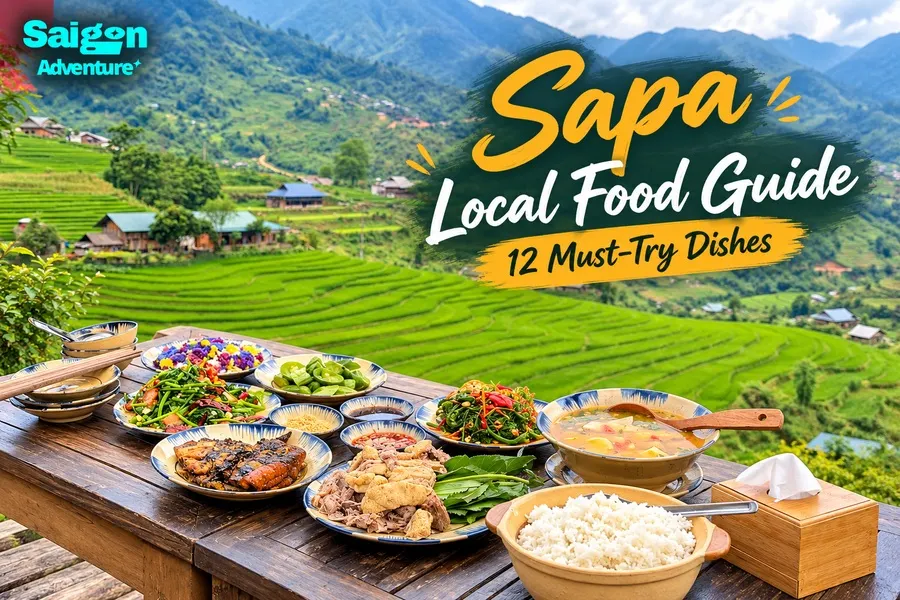
The first thing you notice about Sapa’s food scene is often the smoke rising from roadside grills on a chilly evening. Behind those small stalls and family-run restaurants is a fascinating mix of mountain ingredients, ethnic traditions, and comforting dishes made for the cooler climate.
What food should you try in Sapa? Start with salmon hotpot, grilled mountain pork, bamboo sticky rice, and black chicken. For something more adventurous, explore thang co, smoked buffalo meat, and other traditional highland specialties.
This Sapa local food guide introduces 12 dishes worth tasting, where to find them, what they typically cost, and how to choose the best meals during your visit.
Sapa Local Food: At a Glance
| Food | Best for |
|---|---|
| Thang Co | Adventurous eaters |
| Salmon Hotpot | Cold evenings |
| Sturgeon Hotpot | Sharing with friends |
| Mountain Pork | Grilled meat lovers |
| Black Chicken | Traditional mountain cuisine |
| Bamboo Sticky Rice | First-time visitors |
| Smoked Buffalo Meat | Smoky, bold flavors |
| Five-Color Sticky Rice | Traditional food culture |
| Grilled Stream Fish | Simple regional cooking |
| Sapa Mustard Greens | Vegetable lovers |
| Chestnut Cake | Sweet snacks |
| Sapa Street Barbecue | Casual evening dining |
12 Best Local Foods to Try in Sapa
1. Thang Co – Traditional Highland Stew
Thang co is one of the most distinctive dishes associated with Hmong food traditions in northern Vietnam. Traditionally made with horse meat and offal, this hearty stew is slowly simmered with aromatic spices until the flavors become rich and intense.
Its strong aroma and unusual ingredients may not appeal to everyone, but trying a small portion can be a memorable cultural experience. Some restaurants prepare variations using beef or other meats.
Where to try: Highland specialty restaurants and traditional markets.
Local tip: Ask about the ingredients before ordering, particularly if you prefer to avoid organ meats.
2. Sapa Salmon Hotpot – Perfect for Cold Evenings
Few meals feel better after a chilly mountain walk than a steaming salmon hotpot. Sapa’s cold-water fish farms supply salmon to local restaurants, where it is commonly served with vegetables, mushrooms, and noodles.
The broth is often lightly sour, balancing the richness of the fish. Diners add ingredients as they eat, making it an enjoyable meal for couples, families, or small groups.
Where to try: Fish hotpot restaurants in central Sapa.
Local tip: Check whether the listed price includes vegetables and noodles, especially when ordering a smaller hotpot.
3. Sturgeon Hotpot – A Rich Mountain Specialty
Sturgeon is another cold-water fish commonly served in Sapa. Compared with salmon, its flesh is firmer, making it particularly suitable for simmering in a hotpot.
The broth usually combines vegetables, herbs, and a gently tangy flavor. Some restaurants also prepare sturgeon grilled or fried, offering alternatives for visitors who prefer less soup.
Where to try: Restaurants specializing in salmon and sturgeon.
Local tip: Confirm whether the price is per hotpot or based on the fish’s weight.
4. Lon Cap Nach – Flavorful Mountain Pork
Lon cap nach refers to small pigs traditionally raised in mountainous areas. The meat is prized for its firm texture and flavorful fat, especially when roasted or grilled.
One of the most enjoyable preparations is charcoal-grilled pork, served with herbs and a savory dipping sauce. The slightly smoky exterior contrasts with the juicy meat inside.
Where to try: Traditional mountain restaurants and barbecue eateries.
Local tip: Order grilled pork with local vegetables and rice for a balanced meal rather than choosing several meat-heavy dishes.
5. Black Chicken – A Traditional Highland Dish
Black chicken is known for its dark pigmentation and its place in northern Vietnamese food traditions. In Sapa, it may be grilled, steamed, or cooked with aromatic herbs.
The meat tends to be firmer than ordinary commercial chicken and has a distinctive flavor. Herbal preparations can be especially warming in cold weather, although their strong aroma is not for everyone.
Where to try: Restaurants serving traditional mountain cuisine.
Local tip: Choose grilled black chicken if you prefer familiar flavors, or herbal chicken soup for a more traditional preparation.
6. Com Lam – Sticky Rice Cooked in Bamboo
Com lam is simple, fragrant, and surprisingly satisfying. Sticky rice is cooked inside bamboo tubes, traditionally over a fire, allowing it to absorb moisture and a subtle bamboo aroma.
The finished rice is soft and slightly chewy. It is often served with sesame salt or paired with grilled pork and chicken.
Where to try: Local markets, street food stalls, and mountain restaurants.
Local tip: Look for freshly heated bamboo rice. It makes an excellent snack between sightseeing stops.
7. Thit Trau Gac Bep – Smoked Buffalo Meat
Smoked buffalo meat is a specialty associated with the culinary traditions of northwestern Vietnam. Strips of meat are seasoned with spices, sometimes including fragrant mac khen, before being slowly smoked and dried.
The result is chewy, smoky, and intensely savory. It is usually served in small pieces rather than as a large main course.
Where to try: Highland restaurants and regional specialty shops.
Local tip: Ask for a small serving first. If buying packaged meat as a souvenir, check storage instructions and your home country’s import restrictions.
8. Xoi Ngu Sac – Five-Color Sticky Rice
Five-color sticky rice is closely associated with traditional celebrations among several northern ethnic communities, especially the Tay. Its colors are traditionally obtained from plants, although ingredients and methods vary.
Beyond its appearance, the dish reflects the importance of rice in regional food culture. The flavor is mild, with a soft, slightly chewy texture.
Where to try: Traditional markets, cultural events, and restaurants serving ethnic cuisine.
Local tip: This dish is not available everywhere every day. Ask locally rather than expecting to find it at every food stall.
9. Ca Suoi Nuong – Grilled Stream Fish
Grilled stream fish offers a lighter alternative to Sapa’s rich meat dishes. Small freshwater fish are seasoned and cooked over charcoal until the skin becomes lightly crisp.
The preparation is often simple, allowing the natural flavor of the fish to stand out. It pairs particularly well with steamed rice and sautéed mountain vegetables.
Where to try: Restaurants offering traditional fish dishes.
Local tip: Small fish may contain fine bones, so eat carefully and ask the restaurant about preparation.
10. Cai Meo – Sapa Mustard Greens
Cai meo is a leafy vegetable associated with Sapa’s cool mountain climate. Its slightly bitter, peppery flavor becomes gentler when boiled or stir-fried.
Garlic-fried cai meo is a popular accompaniment to grilled meat and fish. It also adds freshness to a meal dominated by rich hotpot dishes.
Where to try: Vietnamese restaurants and eateries serving regional vegetables.
Local tip: Order a plate of sautéed cai meo when sharing salmon hotpot or grilled pork.
11. Banh Hat De – Sapa Chestnut Cake
Chestnut cakes are a familiar snack around Sapa’s tourist areas. These small pastries usually contain a sweet, nutty filling wrapped in a lightly crisp shell.
They are easy to carry and particularly enjoyable with tea or coffee on a cool afternoon. Freshly prepared cakes tend to have a more appealing texture.
Where to try: Bakeries, market stalls, and snack shops in central Sapa.
Local tip: Buy a small portion first, especially if you prefer desserts that are not overly sweet.
12. Sapa Street Barbecue – Grilled Mountain Snacks
As evening approaches, barbecue stalls bring warmth and energy to Sapa’s streets. Charcoal grills are often filled with pork skewers, chicken, mushrooms, corn, and other seasonal ingredients.
This is one of the easiest ways to sample several flavors without committing to a large restaurant meal. You can choose a few skewers, find a seat, and enjoy the lively atmosphere.
Where to try: Evening food stalls and barbecue restaurants around Sapa town.
Local tip: Confirm prices before ordering and choose stalls that cook ingredients thoroughly.
Where to Eat Local Food in Sapa
You do not need to visit expensive restaurants to enjoy Sapa’s regional cuisine. Some of the most interesting food experiences happen in markets, small eateries, and village homestays.
Sapa Town Center
The streets around Sapa Stone Church, Cau May Street, and Muong Hoa Street offer restaurants serving salmon hotpot, grilled pork, black chicken, and other mountain specialties.
This area is convenient for first-time visitors because many restaurants have illustrated menus and English descriptions.
Sapa Markets and Evening Food Stalls
Markets and evening stalls are good places to try grilled skewers, bamboo sticky rice, and local snacks. The night market area around Luong Dinh Cua Street becomes particularly lively on weekend evenings.
Operating times and vendor locations can change, especially during bad weather.
Village Homestays
For a quieter experience, consider having dinner at a homestay in Ta Van, Lao Chai, or Ta Phin.
Meals may include seasonal vegetables, rice, locally prepared meat, and soup. Ask your host whether dinner is included and whether dietary requirements can be accommodated.
How Much Does Local Food Cost in Sapa?
Food prices in Sapa vary between street stalls, local restaurants, and tourist-oriented establishments.
| Food | Approximate price |
|---|---|
| Grilled street snacks | 10,000–30,000 VND/item |
| Bamboo sticky rice | 20,000–40,000 VND |
| Thang co | 50,000–100,000 VND/bowl |
| Smoked buffalo meat | 80,000–150,000 VND/plate |
| Grilled mountain pork | 120,000–200,000 VND/plate |
| Salmon or sturgeon hotpot | 250,000–650,000 VND/small pot |
Indicative 2026 prices compiled from published local food guides and restaurant listings. Portions, ingredients, service charges, and restaurant standards vary; premium hotpots may cost more.
Budget tip: Street food is usually the more affordable option, while fish hotpots are better value when shared. Always confirm the total price before ordering.
Practical Tips for Eating in Sapa
-
Try seasonal ingredients: Mountain vegetables and traditional dishes may vary by season.
-
Share larger meals: Hotpots and grilled meat platters are often designed for groups.
-
Ask about ingredients: Some traditional dishes contain organ meats, unfamiliar spices, or fish sauce.
-
Choose freshly cooked food: Look for stalls with good hygiene and food prepared to order.
-
Carry Vietnamese dong: Cash remains useful at smaller food stalls.
-
Respect local customs: Ask permission before photographing vendors or family meals.
Frequently Asked Questions About Sapa Food
1. What is the most famous local food in Sapa?
Thang co is among Sapa’s most recognizable traditional dishes. Salmon hotpot, black chicken, grilled mountain pork, and smoked buffalo meat are also popular regional specialties.
2. What should first-time visitors eat in Sapa?
Start with salmon hotpot, bamboo sticky rice, grilled pork, and chestnut cakes. These dishes offer an approachable introduction to the region’s flavors.
3. Is Sapa street food safe to eat?
Street food can be enjoyable when prepared hygienically. Choose freshly cooked dishes, check how ingredients are stored, and avoid stalls with poor food handling practices.
4. Can vegetarians find food in Sapa?
Yes. Vegetarian travelers can look for tofu, mushrooms, vegetables, and suitable rice dishes. Confirm that the food contains no meat broth, fish sauce, or other animal-derived ingredients.
5. Is Sapa food spicy?
Not necessarily. Many dishes are mild, although some regional specialties use chili, pepper, and aromatic mountain spices. Ask for sauces separately if you prefer less heat.
6. What is the best food to eat in Sapa during winter?
Salmon hotpot, sturgeon hotpot, herbal chicken soup, and freshly grilled street food are particularly comforting during Sapa’s colder months.
Discover Sapa Through Its Local Flavors
Sapa’s food is more than a collection of mountain specialties. It reflects the region’s climate, local ingredients, and culinary traditions shaped by generations of highland communities.
From a steaming salmon hotpot to freshly grilled bamboo rice, each meal offers another way to experience northern Vietnam beyond its famous landscapes.
Whether you spend an evening exploring Sapa’s food stalls or share a traditional dinner at a village homestay, make time to discover the flavors that make this mountain destination special.