Imagine returning from a misty mountain walk in Sapa, your legs tired from climbing terraced hillsides, and lowering yourself into a wooden tub filled with steaming, fragrant herbal water. For generations, the Red Dao community has used forest plants in traditional bathing practices.
Today, a Red Dao herbal bath in Sapa offers travellers a chance to experience this distinctive cultural tradition, particularly around Ta Phin Village.
But what exactly goes into the bath, how much should you pay, and is it worth travelling outside town to try one? This guide explains what to expect, where to go, how to choose an authentic experience and what to know before booking.
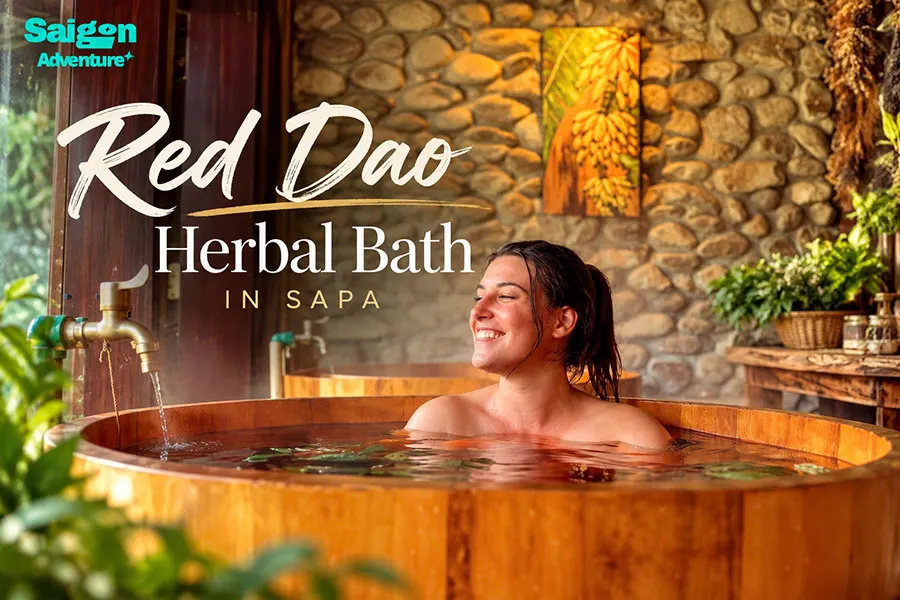
What is a Red Dao herbal bath?
A Red Dao herbal bath is a traditional bathing practice associated with the Red Dao ethnic community in northern Vietnam. Known locally as tắm lá thuốc người Dao Đỏ, it involves soaking in warm water infused with a mixture of plants prepared according to traditional knowledge.
The ingredients vary between families and bath providers. Leaves, stems, bark and other plant materials may be combined, heated in water and diluted to a comfortable bathing temperature.
Unlike a conventional spa treatment, the experience has cultural roots in household practices and knowledge passed between generations.
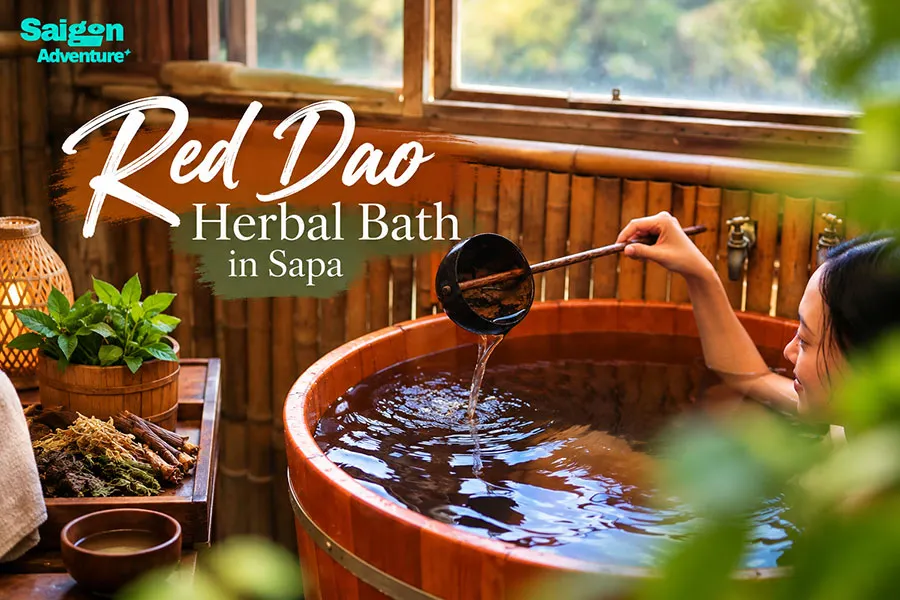
What makes the Red Dao bathing tradition special?
The Red Dao are one of the ethnic communities living in the mountains around Sapa, particularly in areas such as Ta Phin. Their traditional clothing, embroidery and plant knowledge form important parts of their cultural identity.
Herbal bathing is more than a tourist attraction. It reflects a longstanding relationship with the surrounding mountain environment and the plants traditionally used by local families.
However, not every bath advertised as a Red Dao herbal treatment is prepared or operated by Red Dao people. Asking who makes the herbal mixture is one way to better understand what you are paying for.
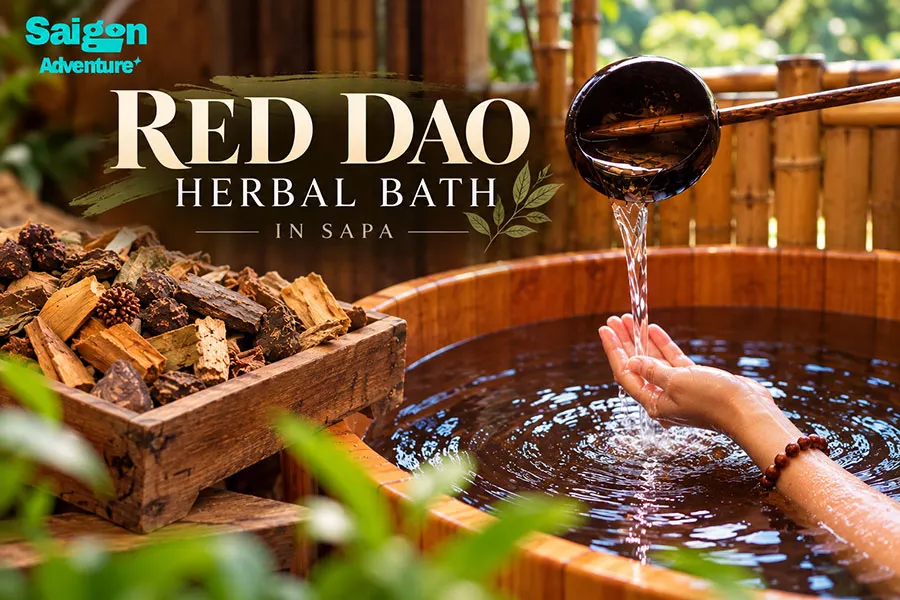
What happens during a Red Dao herbal bath in Sapa?
Most herbal bathing experiences last approximately 30–60 minutes overall, including preparation and changing. The actual soak is often shorter, depending on the water temperature, your comfort and the provider’s recommendations.
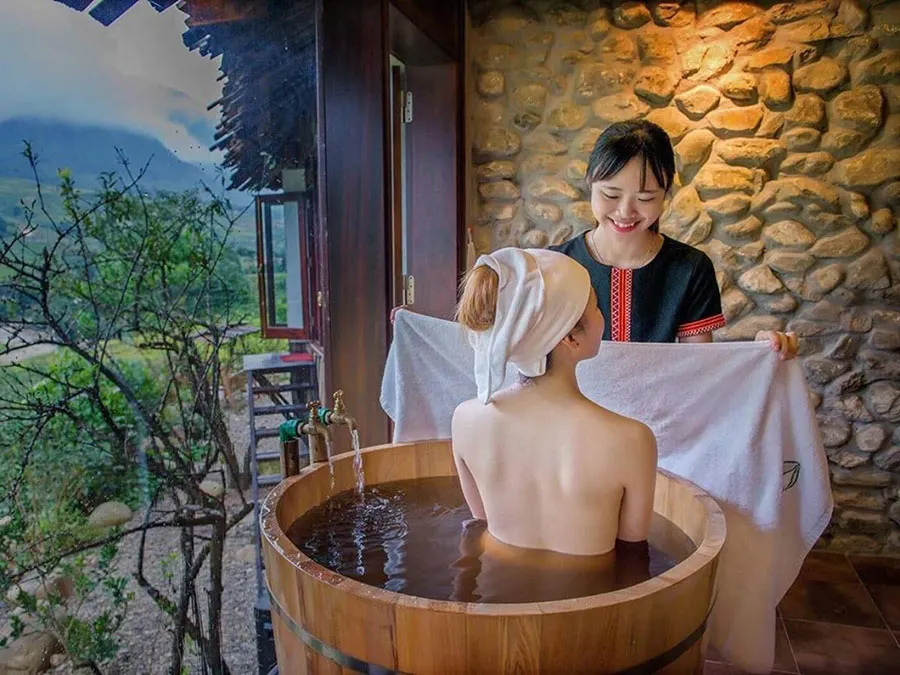
Step 1: Preparing the herbal water
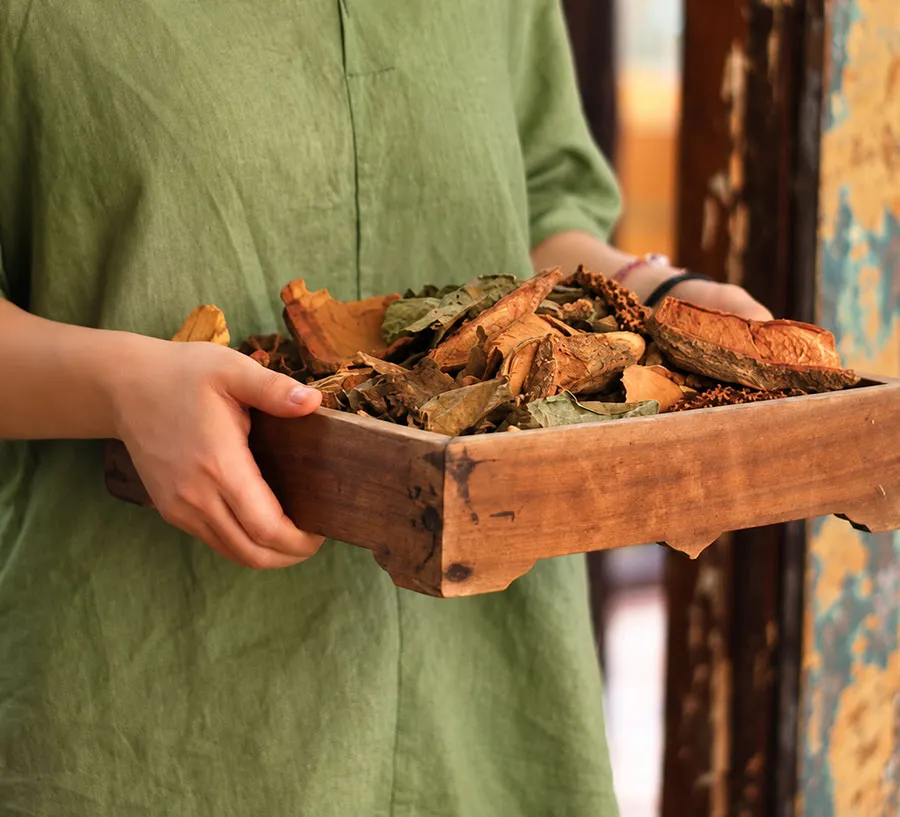
Traditional preparations involve heating selected plants in water to produce a concentrated herbal liquid. The mixture is then added to bathing water.
You may notice an earthy, woody fragrance and water ranging from amber to dark brown. The colour depends on the ingredients and concentration, so darker water does not necessarily indicate a better bath.
Step 2: Soaking in a wooden bathtub
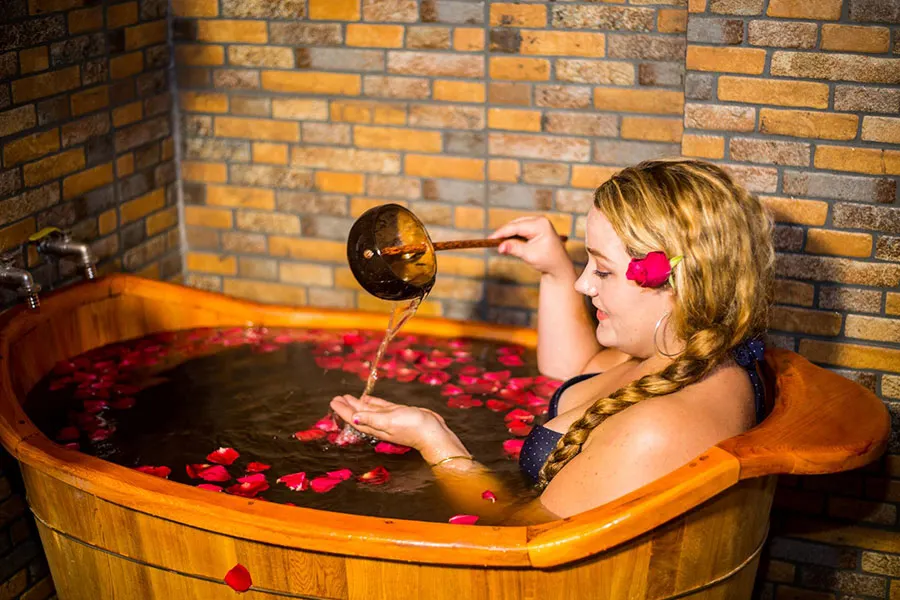
You will usually change in a private area before entering an individual wooden tub. Some establishments use modern bathtubs instead, so check the facilities beforehand if the traditional setting matters to you.
The water should feel comfortably warm, never painfully hot. Many providers suggest soaking for around 15–20 minutes, although you can leave earlier.
Step 3: Resting after your bath
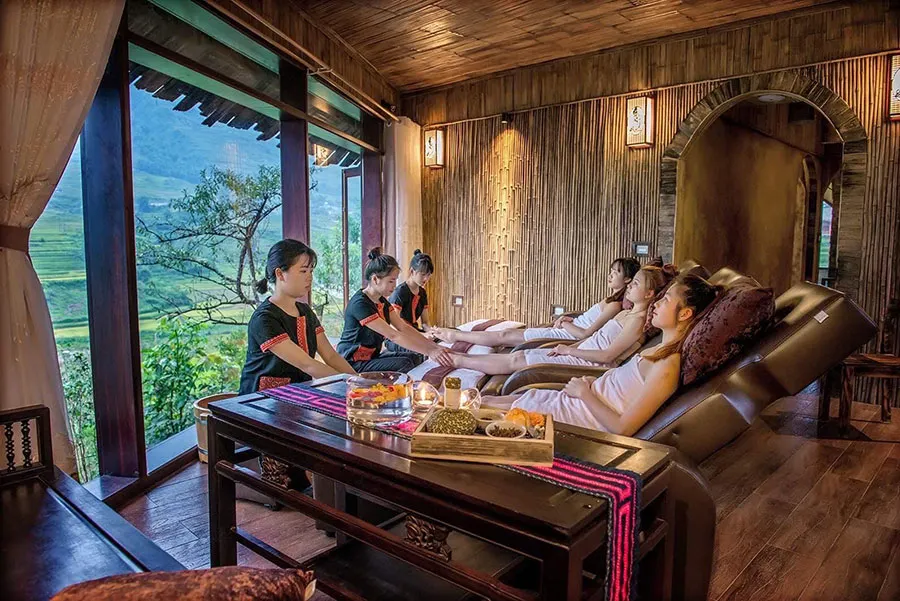
After bathing, dry yourself thoroughly, drink some water and allow time to cool down gradually.
The warmth can feel especially pleasant after a chilly morning in the mountains. Avoid immediately rushing into another strenuous activity if you feel light-headed or unusually tired.
Local tip: Bring a clean change of clothes and a small towel. Not every village bathhouse provides the same amenities as a hotel spa.
Where to try a Red Dao herbal bath in Sapa
There are two main choices: visit a traditional bathing establishment around Ta Phin Village or book a more convenient treatment in Sapa town.
| Location | Best for | Main consideration |
|---|---|---|
| Ta Phin Village | Cultural setting and community-based experiences | Requires transport |
| Sapa town | Convenience and easy access | Authenticity varies by provider |
| Hotels and resorts | Comfort and spa facilities | Often a more commercial experience |
Ta Phin Village: A traditional setting
Located roughly 12 kilometres from central Sapa by road, Ta Phin is closely associated with the Red Dao community and its herbal bathing traditions.
Some local families and community businesses offer baths using traditional plant preparations. Depending on the establishment, you may also learn how the ingredients are prepared.
A visit can be combined with exploring the village, observing traditional embroidery or enjoying the surrounding countryside.
Road conditions and travel times vary, especially during wet weather. Arrange reliable transport and confirm that the bathhouse is operating before leaving town.
For travellers planning a broader cultural itinerary, see Saigon Adventure’s Sapa experiences for additional ideas.
Sapa town: Convenient herbal bath services
If you prefer not to travel to Ta Phin, some spas, hotels and wellness establishments in Sapa town advertise Red Dao herbal bathing treatments.
These options are convenient after a day of sightseeing or trekking. They may offer private changing rooms, showers and additional massage services.
However, a treatment in town does not automatically mean that its herbal ingredients are sourced or prepared by Red Dao practitioners. Ask the establishment directly if cultural authenticity is important to you.
How much does a Red Dao herbal bath cost in Sapa?
A useful planning allowance is approximately VND 100,000–300,000 per person for a basic herbal bathing experience. This is an indicative budget, not a verified current price list, and actual rates may fall outside it.
Village bathhouses, town spas and hotel wellness centres may charge differently. Massage packages, private facilities and transport can increase the total.
Before booking, confirm whether the price includes towels, shower access, herbal preparation and any additional treatments.
Local tip: If visiting Ta Phin, agree on your return transport arrangements in advance. A relatively inexpensive bath can become less economical when private transportation is added.

Is a Red Dao herbal bath worth it?
For many travellers, yes—particularly those interested in local culture, traditional wellness practices and slower travel experiences.
The greatest appeal is the combination of warmth, fragrance and cultural context. After walking through Sapa’s mountainous countryside, a quiet soak can provide a welcome change of pace.
Nevertheless, it is important to distinguish relaxation from medical treatment. Although traditional practitioners associate herbal bathing with various health benefits, there is insufficient reliable clinical evidence to conclude that these specific mixtures treat illnesses or remove toxins.
Who will enjoy the experience most?
-
Travellers interested in Red Dao culture and local traditions
-
Hikers wanting a relaxing activity after trekking
-
Couples seeking a quiet experience away from busy attractions
-
Visitors exploring Sapa without strenuous outdoor activities
-
Travellers looking for something different from conventional sightseeing
If your main priority is a luxury spa experience with extensive facilities, a hotel wellness centre may be a better fit than a simple village bathhouse.
When is the best time to take a herbal bath in Sapa?
Herbal baths can be enjoyed throughout the year, but cooler weather often makes the warm water particularly appealing.
From December to February, Sapa can feel cold and damp, making an indoor bathing experience attractive. During the warmer months, choose a comfortable water temperature and avoid overheating.
Late afternoon is a practical option after trekking or sightseeing, provided you have enough time to return safely before dark.
If you are planning outdoor activities around the weather, our Sapa seasonal packing guide explains what to wear in different conditions.
How to choose an authentic and safe herbal bath
An enjoyable experience depends as much on the provider as on the herbal mixture itself.
Before paying, ask a few straightforward questions:
-
Is the herbal preparation made by Red Dao practitioners?
-
What plants or ingredients are used?
-
Are the bathtub and changing area cleaned between guests?
-
Is the water temperature adjustable?
-
How long is the recommended soak?
-
Are towels, showers and private facilities included?
A reputable provider should be comfortable explaining the treatment and respecting your decision to leave the bath early.
Are Red Dao herbal baths safe for everyone?
Warm bathing is not suitable for everyone. People with cardiovascular conditions, low blood pressure, pregnancy-related concerns, skin sensitivities or other relevant medical conditions should seek appropriate medical advice before trying an unfamiliar herbal treatment.
Avoid soaking if you are dehydrated, have consumed alcohol or feel unwell. Check for possible plant allergies and do not enter water that feels excessively hot.
Children and older adults may need additional precautions, particularly regarding temperature and supervision.
How can you support the local community?
Choosing a community-operated establishment can help direct tourism spending towards local residents.
Ask permission before photographing people, homes or herbal preparation areas. Traditional knowledge is part of a living culture, not simply a performance arranged for visitors.
When possible, purchase directly from local providers and respect any areas or practices that are not open to tourists.
How to combine a herbal bath with your Sapa itinerary
A visit to Ta Phin works particularly well as a relaxed half-day excursion rather than a rushed stop between distant attractions.
You could spend the morning exploring the village, learning about local embroidery and enjoying the surrounding mountain scenery before finishing with a herbal bath.
Travellers with limited mobility or those who prefer lighter activities can also consider things to do in Sapa without trekking.
If you have only one day in Sapa, prioritise the experiences that interest you most rather than attempting to combine several remote villages in a single afternoon.
Frequently asked questions about Red Dao herbal baths
1. What is a Red Dao herbal bath made from?
It is made using a mixture of plants traditionally selected and prepared by Red Dao practitioners. Ingredients may include leaves, stems, bark and other plant materials. Recipes vary between families and providers, and some are treated as traditional knowledge rather than publicly disclosed formulas.
2. How long should you soak in a Red Dao herbal bath?
A soak of approximately 15–20 minutes is commonly suggested, but there is no universal duration. Follow the provider’s guidance, check the temperature and leave immediately if you feel dizzy or uncomfortable.
3. Where can tourists try an authentic herbal bath in Sapa?
Ta Phin Village is a well-known place to explore Red Dao bathing traditions. Some businesses in Sapa town also offer herbal baths. Confirm who prepares the mixture and whether the establishment is locally operated before booking.
4. Can you take a herbal bath after trekking in Sapa?
Yes, many travellers enjoy a warm bath after hiking. Allow your body to cool down, rehydrate and avoid excessively hot water, especially after strenuous exercise.
5. Do you need to book a Red Dao herbal bath in advance?
Advance booking is advisable when travelling to Ta Phin, particularly if you need transport or want a specific bathing time. Smaller establishments may have limited tubs, staff or preparation capacity.
6. Can herbal baths cure muscle pain or other illnesses?
A warm bath may temporarily ease feelings of muscle tension, but Red Dao herbal baths should not be considered proven medical treatments. Claims about curing illnesses or detoxifying the body are not established by reliable clinical evidence.
Final thoughts: A different way to experience Sapa
A Red Dao herbal bath offers something that mountain viewpoints and trekking routes cannot: a quiet introduction to a local tradition shaped by generations of plant knowledge.
Whether you choose a family-run bathhouse in Ta Phin or a convenient treatment in town, take time to understand the people and practices behind the experience.
For more ways to discover the region, explore Saign Adventure’s Sapa travel experiences and build an itinerary that leaves room for meaningful encounters, not just sightseeing.