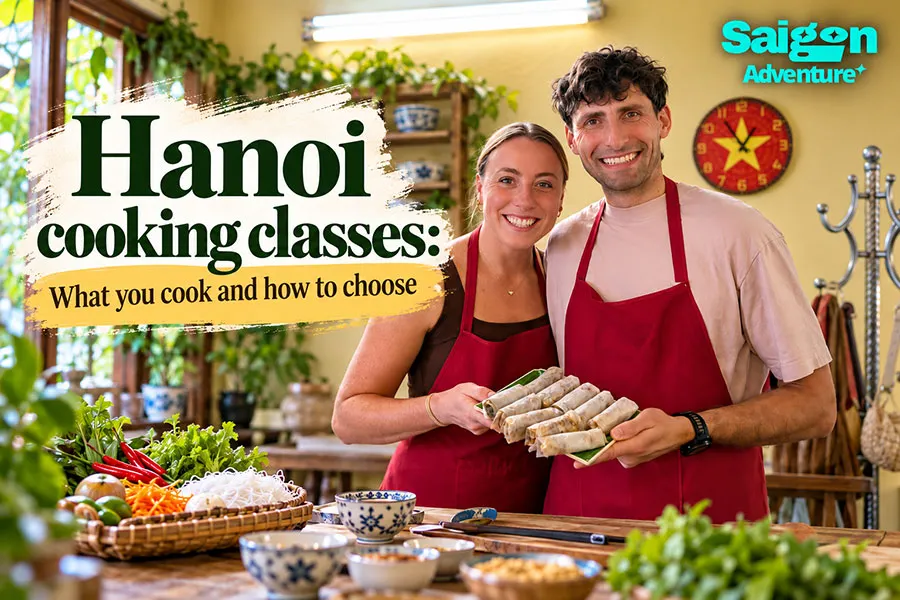
The spring roll looks straightforward until you try folding it: too much filling, one loose edge, and suddenly the chef’s demonstration deserves more attention. Hanoi cooking classes turn familiar dishes into practical discoveries, helping you understand the ingredients, seasoning and small decisions behind a Vietnamese meal.
For most visitors, the best choice is a hands-on class with a clearly stated menu, manageable group size and enough time to cook before eating. A market visit adds context, but your actual participation matters more than the number of dishes advertised.
If you are still discovering northern Vietnamese food, start with this guide to what to eat in Hanoi, then choose a lesson around something you would enjoy making again.
What happens in a Hanoi cooking class?
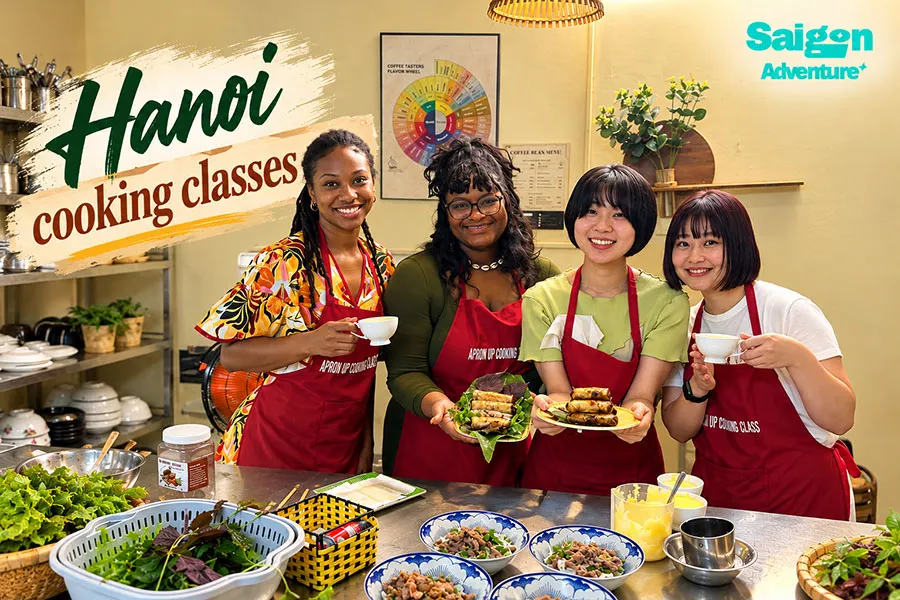
A Hanoi cooking class is a guided lesson in preparing Vietnamese dishes, usually followed by a shared meal. Some programmes begin with shopping at a local market; others start in the kitchen. Depending on the format, guests cook individually, work in pairs or divide tasks across a group.
The useful distinction is between watching, assisting and cooking. Seeing a chef prepare five dishes offers a different experience from seasoning your own filling, shaping spring rolls and adjusting a dipping sauce yourself.
Before booking, ask: “Which dishes will I personally prepare?” A clear answer tells you more than a long list of inclusions.
What do you cook in Hanoi cooking classes?
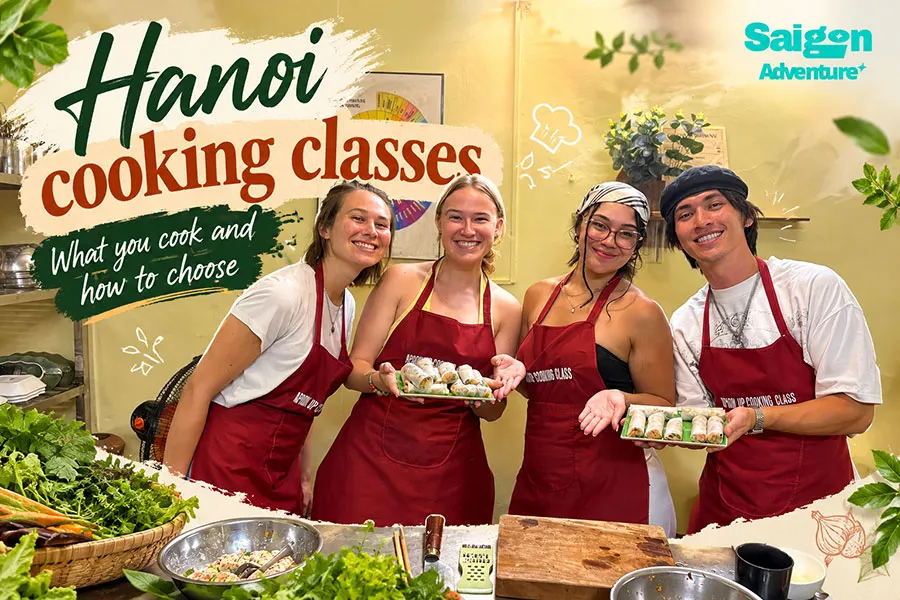
Menus vary by school and session. Published examples from Apron Up and Rose Kitchen include combinations of phở, bún chả, fried spring rolls, papaya or banana flower salad, and egg coffee; these are examples rather than a universal Hanoi menu.
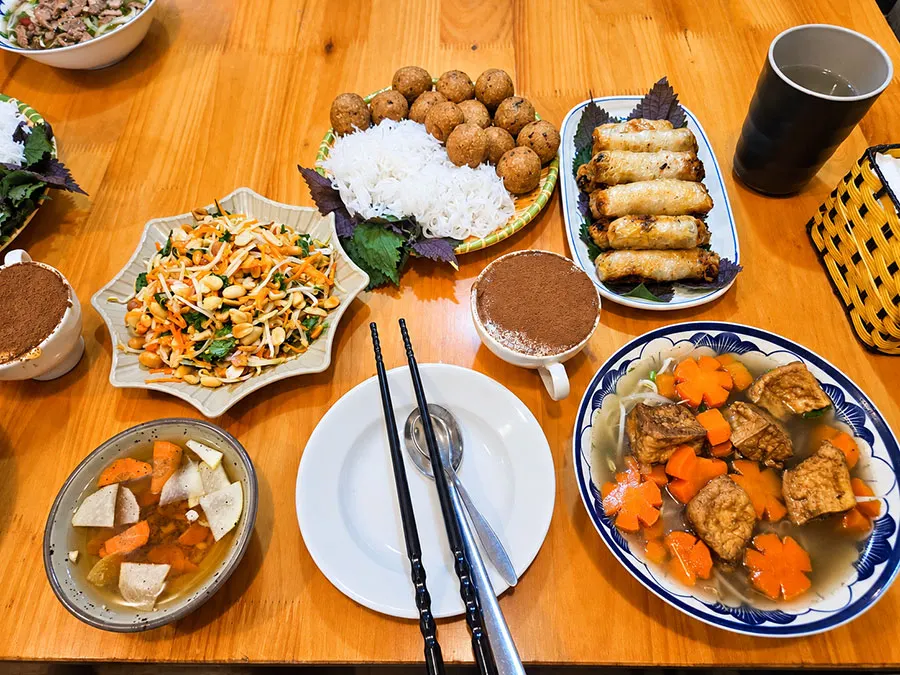
Spring rolls and salads: Useful skills for beginners
Fried spring rolls, or nem rán, teach filling proportions, wrapping and control around hot oil. Ask whether everyone rolls their own and participates in cooking, rather than preparing a wrapper for the chef to finish.
Salads offer another lesson: balancing dressing against crunchy vegetables and fresh herbs. Taste before and after seasoning so you understand what changed, rather than simply copying measurements.
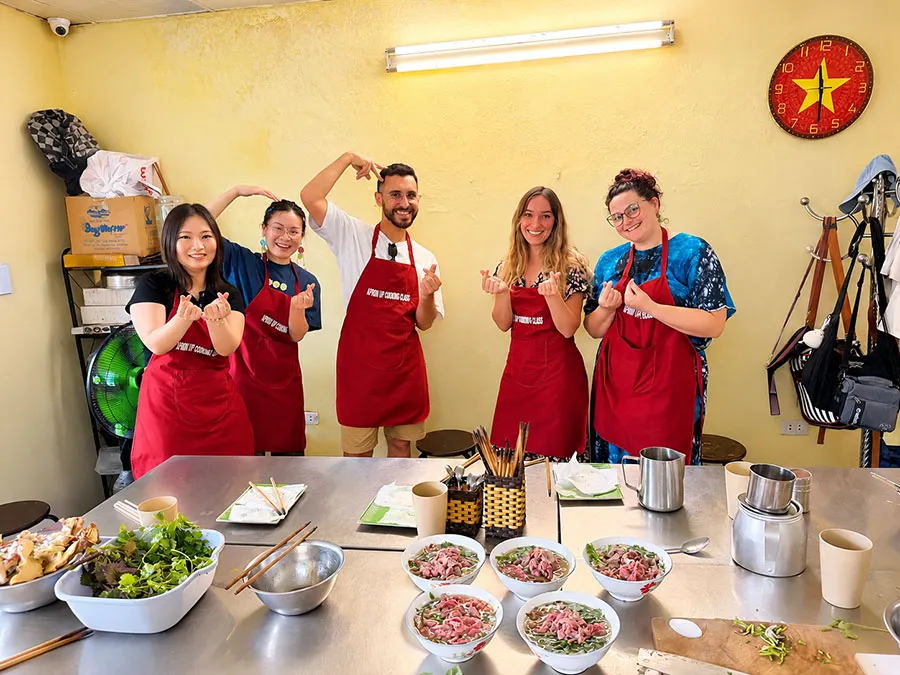
Bun cha and pho: Check what is prepared beforehand
Bún chả combines several components, making it useful for learning how meat, noodles, herbs and dipping liquid work together. Confirm whether you handle the marinade and cooking or mainly assemble prepared ingredients.
For phở, ask how the broth is taught. A short lesson may use stock prepared earlier; that is reasonable, but the instructor should explain the longer process and provide a recipe you can follow at home.
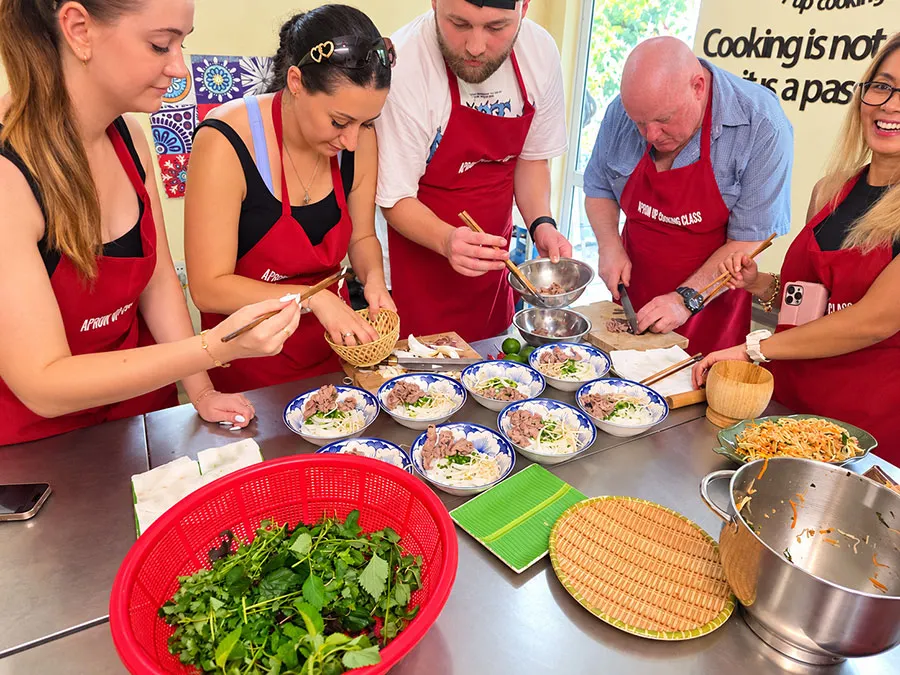
Egg coffee: A drink can count as a menu item
Egg coffee adds a distinctive Hanoi finish, but check whether you make it yourself. A “five-item menu” may include a beverage alongside the food.
Local tip: Ask for ingredient substitutions available in your home country. Knowing an alternative to banana flower can be more useful than leaving with a recipe you cannot recreate.
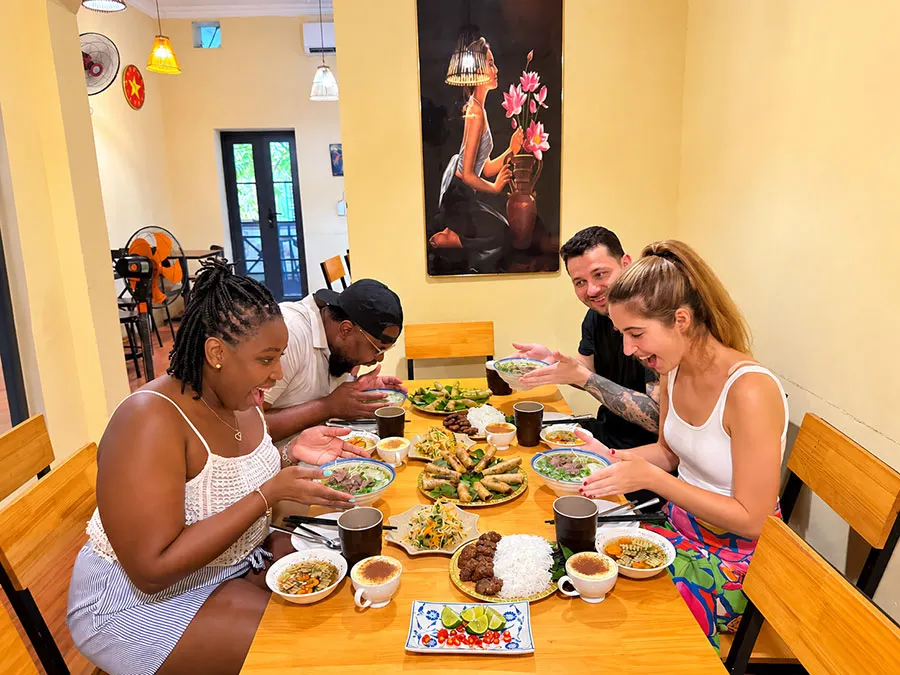
How much do Hanoi cooking classes cost?
Two published group-class examples provide a useful starting point: Apron Up lists US$32 per person, while Rose Kitchen lists US$45 per adult for its standard join-in class. These are individual operator prices, checked on 21 October 2026, rather than a citywide minimum and maximum.
Compare the final booking total and inclusions before paying. A cheaper class may suit you perfectly if it offers substantial cooking time and an easy meeting point.
Ask whether the price covers:
- All ingredients, equipment and instruction.
- The meal you prepare and any drinks.
- A market visit and transport between venues.
- Hotel pickup within your accommodation area.
- Recipes, taxes and applicable holiday supplements.
Private lessons require a separate comparison because the price may depend on your group size and requested menu. Get the total in writing, including any charges for customisation.

How to choose the right Hanoi cooking class
Choose your level of participation first
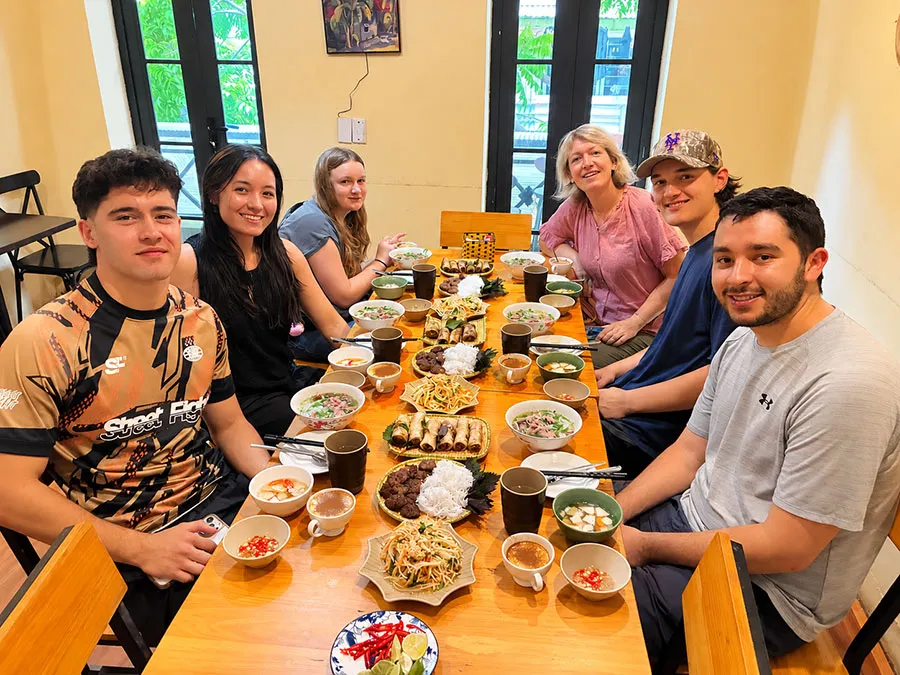
Look for descriptions of what guests actually do: chopping, mixing, wrapping, seasoning and cooking. “Hands-on” alone does not explain whether twelve guests share one workstation or everyone has space to practise.
Ask how many participants share each burner and whether you can repeat a technique. Read recent reviews for comments about teaching and involvement, not just whether lunch tasted good.
Match the format to your travel style
| Class format | Best suited to | Main advantage | What to check |
|---|---|---|---|
| Shared group lesson | Solo travellers and sociable couples | Conversation and shared learning | Maximum group size and task sharing |
| Private lesson | Families or focused home cooks | More scope to adjust pace and menu | Customisation and total cost |
| Market-and-cooking session | Curious food travellers | Ingredient context before cooking | Walking distance and kitchen time |
| Kitchen-only workshop | Visitors with limited time | More direct focus on preparation | Whether ingredients are explained |
A shared class can be enjoyable even when tasks are divided, provided everyone gets meaningful involvement. Choose a private session when your priorities would be difficult to accommodate in a fixed group programme.
Ask about teaching language and take-home recipes
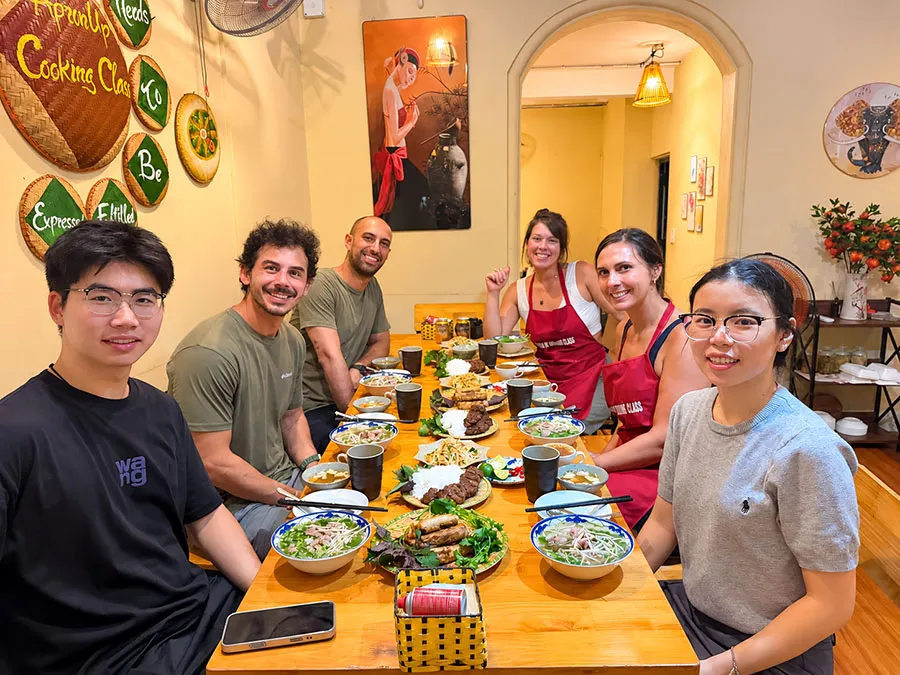
An instructor should be able to explain why a step matters, not simply demonstrate it. Confirm the teaching language and whether recipes include quantities, timing and preparation instructions.
For confident cooks, ask whether the lesson can explore seasoning adjustments or ingredient choices. Beginners may benefit more from a slower session covering a few techniques thoroughly.
Where should you take a cooking class in Hanoi?
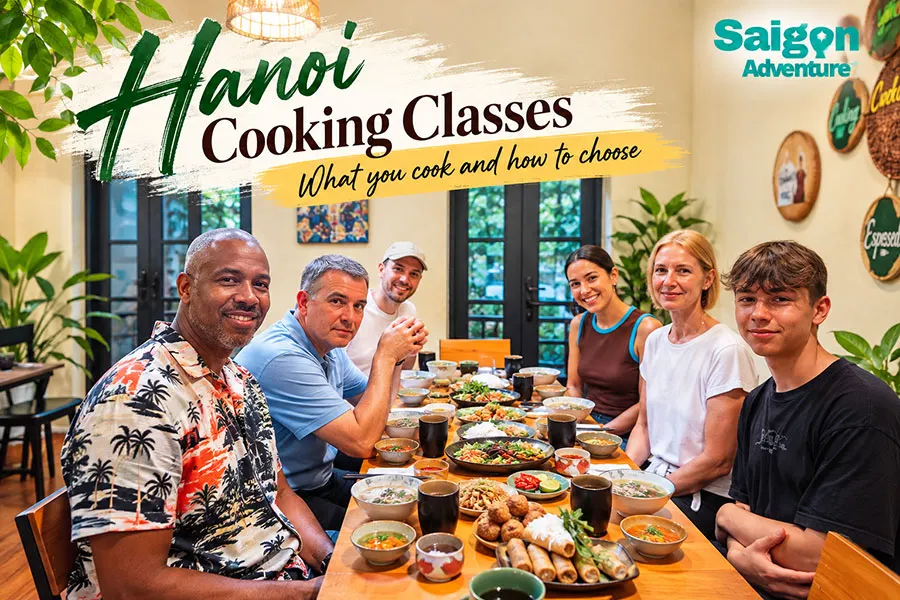
Start with the actual kitchen location, not the booking office or pickup point. An Old Quarter venue may fit easily around sightseeing, while a kitchen elsewhere can involve additional travel.
Apron Up lists its meeting point on Gia Ngư Street in the Old Quarter; Rose Kitchen describes a garden-view villa setting in Ngọc Hà. These illustrate different settings, without establishing that either is the right choice for every traveller.
Ask about stairs, seating, ventilation and toilet access if these affect your comfort. Families should also confirm how children participate around knives, burners and hot pans.
When arranging the rest of your itinerary, browse Saigon Adventure’s Hanoi experiences and leave a comfortable gap between activities.
Morning or afternoon: When should you book?
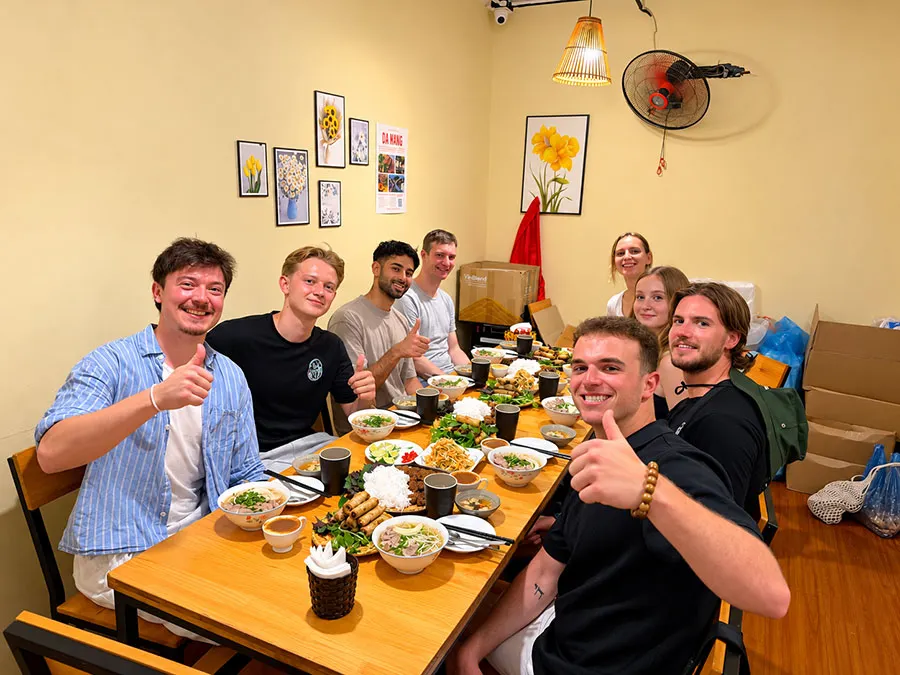
Choose a session around the meal you want it to replace. A morning class can finish with lunch, while an afternoon lesson may lead into dinner; confirm the advertised finish time and allow extra time afterwards.
Operator examples run from around three hours to approximately four and a half hours, including activities beyond cooking. Check how that time is divided between transfers, shopping, instruction and eating.
An indoor kitchen can suit a rainy afternoon, but a market walk still exposes you to the weather. Ask whether there is a kitchen-only alternative if walking outside would be uncomfortable.
Dietary needs and practical tips before you join
Send dietary requirements before payment and request confirmation for your specific menu. Explain which ingredients you avoid, including fish sauce, shrimp paste, meat stock, eggs or dairy, rather than relying on “vegetarian” alone.
For allergies, ask about shared equipment and ingredient handling. A substitute dish does not automatically mean the kitchen can prevent cross-contact.
Wear comfortable shoes with grip, tie back long hair and follow the instructor’s directions around heat. At the market, ask before photographing vendors and keep clear of working counters.
Local tip: Photograph ingredient packaging with permission and record the Vietnamese names. These details help when shopping later, especially for sauces that look similar on a shelf.
Is a Hanoi cooking class worth it?
It is worth considering if you enjoy learning through doing and want a skill to take home. Couples, solo travellers and families can all benefit, provided the pace and participation match their needs.
A food walk may suit you better if your priority is tasting several specialities with little preparation. This guide to choosing a Hanoi food tour helps you assess that alternative.
You can also combine the experiences on separate days: taste first, then cook something that caught your attention. A Hanoi local food tour through the Old Quarter can introduce flavours you later want to understand in the kitchen.
Frequently asked questions about Hanoi cooking classes
Do I need cooking experience?
Beginner-friendly lessons should explain each step and provide supervision. Confirm this before booking, especially if you are unfamiliar with knives or frying.
Do all Hanoi cooking classes include a market visit?
No. Check the specific programme and ask whether the market stop involves ingredient shopping, explanation or simply a short walk.
Can vegetarians or vegans join?
Some operators offer adapted menus. Request the complete ingredient list and confirm that sauces, stocks and drinks also meet your requirements.
Can children join a cooking class?
Policies vary by provider and age. Ask about suitable tasks, adult supervision and whether a child receives a workstation, shared place or meal only.
Will I eat the food I prepare?
Many classes finish with the dishes cooked during the session. Confirm the meal arrangement, portion expectations and whether guests share food.
Should I book a private or group class?
Choose a group for sociability and a fixed programme. Consider a private lesson for a particular menu, a slower pace or requirements confirmed with the operator.
Choose a Hanoi cooking class around one dish you genuinely want to make again. Before reserving, confirm the menu, your participation and the final price—then leave room in your itinerary, and your appetite, for the meal you helped create.