
Just a short journey from Hoi An Ancient Town, the sound of spinning pottery wheels and the earthy scent of wet clay introduce a quieter side of central Vietnam. At Thanh Ha Pottery Village, travelers can do more than admire handmade ceramics—they can sit beside a local artisan and discover how a simple lump of clay becomes something meaningful.
A Thanh Ha Pottery Village pottery class is a hands-on cultural experience where visitors learn basic pottery techniques, shape clay with guidance, and explore a craft passed down through generations. It’s an especially rewarding activity for families, couples, and curious travelers looking for something beyond Hoi An’s familiar sightseeing routes.
But what actually happens during a pottery workshop? How much should you budget, and can you take your creation home? Here’s what to know before getting your hands muddy.
What Makes Thanh Ha Pottery Village Special?
Located in Thanh Ha Ward, west of Hoi An’s historic center, Thanh Ha Pottery Village is known for its traditional terracotta pottery and long-standing connection to local craftsmanship.
Unlike modern ceramic studios focused on perfectly finished products, Thanh Ha offers visitors a glimpse into everyday village life. Artisans continue shaping household objects, decorative pieces, and traditional clay products using skills developed through years of practice.
A pottery tradition shaped by generations
The village’s pottery heritage dates back several centuries, with its development closely connected to Hoi An’s history as a trading port.
Today, workshops help preserve these techniques while introducing travelers to the patience, coordination, and practical knowledge involved in making pottery by hand.
What makes the experience memorable isn’t necessarily the object you create. It’s watching an experienced potter transform clay with movements that appear effortless—until you try repeating them yourself.
What Happens During a Thanh Ha Pottery Class?
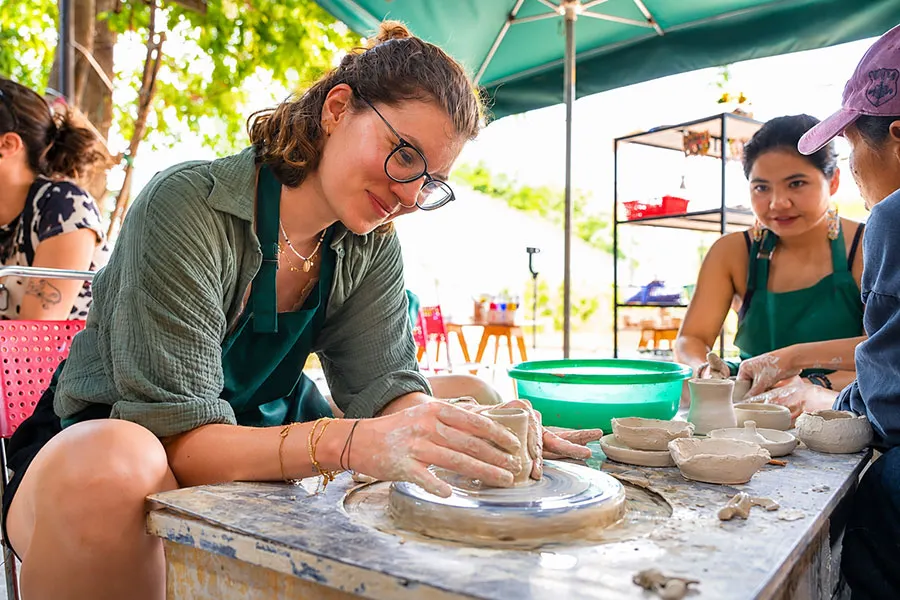
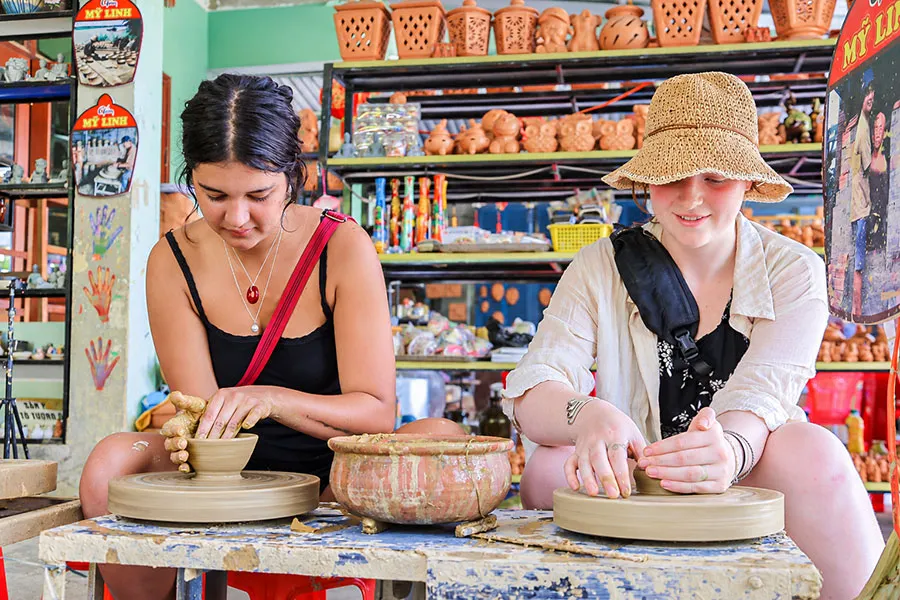
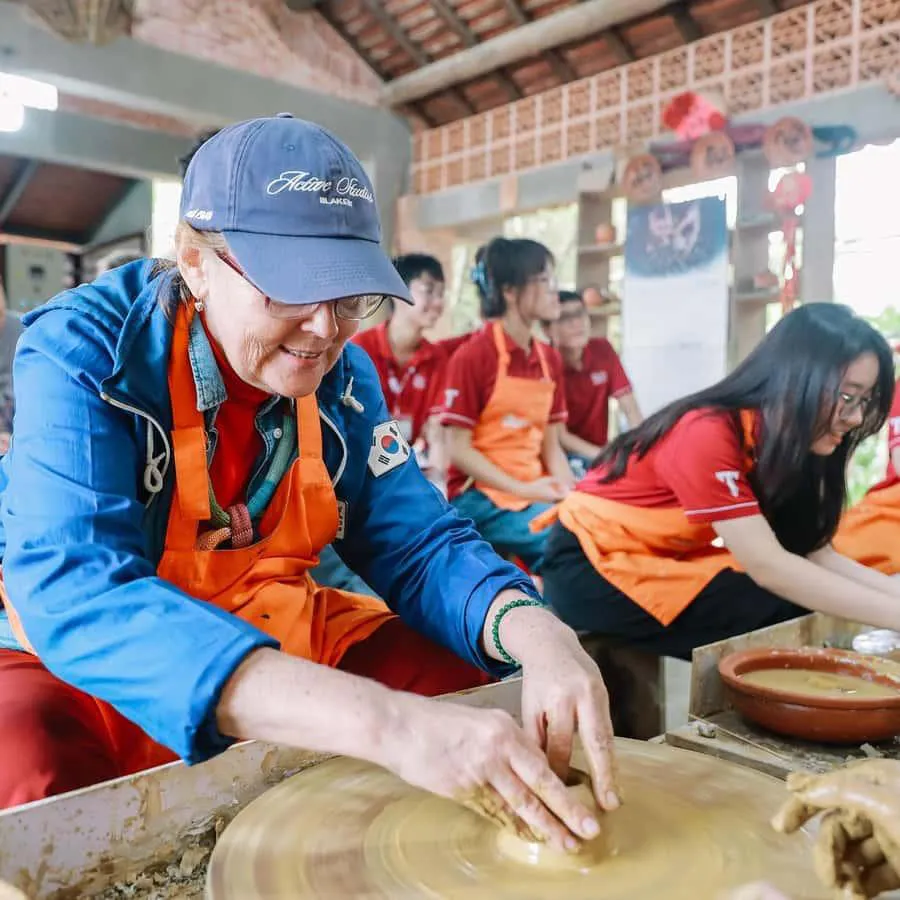
A typical pottery-making experience begins with a local artisan demonstrating how to center and shape clay on a traditional wheel. Visitors then try the technique themselves, usually with hands-on assistance.
The activity is beginner-friendly, although the exact lesson, duration, and finished product depend on the workshop you choose.
Step 1: Watch a local artisan demonstrate
Before touching the clay, observe how the potter positions their hands, controls pressure, and gradually forms a vessel.
Notice how small adjustments change the shape. Watching carefully makes your first attempt considerably easier.
Step 2: Shape your own clay creation
Once you’re ready, you’ll sit at the wheel and work with soft, damp clay.
Your instructor may guide your hands as you form a small bowl, cup, or decorative object. Don’t expect perfect symmetry; keeping the walls even is surprisingly challenging.
Step 3: Discover the finishing process
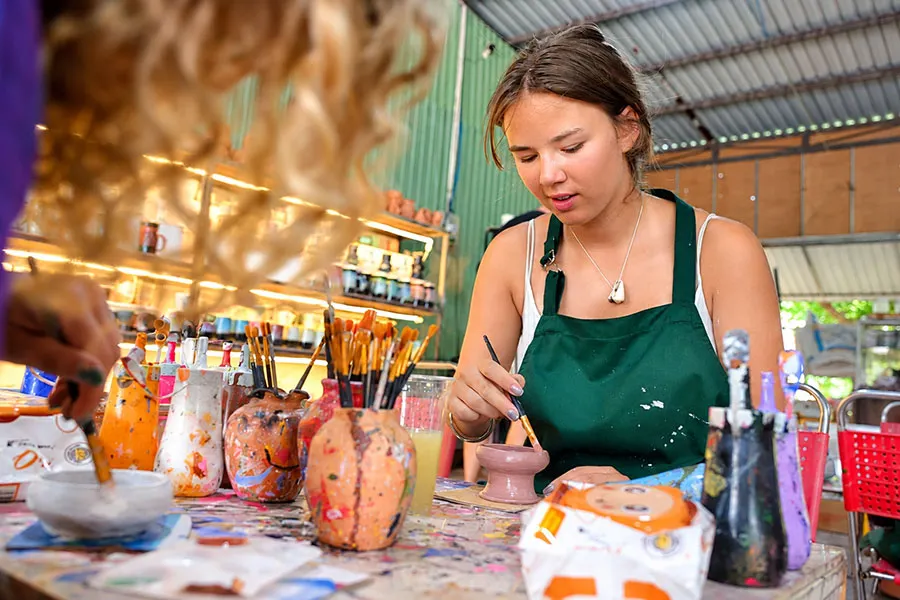
Depending on the workshop, the artisan may demonstrate smoothing, decorating, drying, or other finishing techniques.
Traditional pottery requires additional drying and firing before becoming a durable ceramic object. A short tourist lesson generally introduces only part of that process.
Can you take your handmade pottery home?
Not always. Freshly shaped clay remains fragile and normally needs time to dry and undergo appropriate firing.
Some workshops provide a separate small souvenir, while others may offer arrangements for finished pieces. Ask what is included before paying, especially if taking home your own creation matters to you.
How Much Does a Pottery Class in Thanh Ha Cost?
Pottery workshop prices vary according to the provider, activity length, group size, and whether village admission or souvenirs are included.
Rather than relying on an advertised price alone, check exactly what you’re purchasing. A brief pottery demonstration with a hands-on turn is different from a longer private lesson.
| Experience | What to expect | Best for |
|---|---|---|
| Village visit | Watch artisans and explore workshops | Casual visitors |
| Short pottery activity | Basic shaping with guidance | First-time travelers |
| Private pottery lesson | More individual instruction, subject to availability | Craft enthusiasts |
| Pottery and village tour | Workshop combined with local heritage exploration | Families and culture lovers |
Local Tip: Ask whether the quoted price includes the Thanh Ha village entrance fee, the hands-on activity, and any souvenir. Fees and packages can change, so confirm current costs directly with the operator.
How Long Does a Thanh Ha Pottery Workshop Take?
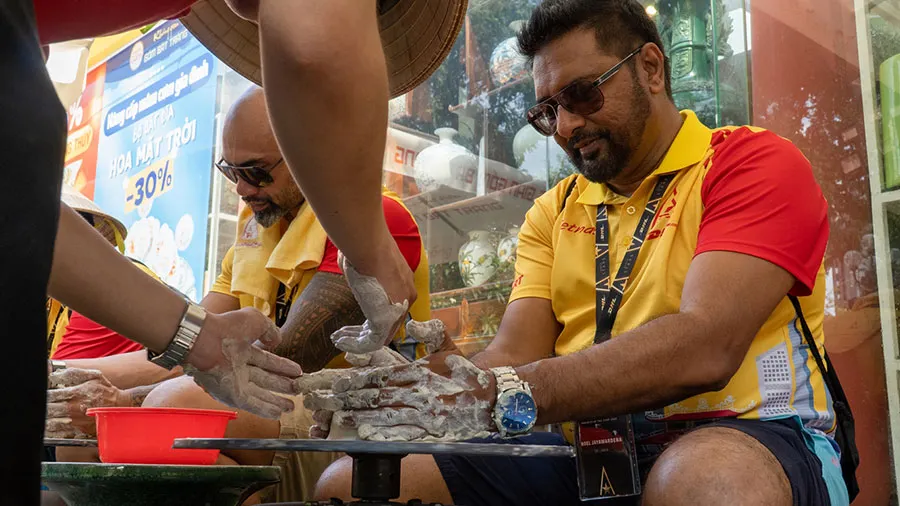
A short introductory activity may take approximately 15–30 minutes, depending on the workshop and waiting time.
For a more relaxed visit, allow around one to two hours to explore the village, observe different artisans, try pottery, and browse handmade products.
Is a short pottery class enough for beginners?
Yes, if your goal is to experience traditional pottery rather than master the craft.
Even a brief session reveals how difficult it can be to maintain an even shape. Travelers who want extended instruction should arrange a longer workshop in advance instead of assuming every village demonstration offers it.
Where Is Thanh Ha Pottery Village and How Do You Get There?
Thanh Ha Pottery Village lies approximately three kilometers west of central Hoi An, making it a convenient cultural stop during a half-day outing.
You can reach the area by bicycle, taxi, or arranged transport. Cycling is particularly pleasant in suitable weather, although traffic and afternoon heat deserve consideration.
Can you combine Thanh Ha with other Hoi An attractions?
Absolutely. A morning pottery session pairs naturally with an afternoon exploring Hoi An Ancient Town, where traditional architecture, riverside streets, and local markets provide a different perspective on the region’s heritage.
Travelers interested in immersive experiences can also explore Hoi An cultural activities or browse Vietnam tours and local experiences when planning a broader itinerary.
Nearby Thanh Ha Terracotta Park is another possible stop for visitors interested in ceramic art and displays. Check its admission arrangements separately from the village workshop.
When Is the Best Time to Visit Thanh Ha Pottery Village?
Morning is often the most comfortable time for a pottery workshop, particularly during Hoi An’s hotter months.
Starting early can also leave more flexibility for sightseeing later in the day. However, individual workshops may have different operating schedules, and artisan availability is not guaranteed.
What about visiting during the rainy season?
Hoi An generally experiences wetter conditions during the later months of the year, with particularly heavy rainfall possible during the autumn storm season.
Covered pottery activities may still operate during ordinary rain, but flooding or severe weather can disrupt travel and access.
Local Tip: Wear breathable clothing that you don’t mind getting slightly dirty. Bring drinking water, and avoid scheduling a tight onward departure immediately after your workshop.
Is Thanh Ha Pottery Village Worth Visiting?
For travelers who enjoy cultural encounters, traditional crafts, and hands-on activities, Thanh Ha Pottery Village is worth considering.
The experience offers a welcome contrast to busy sightseeing attractions. Instead of moving quickly between landmarks, you’re invited to slow down and concentrate on making something with your own hands.
Who will enjoy this pottery experience most?
-
Families with children: A playful introduction to creativity and Vietnamese craftsmanship.
-
Couples: A relaxed shared activity that feels more personal than conventional sightseeing.
-
Solo travelers: An opportunity to engage with local artisans through a practical activity.
-
Culture enthusiasts: A chance to understand traditional production techniques beyond museum displays.
-
Creative travelers: An enjoyable introduction to pottery without requiring previous experience.
What are the possible drawbacks?
Not every workshop provides an extensive lesson, and busy periods may limit individual attention.
Some visitors may also find the activity shorter or more tourist-oriented than expected. Those seeking professional ceramic training, glazing instruction, or a guaranteed fired product should choose a specialized course instead.
The village is most rewarding when approached as a cultural encounter rather than a full pottery certification class.
Practical Tips for Your First Pottery Class in Hoi An
A little preparation makes the experience more comfortable and helps you appreciate the artisans’ work.
What should you know before arriving?
-
Keep fingernails relatively short if possible, as long nails can make shaping clay difficult.
-
Remove delicate rings or bracelets before working.
-
Ask permission before photographing artisans or entering private working areas.
-
Follow the instructor’s guidance when touching tools, wheels, or unfinished pottery.
-
Avoid touching kilns or recently fired ceramics, which may be dangerously hot.
-
Bring some Vietnamese dong for small purchases, while confirming accepted payment methods beforehand.
Most importantly, don’t rush the process. A slightly uneven bowl can become a more meaningful travel memory than a perfectly manufactured souvenir.
Pottery Class vs. Other Cultural Experiences in Hoi An
Hoi An offers several opportunities to experience Vietnamese culture through practical activities. Choosing between them depends on whether you prefer creativity, food, or outdoor exploration.
| Experience | Main appeal | Ideal traveler |
|---|---|---|
| Thanh Ha pottery class | Traditional clay craftsmanship | Creative travelers |
| Hoi An cooking class | Vietnamese ingredients and recipes | Food lovers |
| Lantern-making workshop | Decorative craft and colorful designs | Families and couples |
| Countryside cycling | Rural scenery and village life | Outdoor enthusiasts |
If you enjoy learning through food, a Hoi An cooking class guide can help you compare experiences.
For travelers building a longer central Vietnam itinerary, things to do in Hoi An offers another useful starting point.
Frequently Asked Questions About Thanh Ha Pottery Village
1. Do you need to book a pottery class in advance?
Not necessarily. Some workshops welcome walk-in visitors, but advance arrangements are advisable for larger groups, private lessons, or travelers with limited time.
2. Is Thanh Ha Pottery Village suitable for children?
Yes, many children enjoy shaping clay with an artisan’s assistance. Parents should supervise younger children and confirm any age restrictions with the workshop.
3. How far is Thanh Ha Pottery Village from Hoi An Ancient Town?
The village is approximately three kilometers west of central Hoi An. Journey time depends on your starting point, transportation, and local traffic.
4. Can beginners join a Thanh Ha pottery class?
Absolutely. Introductory workshops generally require no previous experience, and artisans help visitors understand basic hand positioning and shaping techniques.
5. Can you bring your pottery creation home?
It depends on the workshop. Fresh clay usually requires drying and firing, so visitors should confirm whether they receive a finished souvenir or can arrange collection of their own work.
6. Is Thanh Ha Pottery Village better than a lantern-making workshop?
Neither is universally better. Pottery offers a tactile introduction to traditional clay craftsmanship, while lantern-making focuses on assembling a decorative object that may be easier to take home immediately.
Make Time for a Different Side of Hoi An
Hoi An is famous for glowing lanterns, historic streets, and riverside evenings, but some of its most interesting experiences happen away from the busiest attractions.
At Thanh Ha Pottery Village, a simple pottery lesson introduces the skill, patience, and human stories behind a traditional Vietnamese craft.
Whether your clay creation turns out beautifully or collapses into an amusing memory, the experience offers something valuable: a moment of connection with the people who keep the village’s traditions alive.
If you’re planning your next adventure, explore Saigon Adventure’s Vietnam travel experiences and consider adding a hands-on pottery workshop to your Hoi An itinerary.