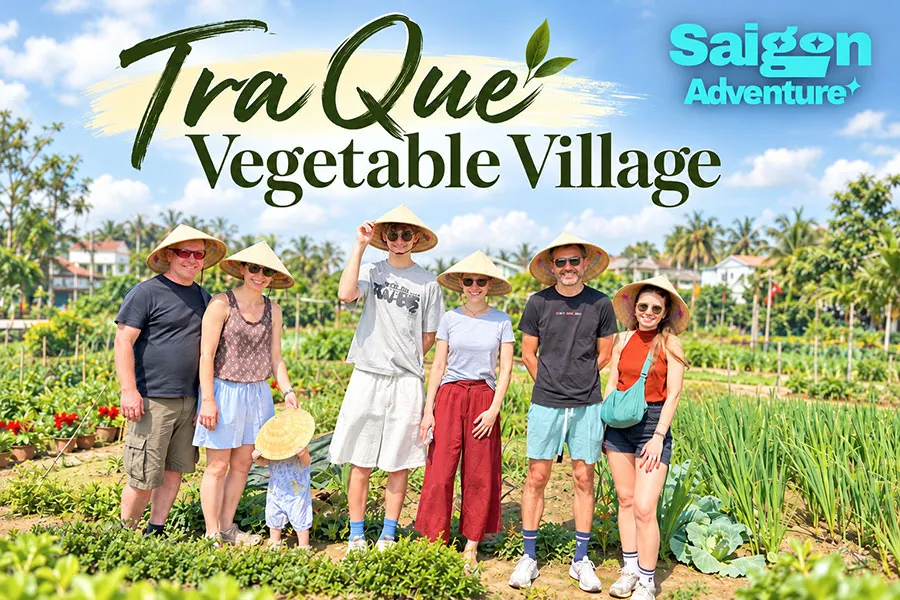
A plate of fresh herbs arrives beside your lunch in Hoi An, and it is easy to treat it as decoration. Visit Tra Que Vegetable Village, and those leaves become the reason for the journey: carefully tended gardens, traditional farming skills, and ingredients that give local dishes their character.
This village near Hoi An is worth visiting for a garden walk, a guided farming session, or a cooking class. Allow around an hour for a brief look, or reserve half a day to connect what grows in the fields with what lands on your plate.
What Is Tra Que Vegetable Village?
Tra Que is a working vegetable-growing community approximately three kilometres northeast of Hoi An Ancient Town. Its gardens produce leafy greens and aromatic herbs, while participating households welcome visitors for agricultural and food experiences.
Traditional cultivation includes using aquatic vegetation as fertiliser, a practice highlighted by Vietnam’s national tourism authorities. Tra Que also received recognition among UN Tourism’s Best Tourism Villages in 2024.
The appeal is in the details: planting rows, preparing soil, and understanding why different leaves belong together in a meal. For wider trip planning, explore our Hoi An Ancient Town travel guide, then give the village its own unhurried morning.
Is Tra Que Worth Visiting, and Who Will Enjoy It?
Tra Que is worth visiting if you enjoy food, gardens, photography, or learning through practical activities. A guided experience adds context that a quick walk can miss. Travellers looking mainly for monuments, shopping, or entertainment may prefer a short stop rather than dedicating half a day.
Families can choose a simple gardening session, while couples and solo travellers might prefer cycling followed by lunch. Food enthusiasts will get the most from combining an introduction to the herbs with a hands-on cooking class.
The main drawback is exposure to the weather. Gardens provide limited shade, and a visit without explanation can feel brief, so choose your activity according to your interests rather than booking the longest package.
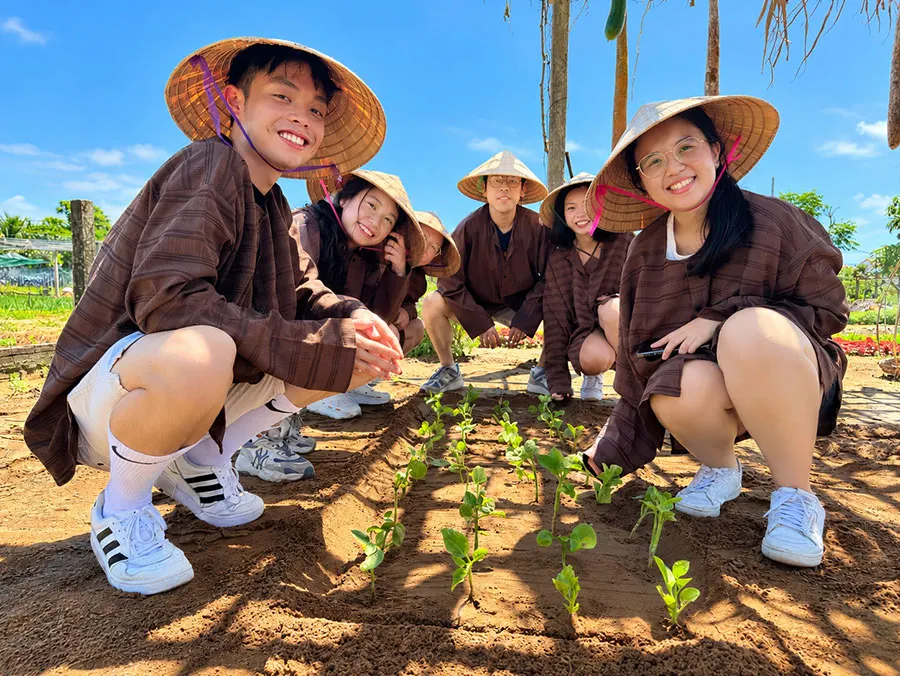
What to See in Tra Que’s Vegetable Gardens
Look Closely at the Herbs and Growing Beds
Start with the contrasting shapes and textures of the crops. Lettuce, basil, coriander, and Vietnamese coriander offer a useful introduction to ingredients used in local kitchens, although planting varies between plots and seasons.
Ask your host to identify a few leaves and explain their culinary uses. Smelling an offered herb is more revealing than photographing another green row; always ask before touching or picking anything.
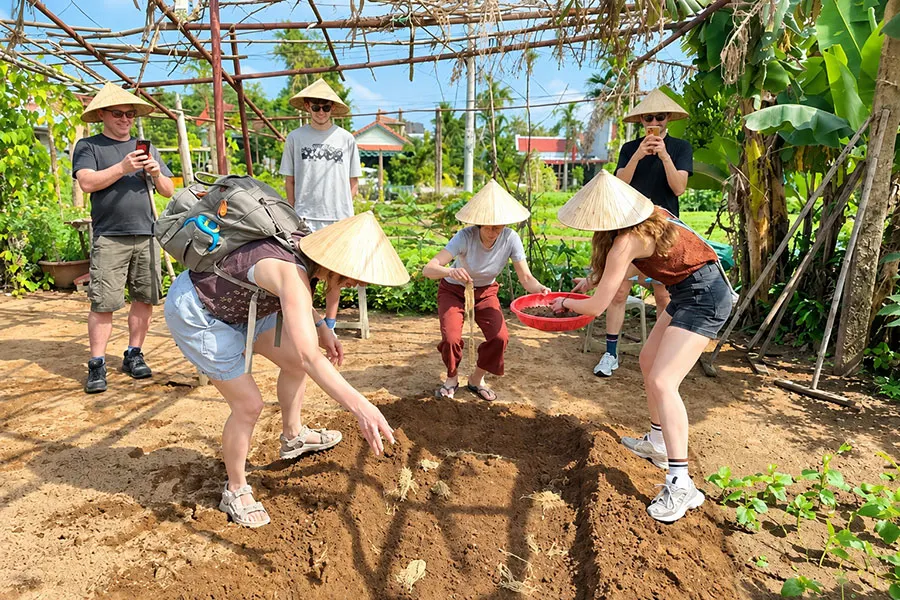
Watch Everyday Farming Without Interrupting
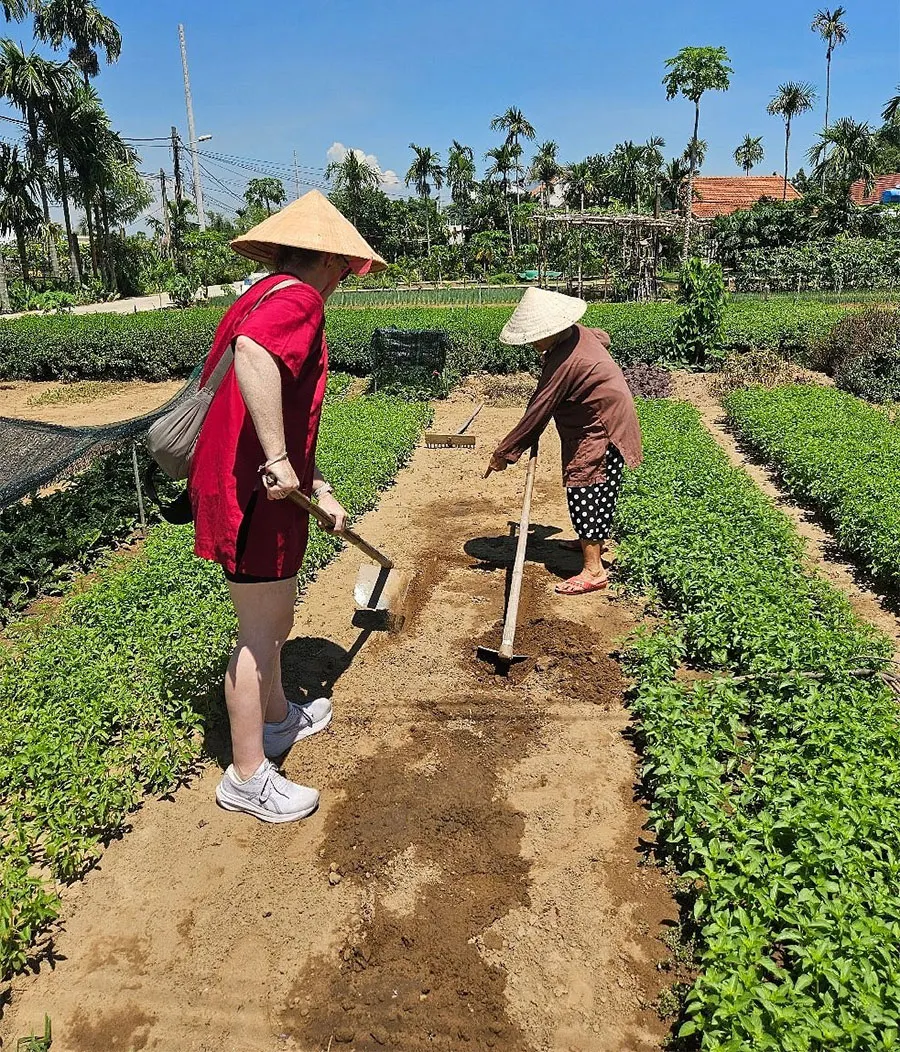
Depending on when you arrive, you may see soil preparation, watering, planting, or harvesting. These are working gardens, so activity follows the crops and weather rather than a guaranteed visitor schedule.
Keep to permitted paths and leave room for people carrying tools or produce. Local tip: ask permission before taking close portraits, especially when someone is concentrating on their work.
What to Taste at Tra Que Vegetable Village
Tam Huu: A Local Dish to Ask For
Tam huu combines shrimp, pork, and basil, tied together with a green onion. It is a useful dish for understanding how a small amount of fresh herb can change the flavour of meat and seafood.
Ask whether it is available when reserving lunch, as menus differ between hosts. Travellers avoiding shellfish or pork should request an alternative before arrival.
Banh Xeo, Mi Quang, and Fresh Herb Accompaniments
Banh xeo offers a contrast between crisp pancake, fresh greens, and dipping sauce. Mi Quang provides another introduction to central Vietnamese cooking, with noodles and toppings accompanied by vegetables; neither dish should be assumed vegetarian.
Rather than ordering several dishes quickly, ask how the accompanying leaves are meant to be eaten. Continue that exploration with a Hoi An food guide for meals beyond the village.
What to Try: Farming, Cooking, or Cycling?
| Experience | Best for | Main advantage | What to check |
|---|---|---|---|
| Garden walk | Independent visitors | Flexible, short visit | Permitted access and admission |
| Guided farming | Families and curious beginners | Practical explanation | Activities and physical demands |
| Cooking class | Food enthusiasts | Connects ingredients with dishes | Menu, participation, dietary needs |
| Bicycle visit | Confident cyclists | Freedom to explore | Route, traffic, bike condition |
Join a Guided Farming Session
A farming experience may involve preparing soil, planting, watering, or harvesting under supervision. The tasks depend on the season and host, so confirm what is actually included rather than relying on a photograph of a particular activity.
Wear clothes that can get dirty and shoes with a secure grip. If lifting watering equipment or bending repeatedly is uncomfortable, ask for a lighter introduction focused on identifying plants.
Choose a Cooking Class With Real Participation
Cooking workshops can include regional dishes such as banh xeo and fresh spring rolls. Some programmes begin in the garden, helping visitors connect ingredients with preparation before sitting down to eat.
Before booking, ask how much cooking each person does, the group size, and whether transfers are included. Compare Hoi An cooking experiences by their actual activities, rather than the number of extras listed.

How to Get to Tra Que From Hoi An
Cycling suits travellers who want to stop along the way and are comfortable sharing roads with motorbikes. Ask your accommodation for a suitable route, check the brakes, and avoid navigating on your phone while moving.
A taxi or arranged transfer is easier in hot weather or with young children. Save your host’s exact meeting point, because arriving at the village does not necessarily mean arriving at the correct garden or cooking venue.
Walking is possible for keen walkers, but consider the return journey and exposed sections. Carry water and avoid turning a short sightseeing stop into a tiring midday walk.
Best Time to Visit Tra Que Vegetable Village
Early morning is a practical choice for cooler conditions and an outdoor activity before lunch. Late afternoon can suit a shorter garden walk, but confirm your host’s availability instead of assuming farming sessions operate until sunset.
For seasonal planning, March and April are sensible months to consider for cycling and garden activities. Later dry-season months can be hot, while September to January may bring rain and slippery paths; check the forecast before committing to outdoor plans.
If rain is likely, choose a programme with a sheltered cooking component and a clear weather policy. A dry interval can still allow a brief garden introduction without requiring a long bicycle outing.
Entrance Fees, Costs, and Booking Questions
Vietnam Airlines’ published guide lists village admission at 35,000 VND per person per day. Treat this as a reference and confirm the current charge locally, together with what access it covers.
Farming sessions, cooking classes, meals, bicycle rental, and transfers can carry separate charges. Request the total price in Vietnamese dong and an itemised description before paying.
Check these details:
- Whether village admission is included.
- Which activities and dishes are provided.
- Whether transport is one-way or return.
- How dietary requests and bad weather are handled.
A Relaxed Half-Day Tra Que Itinerary
Start after breakfast with a bicycle ride or transfer from your accommodation. Meet your host, explore the growing beds, and choose a short farming activity before moving into a cooking session or lunch.
Keep the afternoon flexible rather than adding several distant stops. An Bang Beach can be a separate continuation if conditions suit, while a Hoi An countryside itinerary can help organise a longer outing.
If you also want to explore Hoi An’s waterways, consider the Cam Thanh Coconut Village tour with a basket boat ride as a separate experience. Check travel time and departure arrangements before combining it with your village visit.
Practical Tips for a Respectful Visit
Bring drinking water, sun protection, and footwear suitable for uneven paths. Ask about toilets, seating, and step-free access if these affect your visit, as conditions differ between venues.
Do not enter planted beds, pick produce without permission, or assume that traditional cultivation makes unwashed leaves ready to eat. Tell your cooking host about allergies, including fish sauce, shellfish, and peanuts, before the session.
Frequently Asked Questions About Tra Que
Can You Visit Tra Que Without a Tour?
You can arrange an independent visit rather than joining a packaged tour. Follow local admission and access guidance, and book ahead if you want a hosted activity.
How Long Should You Spend at Tra Que?
Allow around an hour for a short garden visit. Reserve half a day when combining farming, cooking, and a meal, checking the programme’s duration beforehand.
Is Tra Que Suitable for Children?
It can suit children who enjoy outdoor activities and learning about food. Ask about age suitability, tools, shade, and supervision before booking.
Do You Need to Book a Cooking Class in Advance?
Advance booking is advisable because hosts need to prepare ingredients and allocate places. It also gives time to discuss allergies and menu changes.
Are Vegetarian Meals Available?
Ask individual hosts whether they can provide vegetarian or vegan dishes. Confirm sauces and stocks as well as the main ingredients.
Can You Visit Tra Que During Rainy Weather?
A sheltered cooking activity may still be possible during rain. Garden access and cycling depend on conditions, so check with your host before travelling.
Make Time to Taste What You Have Seen
Choose one experience that matches your curiosity, whether that means identifying herbs, watering a garden, or preparing lunch. Leave enough time to ask questions and enjoy the food rather than rushing to the next stop.
For help fitting Tra Que Vegetable Village into a broader journey, explore Saigon Adventure and ask which local experiences suit your schedule.